

You have the consultation booked and a clear idea of what you want: something between brown and blonde that doesn’t look like a single process. The grow-out line needs to be soft, the fringe needs to frame without fighting you, and the color should photograph well under office lights and weekend sun. Bronde balayage solves all of that in one appointment.
Which is why Dreamy Bronde Balayage 2027 fill so many saved boards. 32 looks that range from low-maintenance root blends to brighter, more deliberate blonde ends. For straight, wavy, thick, or fine hair, with or without bangs, these are the real chair conversations.
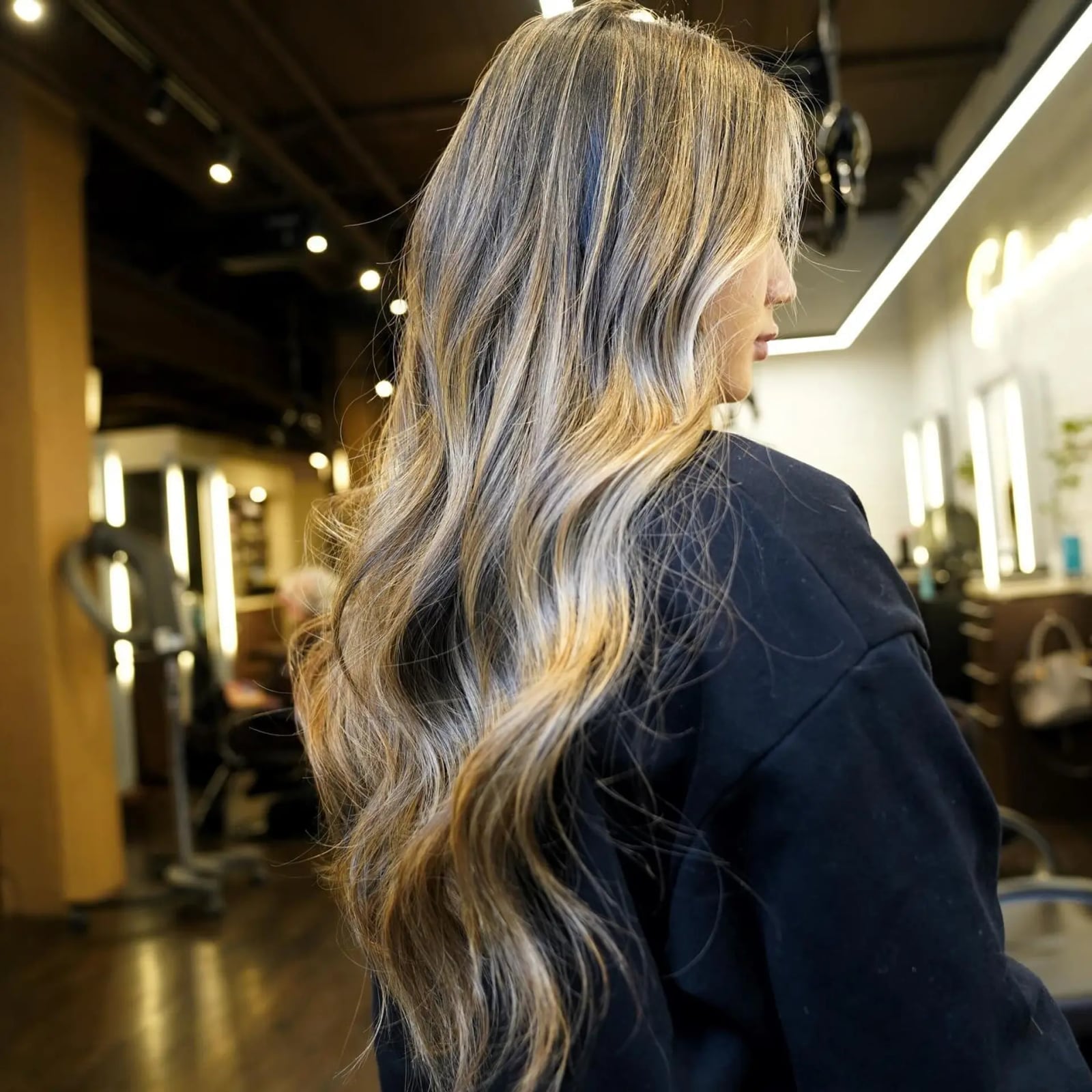
Ash blonde highlights on a warm brown base
Warm brown as the foundation keeps the overall tone grounded. Ash blonde highlights cut through it at irregular intervals, so the color reads cool without turning flat. The loose wave pattern lets those lighter pieces sit at different depths, which is the whole point of a lived-in finish. Fine to medium texture grabs this kind of balayage well because the lightness doesn’t overwhelm the strand. Skip it if you lean toward honey or caramel tones; the ash will read silver against a warm base. Tell your colorist: bronde balayage with ash blonde highlights. A middle part keeps the distribution even on both sides.
Golden blonde highlights creating a lighter effect
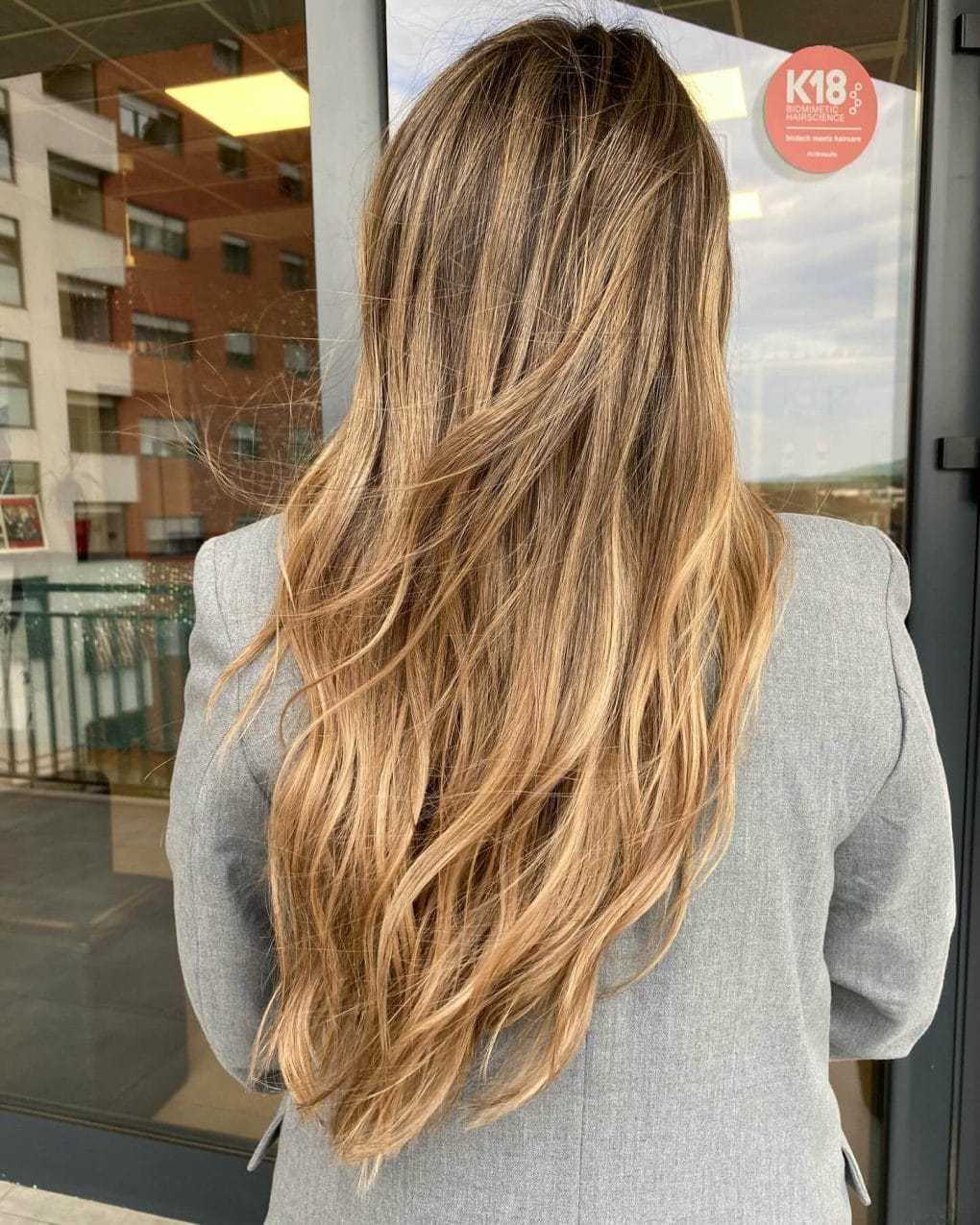
Where ash reads cool, golden reads warm, and this version leans hard into the latter. The bronde base stays neutral enough that the golden pieces don’t look brassy, just lit from above. Thick hair holds that kind of wave without collapsing by noon, which matters when the highlight placement relies on visible texture. The back view confirms the blend runs through the full length, not just the front sections. A matte or smoky finish is not the goal here; golden tones read glossy by nature. Air drying preserves the soft lift at the root without extra heat.
Face-framing layers with side-swept bangs for dimension
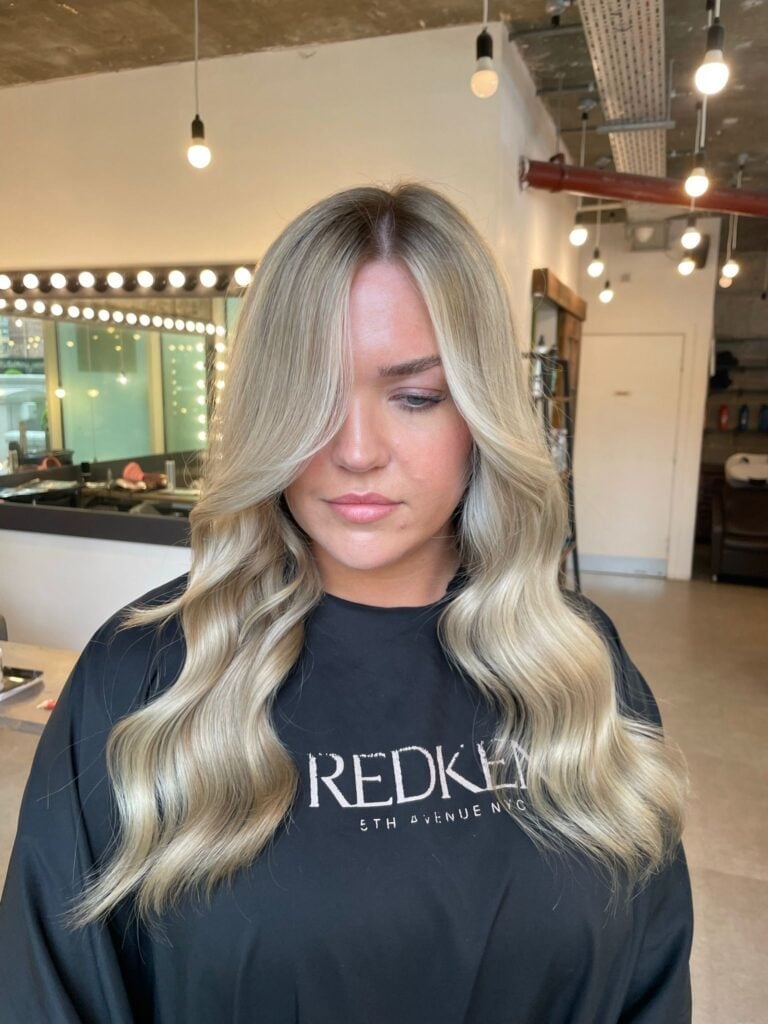
Wondering how to get that soft weight around the face without losing length? The answer is in the layering pattern. Side-swept bangs cut on an angle let the ash blonde highlights hit the cheekbone area directly, while the rest of the wave stays behind the shoulder. Thick texture benefits from the internal layering that removes bulk without making the ends look thin. A middle part anchors the whole shape, so the bangs sweep across rather than sit in the center. Tell your colorist: bronde balayage with ash blonde highlights, soft layers, side-swept bangs. The blowout here gives the wave a neat finish.
Smooth transition from dark brown to bright blonde
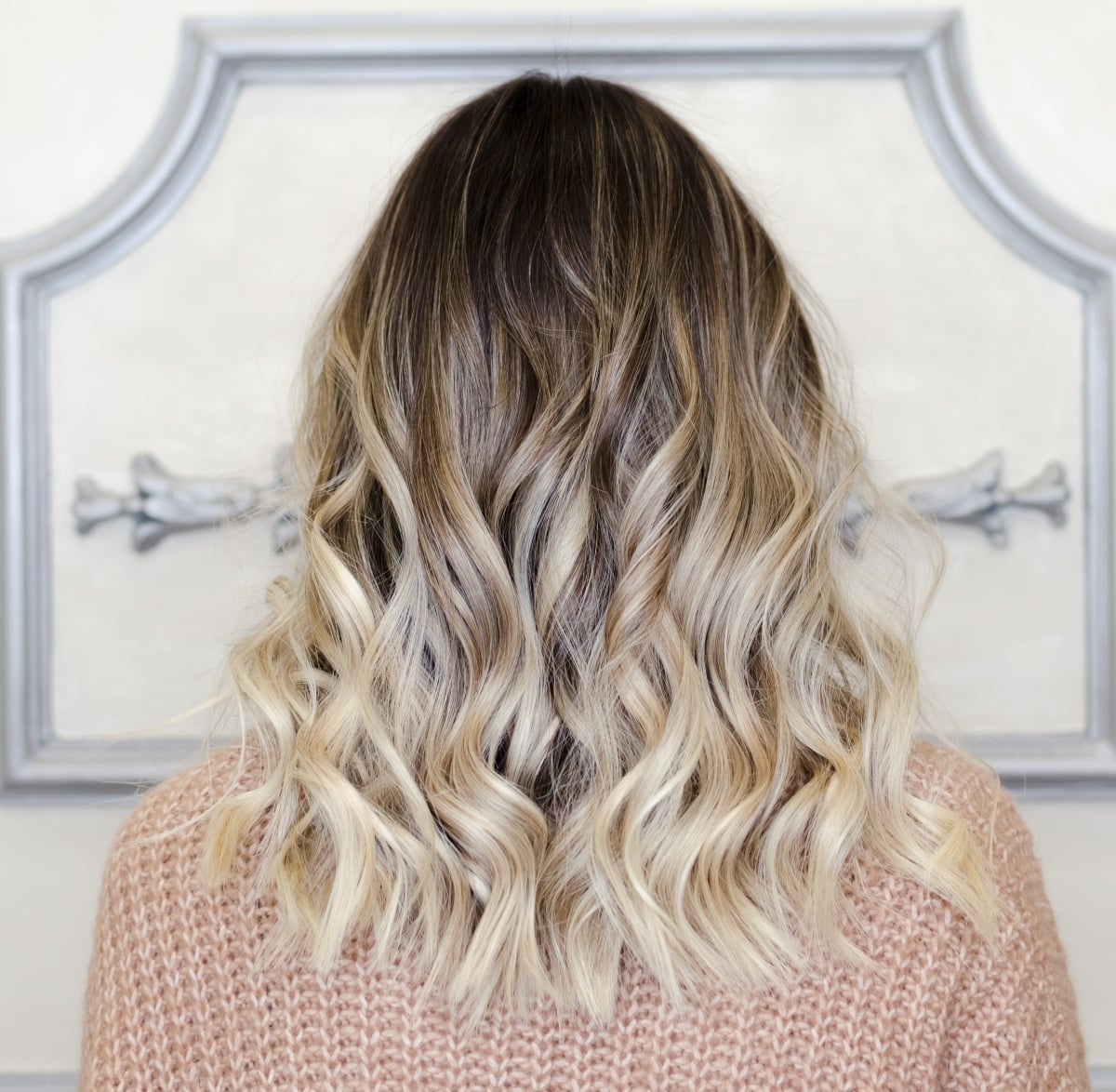
Dark brown at the root, bright blonde at the ends. The gap is wide, but the blend closes it completely. The balayage technique places the lightener heavier toward the bottom third, so the mid-lengths graduate rather than jump. Medium density hair carries the contrast without looking see-through at the ends. The soft wave pattern helps the transition look intentional, not grown out. Skip it if you want a subtle shift; this is a statement move that requires commitment to the grow-out rhythm. A wavy blowout keeps the ends moving so the color reads from every angle.
Curtain bangs with lighter blonde highlights
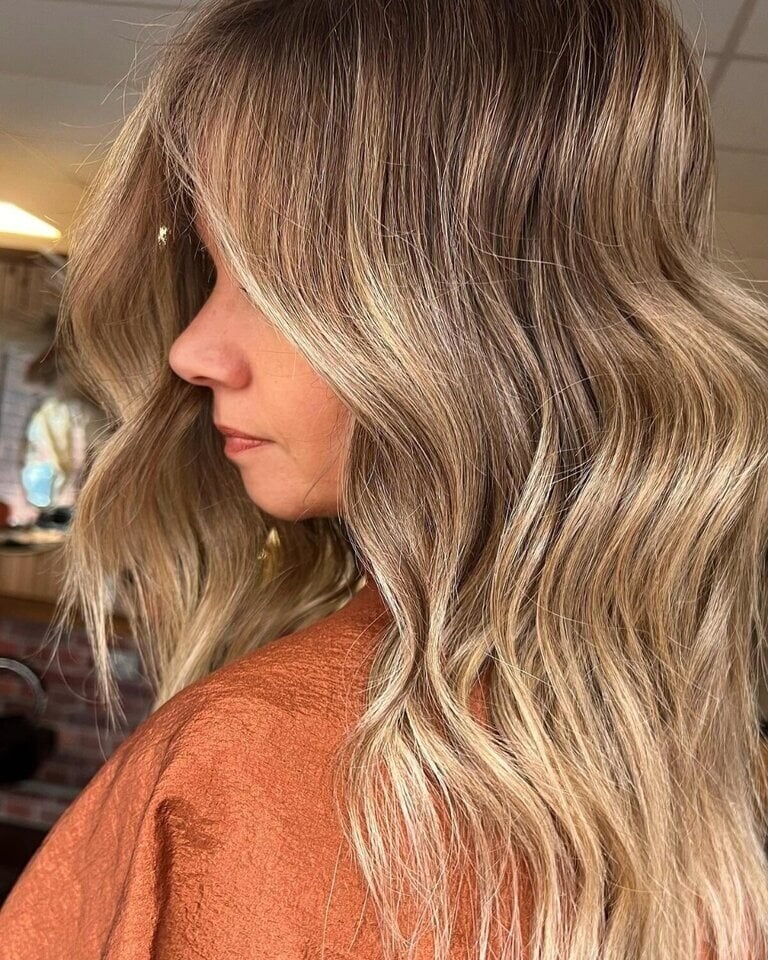
Curtain bangs change how the color lands because the shorter front pieces catch the light first. Lighter blonde highlights feather into a medium brown base here, so the contrast is soft rather than stark. Fine hair gains volume from the layered cut and the bangs frame without requiring constant trimming. The side part directs the heavier side of the bangs across the forehead, which balances the overall shape. Tell your colorist: medium brown balayage with lighter blonde highlights, curtain bangs. A wavy blowout keeps the bangs from falling flat against the face.
Voluminous waves with smooth bronde transition
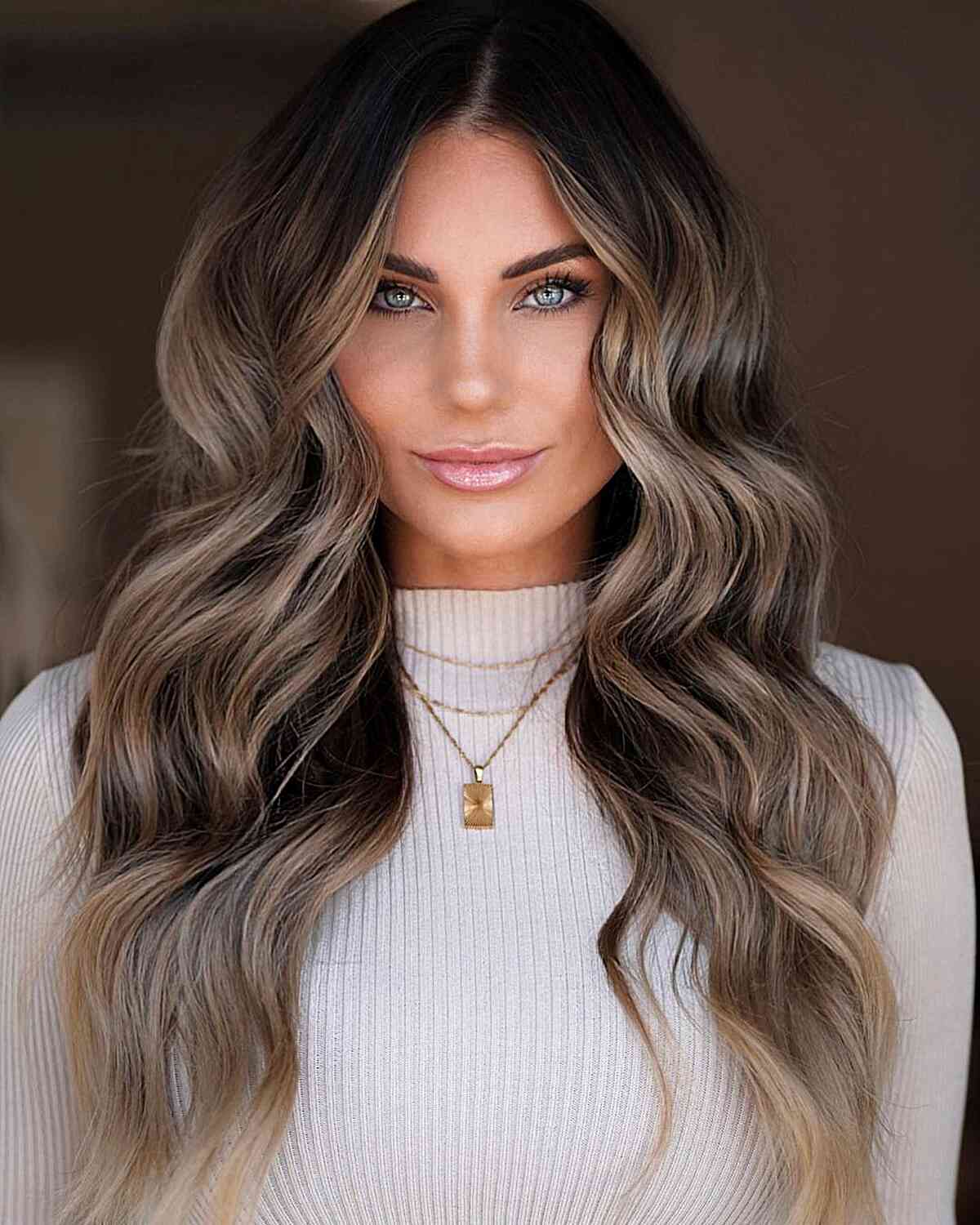
Not a blowout that deflates by lunch, but one that holds its shape through a full day. The dark brown base moves into lighter bronde tones with no hard line, just a gradient that looks deliberate. Waves on thick hair give this real volume, not the kind that needs constant fluffing. A layered cut keeps the weight from pulling everything flat. A volumizing spray before drying helps, and a trim every eight to ten weeks keeps the shape honest.
Subtle blended highlights on a dark brown base
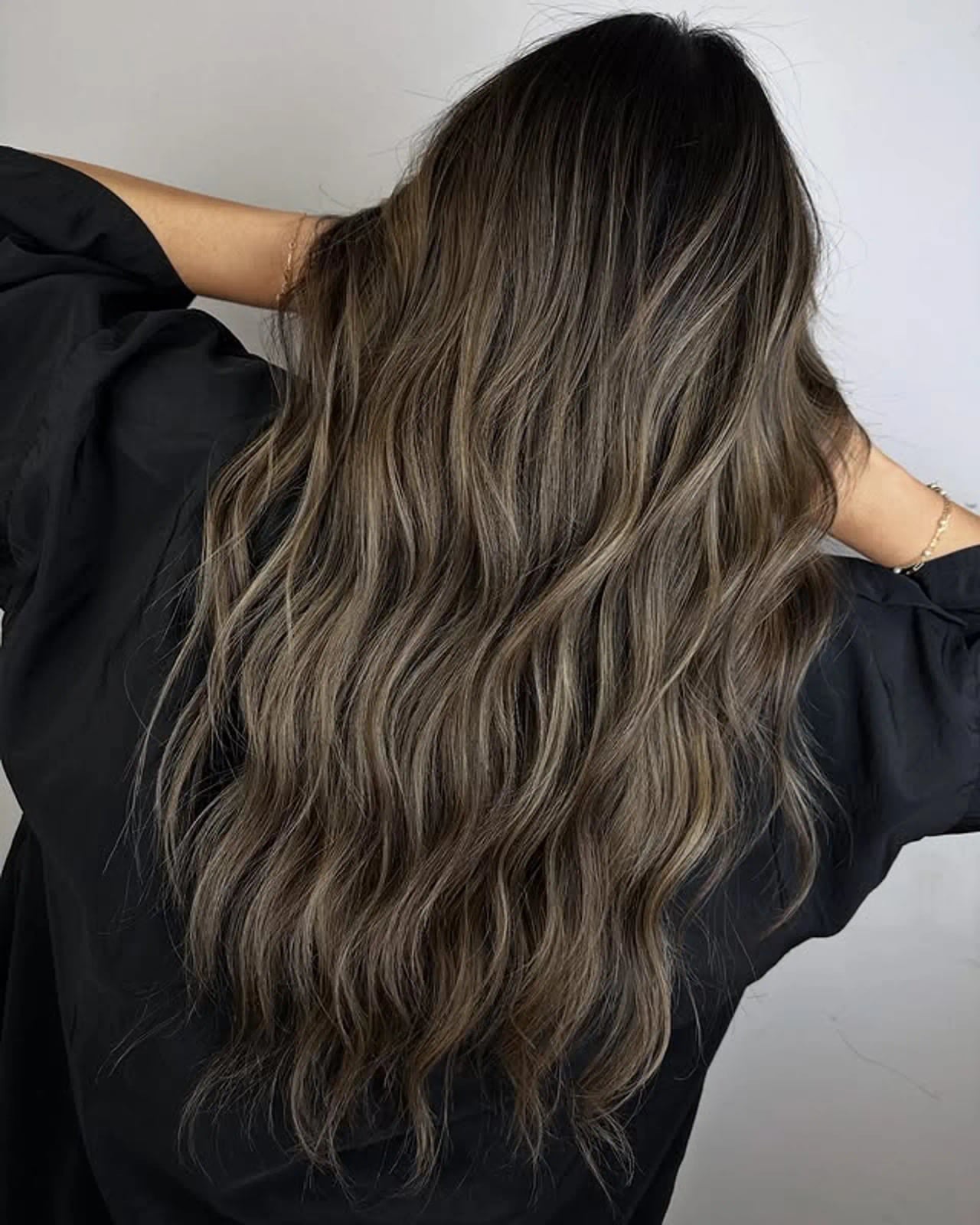
The back view tells the real story here. The dark brown base carries lighter bronde tones that never shout, just sit there as a quiet contrast. Air-dried waves on thick texture keep it from looking overworked. The blend is tight enough that you cannot spot where one tone ends and the next starts. Skip it if you want significant lightness or a high-contrast balayage. Ask your colorist for: dark brown base with subtle bronde balayage. A toning appointment every eight to ten weeks keeps the blend clean.
When you want brightness without harsh lines
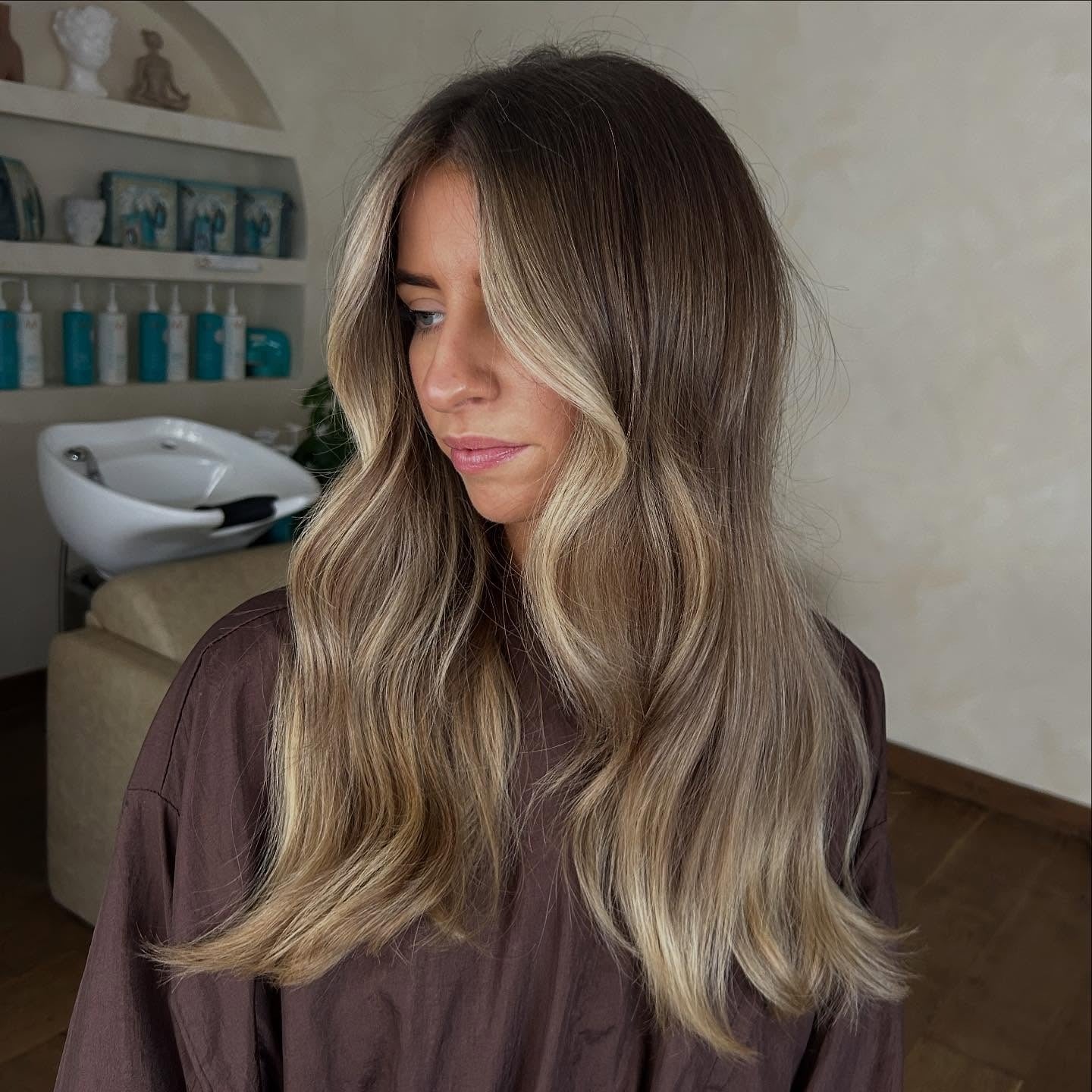
Brightness that does not come with a regrowth line attached. A rich brown base carries ash blonde highlights painted through the mids and ends, with the lightest pieces landing around the face. Loose waves on fine texture keep everything soft. The result is a lift that looks natural, not striped. Skip it if you prefer highlights concentrated at the ends or a blunt cut. A blow-dry with a round brush sets the wave pattern for the day.
Ash blonde balayage for dimension and blend
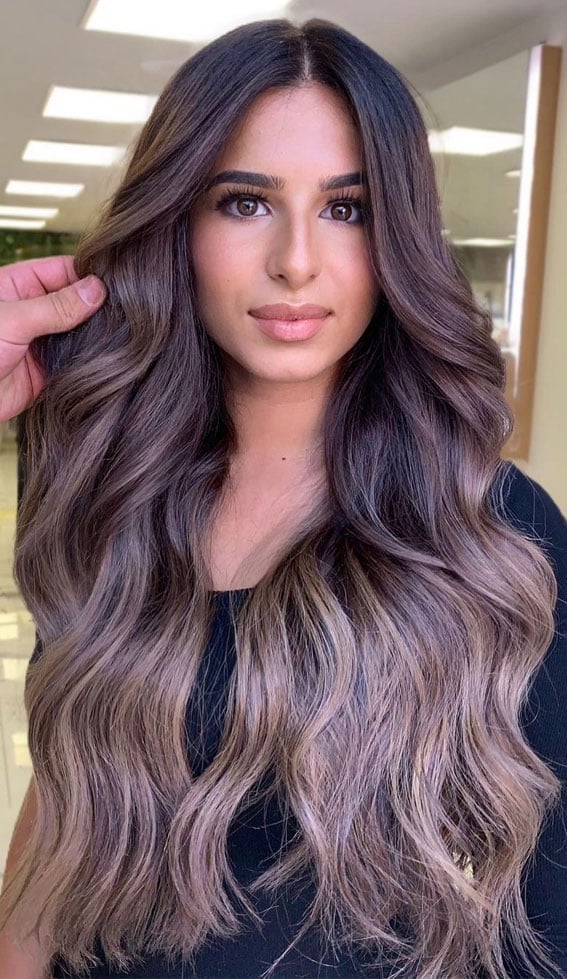
What makes this work is the distance between the dark brown base and the ash blonde ends. The balayage technique keeps that transition soft, so the lighter pieces look dimension, not a separate color. Waves and a middle part let the contrast show without forcing it. Thick texture holds the wave pattern well. Ask your colorist for: dark brown base to ash blonde balayage, smooth blend. A texturizing spray on damp hair gives the wave structure without crunch.
Soft waves with face-framing blonde pieces
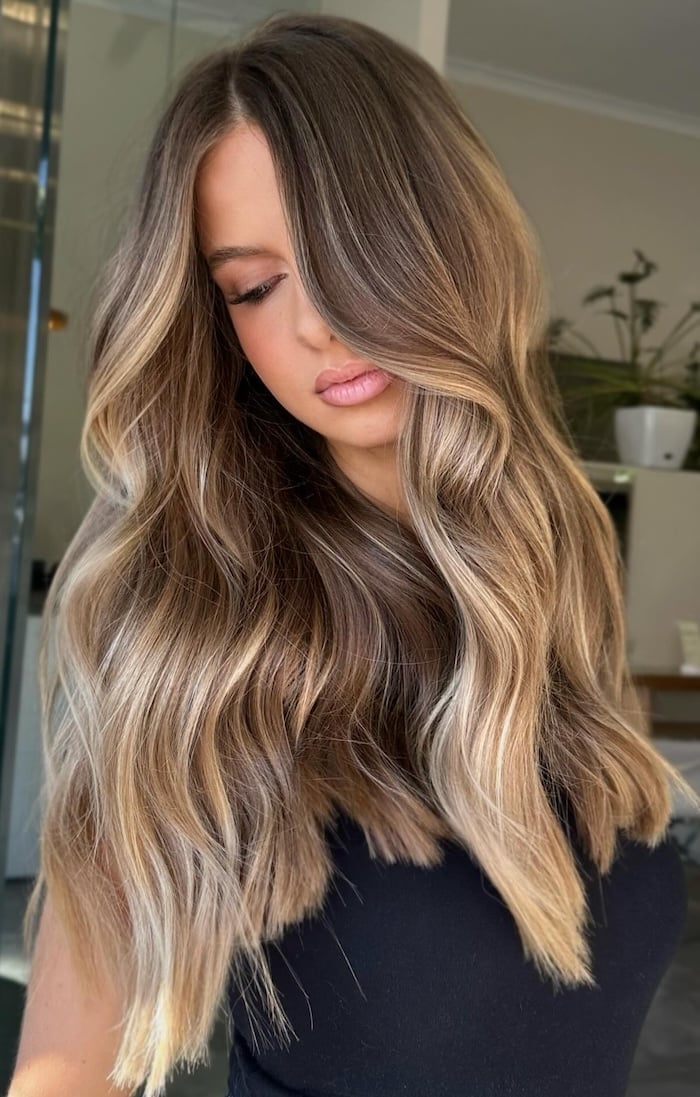
A centered parting and ash blonde highlights that land exactly where they should: around the face. The side-swept bangs get the lightest pieces, which keeps the color from feeling heavy. Wavy layers on thick texture create a relaxed blowout that does not need constant redoing. The face-framing placement means the color works even when the rest is pulled back. Mention to your colorist: bronde balayage with ash blonde highlights, face-framing. A round brush during drying sets the wave direction for the day.
Natural lighter effect with ash blonde balayage
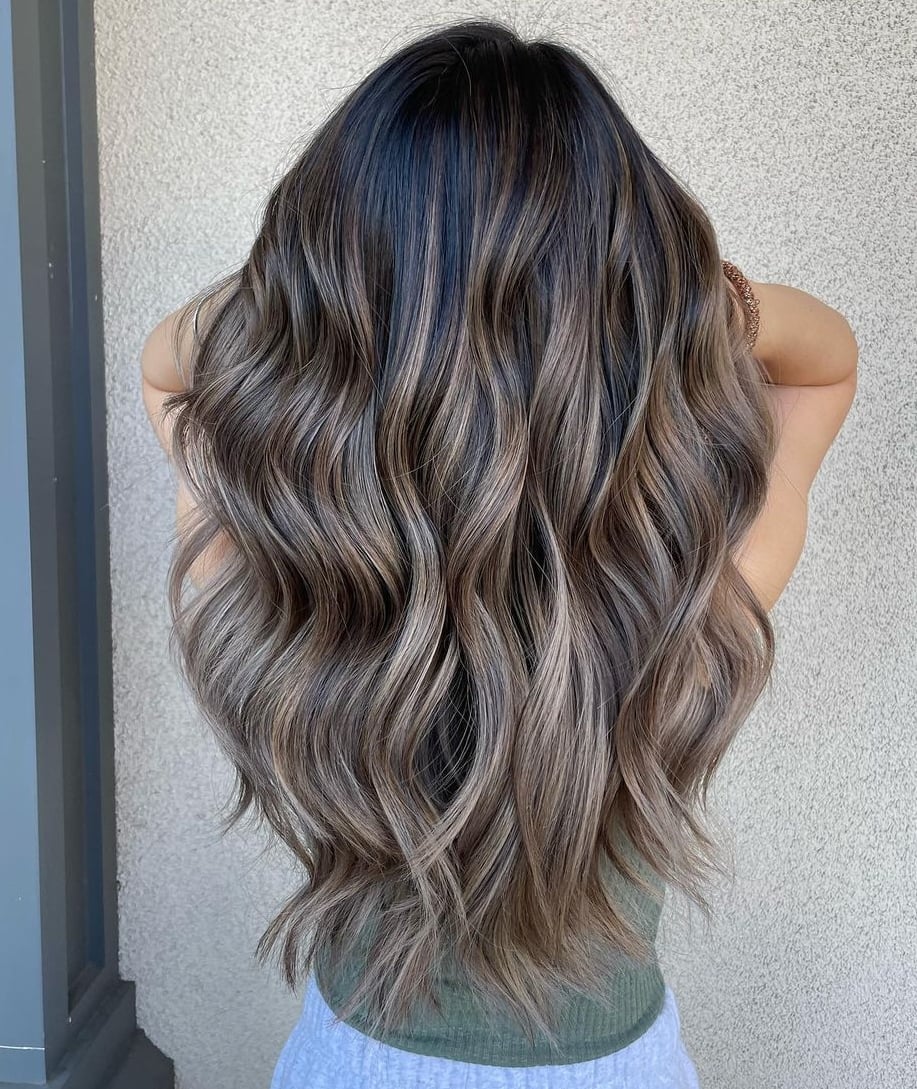
Ash blonde balayage on a dark brown base creates a lighter effect. The technique paints the highlights freehand, so the transition stays soft from root to end. Wavy texture catches the cooler tones and scatters them, making the blend look natural. Thick hair holds that wave pattern longer, which means the dimension keeps working into day two. Skip it if warmer blonde tones are your default; the ash register here leans neutral to cool, and fighting the undertone with warm styling products gets old fast. Tell your colorist: dark brown base to ash blonde balayage, natural blend.
Lighter effect with ash blonde highlights and wavy blowout
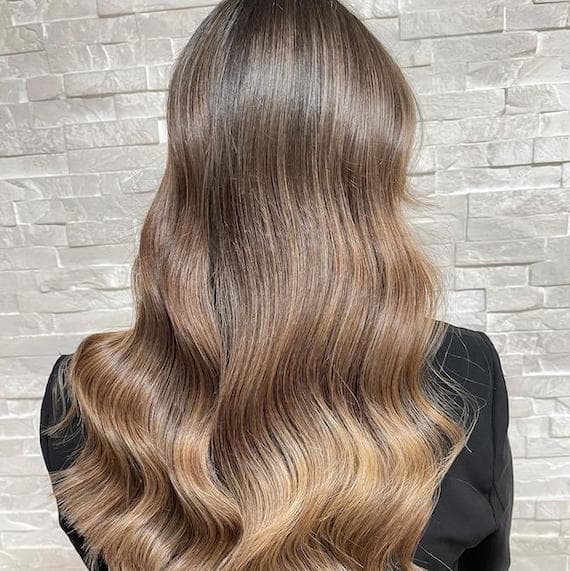
A wavy blowout built on a bronde balayage with ash blonde highlights depends on one thing: the smooth transition from darker roots to lighter ends. The blowout technique, round brush, tension, cool shot, sets the wave pattern so the highlights land on the curve, not the flat. Thick, wavy texture gives the stylist something to work with; fine hair would need a volumizer to hold the shape past noon. The ash tones keep the lighter effect from tipping into brass territory. Mention to your colorist: bronde balayage with subtle ash blonde highlights, smooth blend.
Dark roots and blonde highlights with soft waves
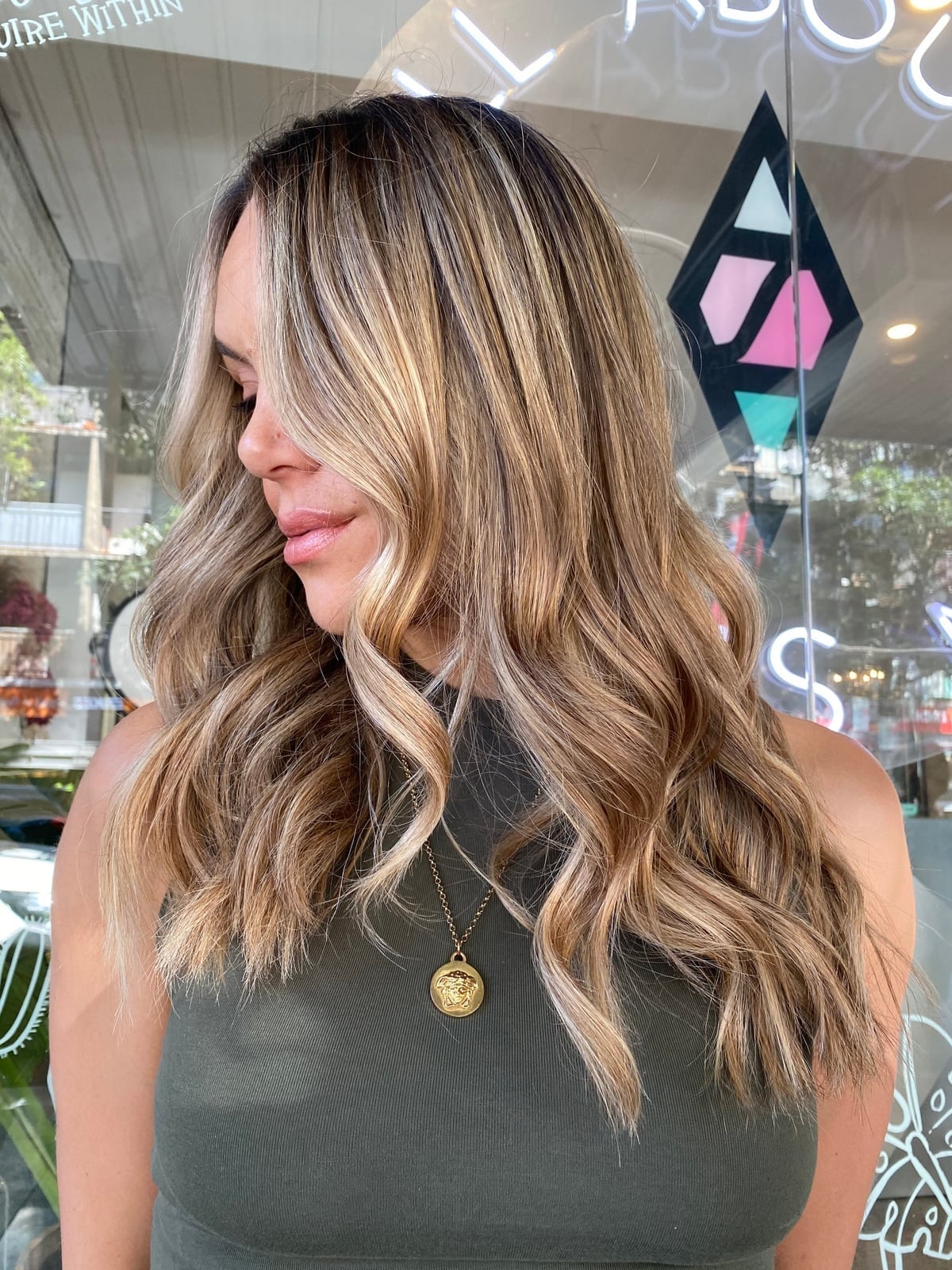
Dark roots with blonde highlights sound like a grow-out gamble, but the soft waves change the math. The waves scatter the light, so the root area looks like shadow, not neglect. Fine hair benefits here. The layers add volume without weight, and the darker root section means less frequent toning appointments. Skip it if a root melt is your preference; the contrast here is deliberate, not blended. A lightweight texturizing spray on the ends keeps the waves from collapsing by mid-afternoon. Request from your colorist: bronde balayage with dark roots and blonde highlights.
Subtle blonde highlights with soft layers
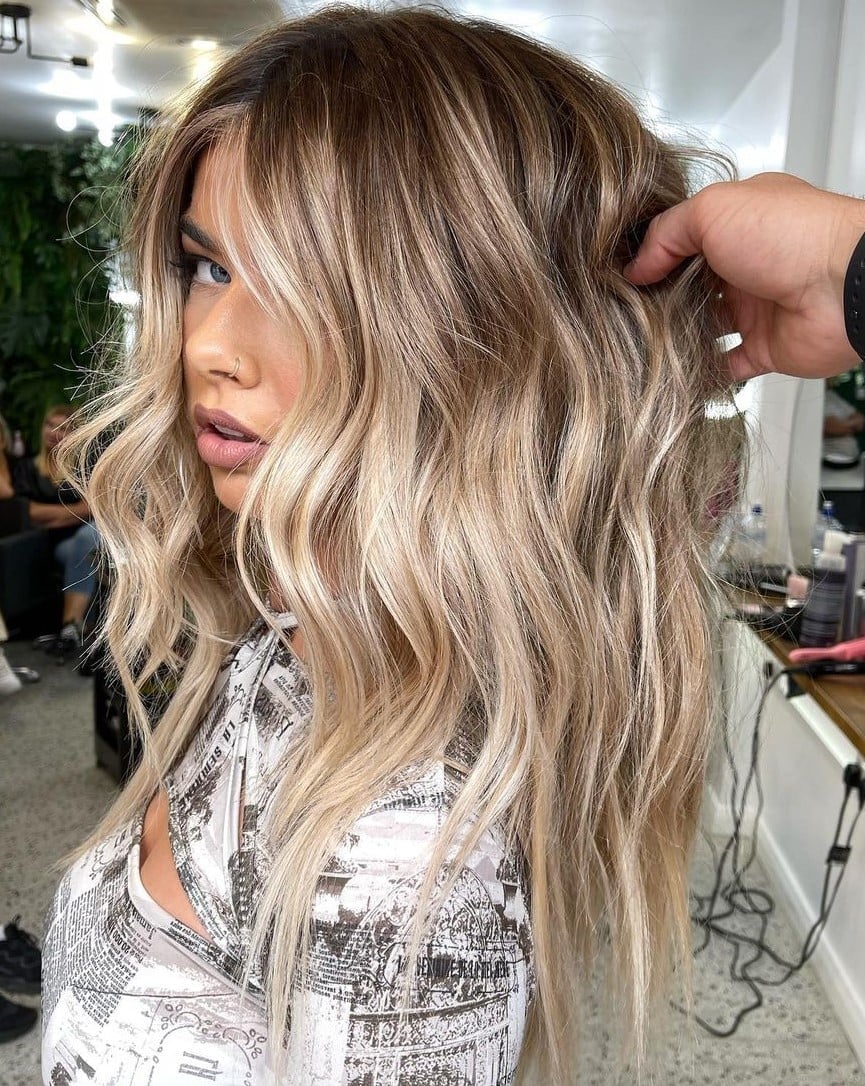
Subtle blonde highlights on a bronde base work because the soft layers create enough surface area for the lighter pieces to register without screaming for attention. The side parting shifts the weight, so the highlights fall asymmetrically, more visible on one side, a whisper on the other. Medium density hair is the sweet spot here; too thick and the layers disappear, too thin and the highlights look stripes. The blend of brown and blonde tones keeps the overall effect grounded. Skip it if a dramatic color contrast is what you are after; this is a low-shout design. Mention to your colorist: bronde balayage with subtle blonde highlights, soft layers.
Curtain bangs with face-framing ash blonde highlights
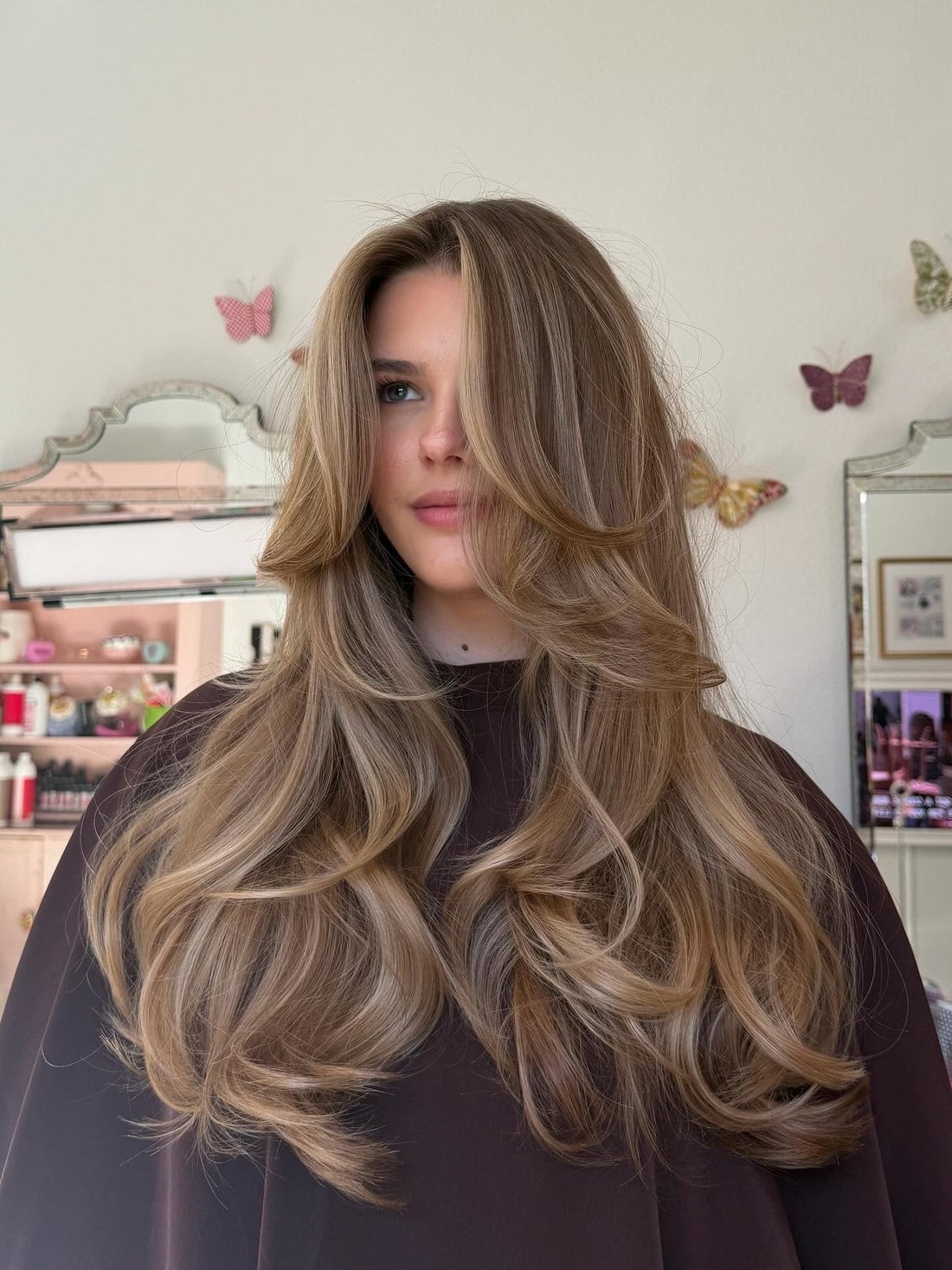
Curtain bangs demand a middle parting to land correctly, and the face-framing ash blonde highlights need to follow the same line. The rule: the lightest pieces should sit where the bangs break, at the cheekbone and jaw, so the color and the cut work the same geometry. Thick, wavy texture helps the curtain bangs fall open rather than stick flat. The ash tone keeps the face-framing pieces from pulling too warm against the bronde base. Mention to your colorist: bronde balayage with ash blonde highlights, curtain bangs, face-framing layers.
Smooth bronde transition with soft wavy layers
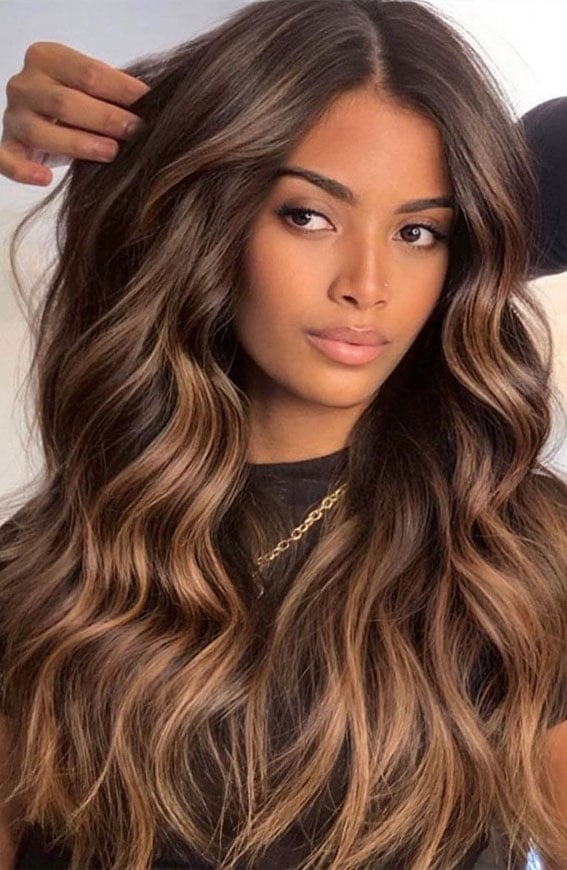
Dark brown at the root, caramel-toned strands taking over by the mid-lengths. That smooth bronde transition relies on a middle part and soft wavy layers that catch every shift in tone. Thick, wavy hair holds this shape best. The weight of the texture keeps the waves from falling flat by midday. This is a lived-in look that needs its layers. To recreate it, look for a texturizing spray. Apply to damp waves, then air-dry or diffuse. Trim every eight to ten weeks to keep the layers from turning shapeless.
Warm copper tones blended into a darker base
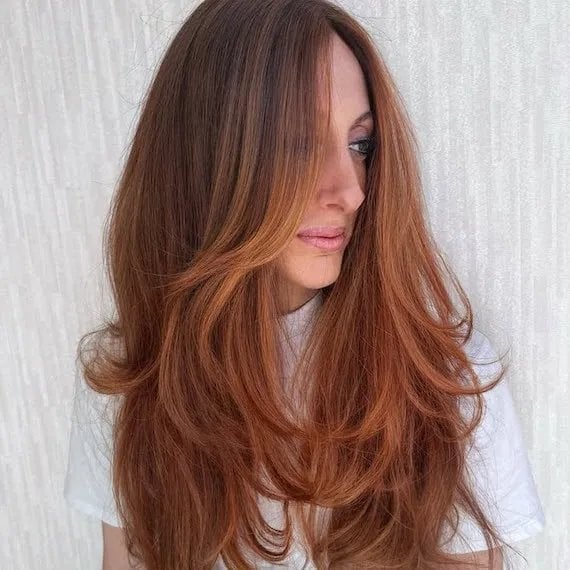
Warm copper tones sit on a darker base, with the lighter strands concentrated around the face and ends. The balayage technique paints the copper onto thick, wavy hair so the warmth looks woven in, not painted on. This shade leans rich and deliberately warm. A color-depositing conditioner every other wash keeps the copper from fading brassy. The waves are the point: they show the transition from root to highlight.
Lighter effect with blonde tones towards the ends
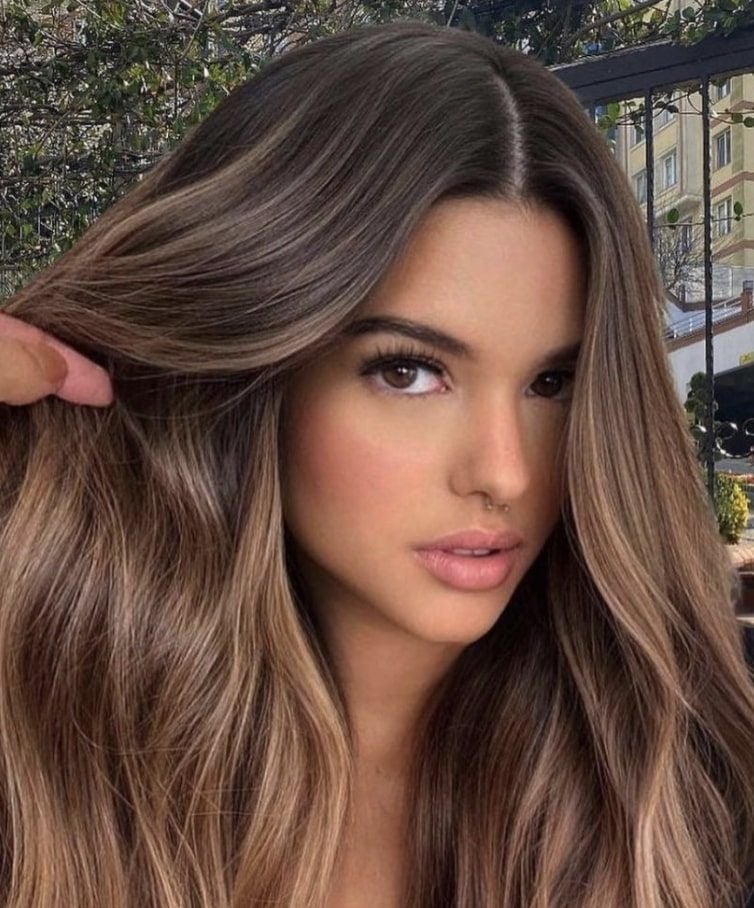
Close to a full head of highlights but not quite. This version keeps the dark brown base intact and lets the blonde tones concentrate at the ends, which means the root grow-out is gentler than a standard highlight. Thick, wavy hair carries the lighter effect naturally, the waves break up the blonde so it looks soft, not stripey. Toning every six to eight weeks keeps the ends from pulling too yellow. A texturizing spray on damp hair, then a quick diffuse.
Face-framing layers and curtain bangs with waves
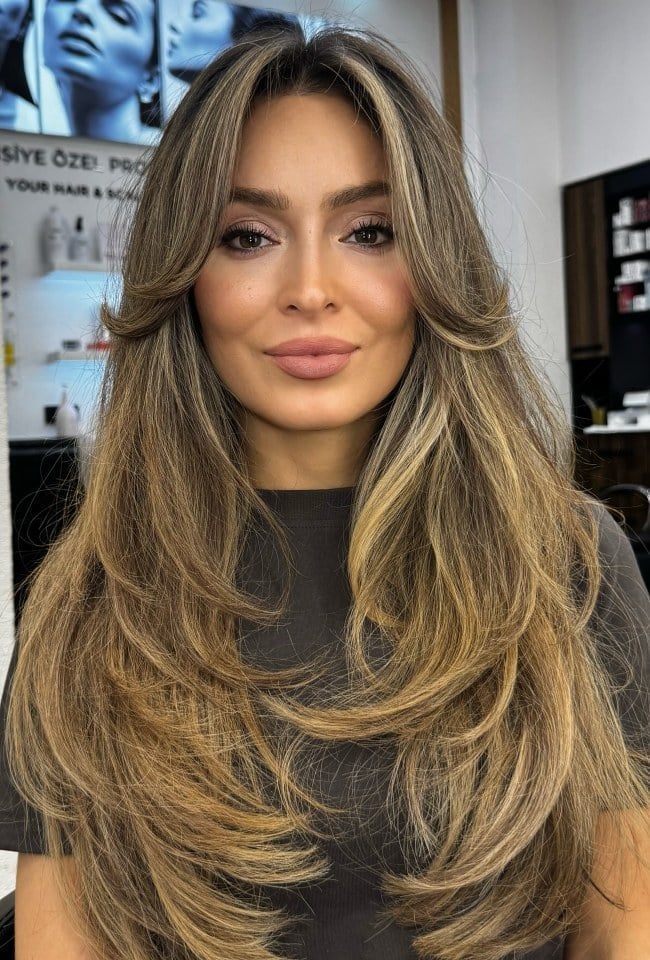
Curtain bangs and face-framing layers do the work here. The bronde balayage carries subtle blonde highlights throughout, but the cut is what gives the color its shape. Thick, wavy hair and a middle part let the bangs fall forward. The curtain bangs are the whole point. Blow-dry the bangs forward with a round brush, then let the rest air-dry.
Blunt bob with dark brown base and blonde balayage
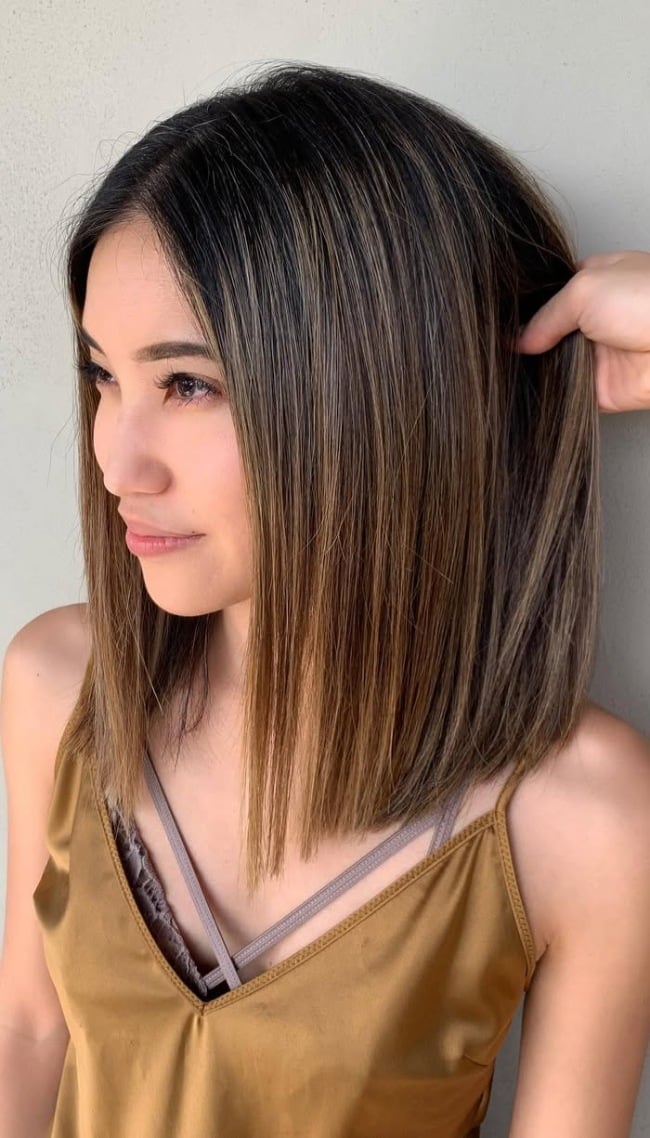
Mention to your colorist: blunt bob with dark brown base and blonde balayage. The straight, fine texture here is key. A blunt bob on thicker hair can look heavy, but on fine hair it reads clean and precise. The middle part and smooth finish let the balayage speak without distraction. Pass when you prefer layered cuts or wavy textures; this is a straight-line commitment. No waves, no texture spray, just the cut and the color.
Rich brown base with lighter blonde
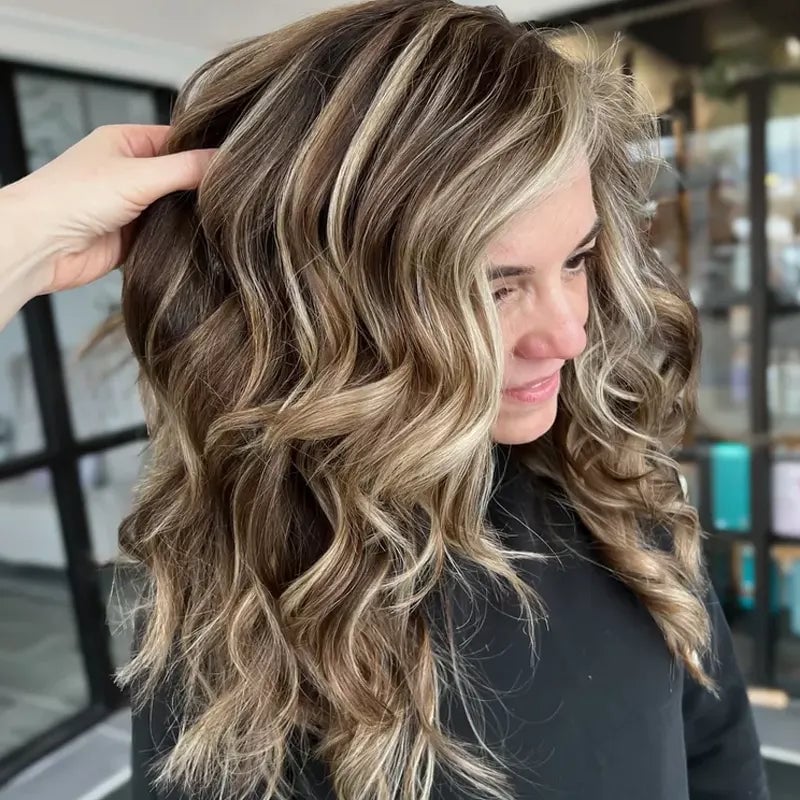
Compared to a full balayage, this version keeps the base rich brown and places the lightness where it counts. Face-framing blonde pieces draw attention first, while the rest stays darker. Wavy, thick texture holds the blowout shape through a second day. This one wants warmth and movement. Tell your colorist: rich brown base with lighter blonde balayage, face-framing pieces.
Full and dimensional look with bronde balayage
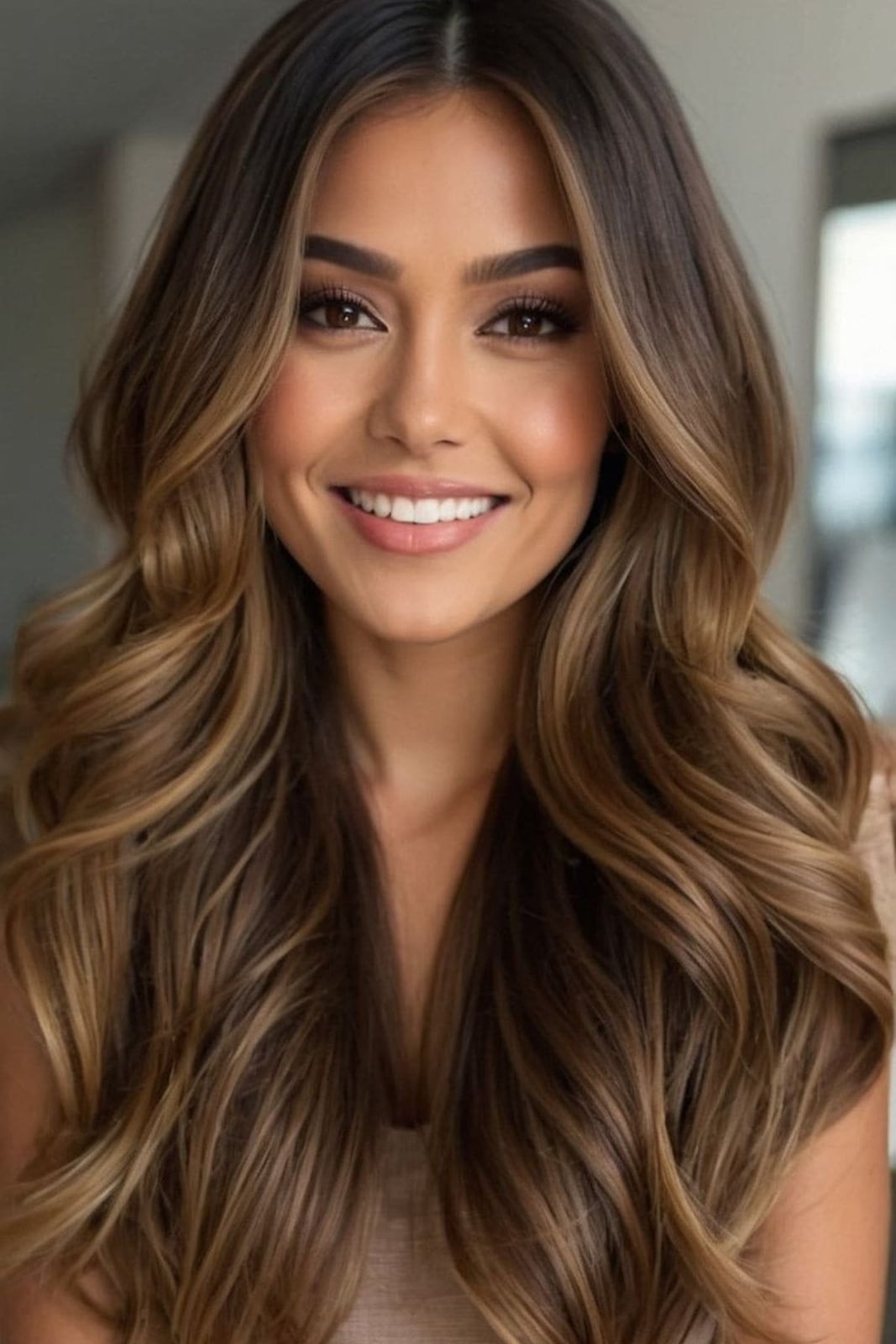
A rule of thumb: the more subtle the layers, the more the color does the work. Here, a dark brown base transitions into lighter bronde tones through a balayage technique. Soft waves add fullness without teasing. The middle parting keeps the weight centered. Thick hair benefits from the subtle layers to avoid a heavy feel. A texturizing spray on dry hair refreshes the waves between washes.
Ash blonde balayage on a rich bronde base
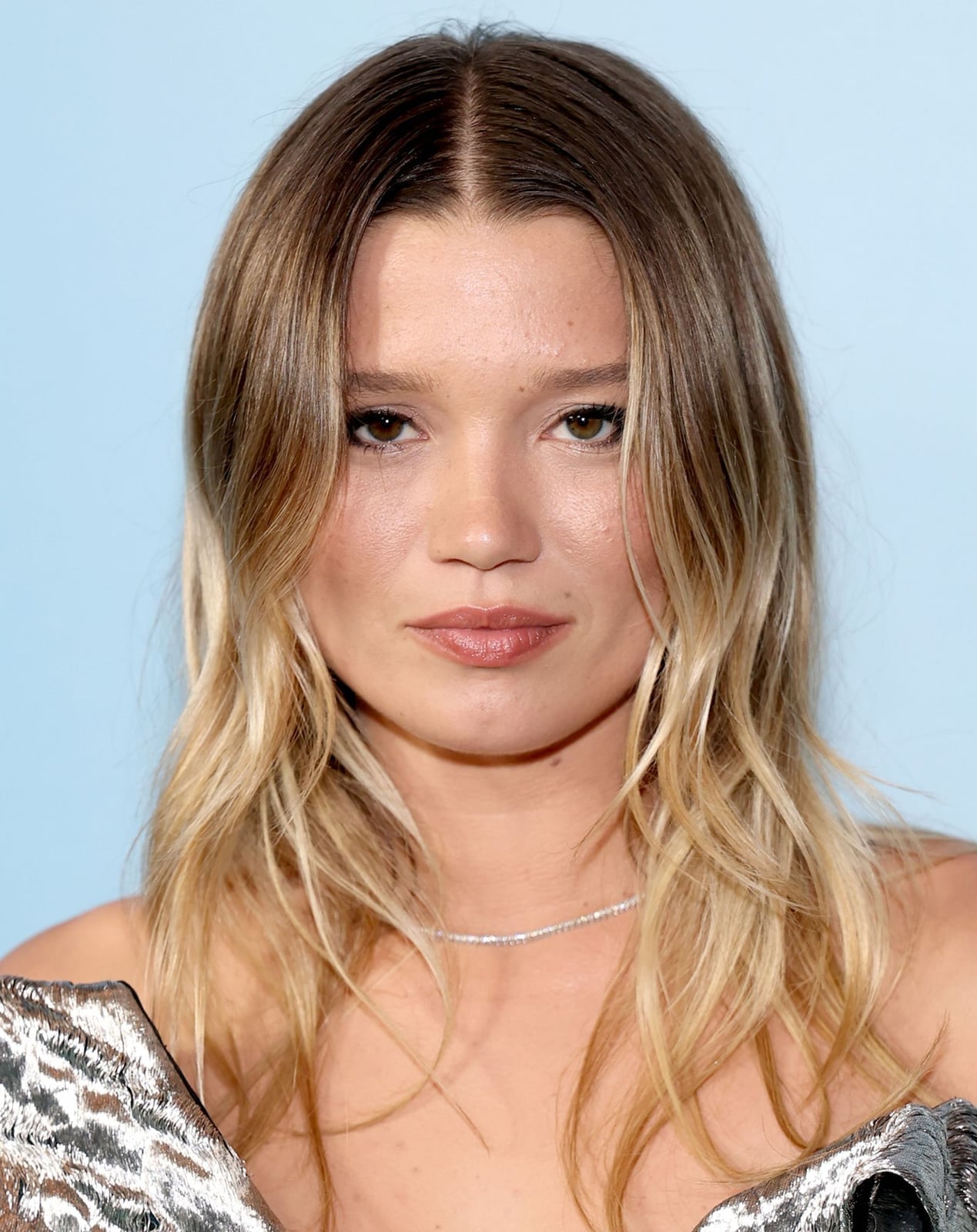
This one is a direct request, not a compromise. The base is a rich bronde, not a flat brown, so the ash blonde highlights create contrast. Soft layers and a middle parting keep the weight balanced. Fine, wavy texture air-dries into a natural wave without product.
Tell your colorist: rich bronde base with ash blonde balayage, soft layers. The ash tone needs a cooler toner at the bowl, mention that. It suits those who prefer warmer blonde tones or a very neat blowout every day.
Ash blonde highlights with curtain bangs and layers, close-up take
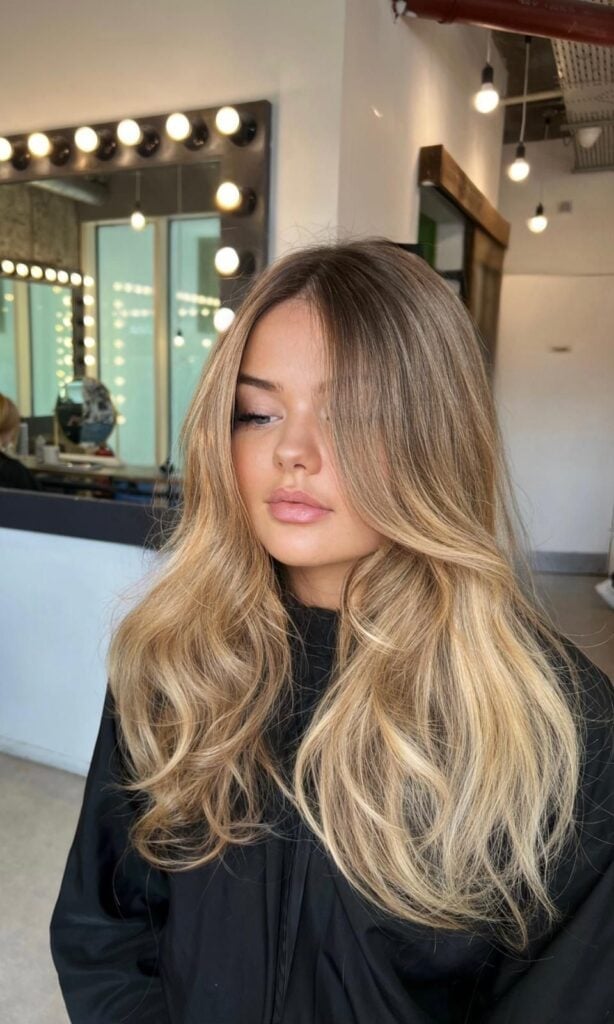
Curtain bangs change the geometry of a balayage. Here, the warm brown base meets ash blonde highlights that feather around the face. The technique is subtle balayage, no harsh lines, just a soft lighter effect. Thick, wavy hair takes the layers well, reducing bulk while keeping the length. Blow-dry the curtain bangs forward with a round brush for that soft sweep.
Face-framing blonde highlights on a dark brown base
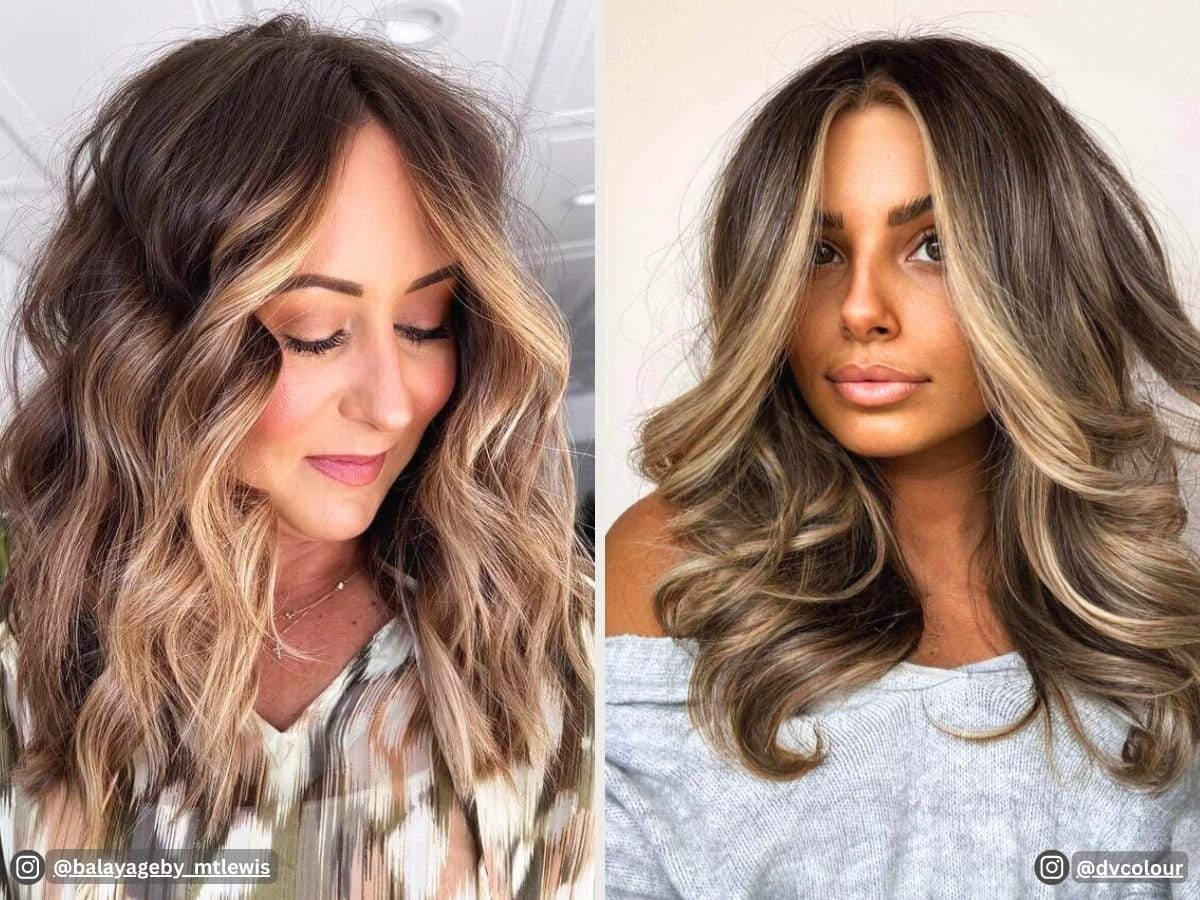
Against a full head of highlights, this version concentrates the blonde where it matters most. Face-framing pieces start brighter and soften into the dark brown base toward the back. The balayage technique keeps the transition smooth, with lighter blonde tones concentrated at the ends. Wavy, thick texture holds the shape well. A round brush and a blow-dryer are enough to recreate the movement at home.
Sandy blonde tones with a smooth bronde transition
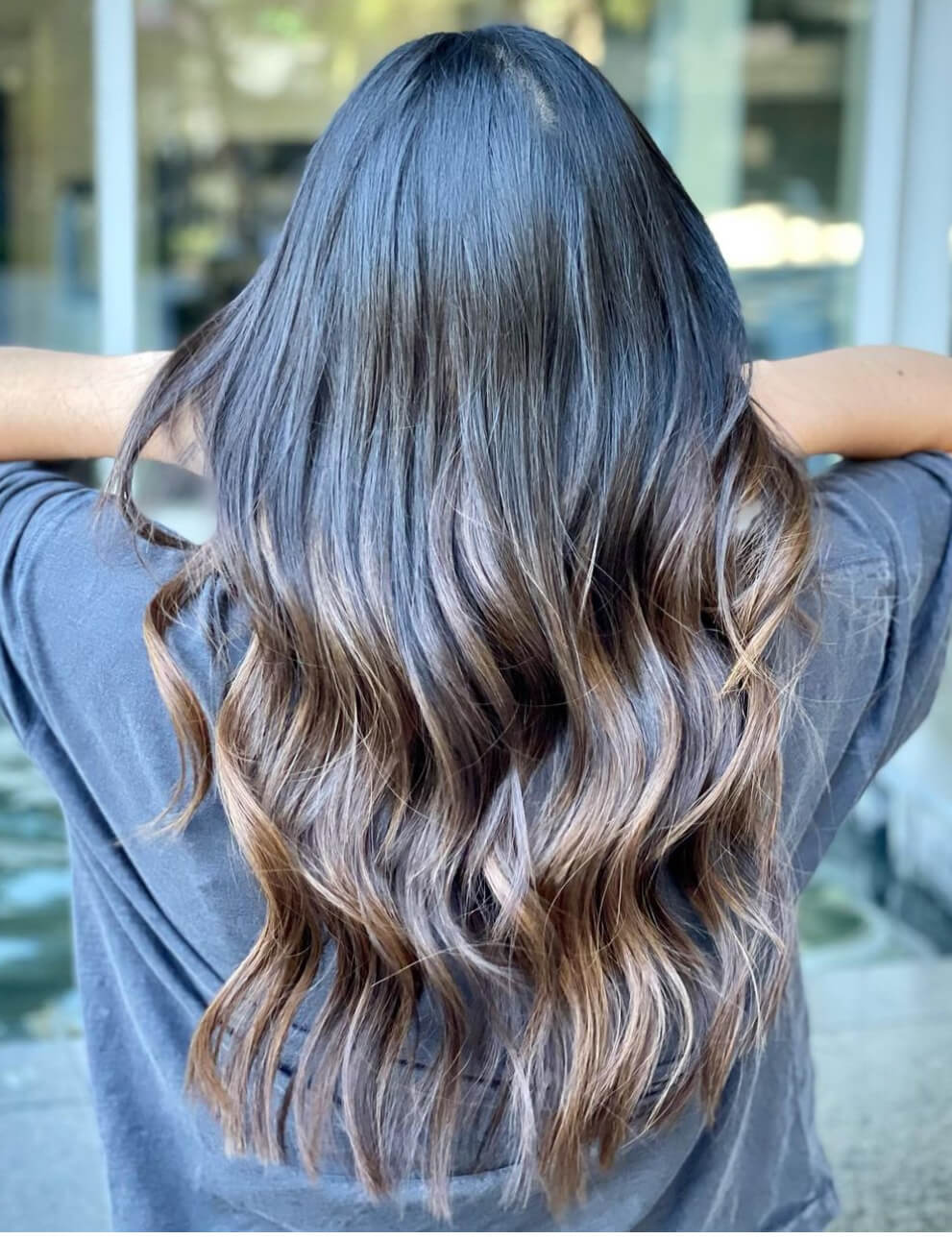
Dark brown at the root, sandy blonde at the ends. The transition is a smooth bronde balayage. Request from your colorist: dark brown base to sandy blonde balayage, smooth blend. The balayage technique places the lighter color where light naturally hits, so the grow-out line stays soft. Thick hair that holds a wave carries this best; the texture keeps the sandy tones from looking flat. This warmth has a beachy feel, not silver.
Two tones this distinct need a good blending hand. The stylist paints the sandy blonde in sections, feathering the color upward so no band appears. Waves help the transition look natural. Use a texturizing spray on damp hair, then scrunch dry to create the wave pattern that shows off the dimension.
Subtle lightness with blonde balayage on brown
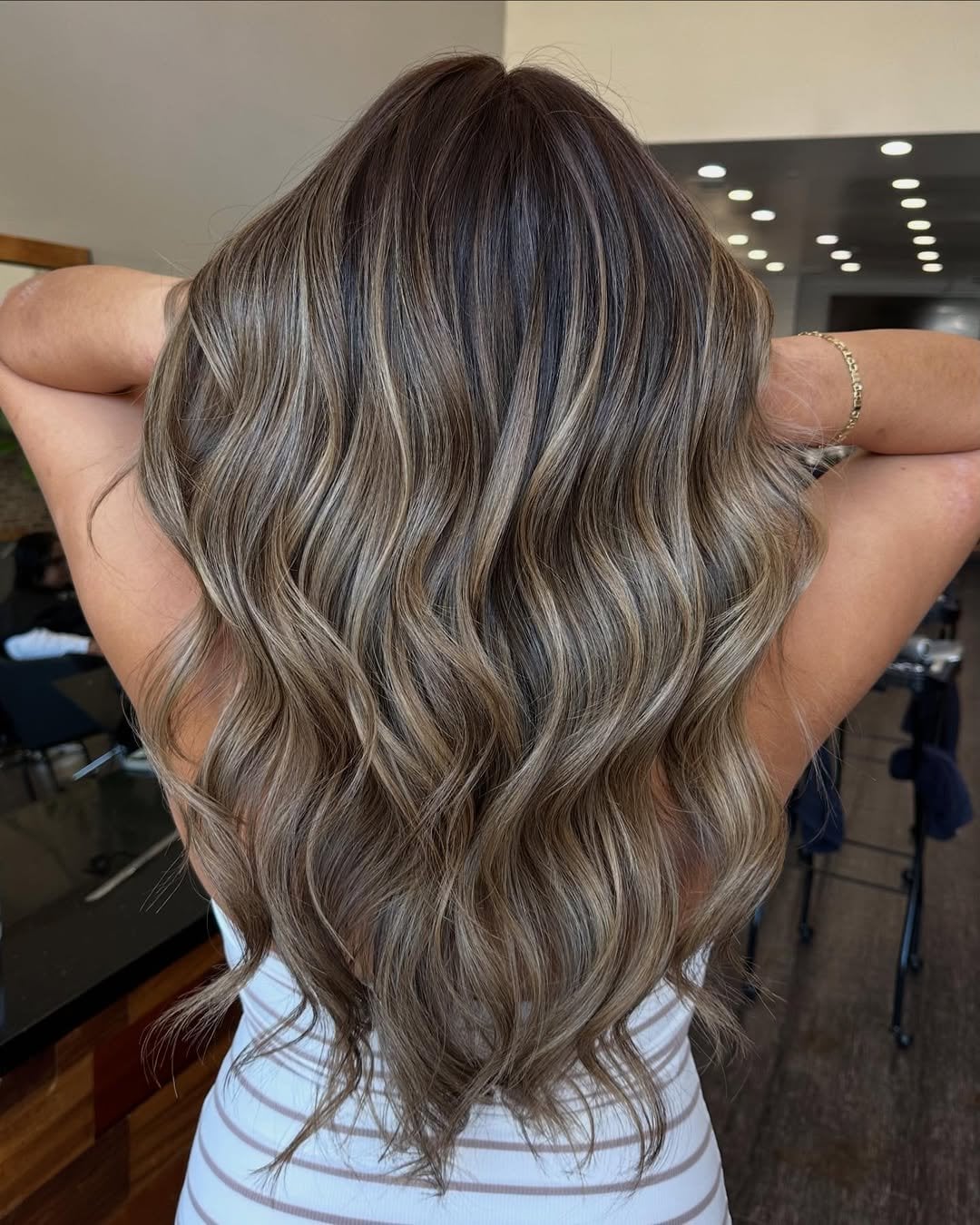
You want lightness without committing to full blonde. The dark brown base stays dominant; the blonde balayage highlights sit as soft streaks through the ends. Thick, wavy hair takes this well because the texture diffuses the lighter pieces. The layers help the blonde catch the eye. The chair time stays reasonable since the color is sparse, about two hours for application and processing.
Lighter highlights with waves and layers
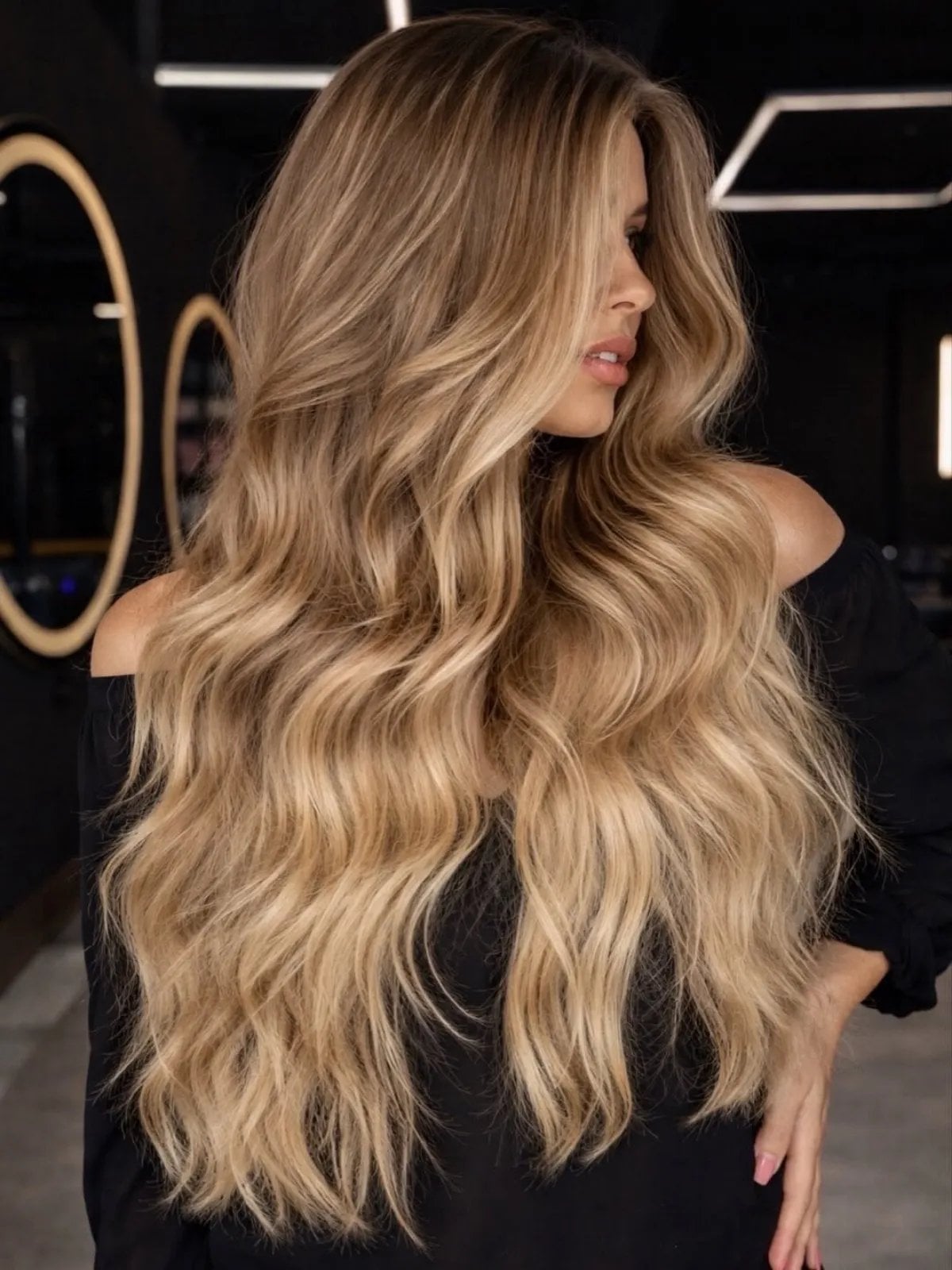
Compared to a solid all-over color, this approach keeps the base brown and adds lighter blonde highlights for that lighter effect. Soft layers throughout the cut give the waves room to move. A middle part frames the face evenly, with the highlights concentrated where the sun would hit. Thick hair that can hold a wave is ideal here. The layers reduce bulk and let the lighter pieces show through. A blow-dry with a round brush on medium heat builds the wave shape; the layers keep it from falling flat by midday.
Ash blonde balayage with dimension towards the ends
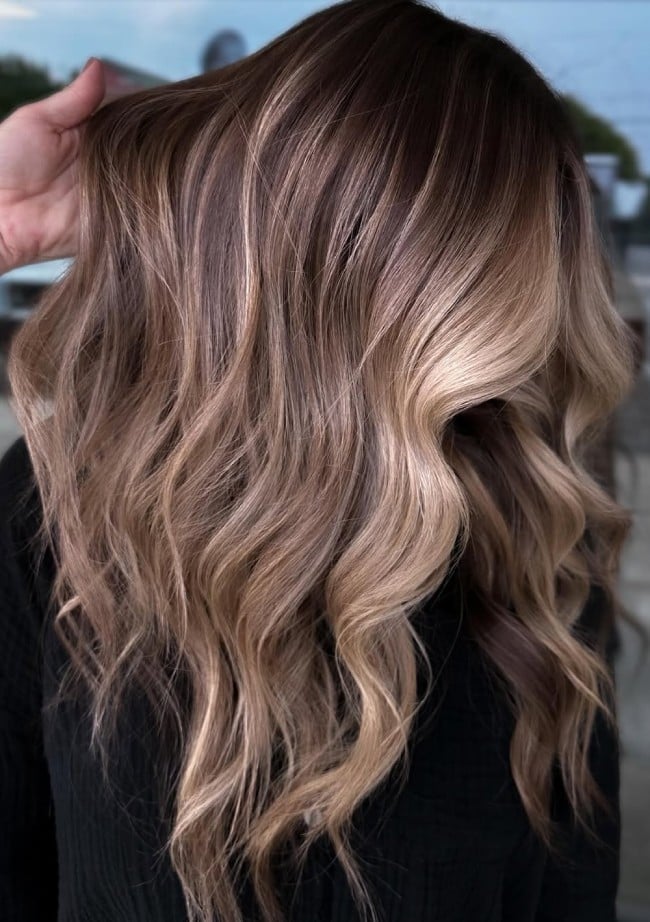
The dark brown base starts at the root and fades gradually into ash blonde at the ends. The balayage technique paints the lighter color freehand, so the transition has no harsh line. Thick, wavy hair shows the dimension best, the waves catch the ash tones and reflect them differently at each bend. Request from your colorist: dark brown base with ash blonde balayage concentrated at ends. The stylist works the lightener in a V-shape around the head, keeping the saturation heavier toward the tips. A wavy blowout finishes the look, the ash tones looking cool and smoky against the dark base.
This placement means the roots stay dark longer, so the grow-out is forgiving. The ash blonde needs a toner refresh every six to eight weeks to keep the cool tone from warming up. A purple shampoo once a week helps in between.
Ash blonde highlights with layers for movement
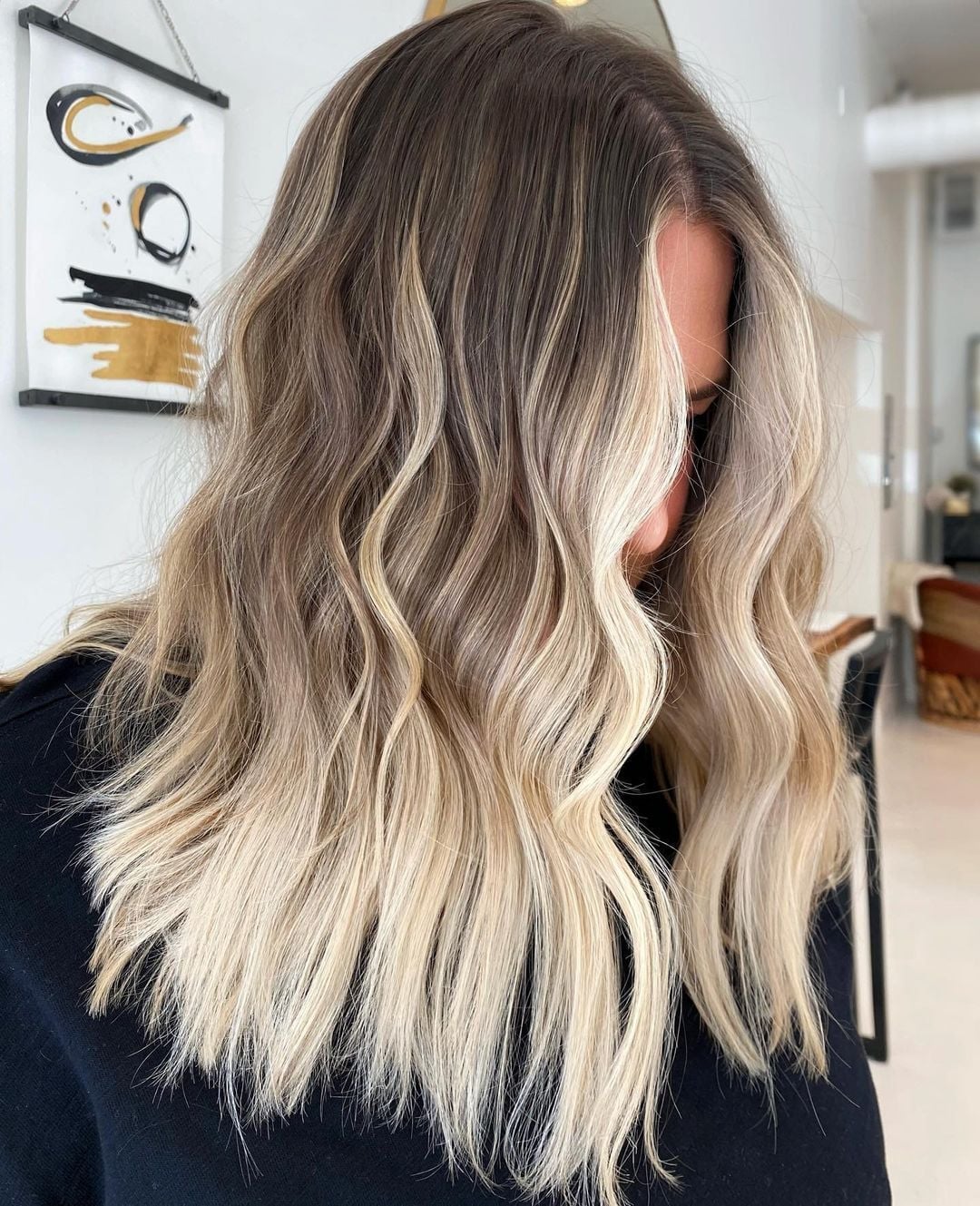
This is the version you can approximate at home with a good toner and the right cut. The natural brown base keeps the color low-maintenance; the ash blonde highlights add a cooler dimension. Layers throughout the cut create the movement. The lighter pieces sit on top of the darker ones and shift as you move. Fine hair benefits from this approach because the layers give volume without weight. A middle part keeps the look balanced. Air-drying with a wave cream encourages the natural texture, and a toner every six to eight weeks prevents brassiness.
Curtain bangs with warm-toned highlights
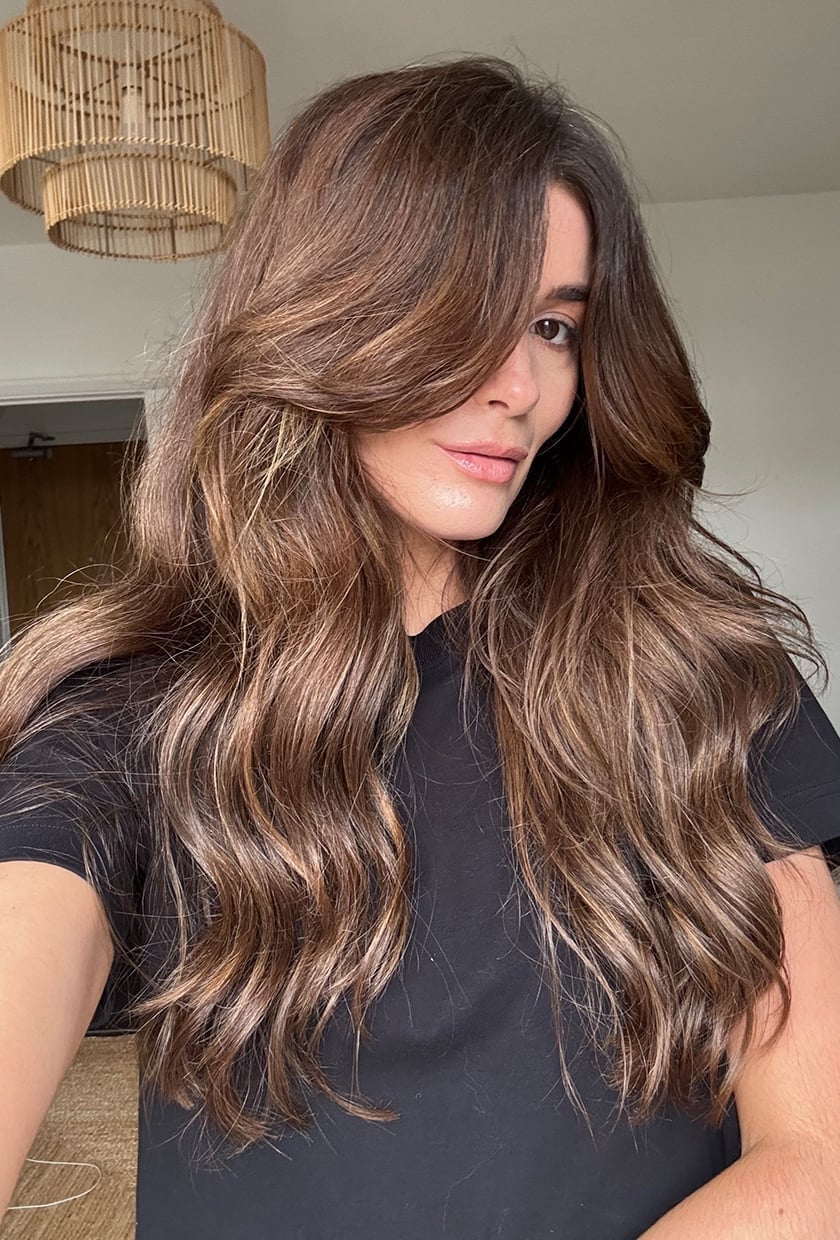
Curtain bangs need a stylist who understands weight distribution, not just a snip. Here, a rich brown base carries warm-toned highlights that stay subtle rather than stripey, and the soft waves give the bangs somewhere to land. Thick hair holds the shape best; fine hair may need a texture spray to keep the curtain from closing. Mention to your colorist: rich brown base with warm-toned balayage, curtain bangs. The warm tone lifts the face without turning brassy, as long as you use a purple shampoo every fourth wash. Blow-dry the curtain bangs forward with a round brush, then let the rest air-dry for that lived-in wave.
Face-framing blonde highlights on a rich brown base, close-up take
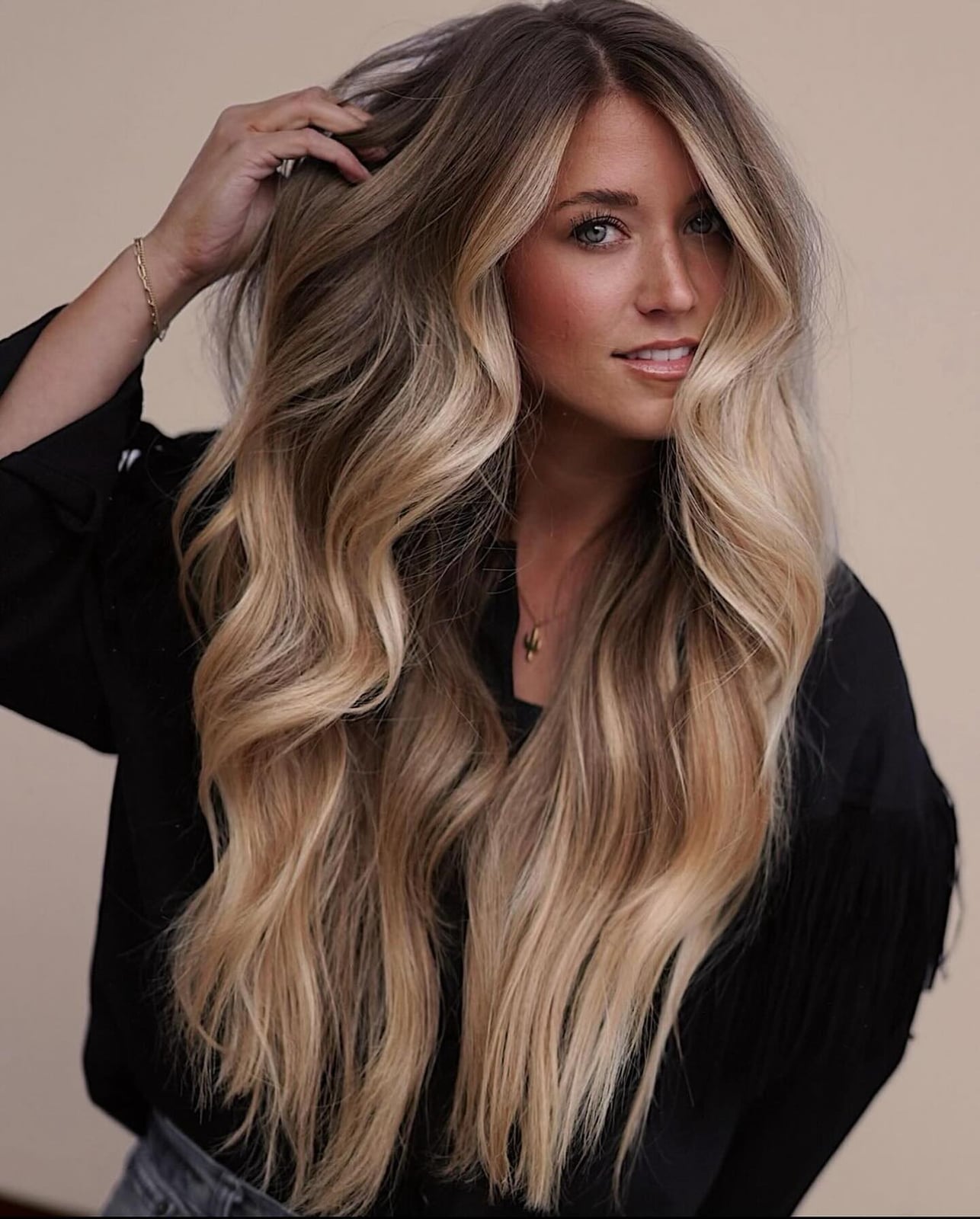
Face-framing highlights start a few inches from the root. This rich brown base keeps the depth, while the blonde pieces around the face add contrast. The waves add volume at the sides, which balances longer face shapes nicely. A single-process color needs no root touch-up, but this style requires regular maintenance.
The middle part here lets the highlights fall evenly on both sides, so you see the contrast from straight on. A round brush enhances the wave pattern, then let the ends cool before breaking the curl. Request from your colorist: bronde balayage with rich brown base and face-framing blonde highlights; they will know exactly where to place the lightest pieces.
Final Thoughts
Pick the look that matches your morning routine and your natural texture.
- Fine hair: keep the blonde concentrated at the ends for depth.
- Ten minutes in the morning: choose a smooth transition that grows out softly.
- Cool base that pulls brassy: add ash tones and a purple shampoo every two weeks.
- Thick, wavy hair: face-framing layers cut down drying time.
Find the bronde balayage that fits your lifestyle.
