

You are scrolling again. That grow-out line is visible at week five, and the fringe you pinned last month feels like a maybe. A set of highlights that lands somewhere between fresh and lived-in. That is the brief you keep rewriting. The right placement buys you two extra weeks between appointments and photographs well on a Tuesday.
34 examples, from low-contrast caramel to vertical ash. Fine hair, thick waves, bangs, no bangs. The spread covers the decision you actually need to make: how much lift, how close to the root, how fast it grows out. Which is why Dreamy Highlights Hair 2027 fill so many saved boards. It solves the gap between what you want and what you can maintain.
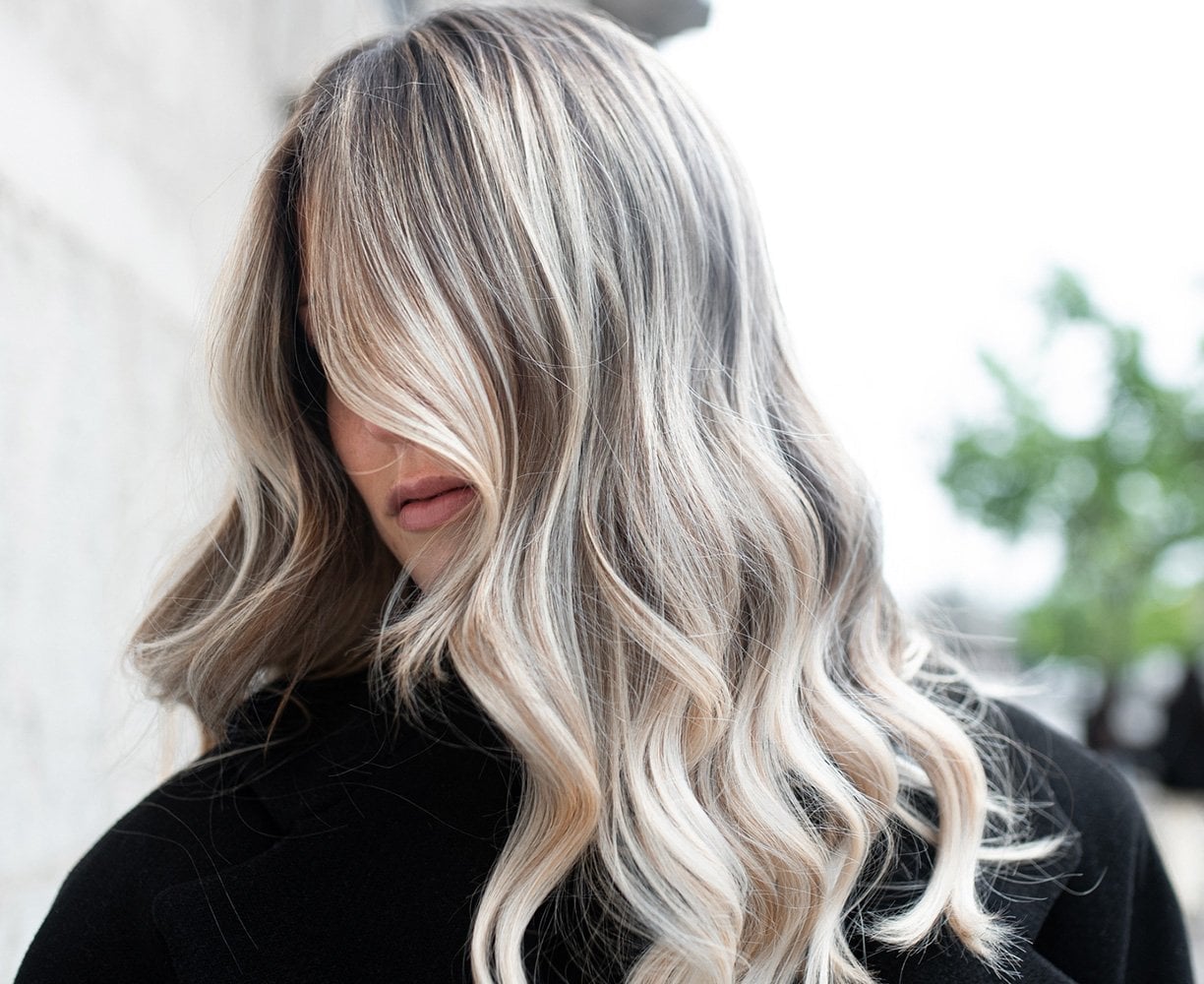
Ash blonde highlights on a dark blonde base with face-framing layers
Side-parted loose waves let ash blonde highlights look deliberate, not accidental. The dark blonde base keeps roots from screaming for attention at week four. A fine, wavy texture benefits from the contrast. Ask your colorist for: dark blonde base, ash blonde highlights, face-framing layers. Skip it if you prefer a uniform color or have very short hair. A trim every eight weeks keeps the layers from losing their shape. One short sentence lands the point: this is a grown-up blonde.
Balayage blonde highlights on long dark brown hair
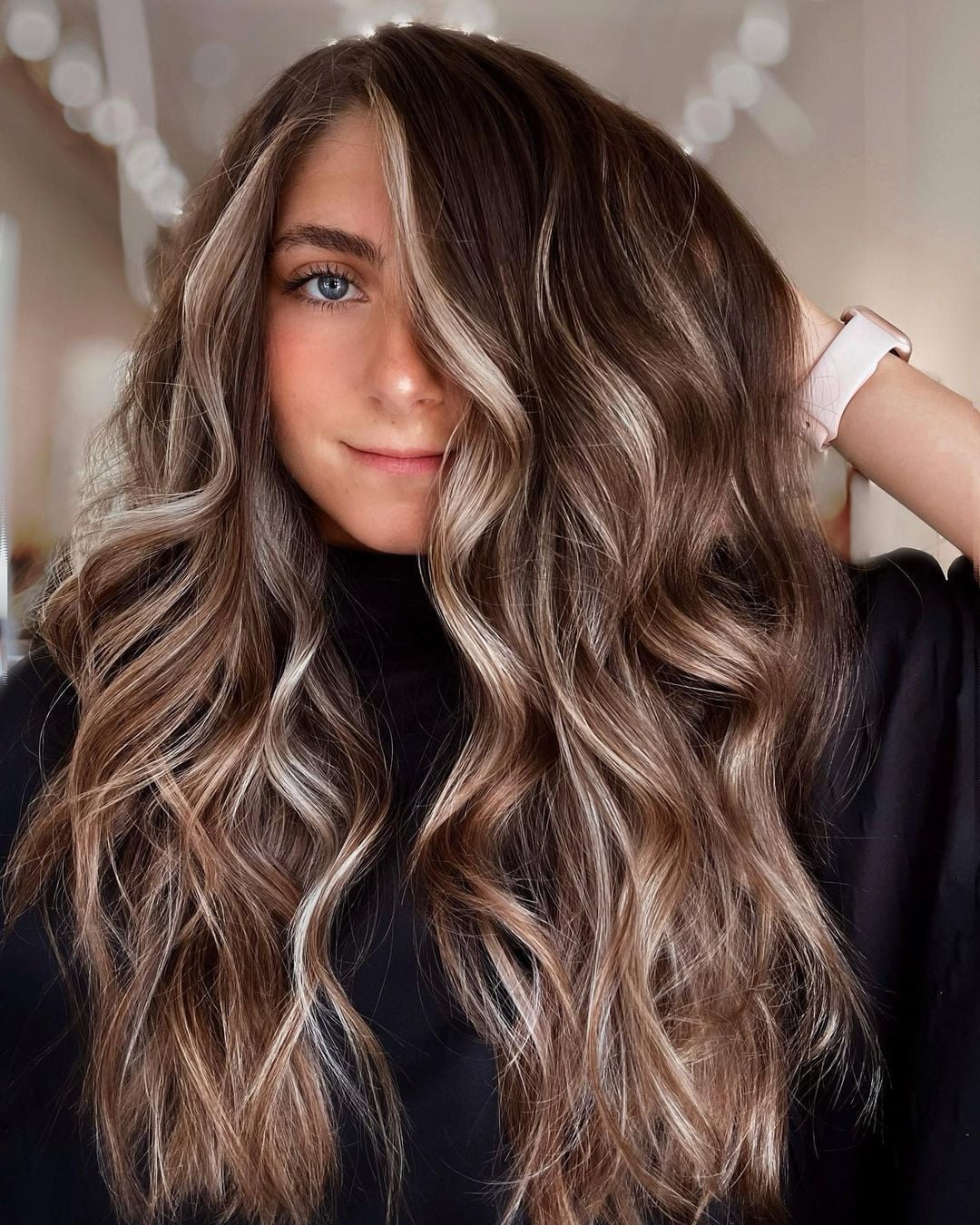
What exactly do you say to get that soft, face-framing lift without the stripe effect? Long, layered dark brown hair gets a balayage treatment that places blonde highlights where light naturally hits. The side part and loose waves help the blend look organic. Wavy, fine texture holds the color well. It works best if you want medium to high contrast. Balayage grows out softer than traditional foils, so you stretch the time between appointments.
The darker base creates contrast that makes the blonde pop without needing a full lift. The result is dimensional without being high-maintenance.
Contrasting blonde highlights on a dark blonde bob
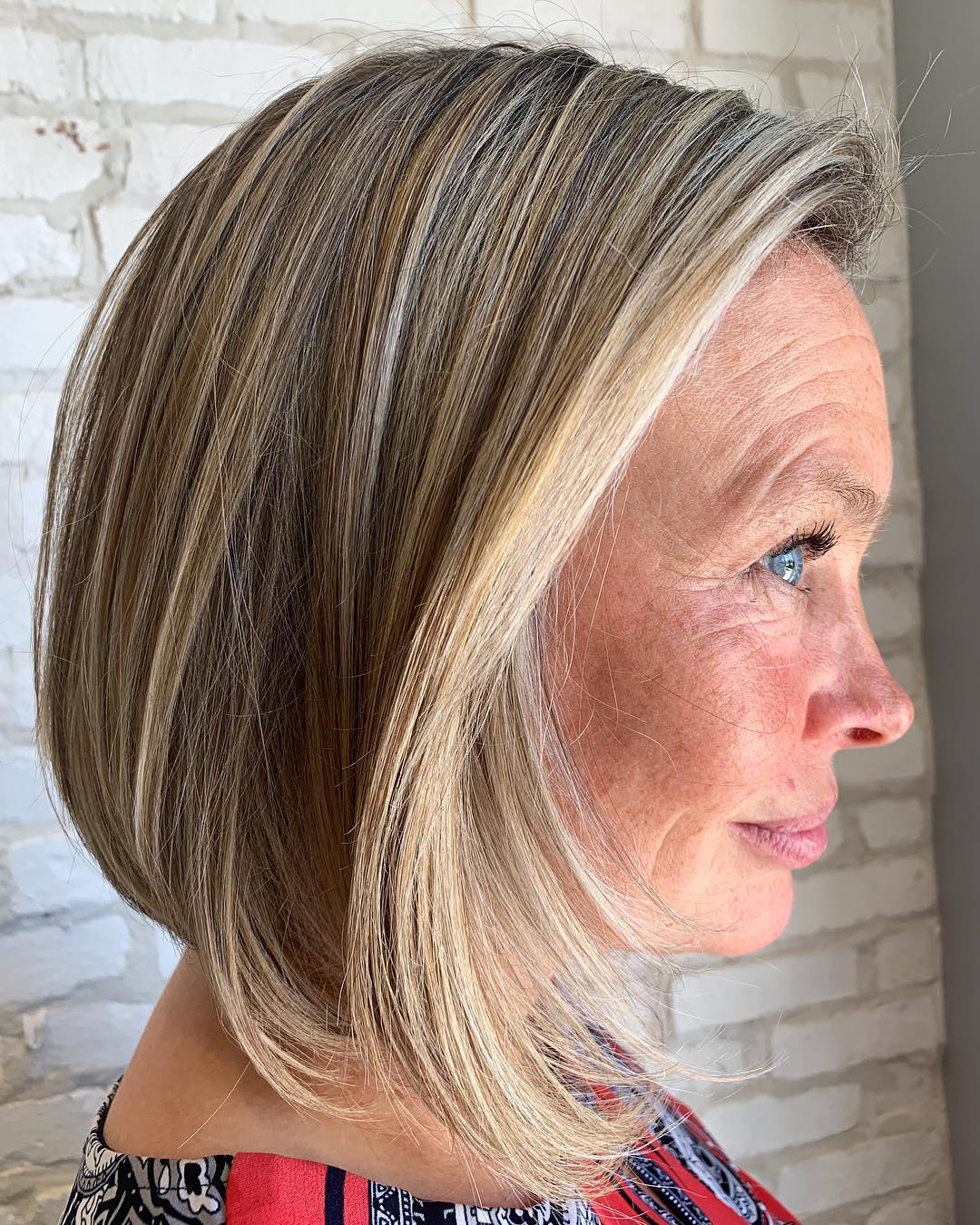
Contrasting blonde highlights on a dark blonde bob land closer to editorial than everyday. The side part and smooth blowout keep the fine, straight texture looking sharp. The catch: this works best for those who like a defined line. Ask your colorist for: dark blonde base, contrasting blonde highlights, blunt bob. Pass if you have very thick hair or prefer minimal styling. A bob this precise needs a trim every six weeks.
Subtle golden highlights on wavy thick hair
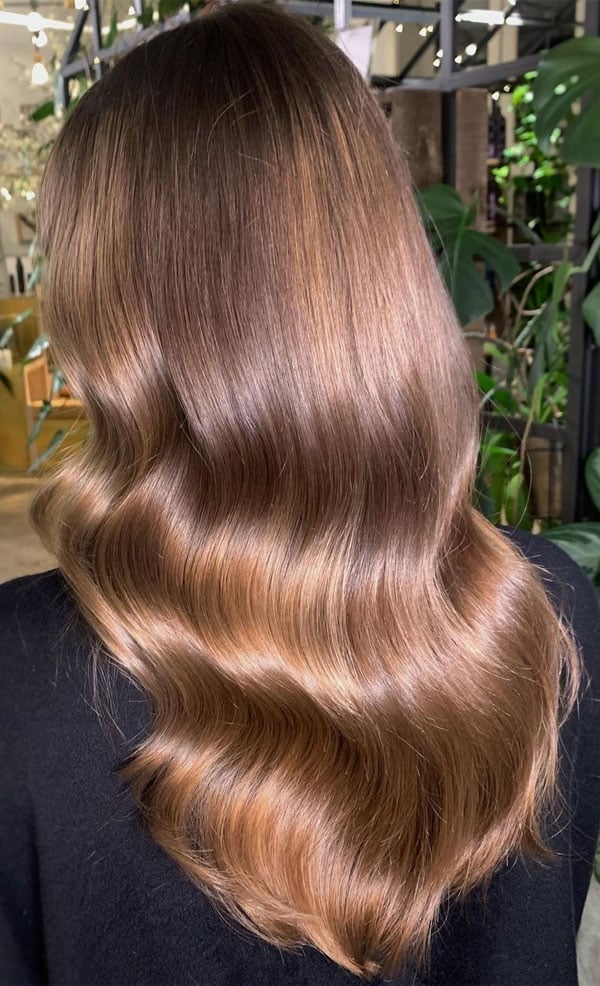
Warm brown hair with golden highlights catches light in a way that looks natural, not salon-applied. The wavy, thick texture allows the color to spread across the surface. Side parts and deep layers help distribute the tone evenly. Pass when you have very fine hair or prefer ash tones. Wavy hair benefits from air-drying or diffusing to enhance texture.
Honey blonde balayage on dark blonde wavy hair
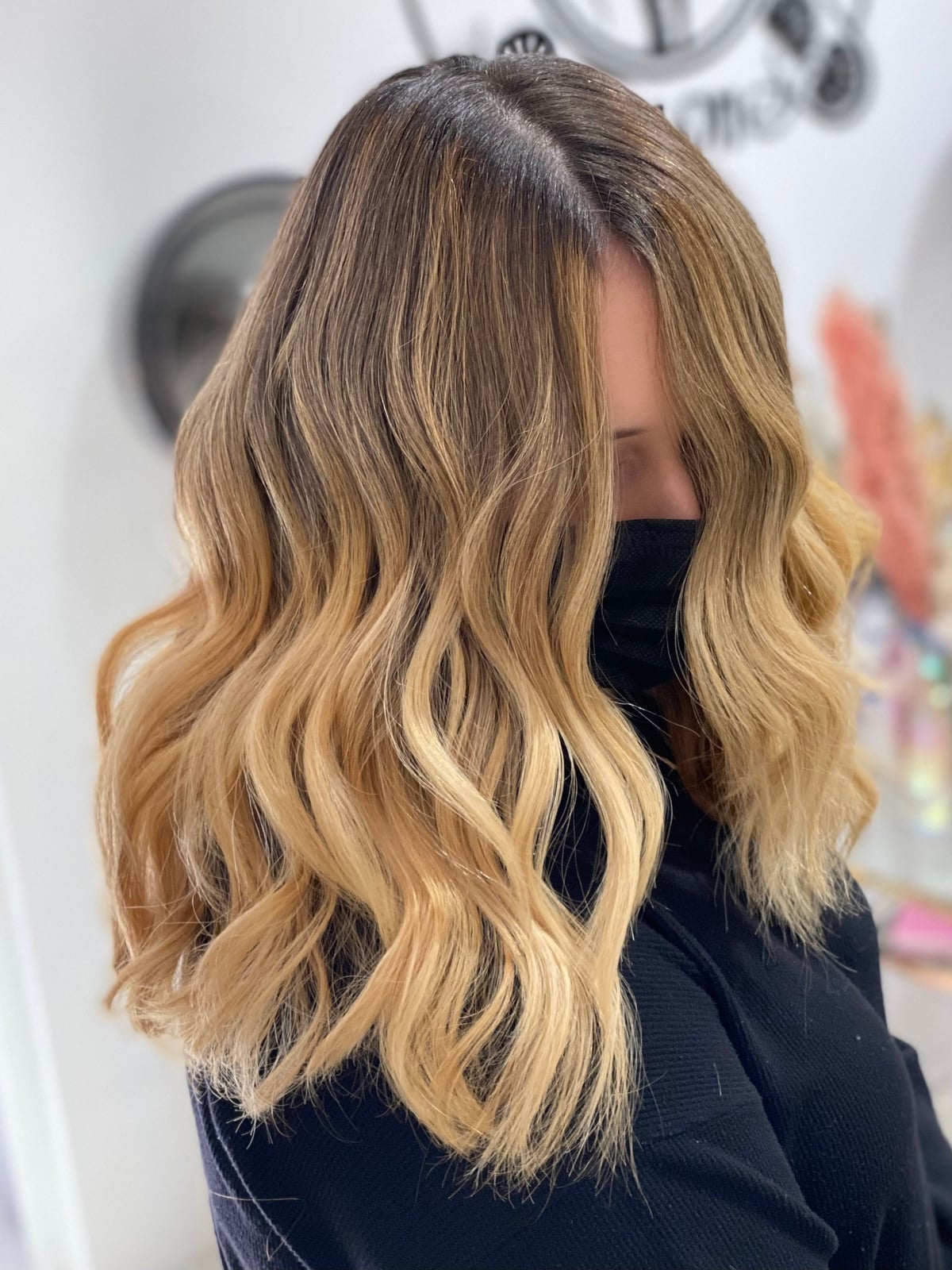
A middle part and soft wavy layers let the honey blonde balayage transition feel smooth rather than stripey. The dark blonde base anchors the lighter pieces, so the overall effect stays grounded. Fine, wavy texture helps the color move with each wave. Tell your colorist: dark blonde base, smooth honey blonde balayage, soft wavy layers. Not for anyone who prefers a uniform color or has very straight hair. Balayage grows out gracefully, often needing a refresh every twelve weeks.
Caramel highlights on thick wavy hair with face-framing pieces
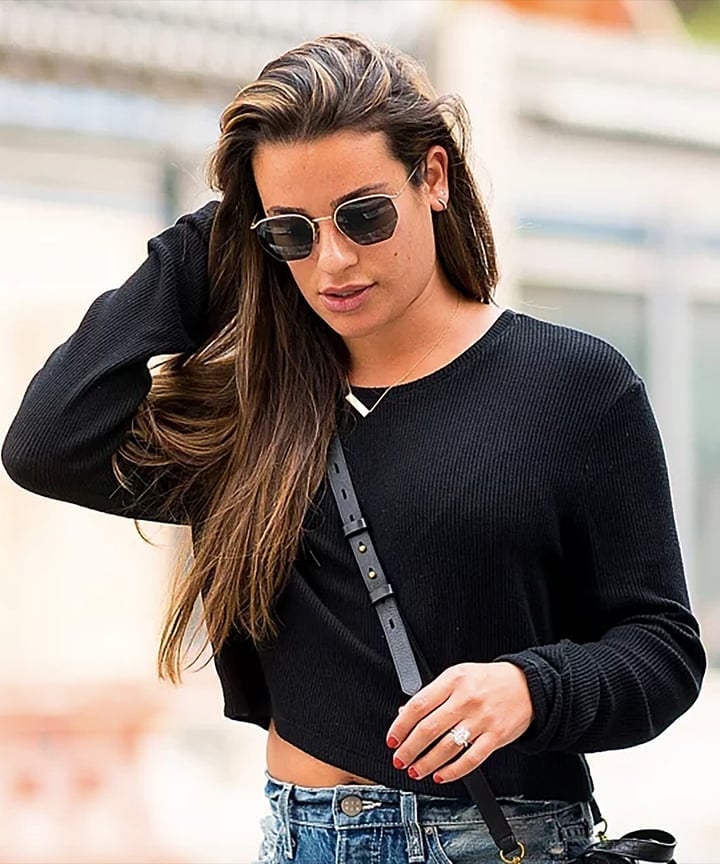
Dark brown base with caramel highlights that stay subtle rather than shouting for attention. The face-framing pieces are the real draw here, pulling the lighter shade forward where it catches the eye first. Air-dried waves let the texture do its thing, and a side part keeps the weight off one side. Thick, wavy hair handles this kind of placement best. Pass if you prefer a salon blowout finish or have fine hair.
Dark blonde balayage with lighter blonde highlights and curtain bangs
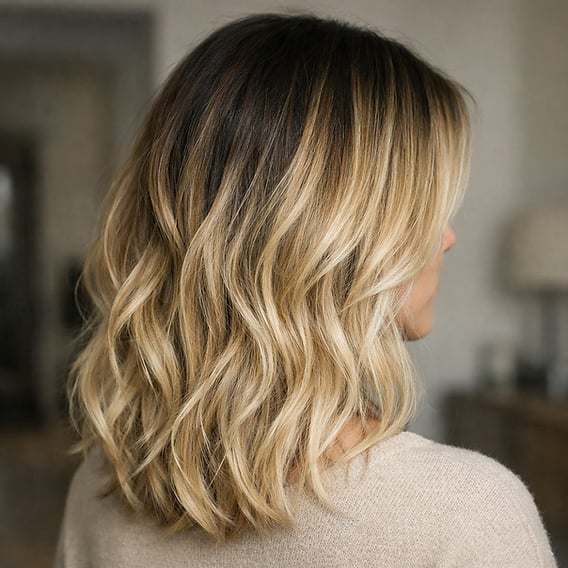
Standard balayage tends to land heavier at the ends. This version keeps the lighter blonde highlights closer to the root through the mid-lengths, so the transition looks sun-washed. The curtain bangs and middle part balance the distribution, while air-dried waves keep the whole thing from feeling overworked. Fine, wavy hair at collarbone length or longer suits this approach. Dark blonde balayage with lighter blonde highlights and curtain bangs is the ask.
Warm blonde base with honey highlights for lighter waves
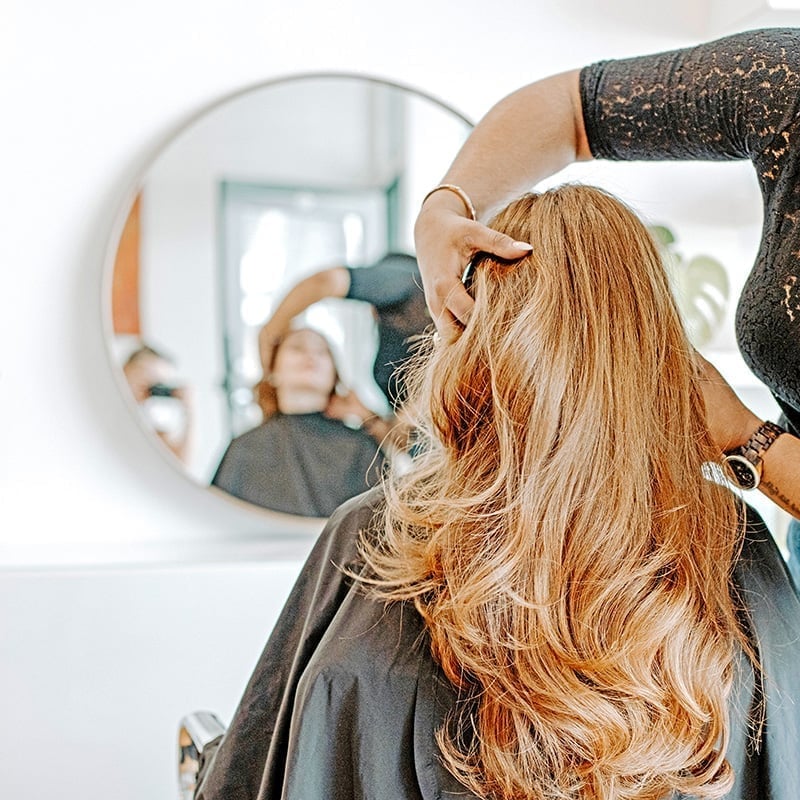
A layered cut and a middle part create the foundation. The warm blonde base gets honey-toned highlights that sit a shade lighter, soft enough to avoid the stripe effect. Styled in waves with a blowout, the fine texture gains volume without looking stiff. The back view shows how the layers stack the lighter pieces toward the ends. Warm blonde tones fade faster than cool ones, so a toner every six to eight weeks keeps the honey in honey. Oval and round faces get the most out of this shape.
Ash blonde highlights on dark brown long layered hair with side bangs
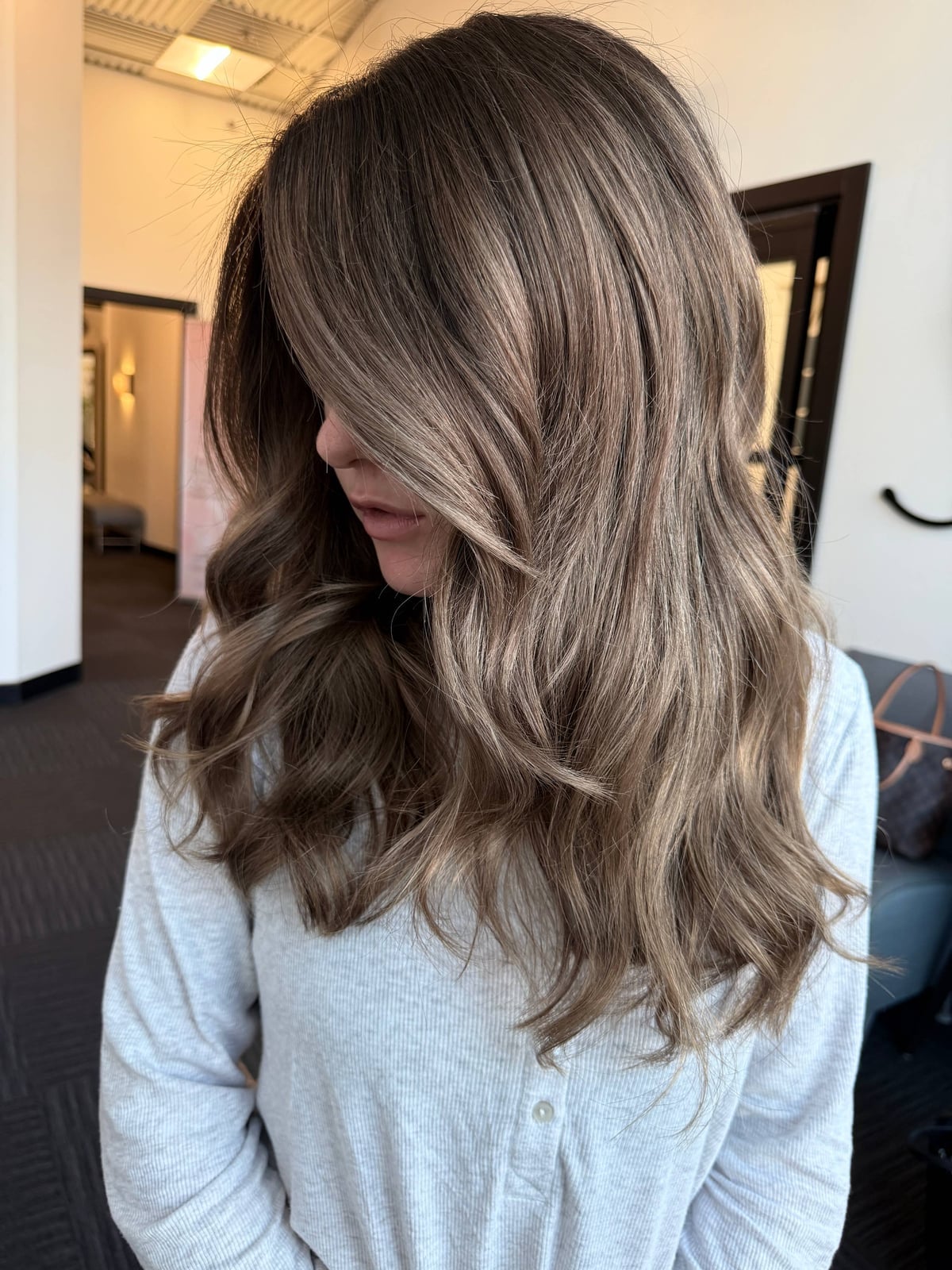
Ash blonde on a dark brown base is a study in contrast. The long layers create vertical movement, and the side bangs break the horizontal line across the forehead. Styled in waves with a side part, the ash tone appears dusty due to the dark base underneath. Fine, wavy hair at shoulder length or longer carries this weight well. This look requires a commitment to regular salon visits for color and cut maintenance. Request from your colorist: dark brown base, ash blonde highlights, long layers, side-swept bangs.
Caramel highlights on dark brown thick wavy hair with layers
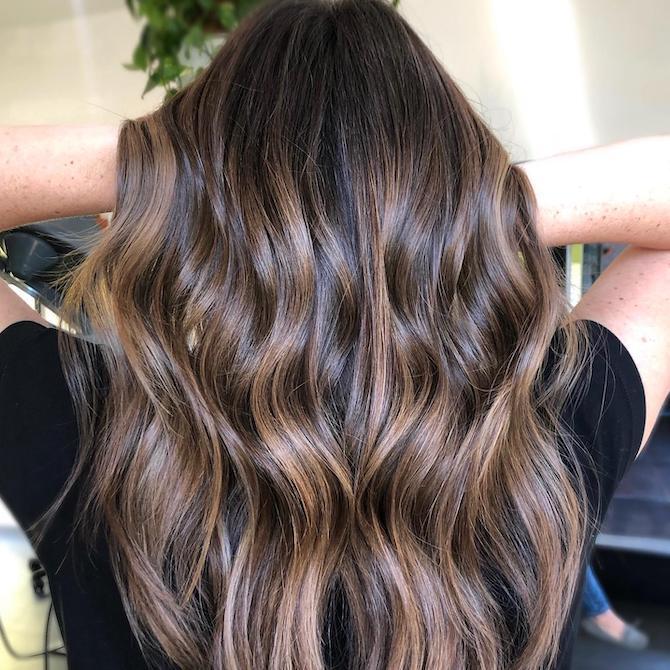
Foils or balayage? This leans balayage for the caramel highlights, painted freehand so the placement varies naturally. The subtle layers in the cut let the waves stack the lighter pieces toward the surface, giving dimension without chunky streaks. Thick, wavy hair of collarbone length or longer has enough density to absorb the lift without looking brassy. The middle part and blowout finish keep the shape neat. Pass if you prefer a high-contrast look or have fine hair.
Long layered brunette hair with finely woven caramel highlights
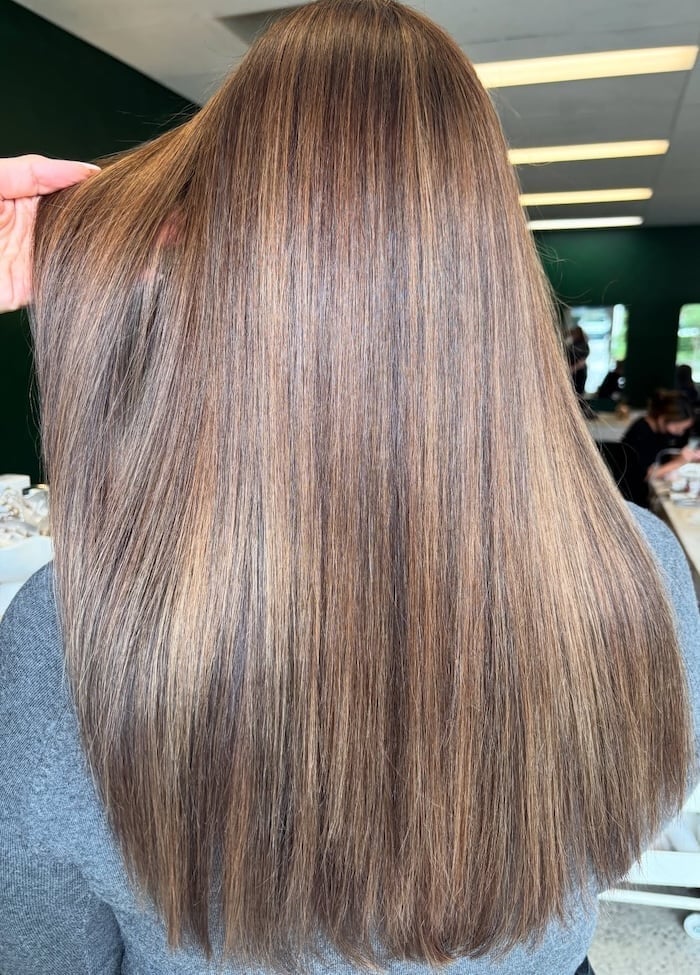
A smooth blowout on long layered hair lets you see exactly where each caramel highlight lands. The brunette base stays deep while the lighter pieces sit closer to the surface, never buried. Fine, straight texture reads the difference best, thick hair tends to swallow subtle placement. Pass if you prefer a textured look; waves can blur the precision a blowout reveals. The middle part keeps the distribution even on both sides, which means fewer surprises when you flip your hair over.
This approach suits oval and long faces because the length pulls the eye down. Request from your colorist: brunette base, subtle caramel highlights, long layers. A flat iron touch-up between washes keeps the shine consistent and the lines clean.
Dimensional blonde highlights on dark brown layered hair
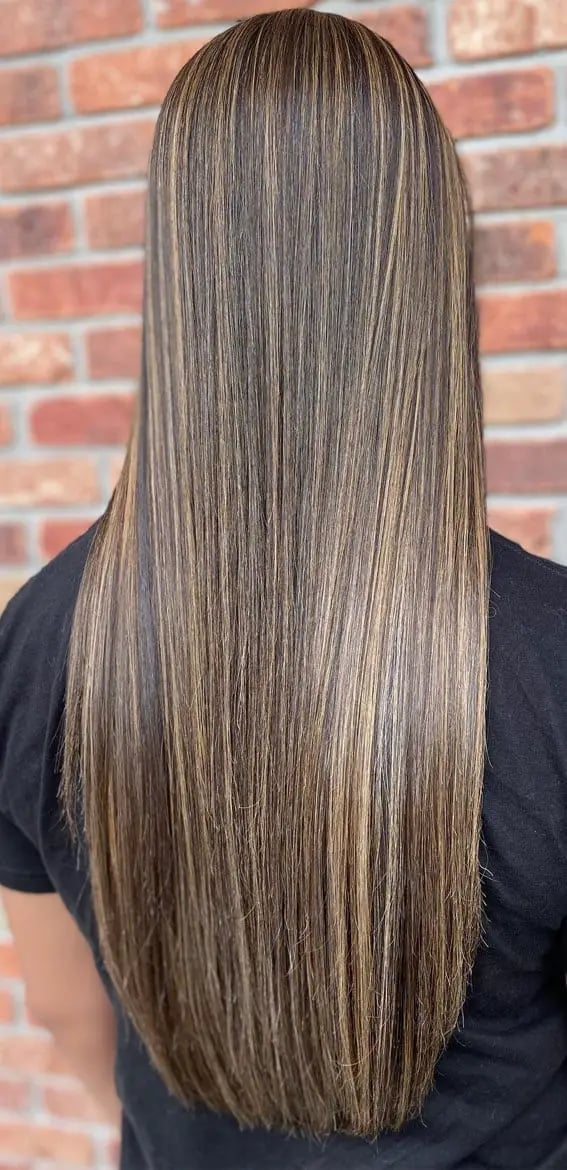
Two tones sit on the same strand in this version: a dark brown base with blonde highlights that are separate, not blended. The long layers keep the heavier pigment from feeling flat, and the middle part lets each side mirror the other. Fine, straight hair holds the contrast longer because the lighter pieces do not sink into denser texture. This one announces itself. A toner every six to eight weeks maintains the blonde as the base slowly warms up.
Caramel highlights on dark brown layered hair with face-framing pieces
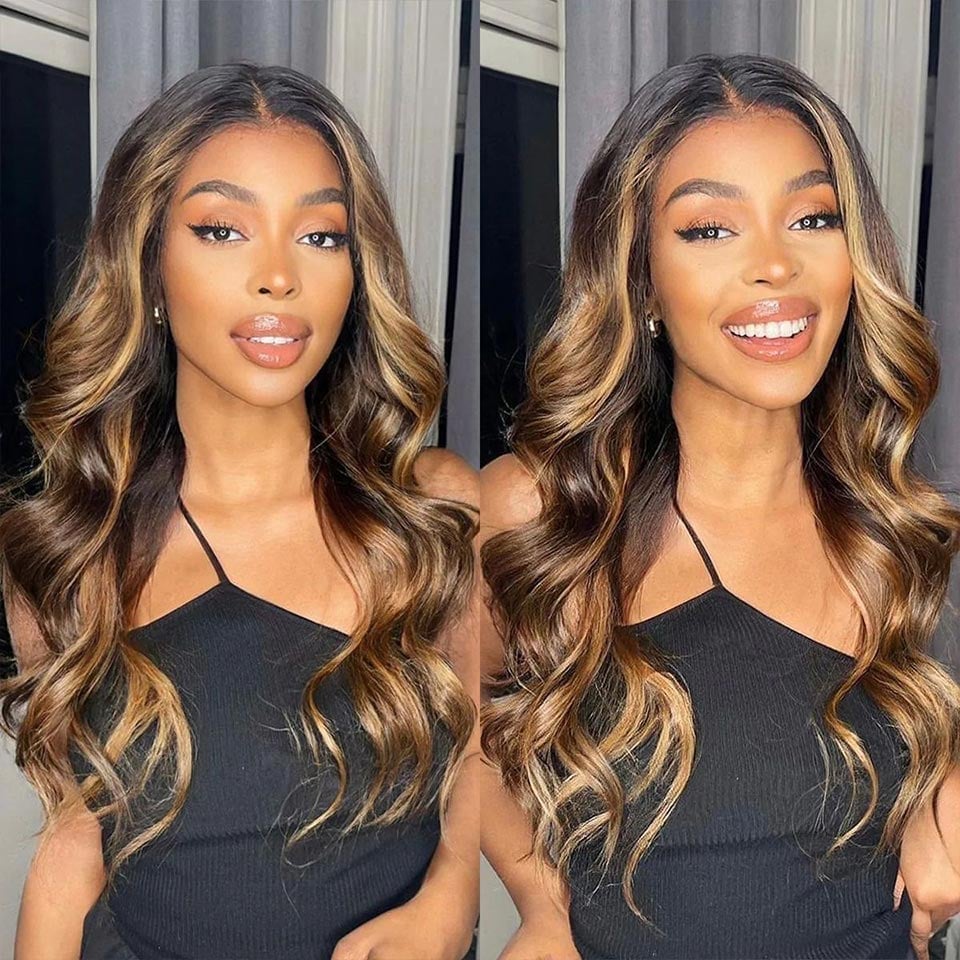
Face-framing pieces change how the light hits the front of the hair. On a dark brown base with caramel highlights, those front sections catch the warmest part of the color first. The layers run through the whole cut, so the highlights don’t all end at the same height. Thick, wavy texture gives the caramel room to sit on top of the wave. This shape relies on the layers to move. Request from your colorist: dark brown base, caramel highlights, layers, face-framing pieces.
Caramel highlights on dark brown thick wavy hair, close-up take
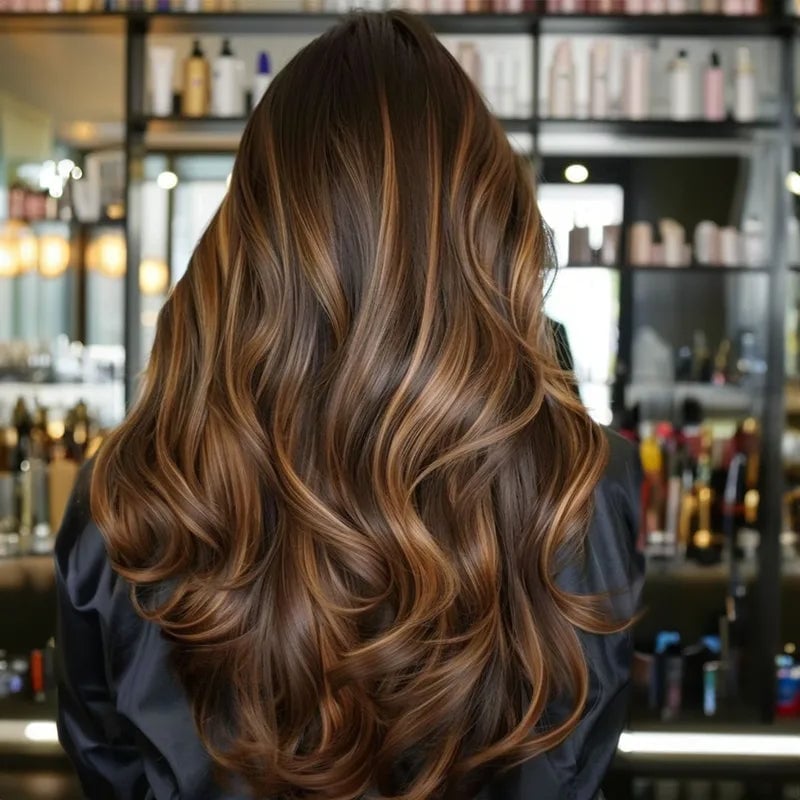
Smooth caramel highlights on a dark brown base work because the transition between the two is gradual, not striped. Thick, wavy hair needs that soft edge; sharp lines would fight the texture. The loose waves let the caramel wrap around each curve, so the color reads from every angle. This look stays subtle rather than high contrast.
The middle part keeps the application balanced, but the real work happens at the bowl. Refresh color every eight to twelve weeks; the grow-out blends well because the technique was designed to blur the root line from the start.
Honey highlights on warm brown wavy hair with balayage
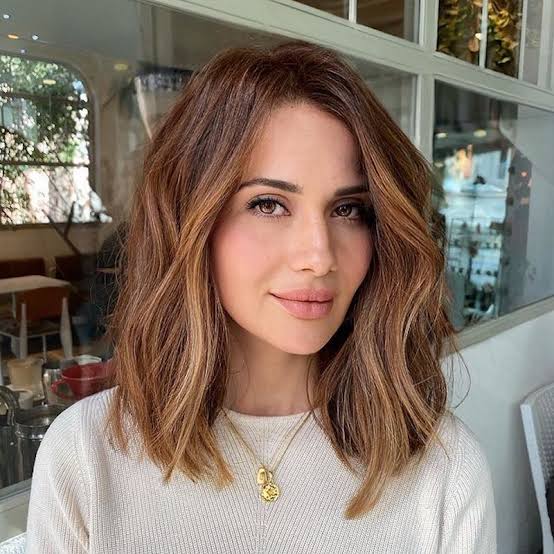
Balayage on warm brown hair with honey highlights creates a softer lift than foil highlights would. The honey tone sits on the surface of the wave, not underneath it, which keeps the dimension visible even when the hair moves. Medium density wavy hair is the sweet spot here, too much density and the light pieces get lost; too little and the contrast feels stark. Pass if you prefer a uniform color; this technique is built for variation. Request from your colorist: warm brown base, honey highlights, balayage technique, layers. The grow-out period stretches to ten to fourteen weeks because the application was never meant to start at the root.
Caramel highlights on dark brown long layered hair
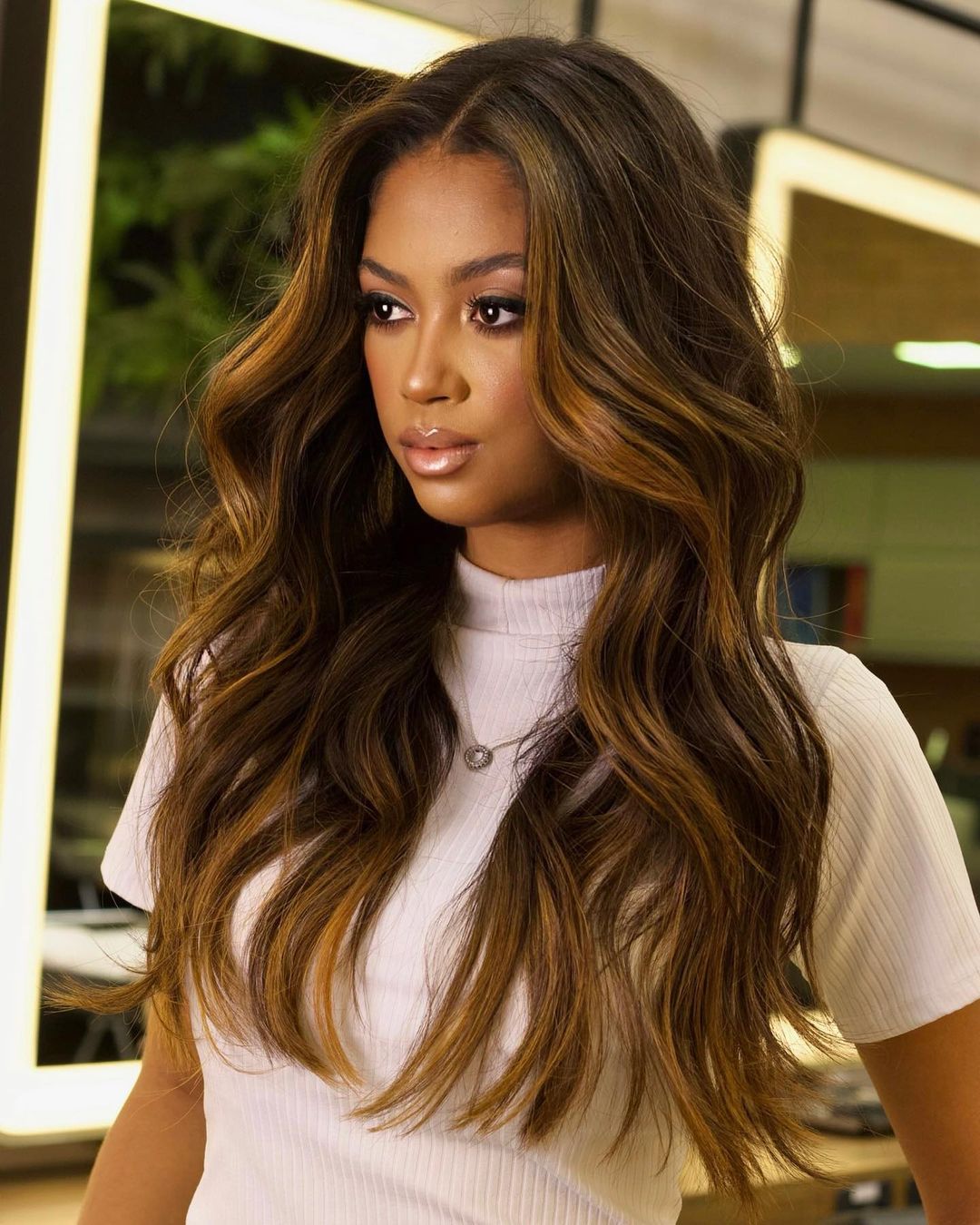
Two tones at play here: a dark brown base and warm caramel highlights that sit close enough in value to create a single, sunlit surface. The long layers and waves let the lighter pieces surface at different points along the shaft, so the color shifts as you move. Suits anyone with thick, wavy hair starting at shoulder length. Pass if you want a high-contrast look or have fine hair. The effect depends on density to keep the caramel from floating on top.
The face-framing pieces are the practical detail: they catch the eye without demanding a full highlight schedule. Pass on the purple shampoo here. The tone is warm, not ash, so you want the caramel to stay golden.
Blonde highlights and balayage on a dark brown lob, wavy
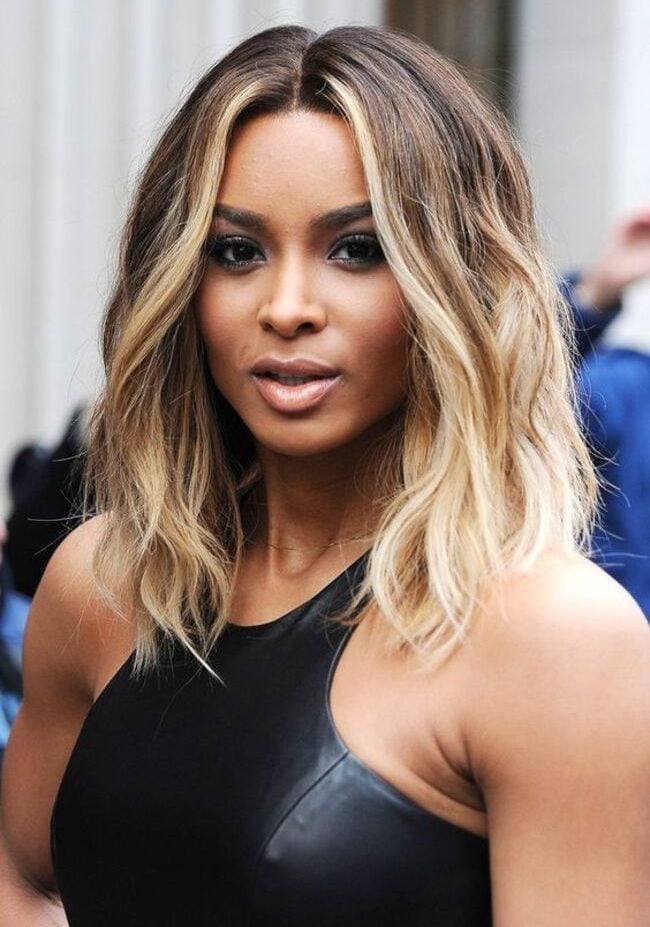
Blonde strands sit at the front of this lob while the rest of the hair stays dark brown, a deliberate contrast that gives the cut its shape. The balayage technique places the lighter color where it lands on the wave, not in a uniform grid, so the transition from dark to light looks like a byproduct of the styling rather than a plan. Works best on thick, wavy hair cut to lob length. Pass if your hair is very fine; the weight of the darker base can make thin strands look sparser. Tell your colorist: dark brown base, blonde balayage, face-framing strands.
Ash blonde highlights on dark brown thick wavy hair with layers, side
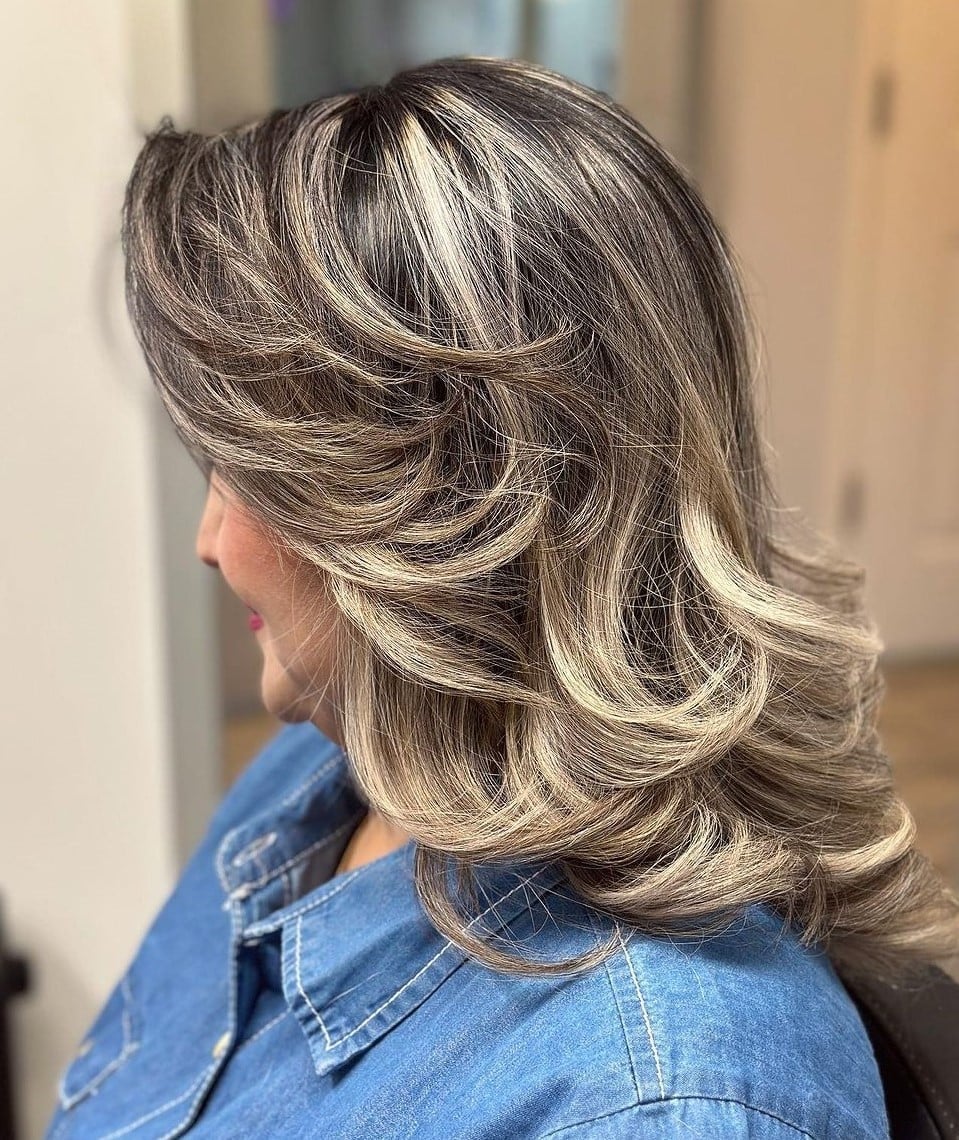
Ash blonde on a dark brown base reads cooler than caramel or honey, and on thick, wavy hair the difference shows clearly against the darker mass. The face-framing layers are cut to follow the side parting, so the lighter strands fall forward where they are most visible. A voluminous blowout makes the waves hold their shape longer. The ash tone can look flat without enough density underneath.
Caramel highlights on dark brown long layered, office-safe version
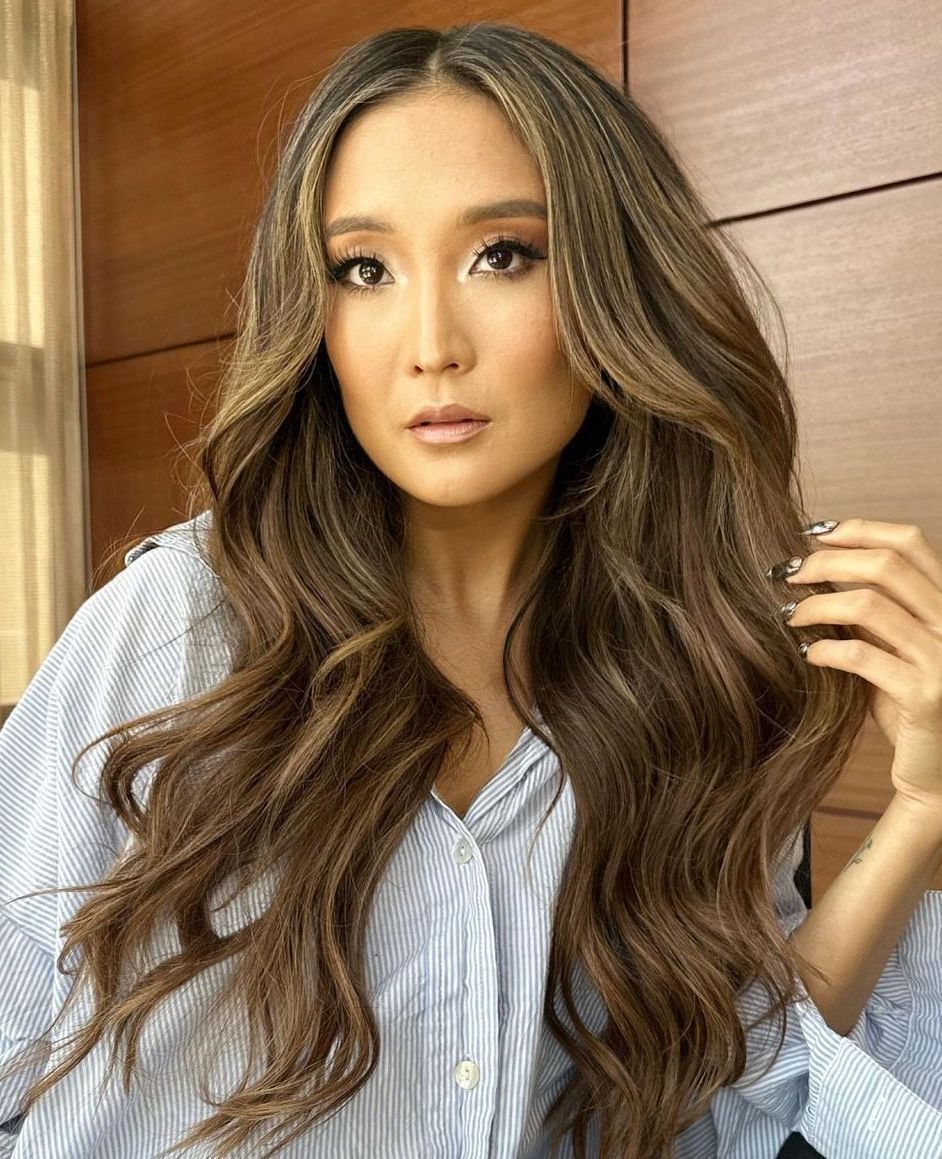
Compared to a high-contrast blonde-on-brown look, this version keeps the caramel close to the base shade. The highlights are soft, not stark. The long layers and loose waves let the lighter pieces surface gently, so the overall impression is dimensional without being dramatic. Suits fine, wavy hair of shoulder length or longer; the finer texture lets the caramel sit on top without looking chunky. Pass if you have thick hair. The effect can get lost in the density. The face-framing pieces add a soft edge around the jaw without needing a full cut.
Ash blonde highlights on dark blonde layered hair
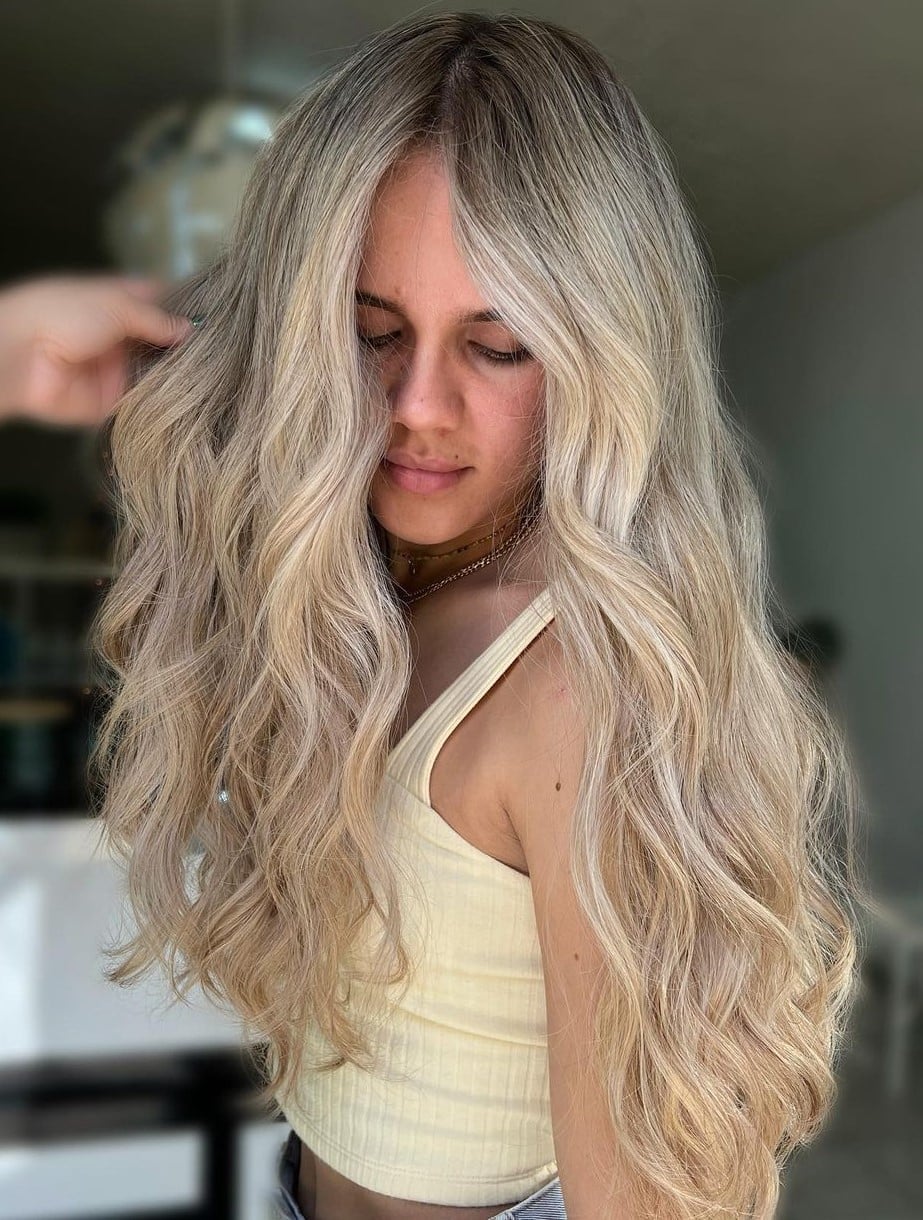
Ash blonde against a dark blonde base is a subtle shift. The difference is a few levels, not a jump from dark to light. The layers and soft waves let the ash pieces surface at the bends, where they become visible briefly and then disappear into the darker mass. Best on fine, wavy hair of collarbone length or longer. The effect is quiet by design. Ash tones fade faster than warm ones, so plan for a toning treatment every four to six weeks to keep the cool edge.
Light brown base with subtle ash blonde highlights and waves
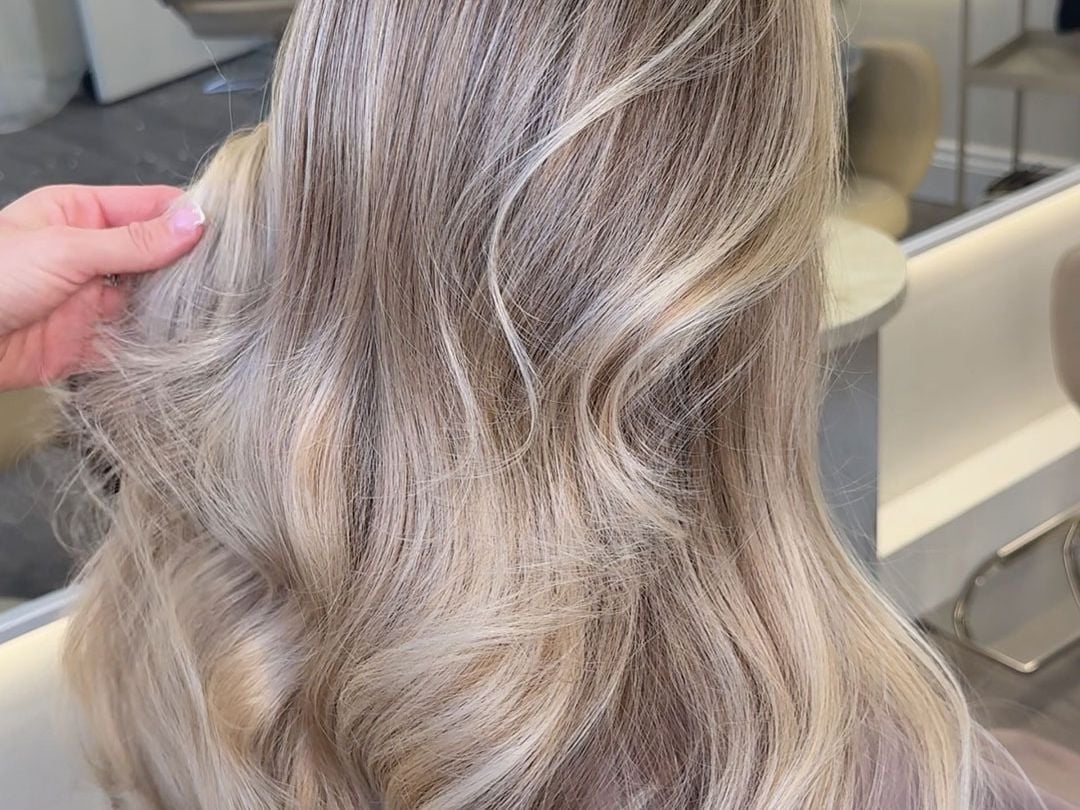
Ash blonde highlights are woven through a light brown base, placed finely enough that the base still looks the main event. A blowout technique shapes the wavy texture, keeping the wave pattern uniform without looking stiff. Fine hair benefits here, the light strands create the illusion of density without weighing anything down. Request from your colorist: light brown base, subtle ash blonde highlights, waves. The catch: ash tones can pull brassy on some base colors, so a consultation on your starting shade matters. That is a real conversation, not a roll of the dice.
Copper and caramel highlights on auburn hair
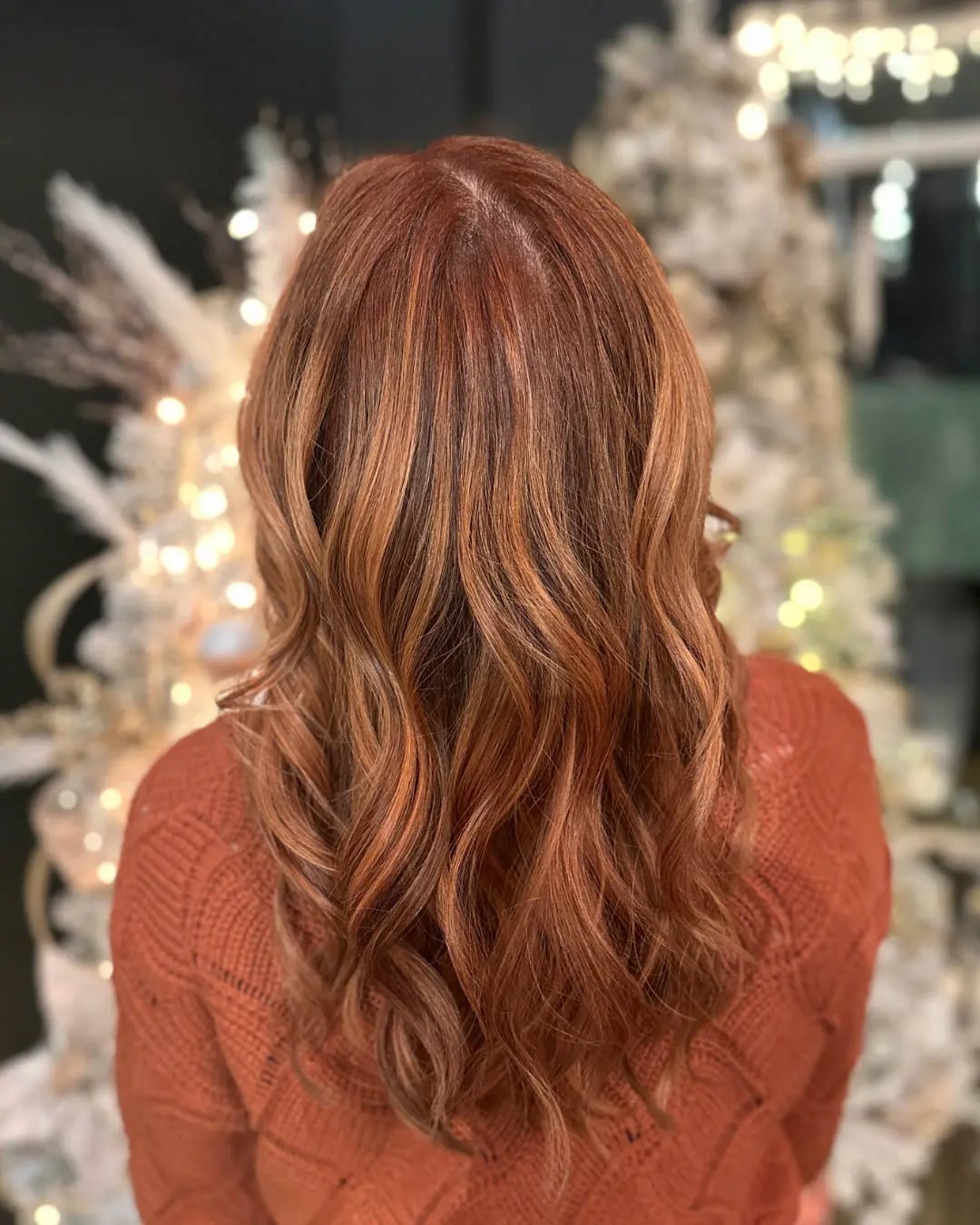
Copper and caramel highlights sit on an auburn base, which is a different ask than straight copper or straight caramel. The back view shows the layered cut carrying the warm tones through the mid-lengths and ends. Fine, wavy texture lets the two highlight shades blend without hard lines. Pass if you prefer a cool, ashy palette. This is a warm commitment. A color-depositing conditioner keeps the copper from fading into a flat brassy note between salon visits.
Ash blonde highlights on dark brown layered hair, close-up take
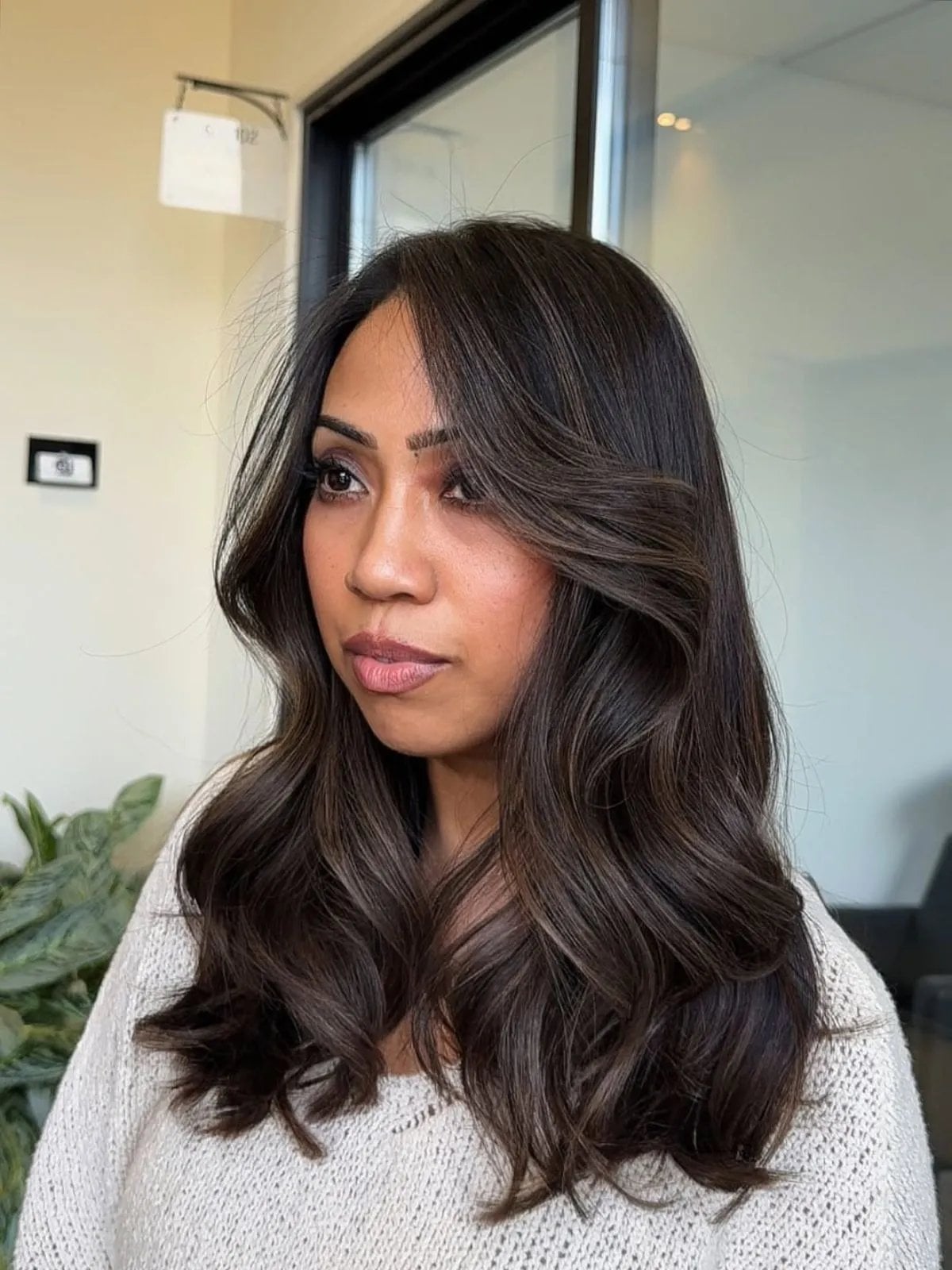
This is the low-contrast version of ash blonde on dark brown. The layers are cut to let the woven ash pieces surface at different points, so the wave pattern gets a staggered lift. Fine hair handles this placement well, heavy strands would swallow the ash. Compare it to a chunky highlight: here the base stays dominant, the light pieces are a quiet second voice.
Pass when you prefer a high-contrast blonde-on-brown look. The side parting and soft waves keep the finish neat, not beachy. A toning treatment every four to six weeks keeps the ash from warming up. Request from your colorist: dark brown base, subtle ash blonde highlights, layers, soft waves.
Ash blonde highlights on dark blonde hair with air-dried waves
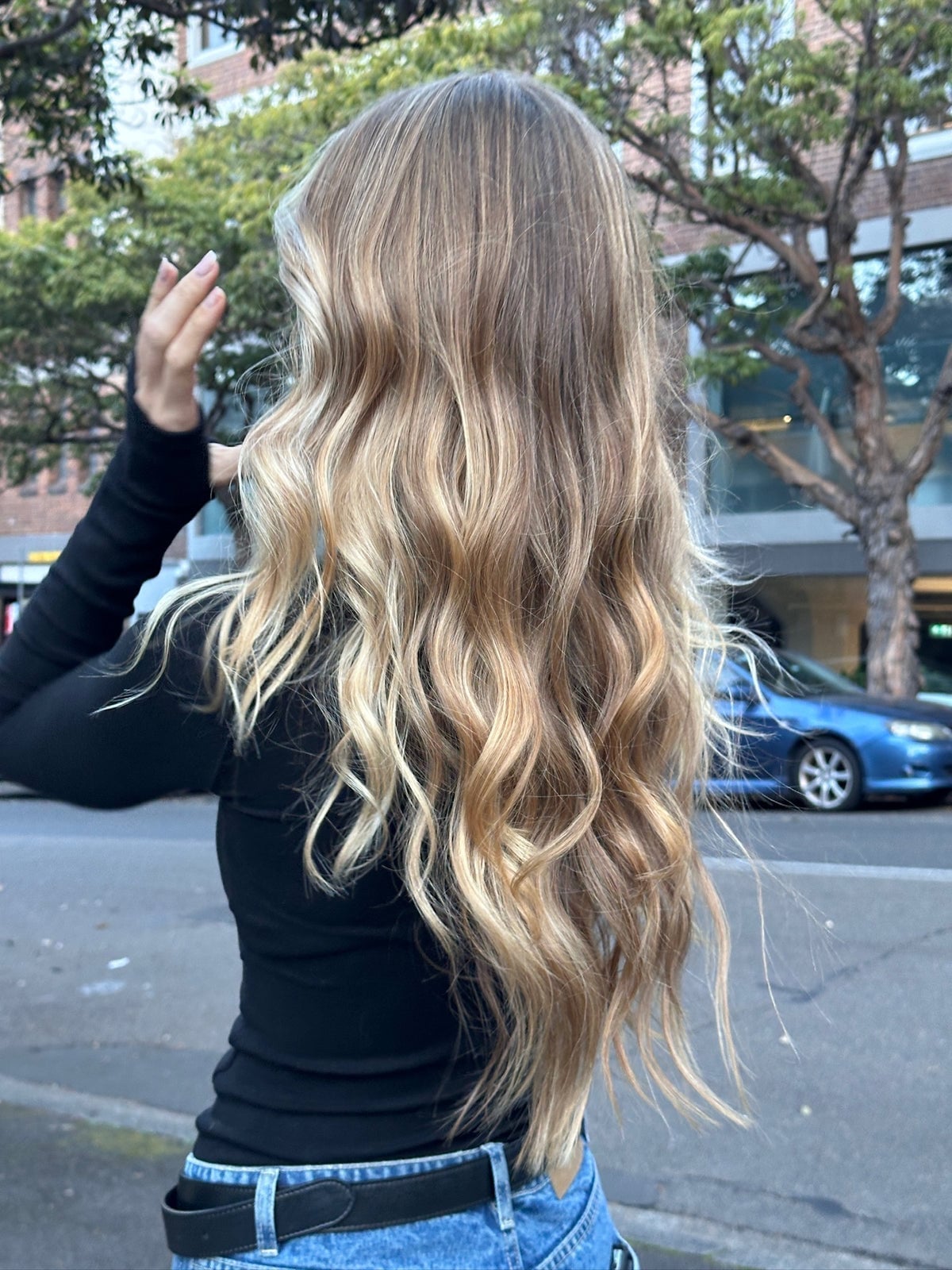
Fine, wavy hair air-dries into this shape naturally; a texturizing spray adds grip without heat. Pass if you prefer a neat blowout every day. This finish looks casual on purpose, not as a compromise.
Ash blonde highlights on dark blonde layered hair, everyday version
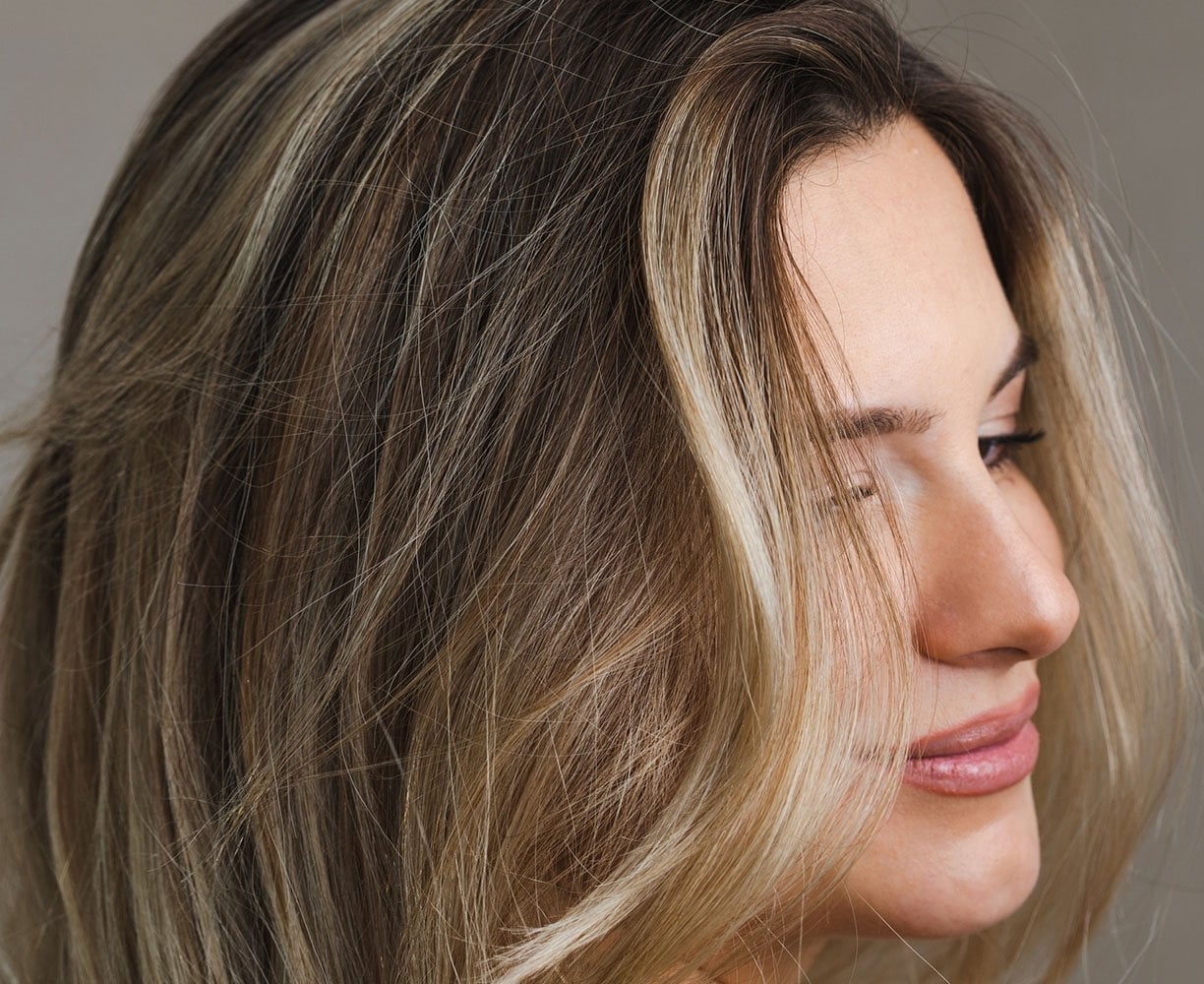
A practical rule for air-dried color: the highlights need to sit where the wave bends. Here the distinct ash blonde pieces land at the layers, so the side parting lets the light catch them as the hair falls. Fine, wavy texture keeps the strands from clumping into a single block of color. Request from your colorist: dark blonde base, distinct ash blonde highlights, air-dried texture, side parting. The cut holds the shape, and the shape shows the color.
Caramel highlights on dark brown thick wavy hair, low-key version
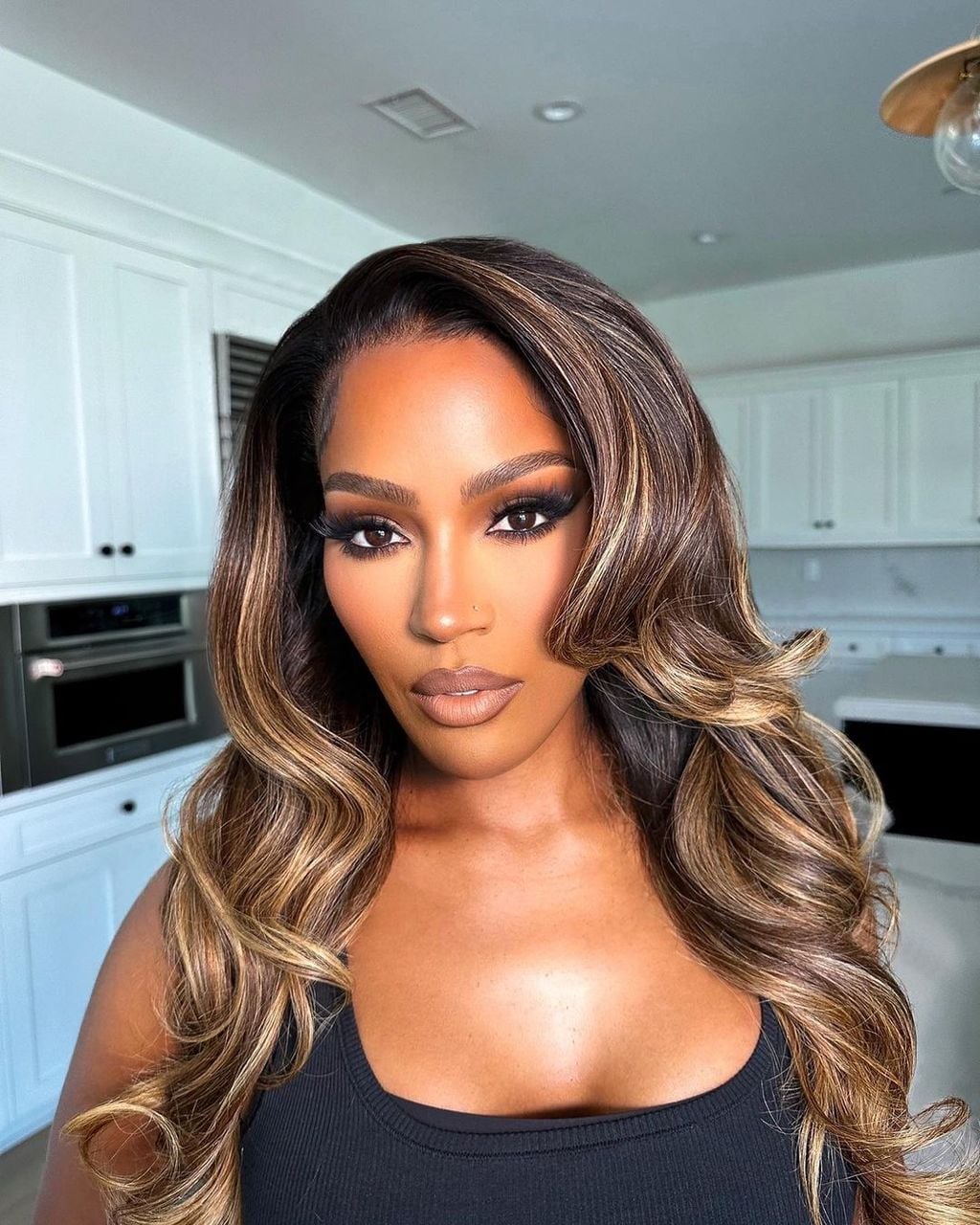
Not every highlight needs to shout. A dark brown base keeps things grounded, while caramel highlights add warmth without going full golden. The thick, wavy texture gives the color something to catch on, each wave revealing a different stripe of caramel. A side part changes the distribution, pulling more light to one side.
The side part is non-negotiable for the effect. Pass if you have fine hair. The contrast can feel heavy rather than dimensional. A dry shampoo at the roots keeps the blowout lift going for a second day.
Blonde balayage highlights on dark brown thick wavy, everyday version
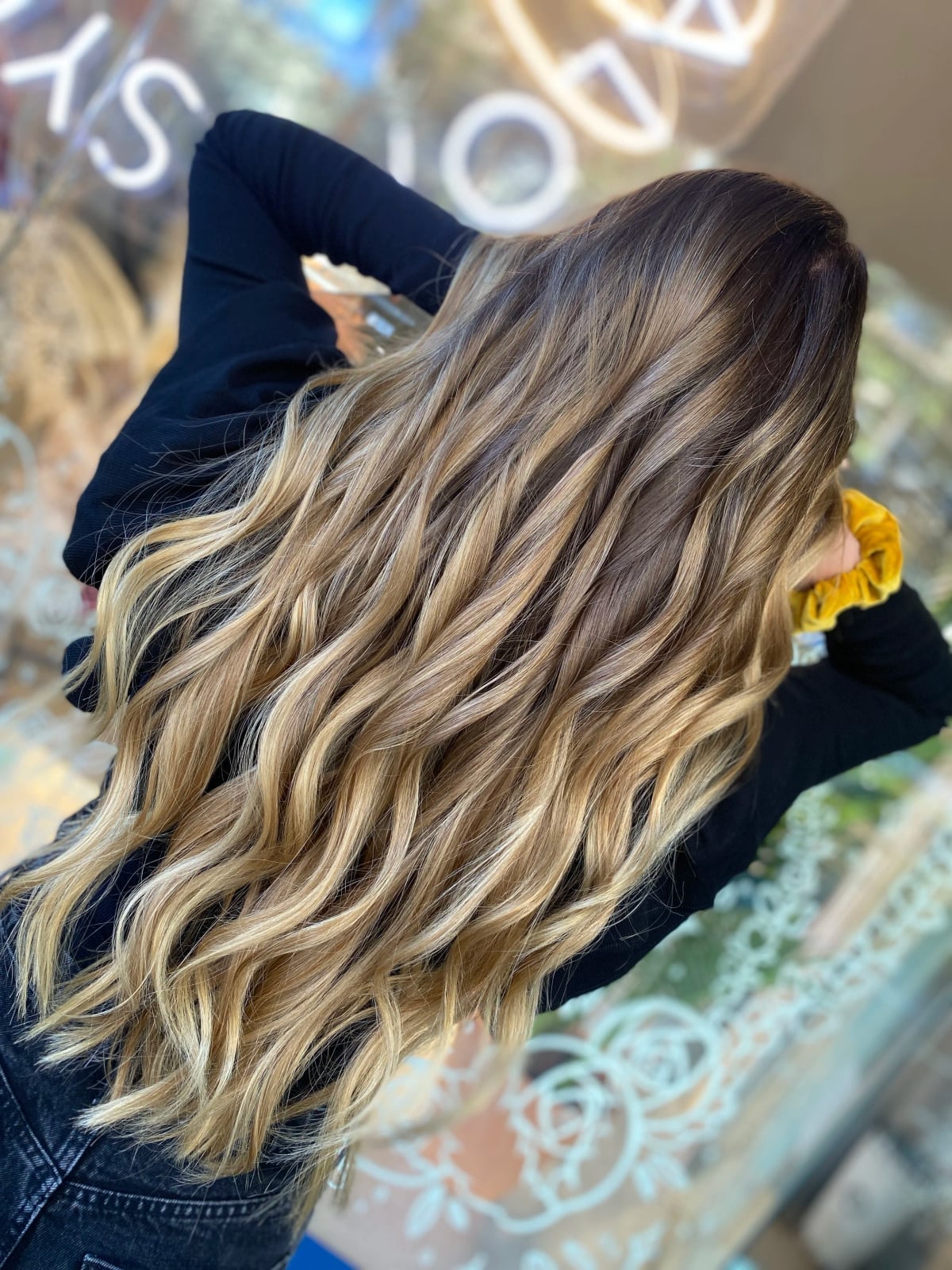
Balayage works when you want the sun to have done the work. Here, a dark brown base meets smooth blonde balayage highlights, painted on by hand so the transition is soft. The loose waves and middle parting let the color look natural, not applied. Suits thick, wavy hair from collarbone length down. This version blends in and stands out subtly. A refresh every 10 to 14 weeks keeps the blonde from muddying against the dark brown.
Lighter copper highlights on a copper base with layers
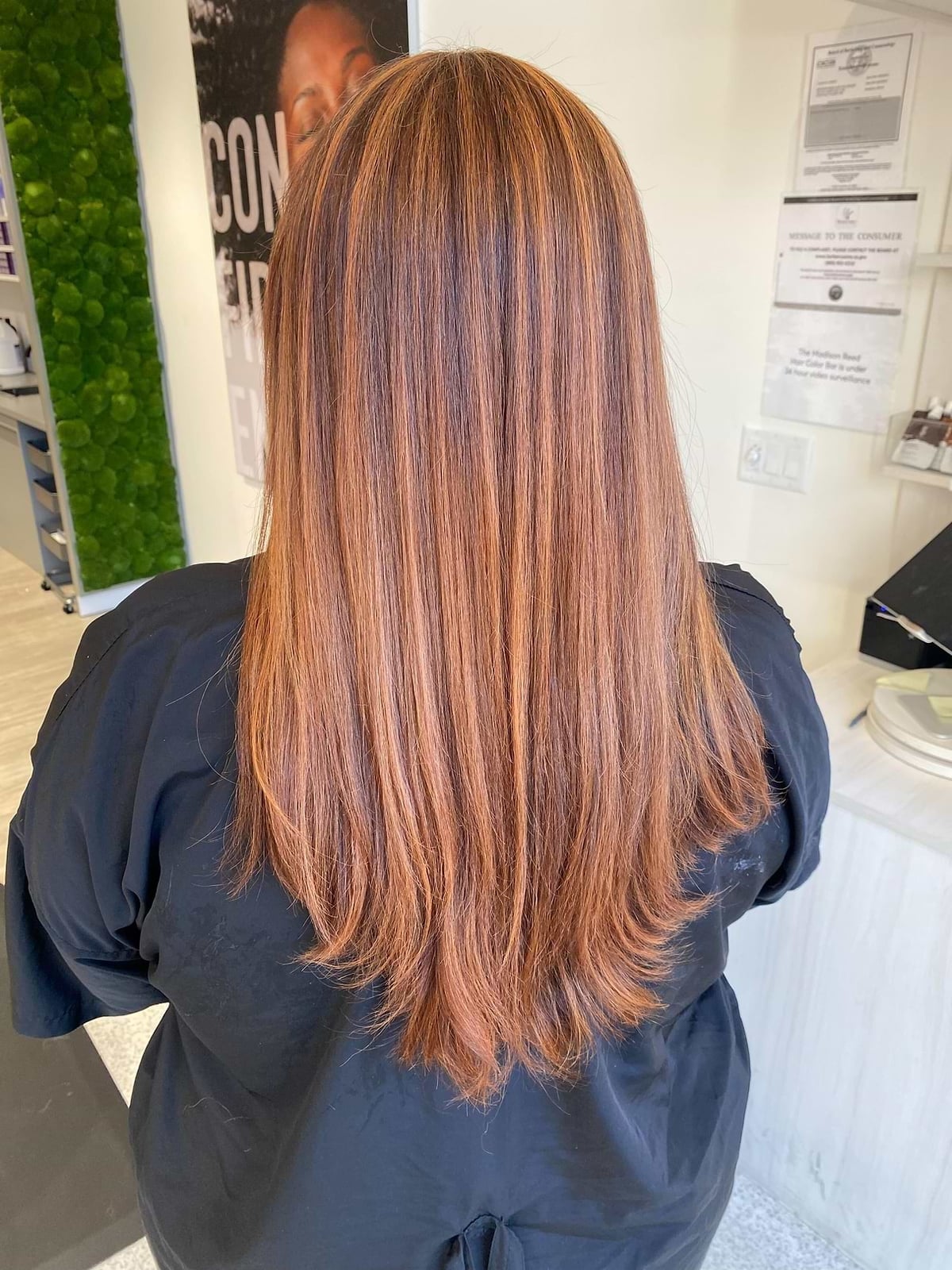
Copper this deep needs a lighter companion to keep it from reading flat. A rich copper base gets subtle, lighter copper highlights woven through the layers, each one lifting the overall tone without changing the color family. The smooth blowout and middle part emphasize the fine, straight texture. Suits oval and long faces best. Pass when you prefer cool tones. This one runs warm and stays warm. A color-depositing conditioner every few washes keeps the copper from fading into a brassy orange.
Caramel highlights concentrated towards the ends of dark brown hair
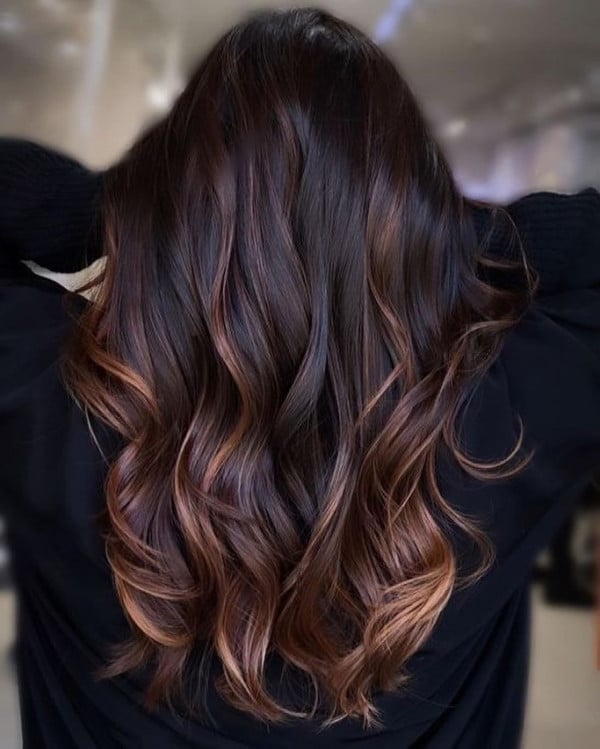
Highlights don’t have to start at the root. Here, warm caramel highlights are concentrated towards the ends of a dark brown base, leaving the top half mostly untouched. The loose, flowing waves show off the gradual lightening, the caramel catching light only where the hair moves. Suits thick, wavy hair from collarbone length down. Pass if you want highlights throughout. The contrast is deliberate and end-focused. The grow-out is softer than traditional highlights, with a refresh needed every 8 to 10 weeks.
Vertical ash blonde highlights on dark brown thick, softer variation
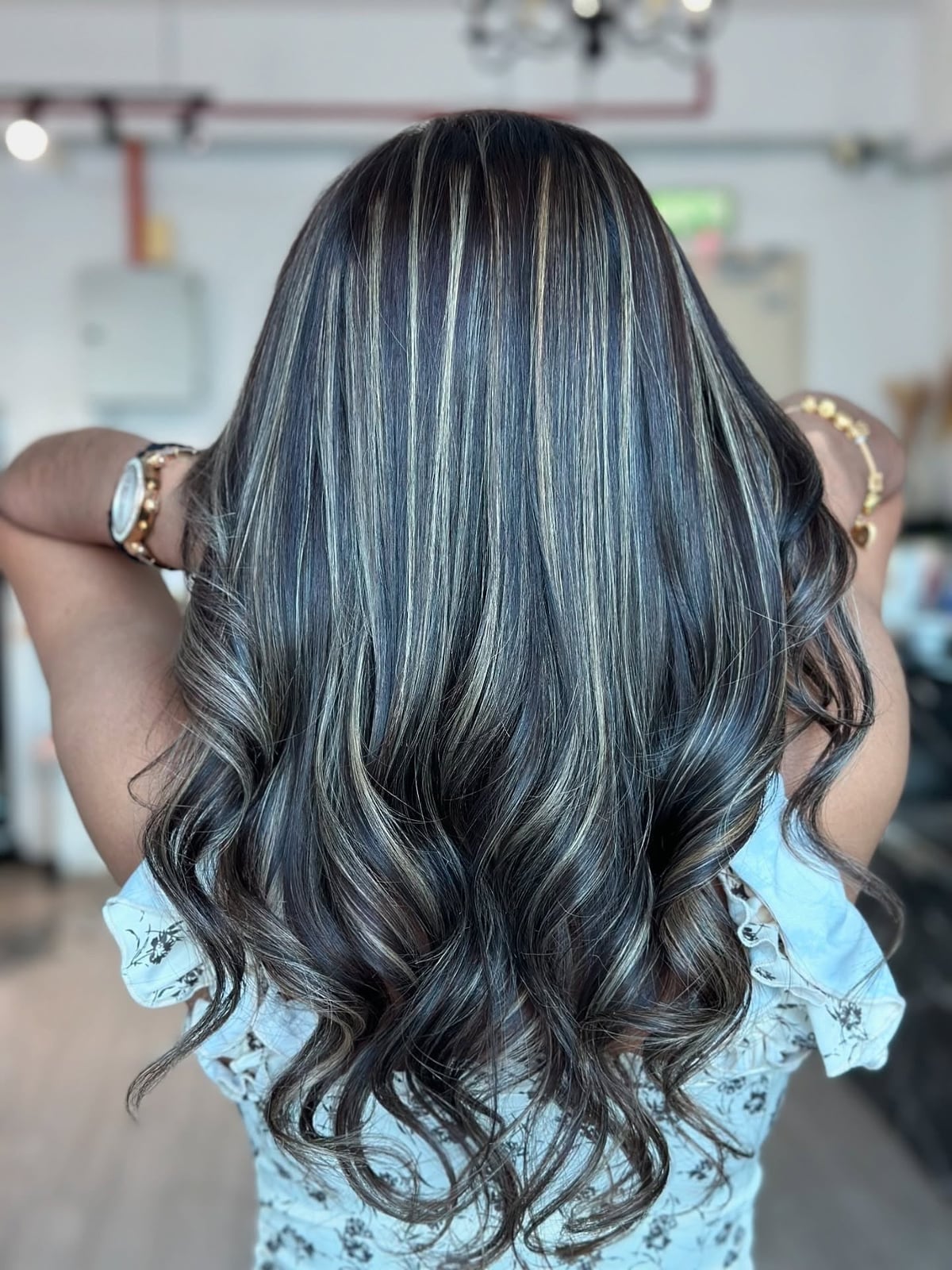
Vertical placement changes the game. Striking ash blonde highlights run in clean vertical lines through a dark brown base, creating a high-contrast effect. The loose waves soften the geometry, the thick texture giving the color depth. Suits thick, wavy hair from collarbone length down. This one makes a statement. Toning is crucial between appointments to keep the ash blonde from pulling warm.
Magenta highlights on dark brown layered hair with curtain bangs
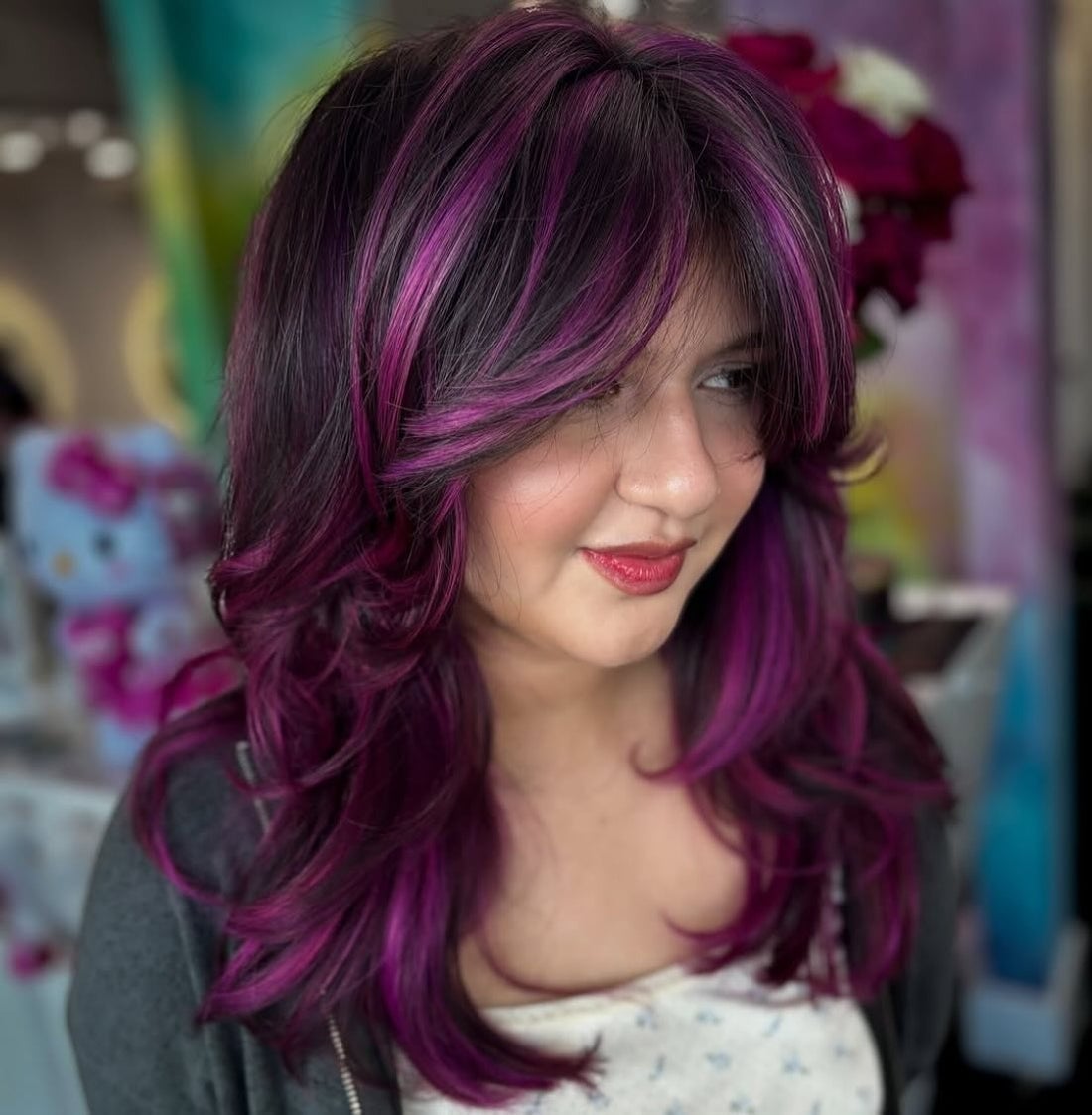
Bright color on dark hair is a two-visit process. A dark brown base takes vibrant magenta highlights without pre-lightening everything, but the contrast lands hard. Thick, collarbone-length or longer hair holds the color best. The wavy texture and middle part keep the look from feeling costumey. Pass if you prefer a natural tone or have fine hair. The saturation can overwhelm finer strands. Request from your colorist: dark brown base, vibrant magenta highlights, layers, curtain bangs. The color fades fastest in the first three weeks, so a color-safe shampoo and cooler water are not optional.
Ash blonde highlights on dark blonde layered hair with curtain bangs
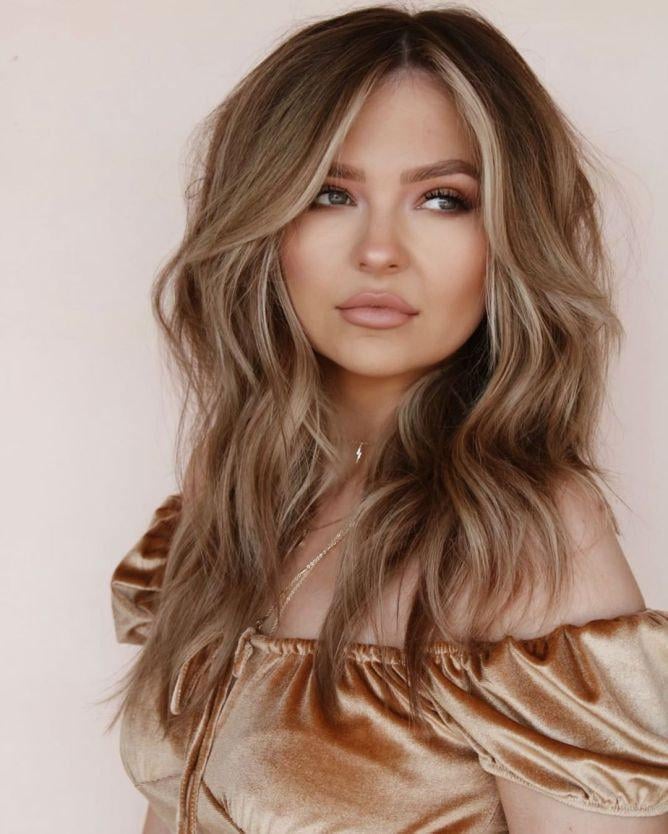
This combination works because the base and highlight are close neighbors on the color wheel. A dark blonde base keeps the ash blonde highlights from looking ashy-gray; they look cool brightness instead. Fine, wavy hair of collarbone length or longer handles the soft layers and curtain bangs without losing density. The face-framing highlights pull light toward the center of the face, which is the whole point.
The curtain bangs need a round brush and five minutes of heat to sit right, air-drying them flat defeats the shape. Pass if you prefer no bangs or a high-contrast look.
Blonde highlights with contrast on dark brown layered hair, wavy
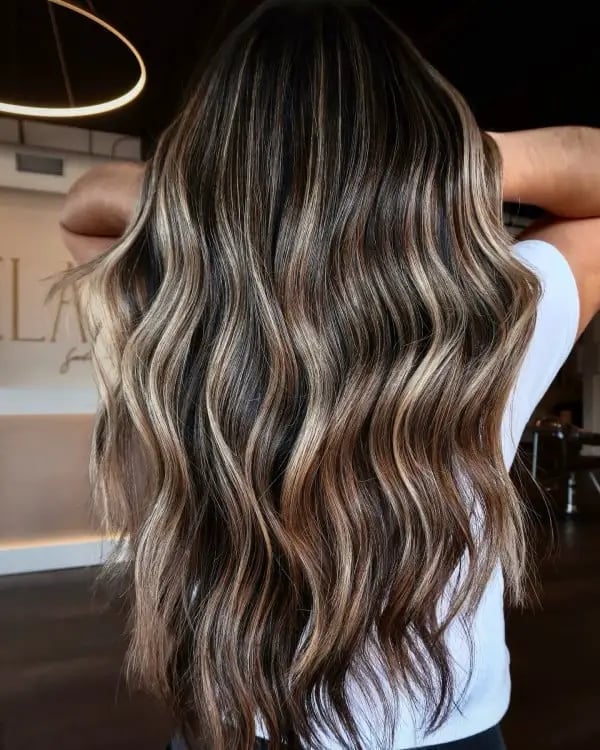
The mistake people make here is asking for highlights that are too fine. Thin weaves on a dark brown base create a muddy stripe effect, not contrast. Thick, wavy hair needs chunkier sections to let the blonde stand out. The subtle layers and loose waves with a centered parting do the rest. Request from your colorist: dark brown base, blended blonde highlights, loose waves, subtle layers. The width of the highlight sections can look harsh on thinner strands. A refresh every eight weeks keeps the contrast sharp.
Caramel and copper highlights on dark brown hair with waves
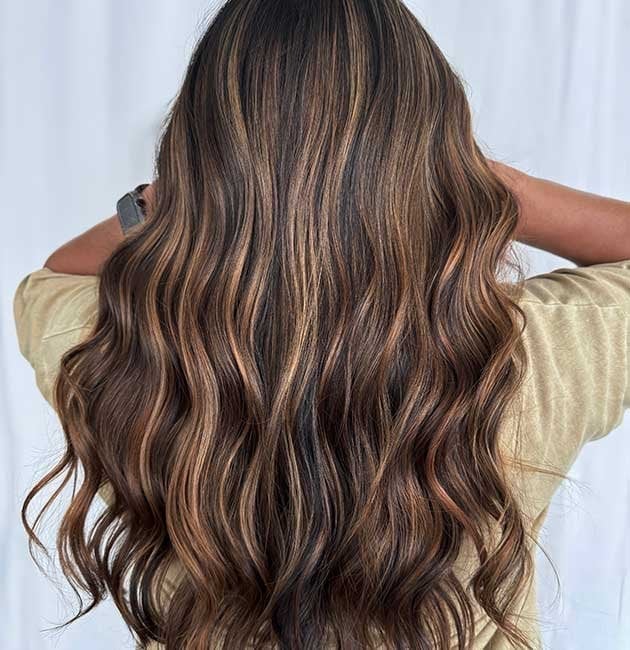
Warm tones on a dark brown base flatter most face shapes because they lift without shouting. The caramel and copper highlights sit close enough to the base to blend, far enough to glow. Thick, wavy hair of collarbone length or longer shows the dimension best, the waves catch both tones at different angles. Pass if you want a high-contrast look or have fine hair; the subtlety gets lost on thin strands. The blend demands a skilled hand at the bowl, so expect a longer appointment. Color refresh every ten weeks keeps the warmth from muddying.
Final Thoughts
Pick the one that matches your morning routine and your patience for toner.
- Fine hair: keep highlights fine and close to the root.
- Thick hair: balayage placement reduces the weight of the appointment.
- Cool base that pulls brassy: ash tones with a purple shampoo rhythm.
- Ten minutes in the morning: air-dried waves with a mid-light contrast.
Find your perfect dreamy highlight shade and technique.
