

You have the consultation this week, and the question is not whether to try Fulani braids but which version. By 2027 the style has moved past one formula, the center part, the single bead at each end, into a family of variations that work with different textures, different lengths of commitment, and different levels of patience for tiny beads.
Which is why Lovely Fulani Braids 2027 fill so many saved boards: 28 ways to wear the style, from a quick weekend braid session to an all-day installation with sculptural cornrows. The collection solves the gap between what you want on Pinterest and what actually holds for a week of work, gym, and sleep.
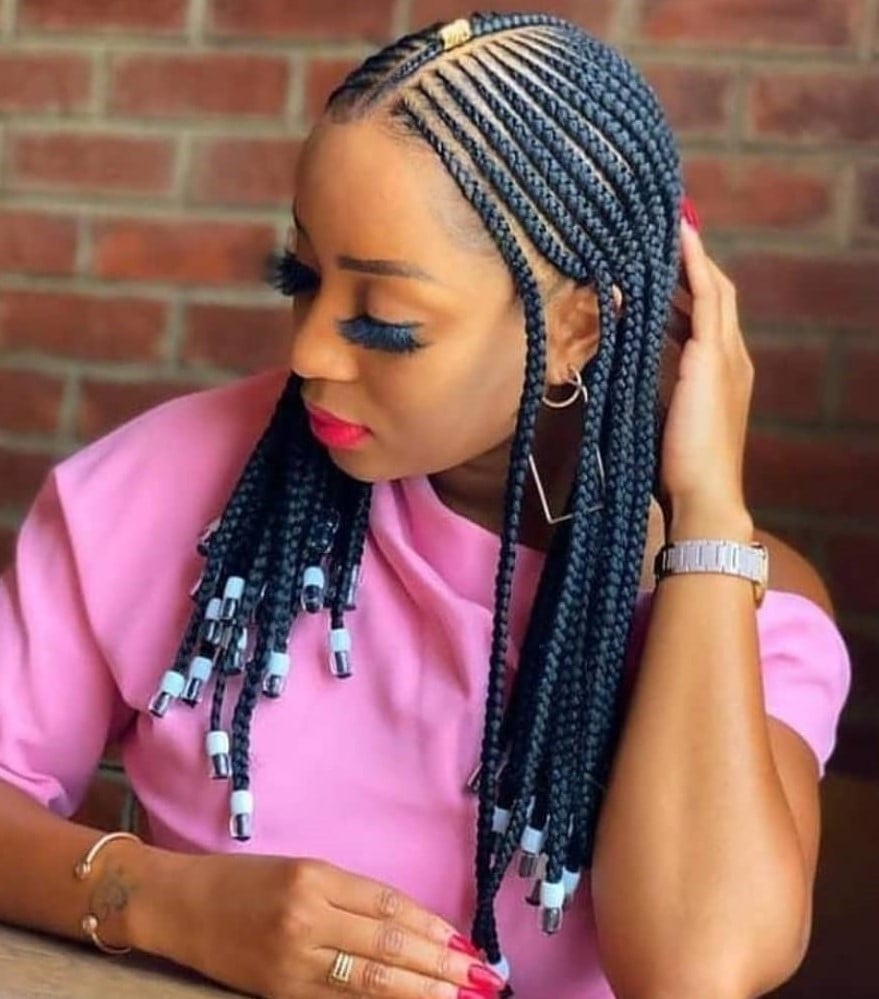
Thin black braids with white and silver beads
Hundreds of thin, straight braids fall from a clean middle part, each one a uniform black thread. The small white and silver beads add subtle detail without overwhelming the density. This sheer number of braids works best on thick hair that can handle the tension, and the weight sits evenly across the scalp. Thicker braids or bead embellishments that feel busy for daily wear are not the goal here. Ask your stylist for: thin straight fulani braids with white and silver beads. The salon finish means a solid two to three hours in the chair, but the hold is reliable for several weeks with careful edges.
A quieter take on dark brown with lighter brown highlights
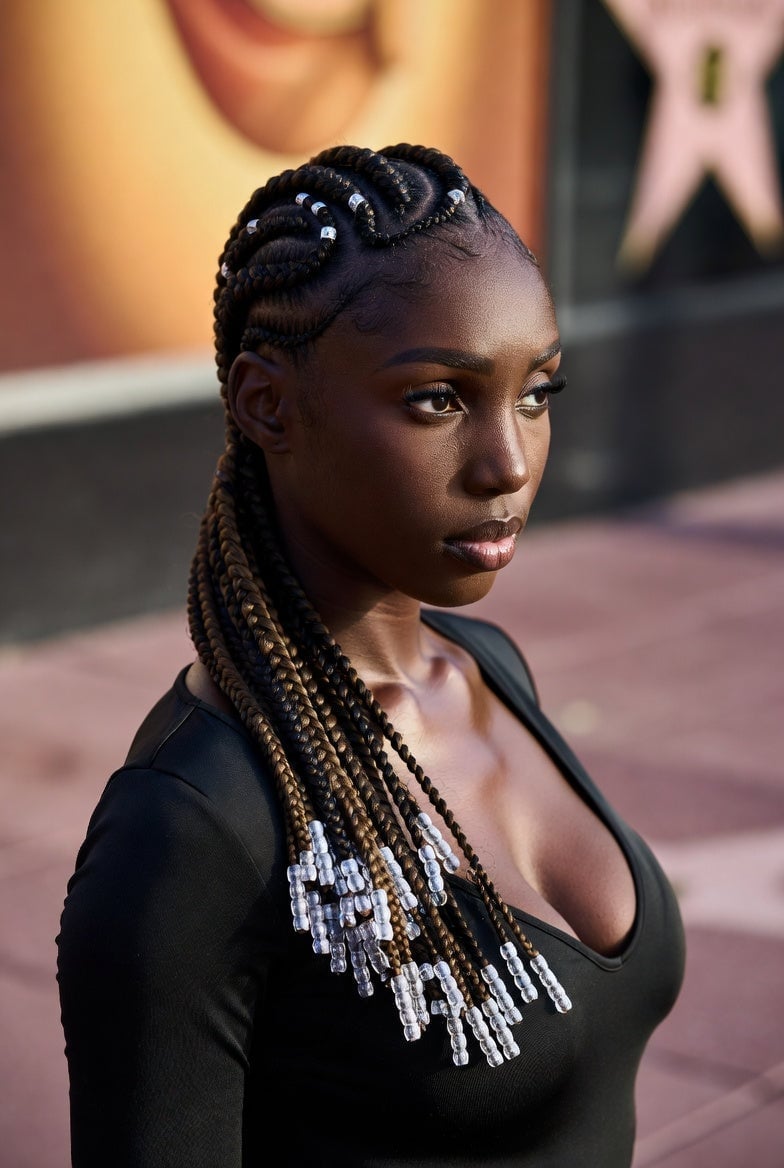
Wondering how to get that subtle color shift without a full ombré? The gradient here runs dark brown at the roots into lighter brown strands further down, and the clear beads spaced along the braids keep the look from looking flat. The middle parting and laid edges frame the face without extra bulk. A single solid shade or no embellishments at all gives a different effect. The technique holds the color transition without harsh lines, and the beads stay put for the life of the style.
Soft curly ends that add movement to intricate braids
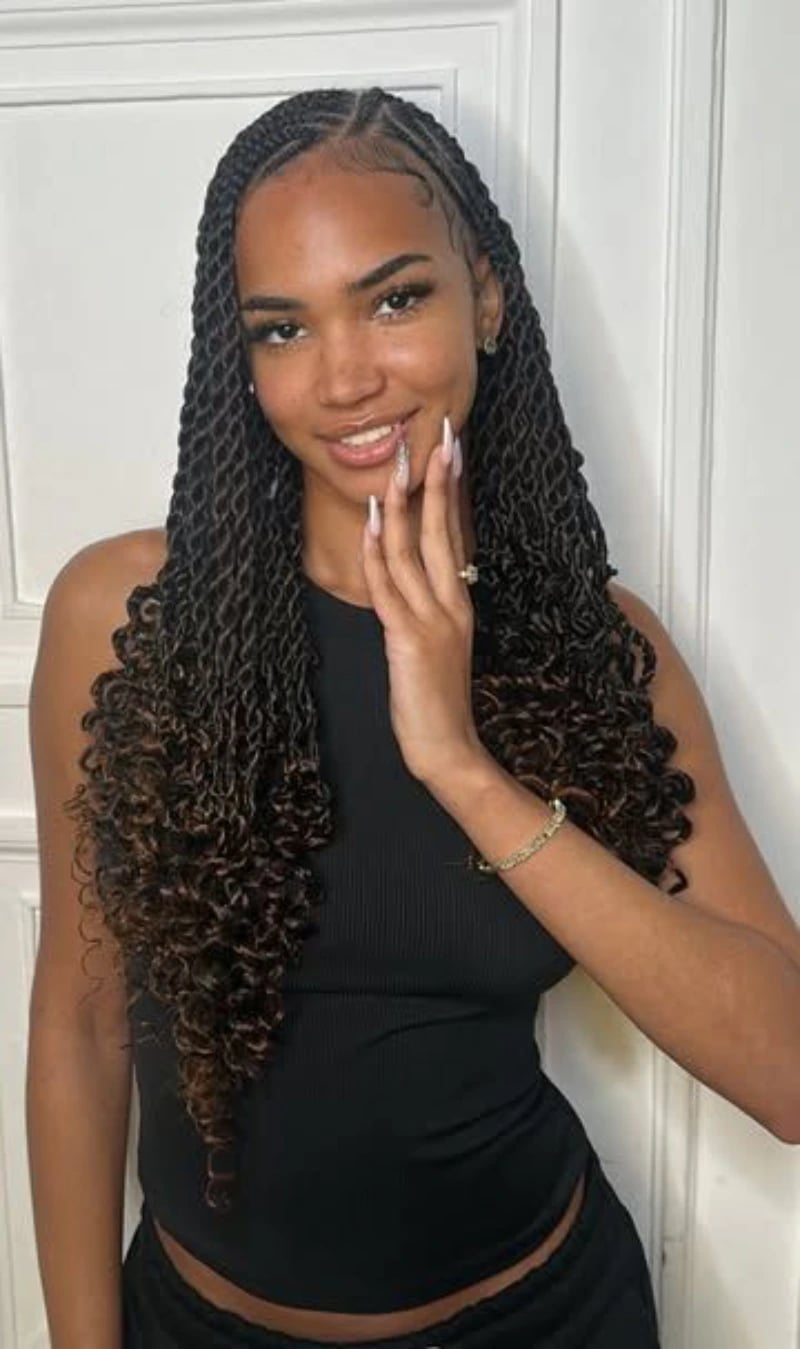
Straight braids all the way down can feel heavy by week three. A set that switches to loose, curly ends at the bottom changes the weight distribution entirely. The dark brown base with subtle lighter brown highlights keeps the transition from looking like an afterthought. Ask your stylist for: fulani braids with loose curly ends, subtle highlights. The curly ends need a separate styling step, a quick twist or light water mist every few days to keep the shape readable. The clean middle parting and intricate braiding up top provide the structure; the curl gives the swing.
Clear and brown beads woven into black braids
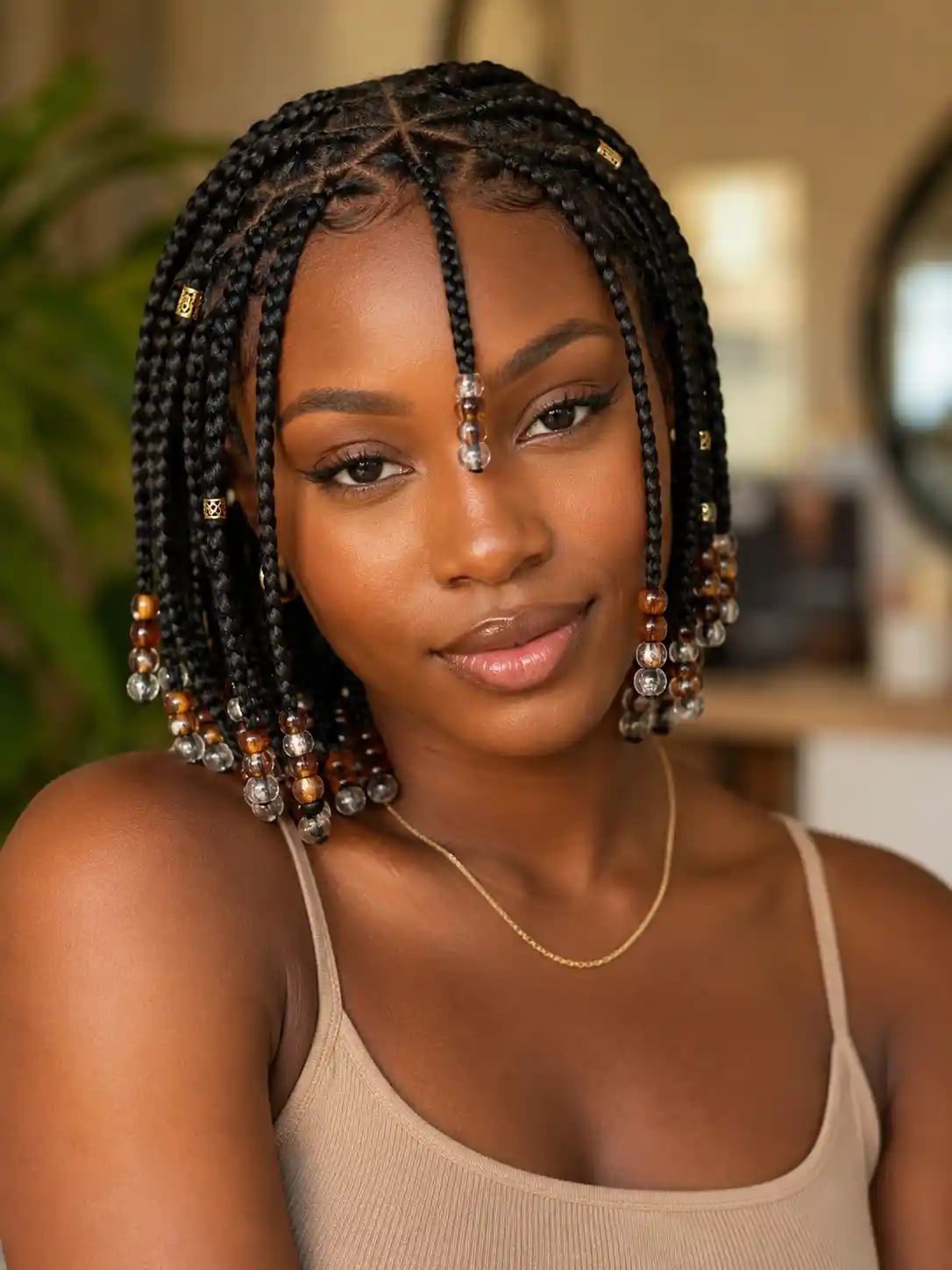
Two bead colors on the same braid require more planning than a single shade. The clear beads let the black braid show through, while the brown ones sit like small wood knots against the dark base. The middle part keeps the pattern symmetrical, and the beads are woven in at intervals rather than clustered at the ends. The technique means each bead is threaded onto the braid as it is formed, so removal takes patience. Skip it if you want a no-embellishment style or prefer a quicker install.
Braiding a top knot with beads and face-framing strands
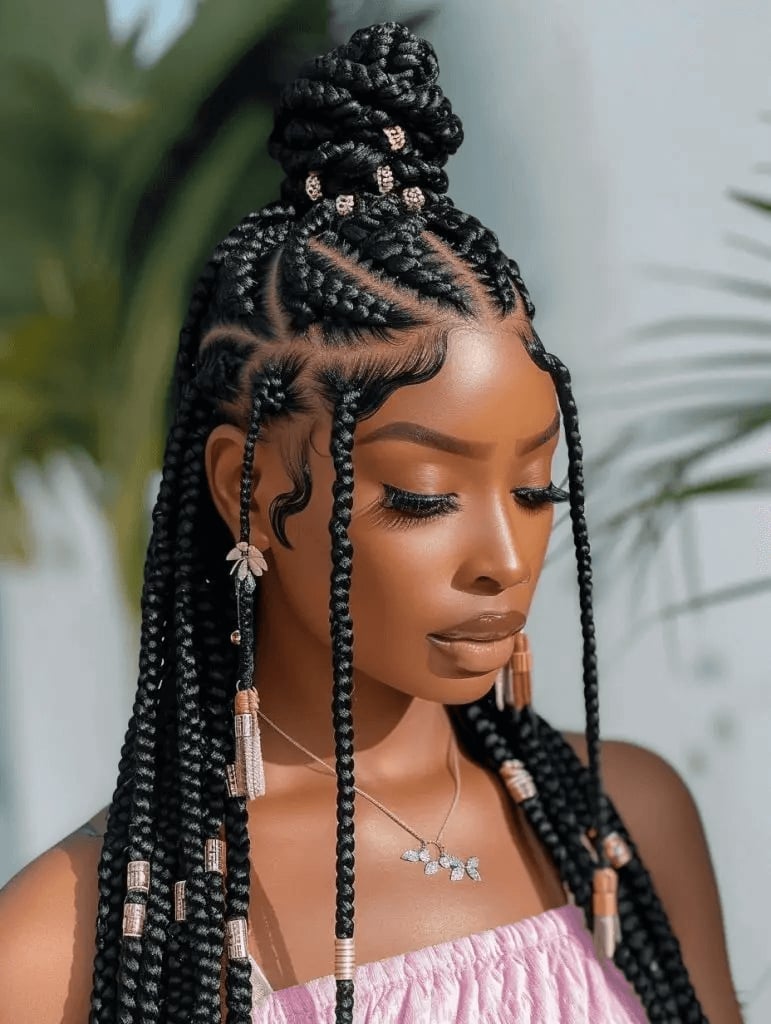
A high braided top knot pulls the weight off the nape and neck, which matters for longer wear. The decorative beads and charms sit on the knot itself and on the loose strands left to frame the face. Request from your stylist: fulani braids into a high top knot with beads. The face-framing pieces soften the pulled-back silhouette, making it suitable for formal events without looking severe. Not for you if you prefer braids worn fully down or need a style that moves freely. The updo holds securely for days with minimal adjustment at the edges.
Silver beads on cornrows curving towards the back
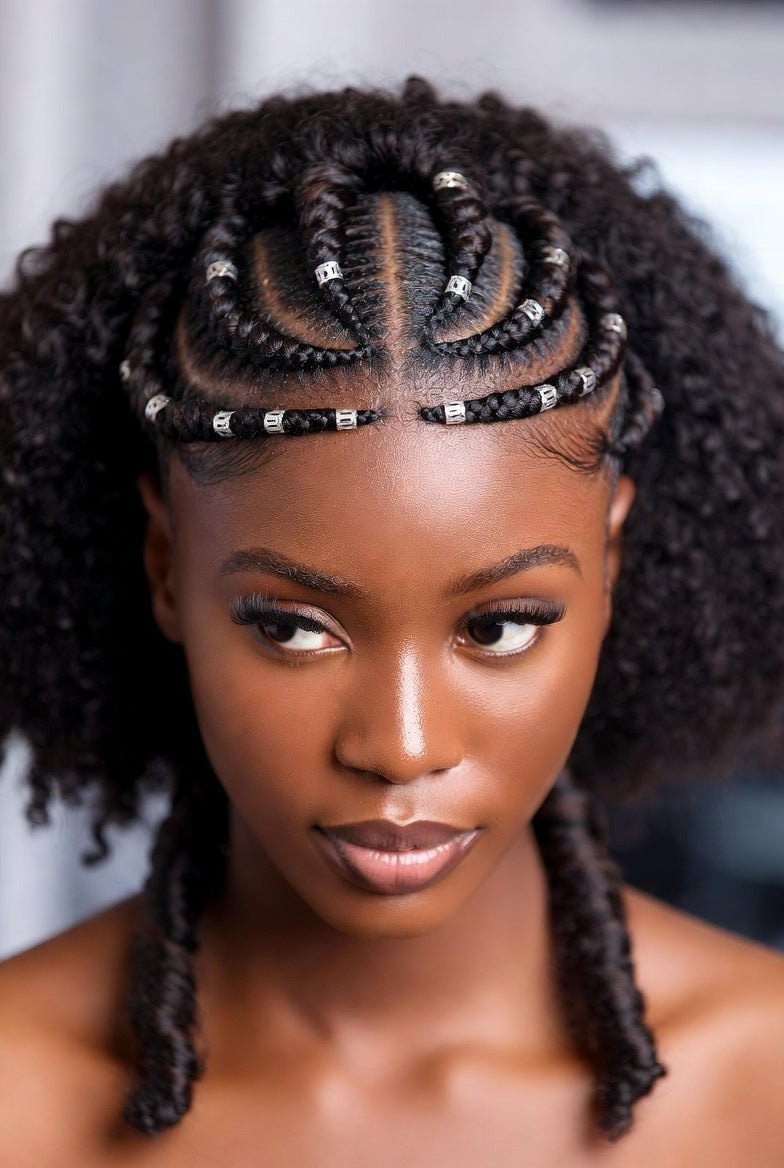
Cornrows curved toward the back keep the front tidy while the rest stays voluminous and coily. A middle part and black braids create a clean foundation for silver beads at the hairline. It works best if you want a partially braided look with cornrows. The combination of cornrows and loose braids requires careful handling to maintain definition.
Wooden and shell beads on braids with coily ends
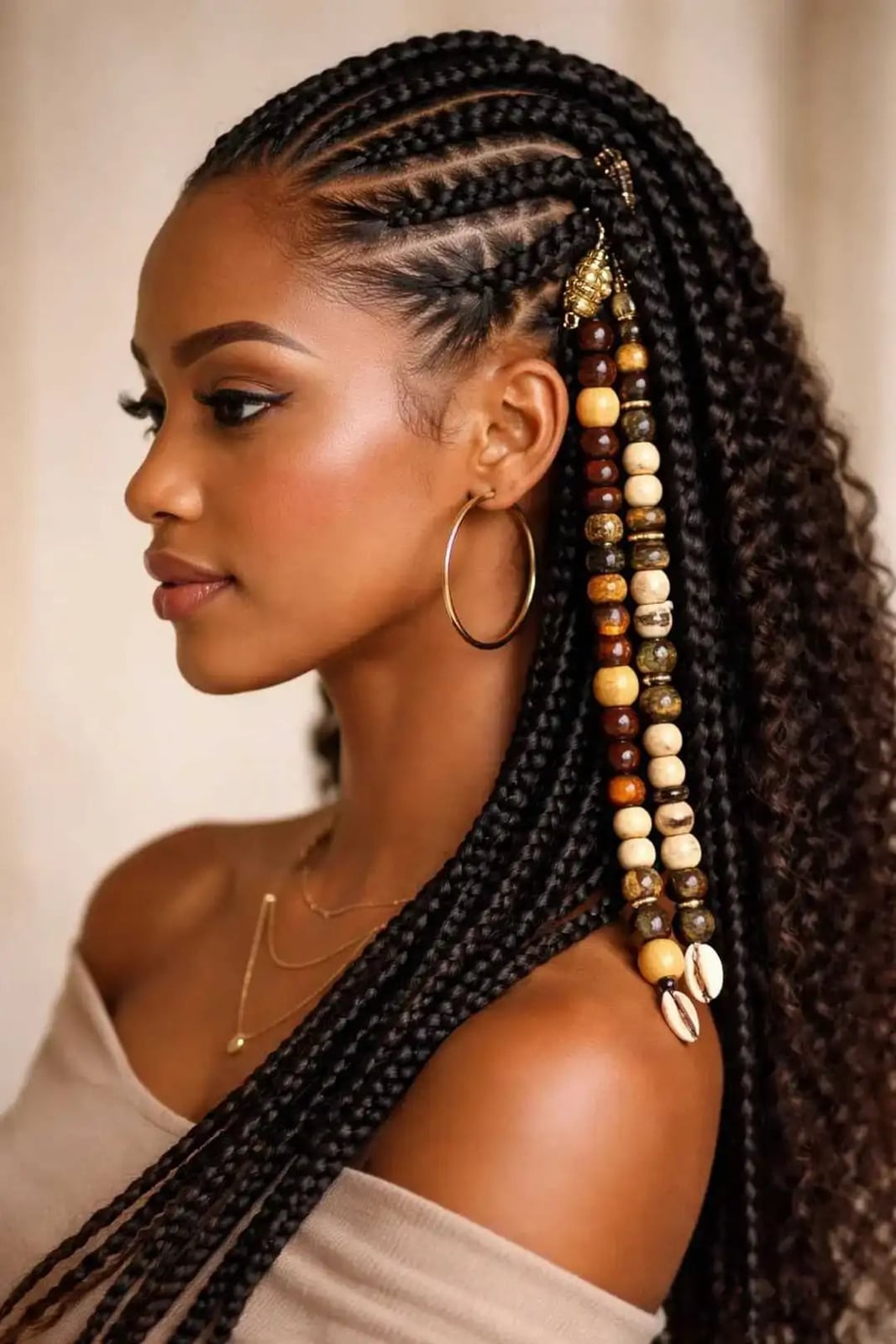
Multiple strands of wooden beads in earthy tones sit alongside delicate cowrie shells on black braids. The braids transition into loose, coily ends that add movement. This design lands best in warmer months when the natural materials complement lighter fabrics. Request from your stylist fulani braids with wooden beads and cowrie shells. The natural bead materials offer a unique aesthetic and may require gentle handling to keep them secure. A satin scarf at night prevents the shells from catching on pillowcases.
The coily ends need a light leave-in every few days to stay defined. Avoid heavy oils near the beads. They can loosen the threading. The overall look holds for three to four weeks before the roots need attention.
Ornate hair jewelry on thick, coily braids
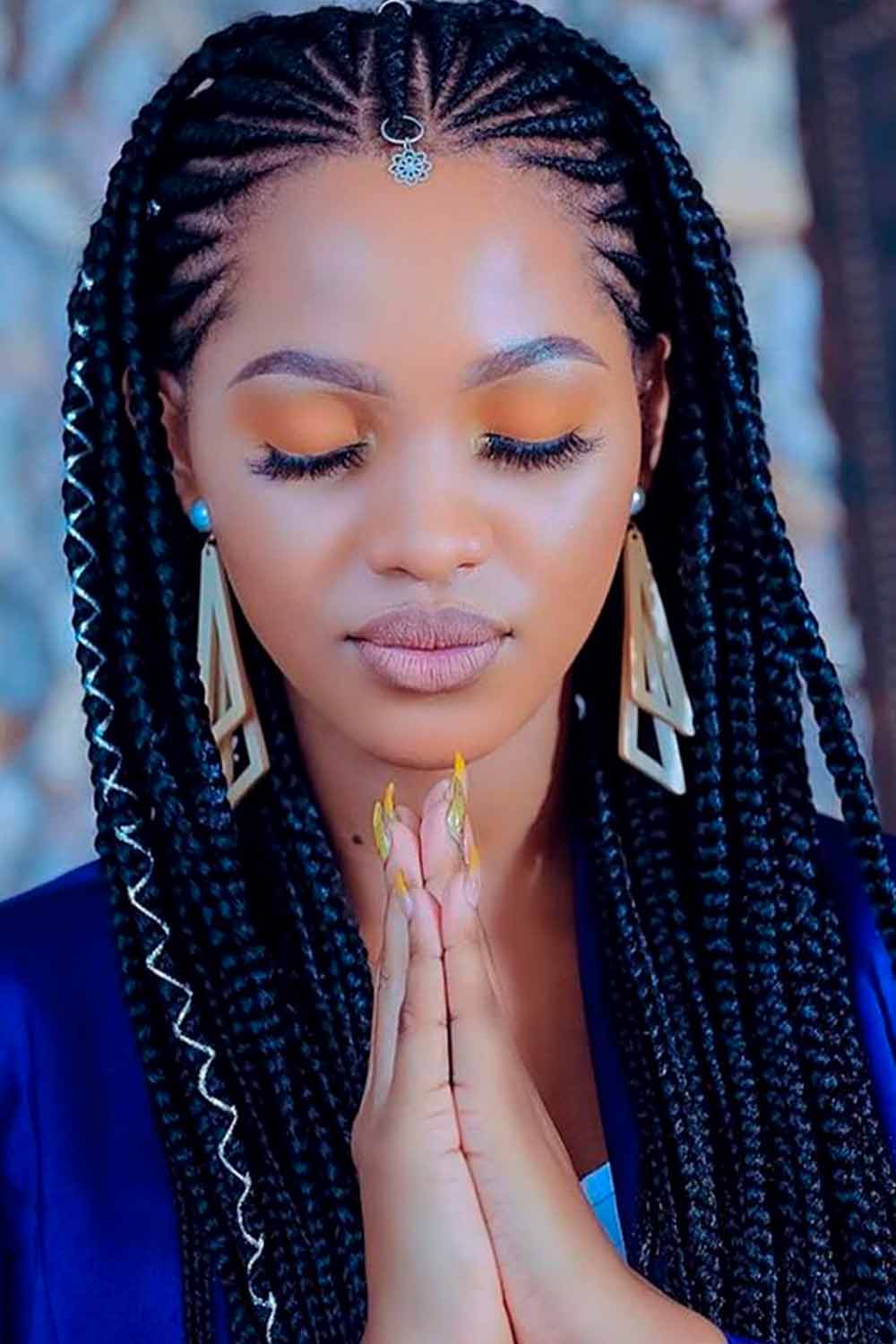
A middle part frames thick, coily braids, with a few strands wrapped in silver thread. The ornate hair jewelry at the hairline adds a deliberate focal point. This style requires a salon visit. The jewelry needs careful placement to avoid snagging. The metal pieces can shift during sleep, so a bonnet is recommended. A minimalist look skips the adornments.
Sunburst braid pattern with blonde highlights
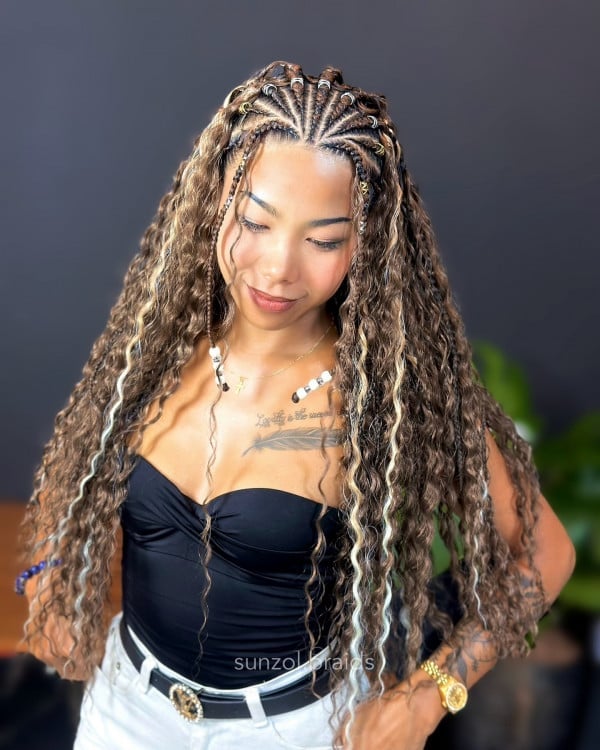
The crown uses a sunburst braid pattern that radiates outward, drawing the eye up. Beads punctuate the braids where the pattern meets the wavy ends. Request from your stylist fulani braids with sunburst crown pattern and blonde highlights. The blonde highlights run through the braids from the middle length down, creating contrast against the darker base. The wavy ends soften the geometry of the crown pattern.
The highlights require color-safe shampoo to keep the blonde from turning brassy. The braids themselves hold the pattern well for two to three weeks before the roots grow out. Not for you if you prefer solid color braids or no highlights.
Two textures: cornrows and loose braids with wavy ends
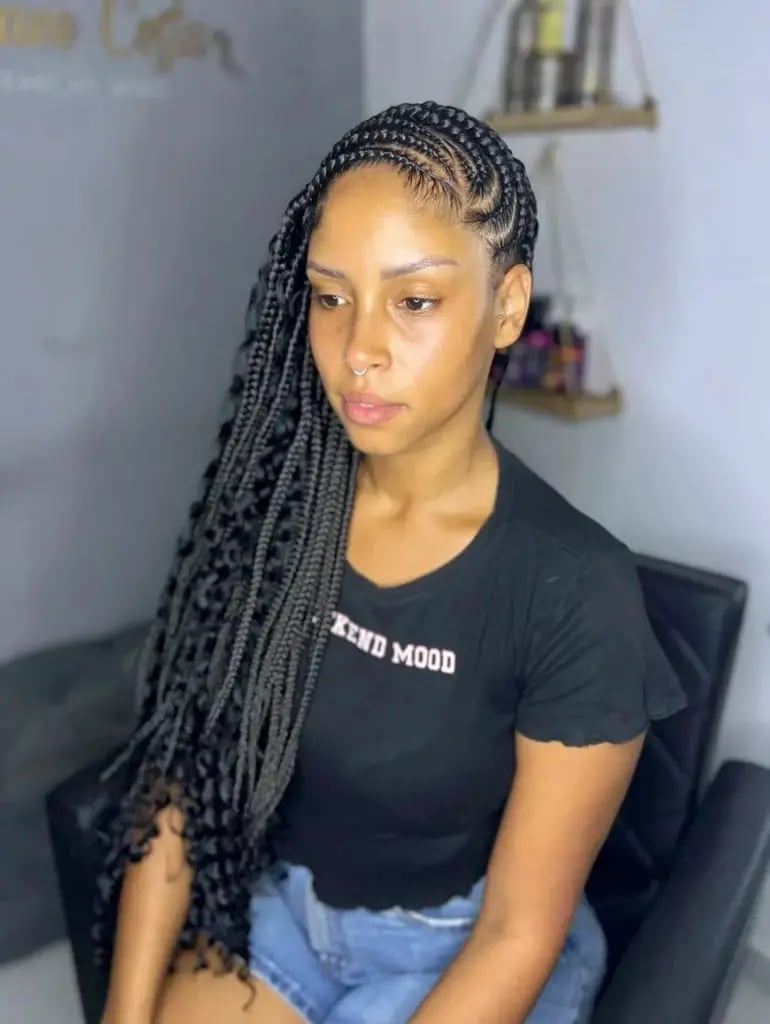
Cornrows along the hairline give way to loose braids with wavy, coily ends. The middle part and deep black color keep the two textures unified. The contrast between structured cornrows and flowing ends adds visual weight. A uniform braid style is a simpler alternative. Maintaining the distinct textures requires targeted care for both the cornrows and the loose ends.
A wide-tooth comb on the wavy ends prevents tangling at the transition point. The cornrows need edge control at regular intervals to stay sleek. This style typically lasts about three weeks before the hairline needs redoing.
Zig-zag cornrows leading into long black braids
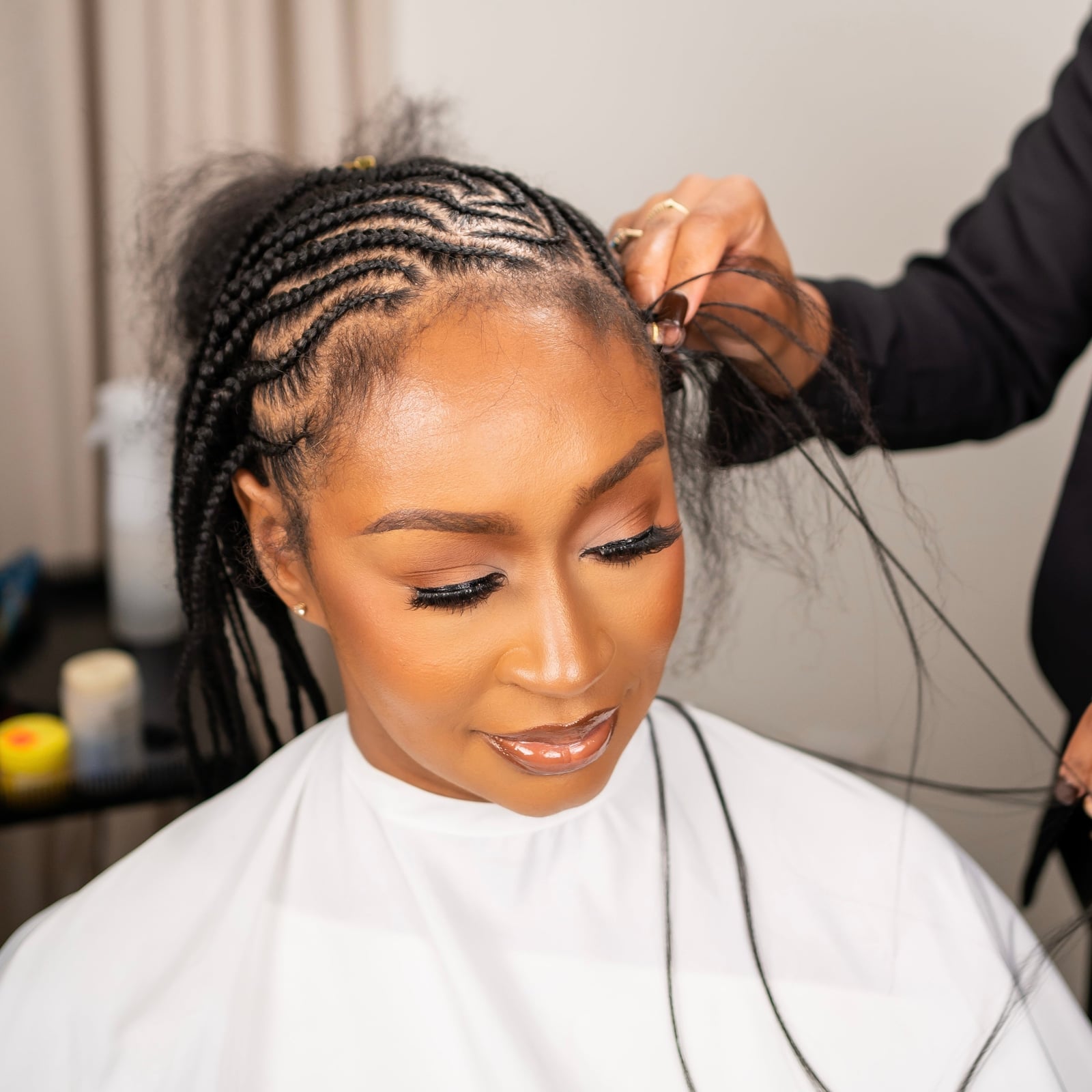
The words you need are “fulani braids with a zig-zag cornrow pattern.” Long, thick black braids drop from a detailed parting where each cornrow curves and reverses direction at the center. Coily texture holds the shape of each twist, so the zig-zags stay crisp for weeks. The pattern requires patience in the chair, expect a solid salon appointment, not a quick pull-through. Not for you if a standard straight cornrow feels cleaner to you. Black hair color keeps the focus on the geometry.
Vibrant blue braided bun with cascading braids
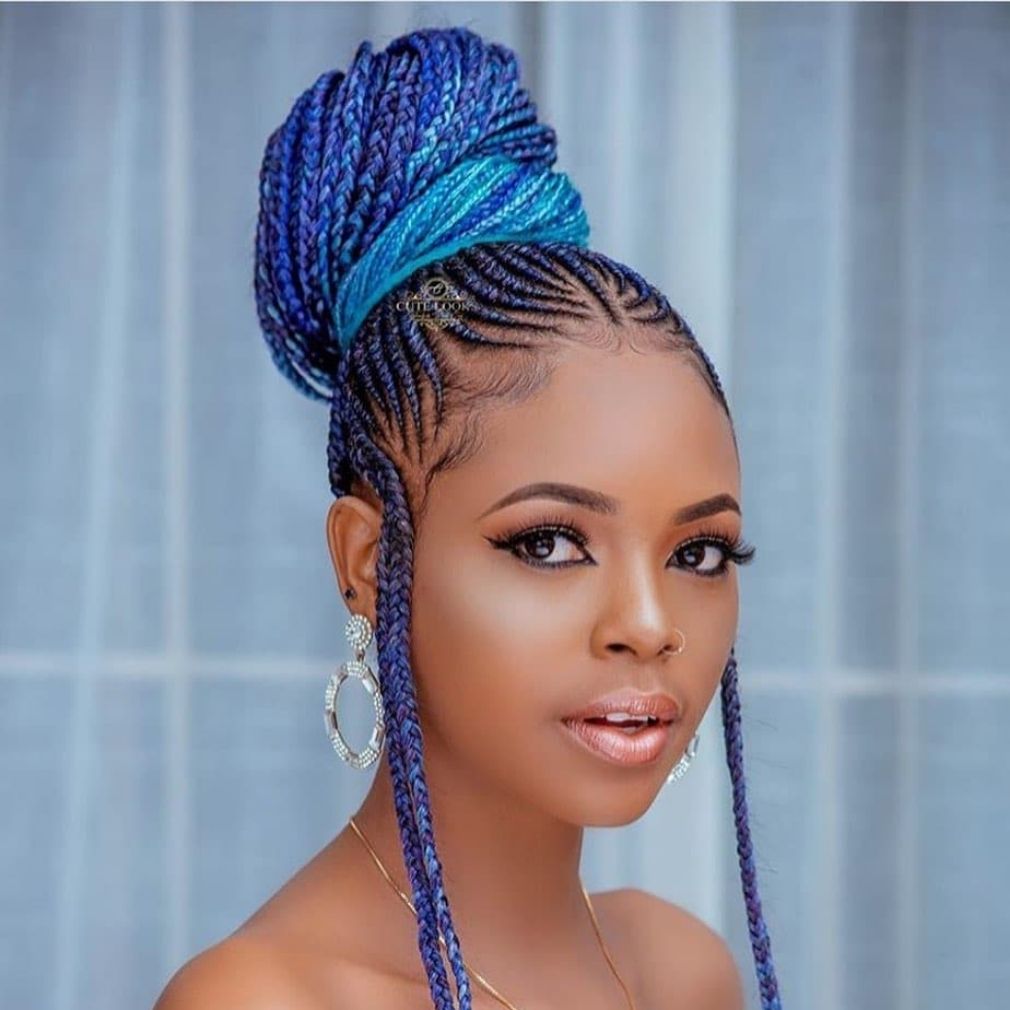
Two braids fall forward from a high bun, and that single detail makes the color look deliberate rather than accidental. Vibrant blue braids with lighter blue streaks gain structure from the contrast between the gathered top and the loose strands. A middle part and coily texture support the volume at the crown, so the bun sits full instead of flat. Pass when natural hair colors are your boundary. This shade asks for a commitment to upkeep. Thick hair has the density to carry both the elevation and the cascade without looking sparse.
Intricate cornrow designs framing the face
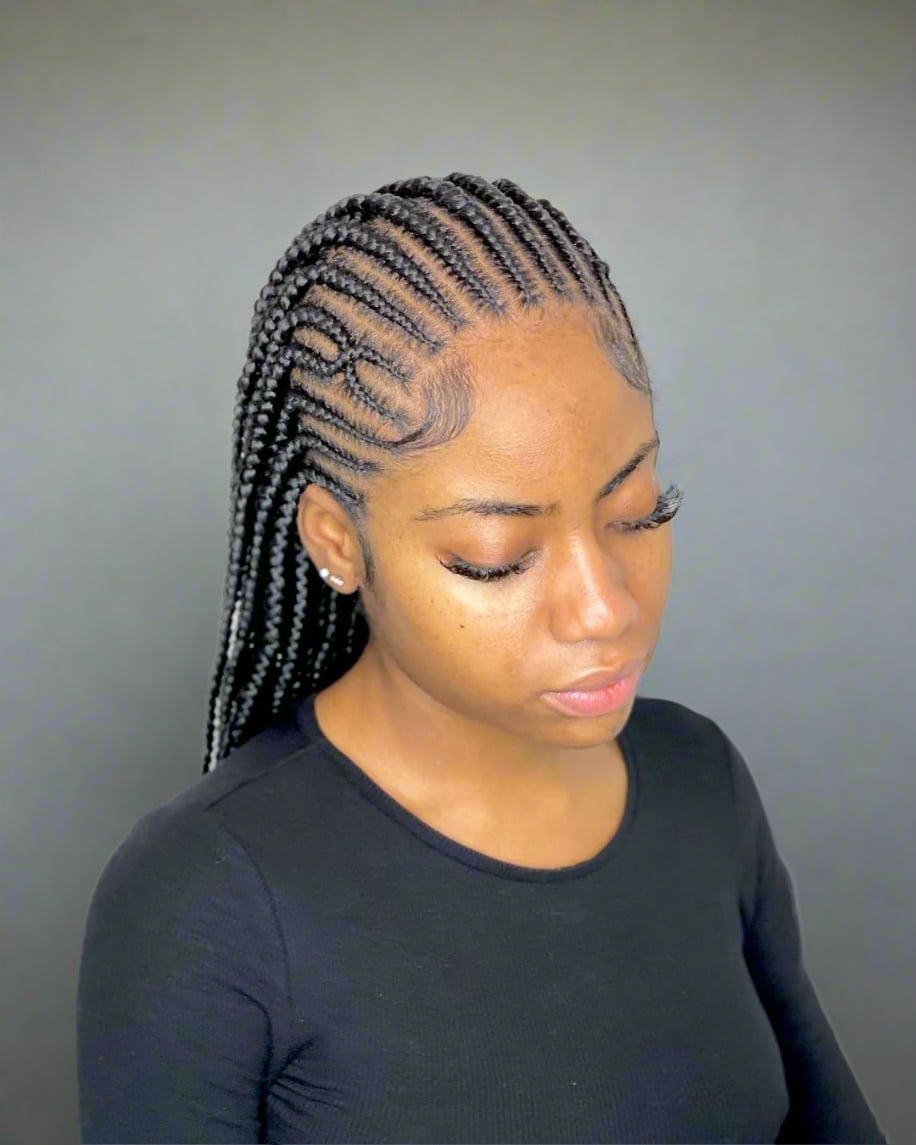
Cornrows curve along the hairline before feeding into long, uniform braids, and that framing is what separates a simple style from a deliberate one. A middle part anchors the symmetry, while the coily texture keeps each cornrow raised and defined. The side view shows how the pattern wraps around the face without pulling tight at the temples. Black color lets the braid work speak without distraction. Tell your stylist: fulani braids with face-framing cornrow designs. The precision holds best when the braids are kept at consistent tension from root to tip.
Neat braids with softly curled baby hairs
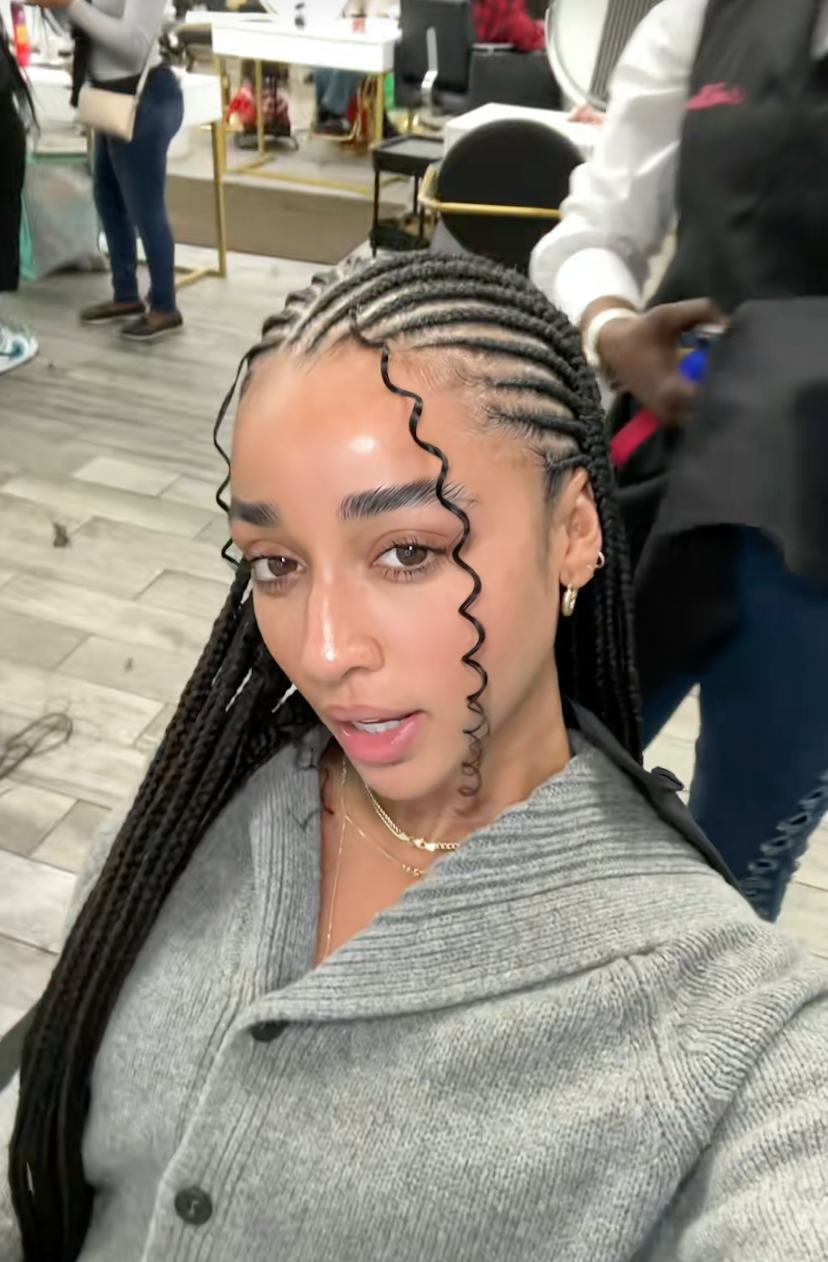
Curly baby hairs soften the line where the braids begin, and that small shift changes the whole finish. A centered parting keeps the neat Fulani braids symmetrical, while a few curls at the edges add a neat contrast. Coily texture makes those curls hold their shape without extra product. The baby hairs are styled with a fine-tooth comb and edge control, not a gel that flakes by midday. Black hair color keeps the focus on the contrast between smooth braid and curled edge. This is a salon finish that is deliberate without being fussy.
Gold and silver beads on braids in a nape ponytail
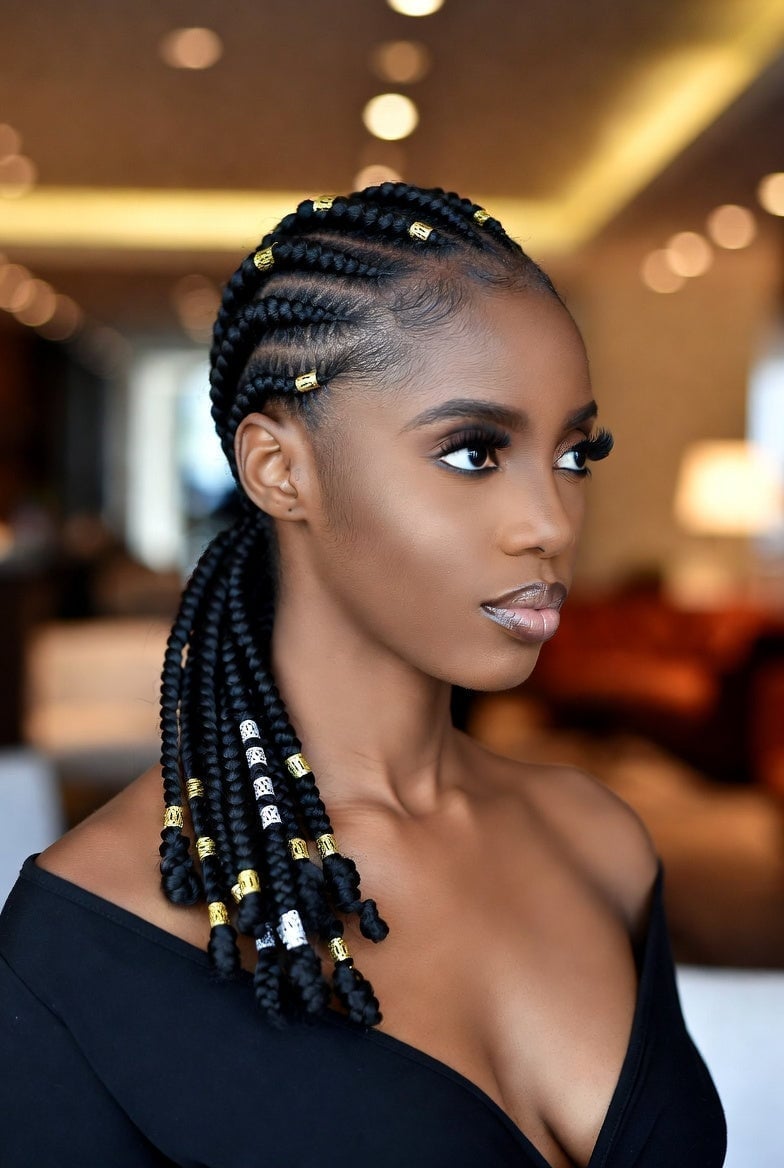
A nape ponytail versus a high one: the low gather keeps beads from clattering against your neck all day. Gold and silver beads slide onto neat Fulani braids with a middle parting, and the ponytail at the nape collects the weight so the braids don’t pull at the temples. Coily, thick texture gives the beads enough grip to stay in place without sliding. The black color creates a clean backdrop for the metallic contrast. Tell your stylist: fulani braids with beads into a nape ponytail. The low gather also keeps hair off your face without the tension of a high pull.
Geometric braid patterns in dark gray hue
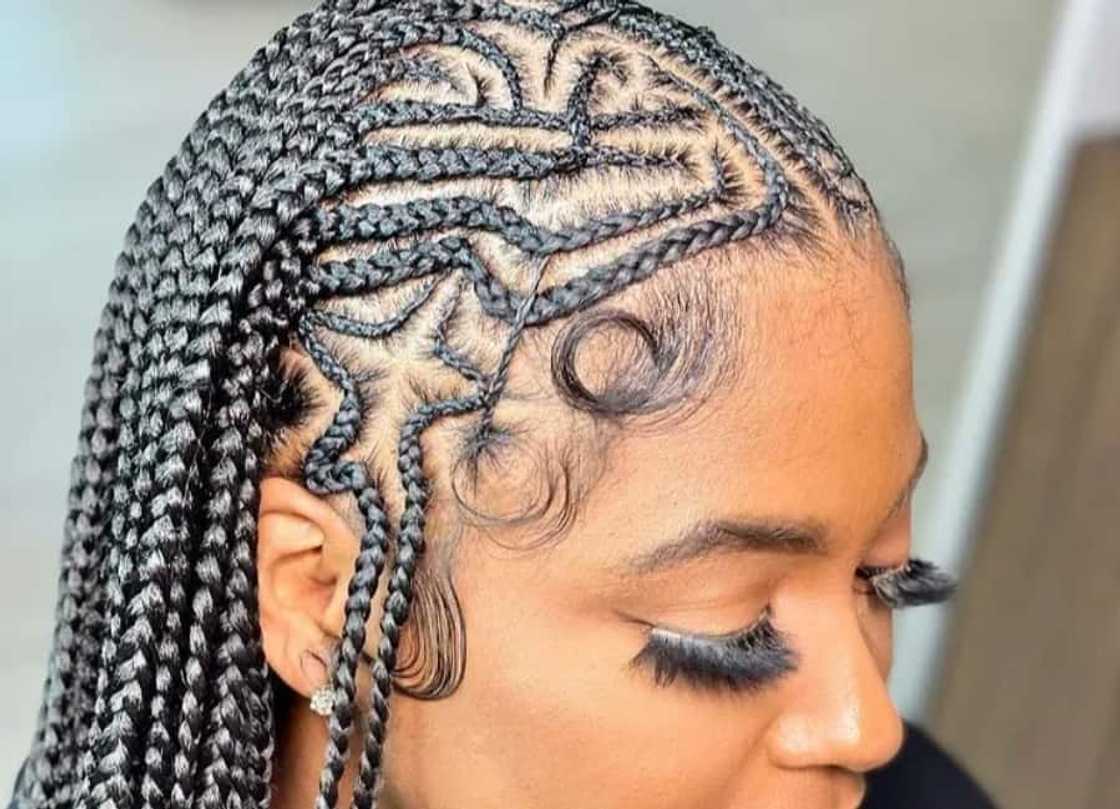
Dark gray is not a color you see every day, and that is exactly the point. The geometric patterns carved along the hairline turn the braids into a deliberate design choice. Coily, thick hair holds the crisp lines best, with face-framing tendrils and curled edges softening the precision. A middle part keeps the symmetry intact. This shade demands a certain commitment. Colored braids need specific care to maintain their hue and prevent fading.
Honey blonde braids with darker roots and curls
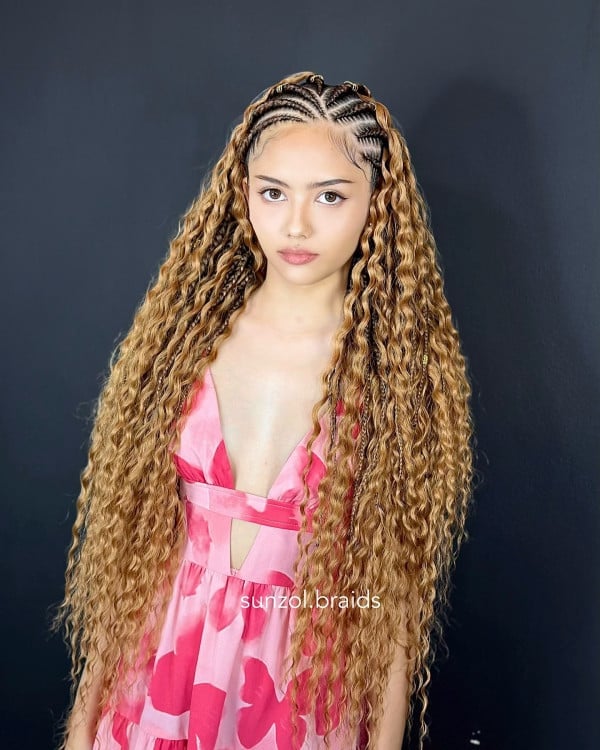
Honey blonde against darker roots creates a grown-in color shift. The intricate cornrow pattern at the crown leads into long, loose curly extensions in a warm blonde, and the darker base at the scalp keeps the contrast from feeling artificial. Thick, coily hair holds the cornrow detail best, and a middle part keeps the symmetry clean.
Request from your stylist honey blonde fulani braids with darker roots and curly ends. The curly ends add volume but also weight, so expect a denser feel than straight braids. The root-to-highlight contrast can fade toward brassiness around week five, so a color-safe shampoo matters more than usual.
Side part braids with wavy extensions and gold charms
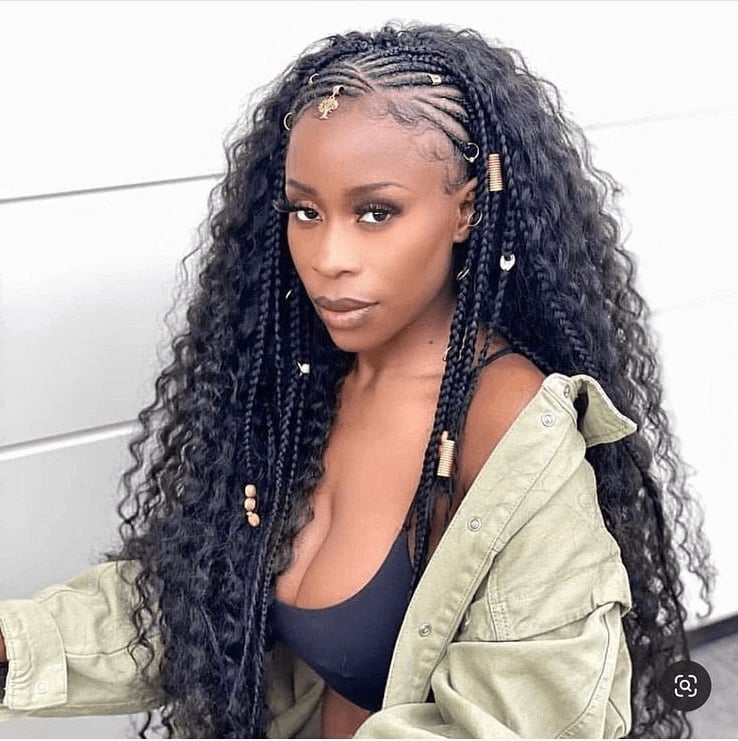
A side part changes the weight distribution of fulani braids entirely. The part shifts the bulk to one side, and the wavy extensions amplify that asymmetry. Gold beads and charms spaced along the small braids add shine without overwhelming the design. Thick, wavy texture gives the extensions the body they need to keep the waves from collapsing. The gold charms need to sit on a few braids only, or the design looks cluttered.
Cornrows transitioning to braids with honey blonde highlights
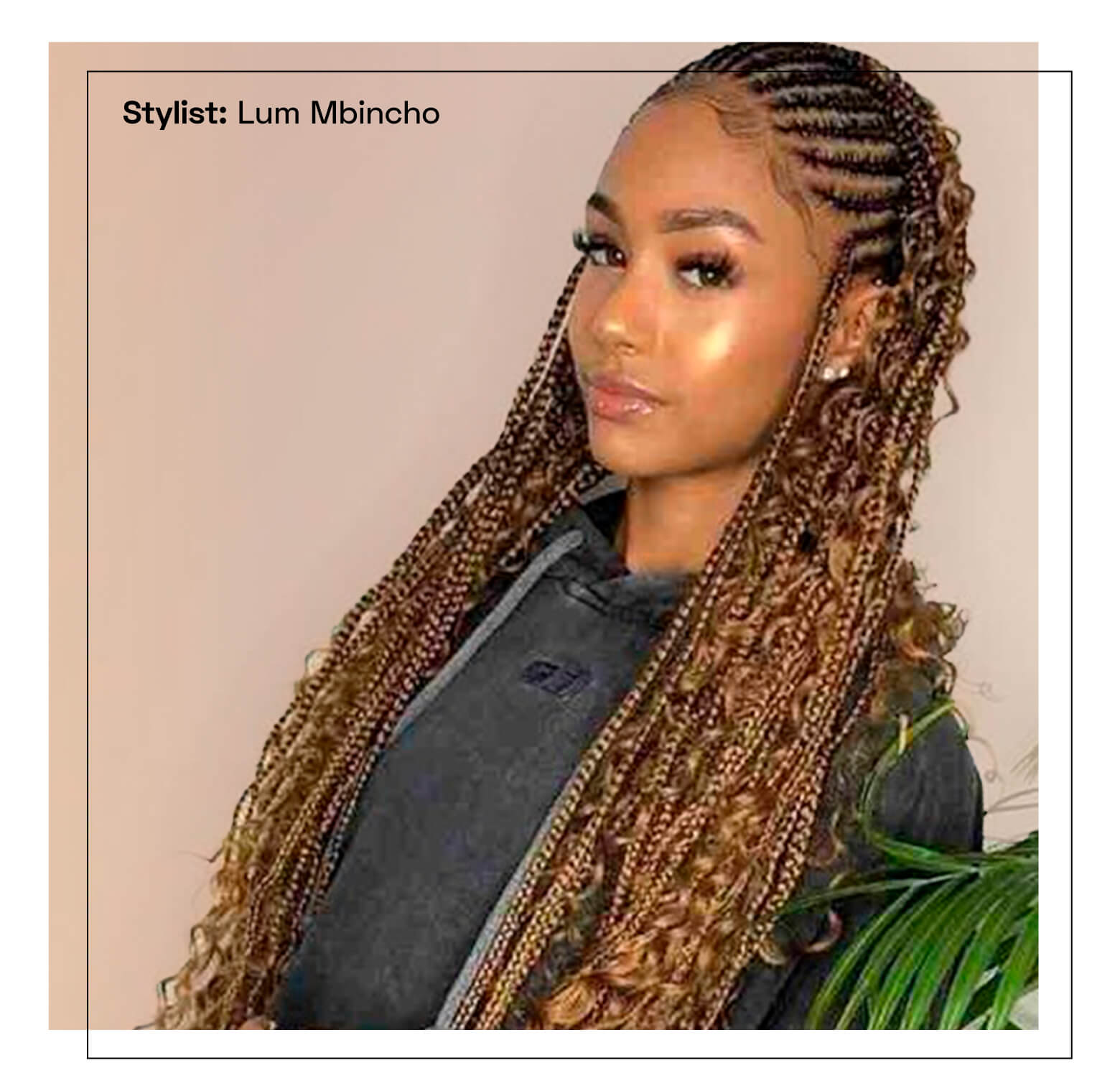
Cornrows at the crown and braids below sounds like two separate styles, but the transition is the point. Intricate cornrows hug the scalp, then release into long, flowing braids with curly ends. The honey blonde highlights against a dark brown base give the braids a lift that solid color cannot. Thick hair holds the cornrow detail crisp and the braids full.
Request from your stylist cornrows to braids with honey blonde highlights and curly ends. A middle part keeps the highlight placement even on both sides. The curly ends soften the overall shape, which matters for a design that is structured. The highlight contrast works best when the base is at least two shades darker than the blonde pieces.
Box braids and curly extensions for textured volume
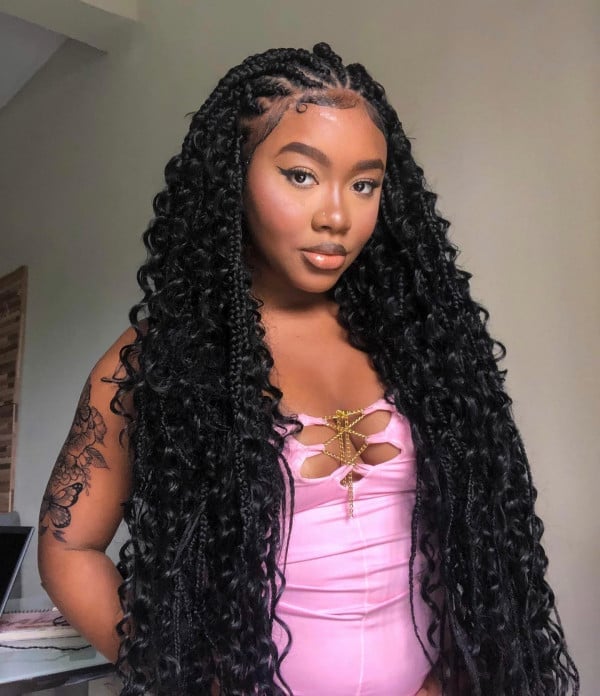
You need density before you need length. The mix of box braids and curly extensions builds volume from the scalp down, and a middle part keeps the weight balanced on both sides. Thick, curly hair holds this combination best because the natural texture blends with the curly extensions without a visible seam.
Black braids and black curls create one mass of texture that works as a cohesive look. The box braids provide the structure, the curly extensions add the body, and the face-framing shape keeps the whole silhouette from becoming a single block of hair. The hold depends on how tightly the box braids are installed; looser braids will frizz faster, so expect a salon-leaning result that needs a satin scarf at night.
Black to honey blonde Ombré braids with colorful beads
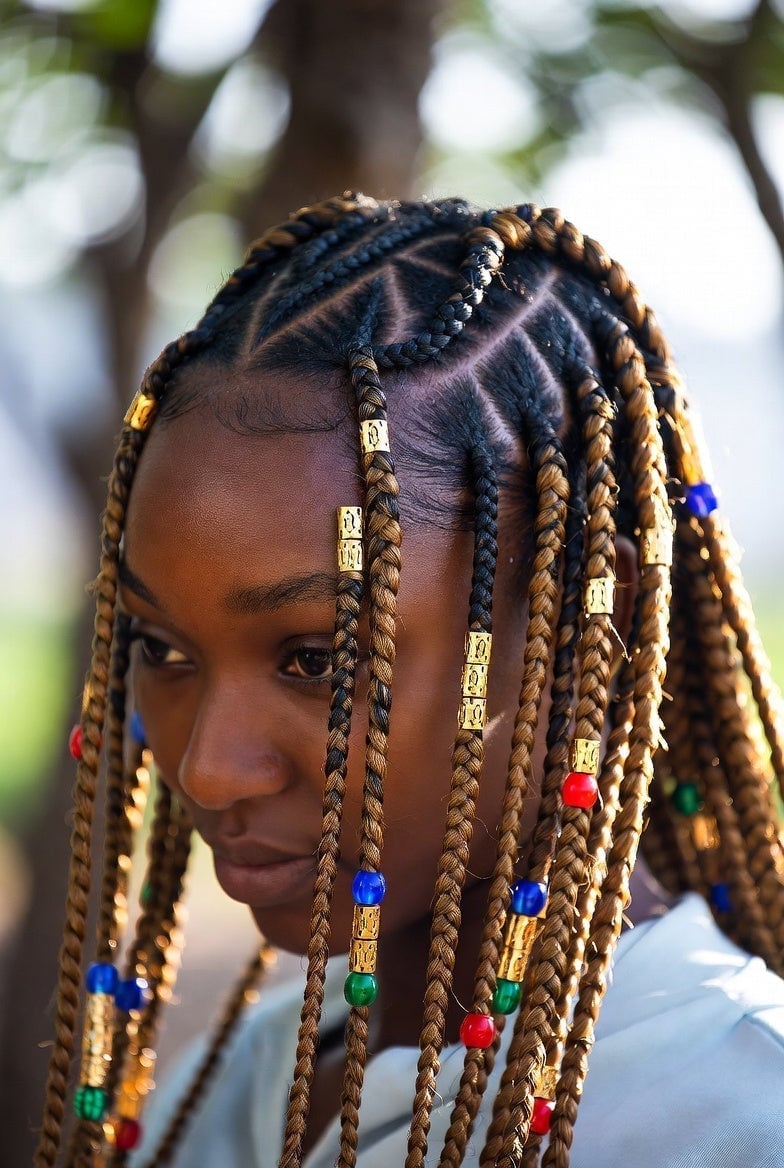
Where a full blonde set feels like too much commitment, this gradient lands the look without the root-rethink. Black at the scalp shifts into honey blonde toward the ends, with gold and colorful beads threaded through the thick braids. A middle part keeps the ombré transition even on both sides. Request from your stylist: fulani braids with black to honey blonde ombré and colorful beads. The gradient holds its contrast best when you use color-safe products and keep the beads from snagging during sleep. Not for you if you prefer solid color braids or natural tones only.
Wooden beads on neat fulani braids
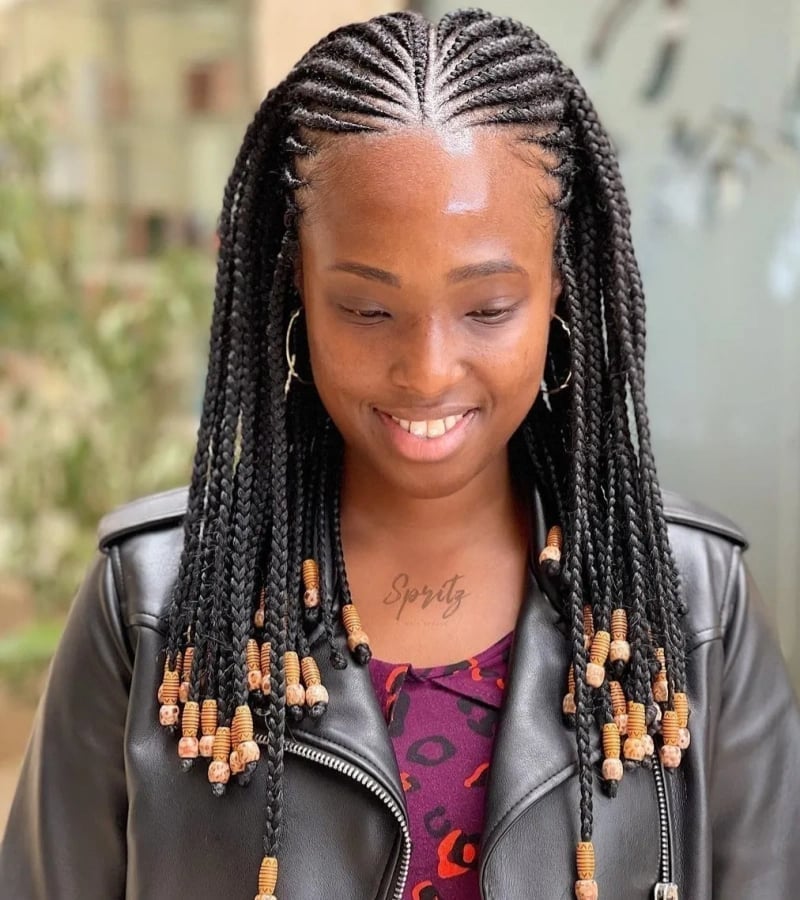
Wooden beads read differently than metal or acrylic. They bring a grounded, natural finish to neat fulani braids that already have a centered parting and a thick, coily texture. The matte tone of the beads sits quietly against the black braids without competing. This is a straightforward request that any braider can execute. Not for you if you prefer metal or colorful beads that draw more attention.
Long, thin black braids in a dense look
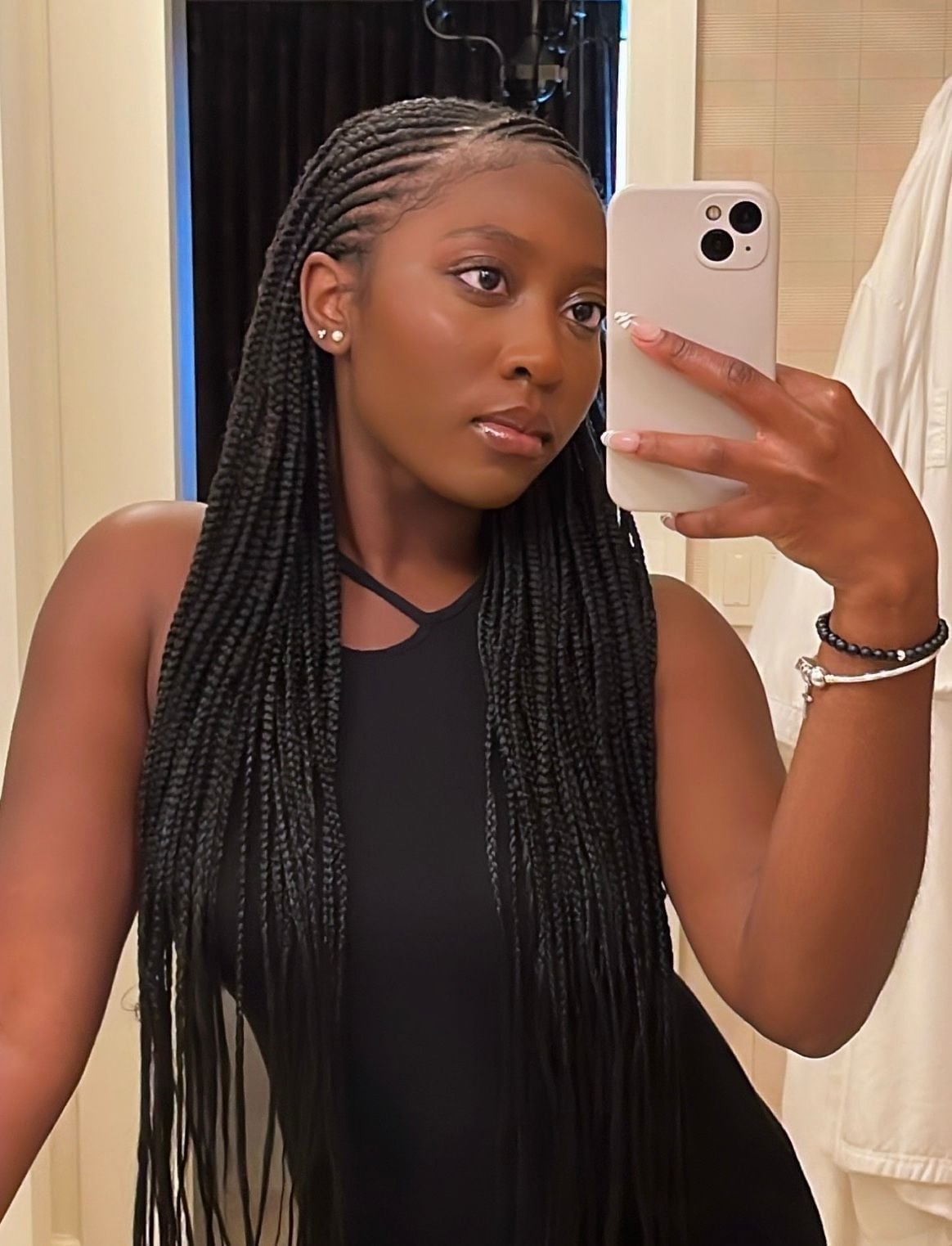
Density comes from section count, not braid thickness. These are numerous thin, coily braids in a solid black shade, parted down the middle and allowed to hang in a full, intricate curtain. A middle part gives the dense mass a clean starting line.
Thin braids are more delicate than their chunkier cousins. Handle them gently when detangling and avoid heavy manipulation at the roots. Request from your stylist: long thin coily fulani braids. Not for you if you prefer thicker braids or lighter colors for contrast.
Geometric braid pattern with face-framing sections
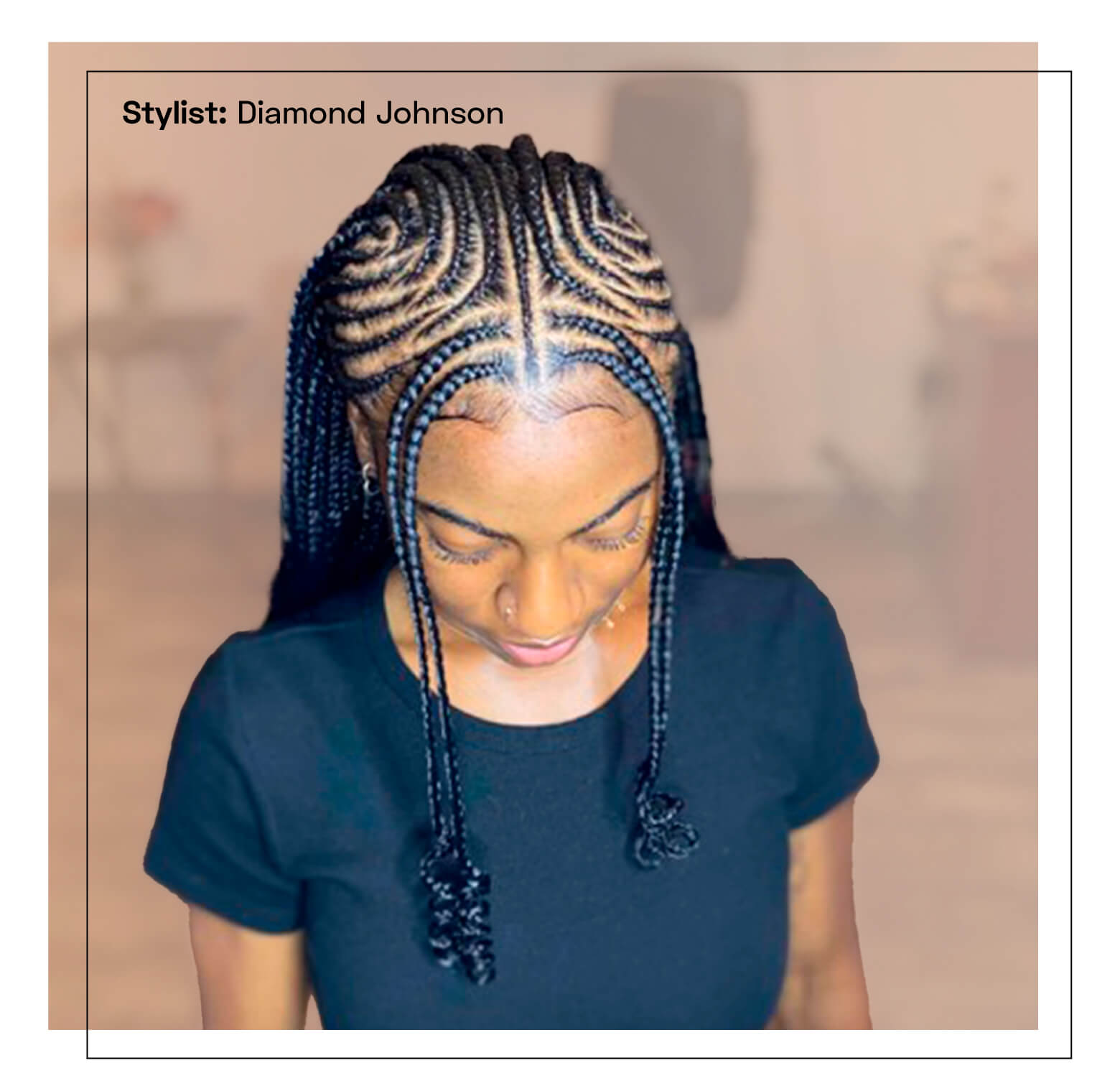
A uniform braid pattern is one thing. A geometric design radiating from the middle part is another. Here the coily black braids form a precise shape at the crown while two distinct sections frame the face and end in curled tips. The curled ends soften the geometry just enough. Not for you if you prefer a uniform braid pattern without directional changes.
Cornrowed front with long, coily braids
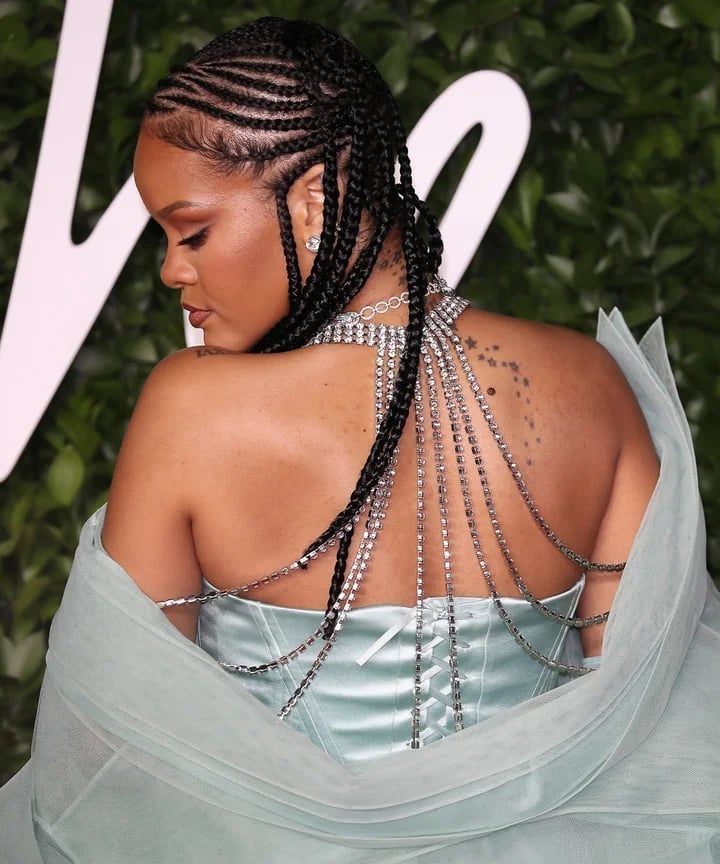
Cornrows at the front keep the hair off the face while the rest falls freely. This version uses intricate cornrows along the hairline that transition into long, thick, coily braids in a deep black shade. A middle parting carries through both sections for continuity. Request from your stylist: fulani braids with cornrowed front and long coily braids. The transition line needs neat application to stay smooth; a loose section there will unravel faster than the rest.
Braiding zig-zag patterns into a low bun
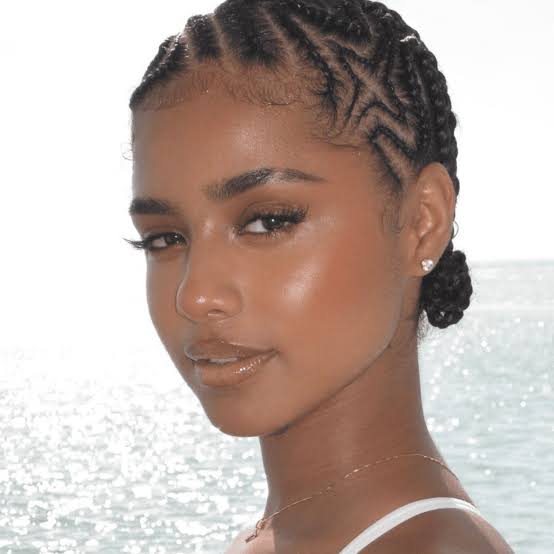
This is a salon-leaning design that looks one continuous pattern. Zig-zag cornrows sweep toward the nape, where thick, coily braids gather into a neat low bun. The tight scalp work and the dense texture hold the shape without pins slipping. Not for you if you prefer braids worn down or a high bun that clears your collar. The pattern itself keeps edges tidy for about two weeks before new growth softens the lines.
Dark brown braids with loose waves and gold cuffs
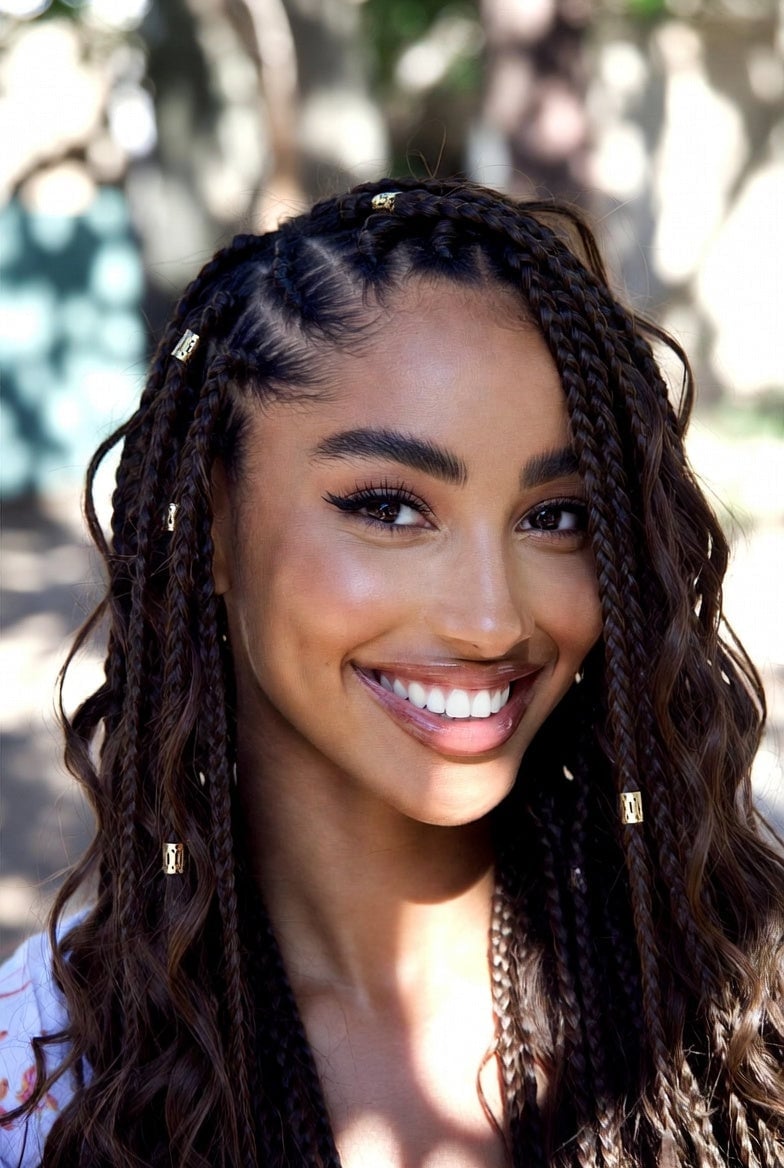
A middle part is the practical starting point here. Dark brown braids fall into loose waves, with small gold cuffs threaded at intervals. The wavy extension gives the set movement that solid braid ends cannot. Request from your stylist dark brown fulani braids with loose waves and gold cuffs. The catch: cuffs catch on collars and scarves, so check each one is clamped tight before you leave the chair. A salon visit is the realistic route because the wave pattern and cuff placement need two hands and a steady table.
Two thick, coily braided pigtails
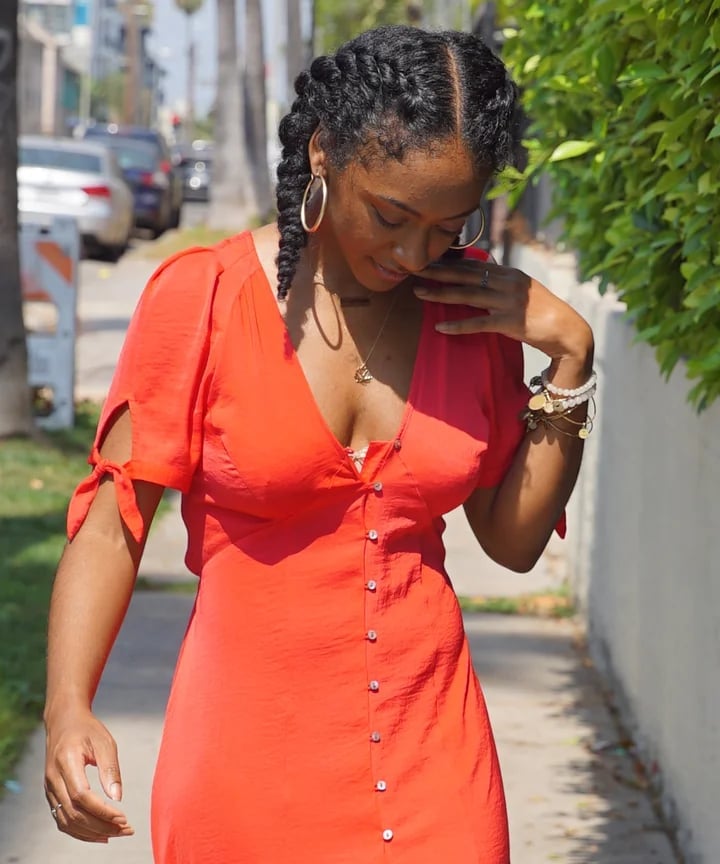
Two thick, coily braided pigtails sit on either side of a middle part. The weight is split evenly, so the part stays straight and the braids do not tug at the nape. Not for you if you prefer braids worn down or in a single style that hides the ends. The pigtails hold their shape well because the thick, coily texture locks the braid tight without extra rubber bands.
Final Thoughts
Pick the version that matches your schedule and your patience for bead threading.
- Fine or thin hair: stick to thin, dense braids without heavy beads pulling at the root.
- Ten minutes in the morning: choose a ponytail or top knot style that clears the neck.
- Want it to last three weeks: go with smaller sections and seal the ends with a curl or dip.
- Sleep without fuss: a silk bonnet and a loose pineapple hold the pattern.
Fulani braids offer endless possibilities for style and expression.
