


You are scrolling through saved boards, pausing on that one shot of a dark brown base with cherry red highlights, a soft blowout making the color catch the light. The question is not whether red highlights work, but which version fits your hair, your routine, and the grow-out line you can live with.
This collection of 28 ideas gives you the range, from low-commitment face-framing pieces to full-on vibrant color, for straight hair, waves, curls, and everything in between. The struggle is narrowing it down, which is why Lovely Red Highlights 2027 fill so many saved boards.
Vibrant orange base with subtle blonde highlights and waves
Layered cutting creates the structure here, letting the vibrant orange base and subtle blonde highlights land where they catch the most light. Fine, wavy texture holds the air-dried finish without effort. Skip it if you prefer a smooth, neat blowout instead. The natural wave keeps the color from looking too deliberate. A trim every eight to ten weeks keeps the layers from losing their shape.
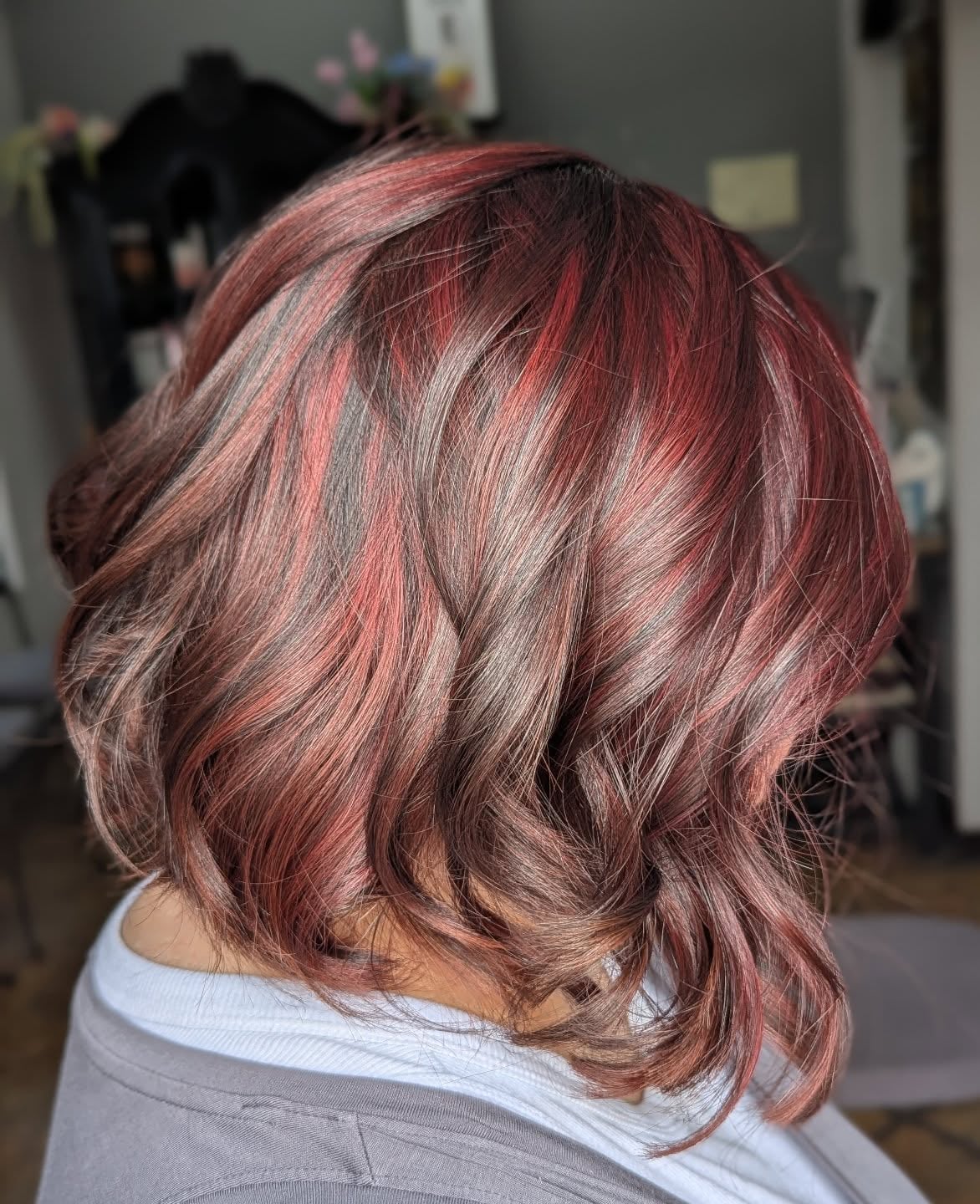
Dark brown base with cherry red highlights and a soft blowout

How do you ask for a dark brown base that still looks red? Tell your colorist: deep brown base, cherry red highlights, subtle layers. The fine, wavy texture takes a soft blowout with a middle parting in about fifteen minutes. The cherry tone stays visible without overwhelming the base. A trim every six to eight weeks keeps the layers moving right.
Striking red highlights on dark brown base
Vibrant red highlights on a dark brown base sit somewhere between subtle and bold. The side parting and loose waves give the color room to move. The red shows more in the wave. Thick texture carries the layered cut well. The contrast works best when the base stays dark and the red stays bright.
When you want volume without a harsh line
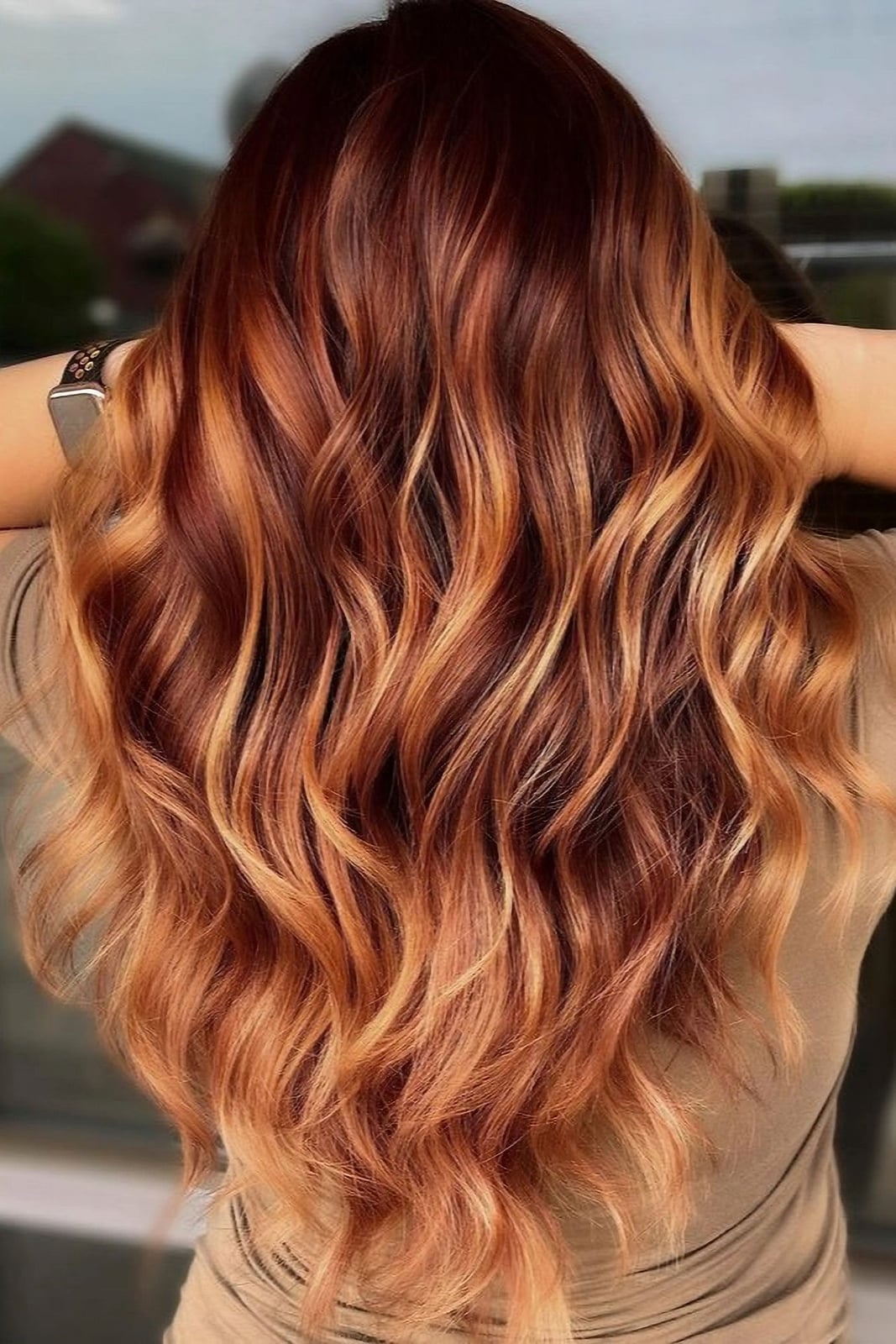
Dark red base with vibrant copper highlights creates volume through color alone. The loose waves and thick texture build body without a blunt edge. Not for anyone who prefers a single, solid shade. The copper strands lift the dark red without a visible root line. A texturizing spray helps the waves hold their shape through the day.
Dark brown base with copper red highlights and a voluminous blowout
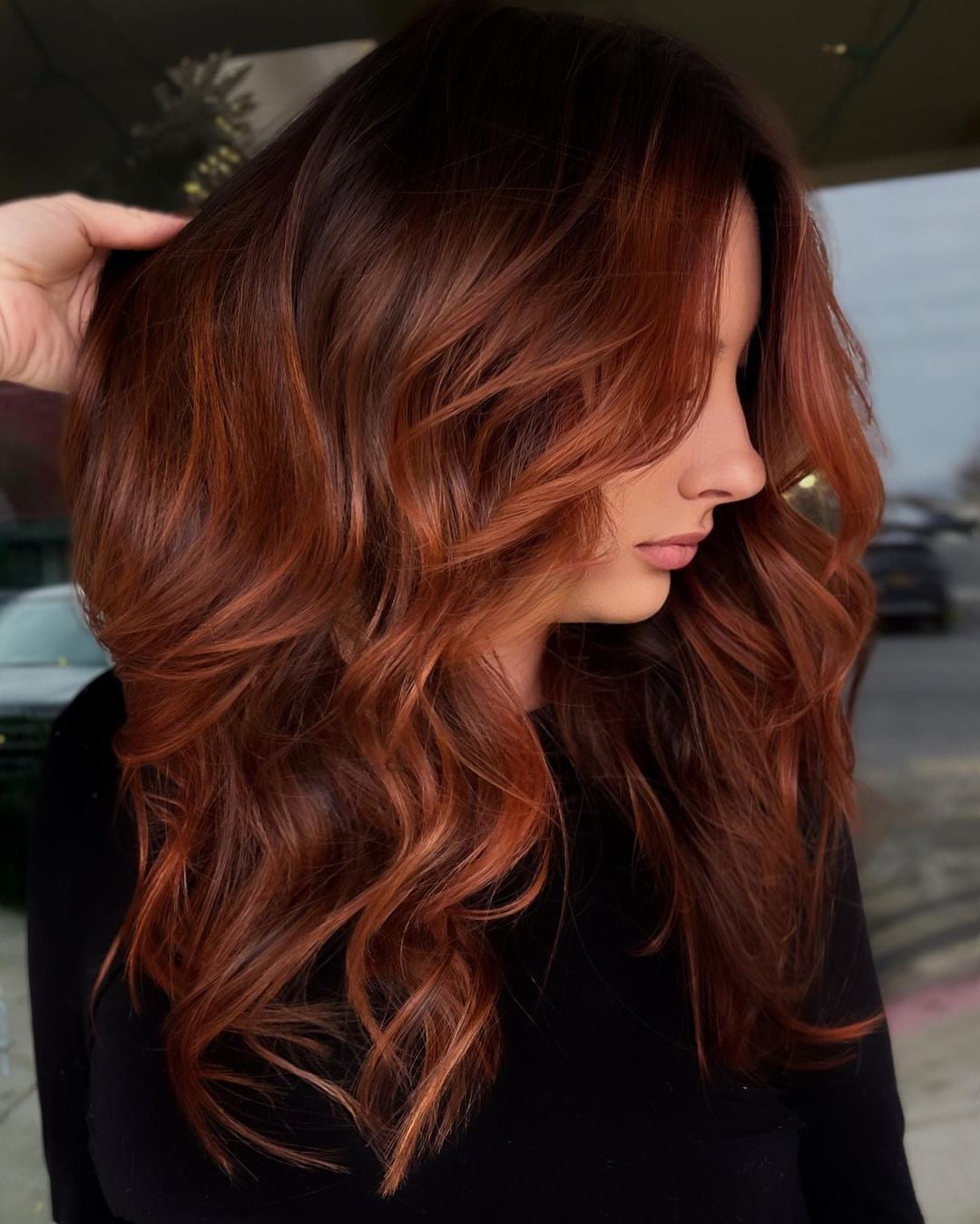
Copper red highlights on a dark brown base demand a blowout that shows them off. The side view catches the layered cut and the soft waves that build the volume. A volumizing mousse is the key piece here. Thick texture holds the shape for most of the day.
Dark red base with copper and blonde highlights, styled in waves
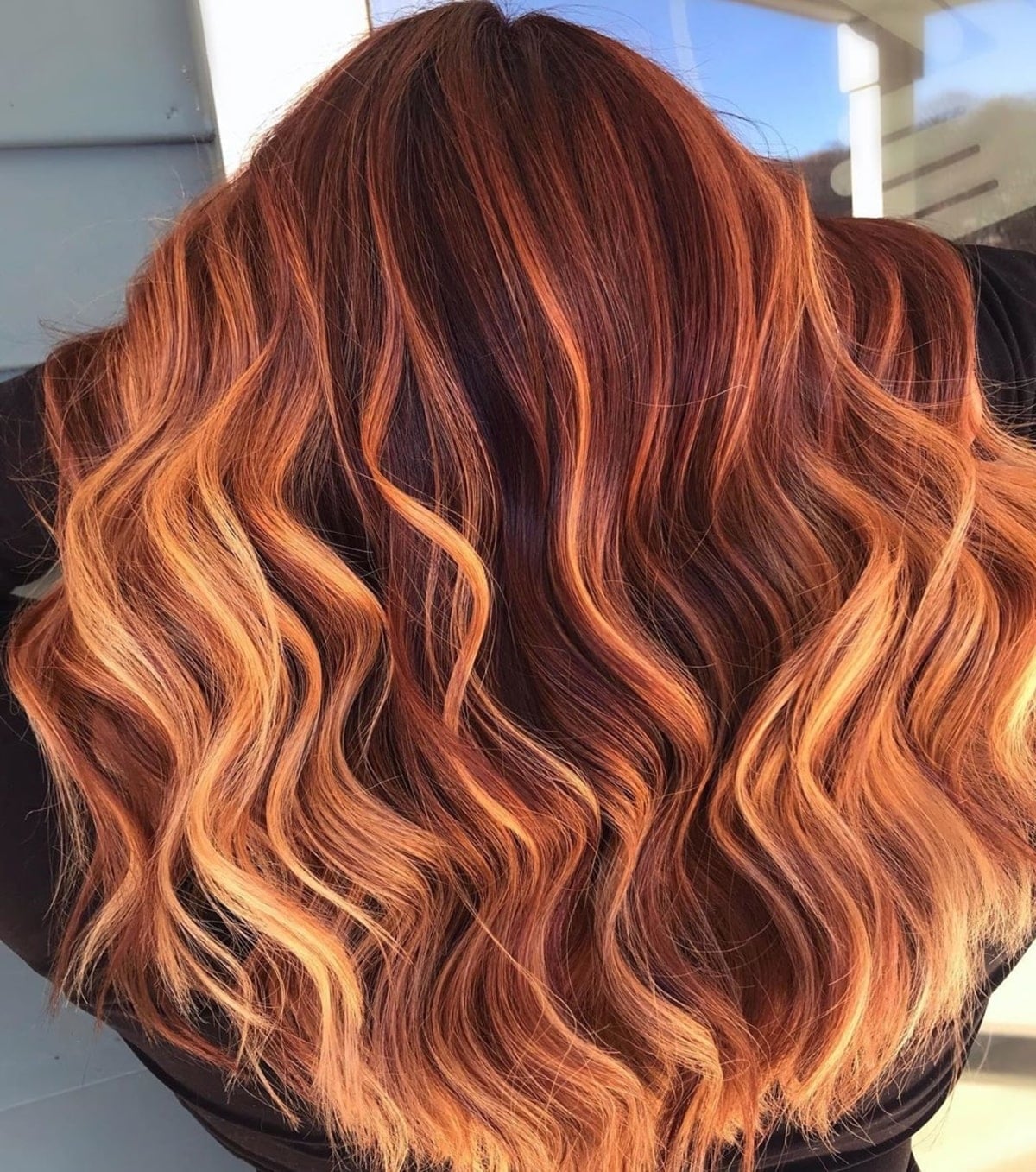
Compared to a single-tone red, this design builds its depth from three layers at once. A dark red base anchors the color, while copper and blonde highlights cut through the density. The wavy texture spreads those lighter pieces so they look movement rather than stripes. Thick hair starting at the collarbone handles the volume best. Tell your colorist: dark red base, copper and blonde highlights. The catch: skip this if you prefer a single-tone red that fades evenly.
Dimensional effect from vibrant copper red all-over color
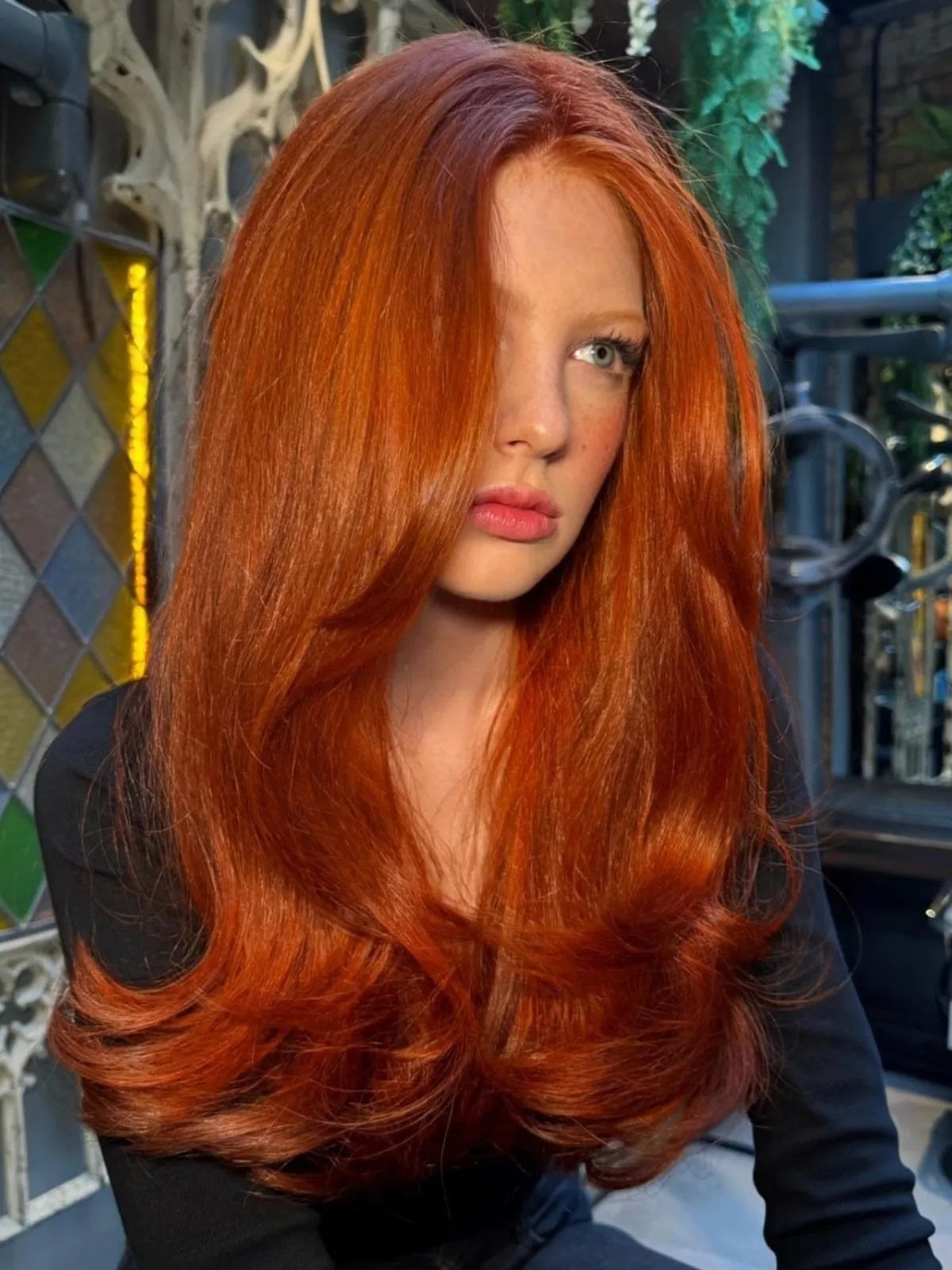
Vibrant copper red applied from root to end creates a uniform tone. The face-framing layers reflect light differently than the rest, so the color still shifts even without highlights. Thick hair at the collarbone holds the wave pattern that makes the shade look layered. One drawback: all-over color means a visible root line every three to four weeks. Choose this when you prefer a darker base or a rooted grow-out.
Copper red base with subtle blonde highlights and curtain bangs
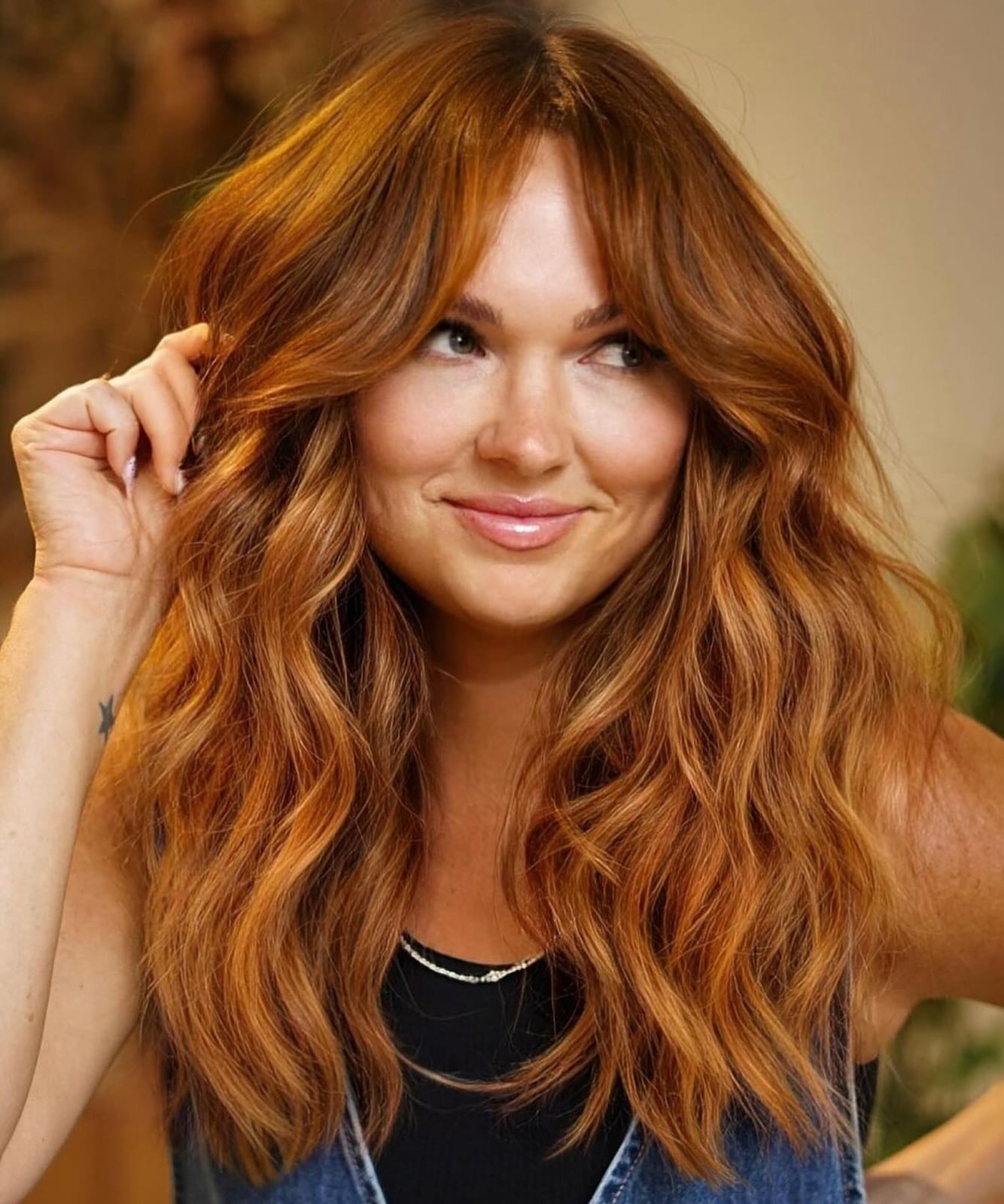
Wondering how to get that lived-in copper look without the harsh line? Curtain bangs and face-framing layers soften the transition from dark root to copper red base. Subtle blonde highlights woven through the mid-lengths keep the tone from falling flat. The thick, wavy texture holds the blowout shape all day. Ask your colorist for: copper red base, subtle blonde highlights, curtain bangs. It suits anyone who wants a warm red that still looks natural.
Blunt cut lob with a dark base and red and orange gradient highlights
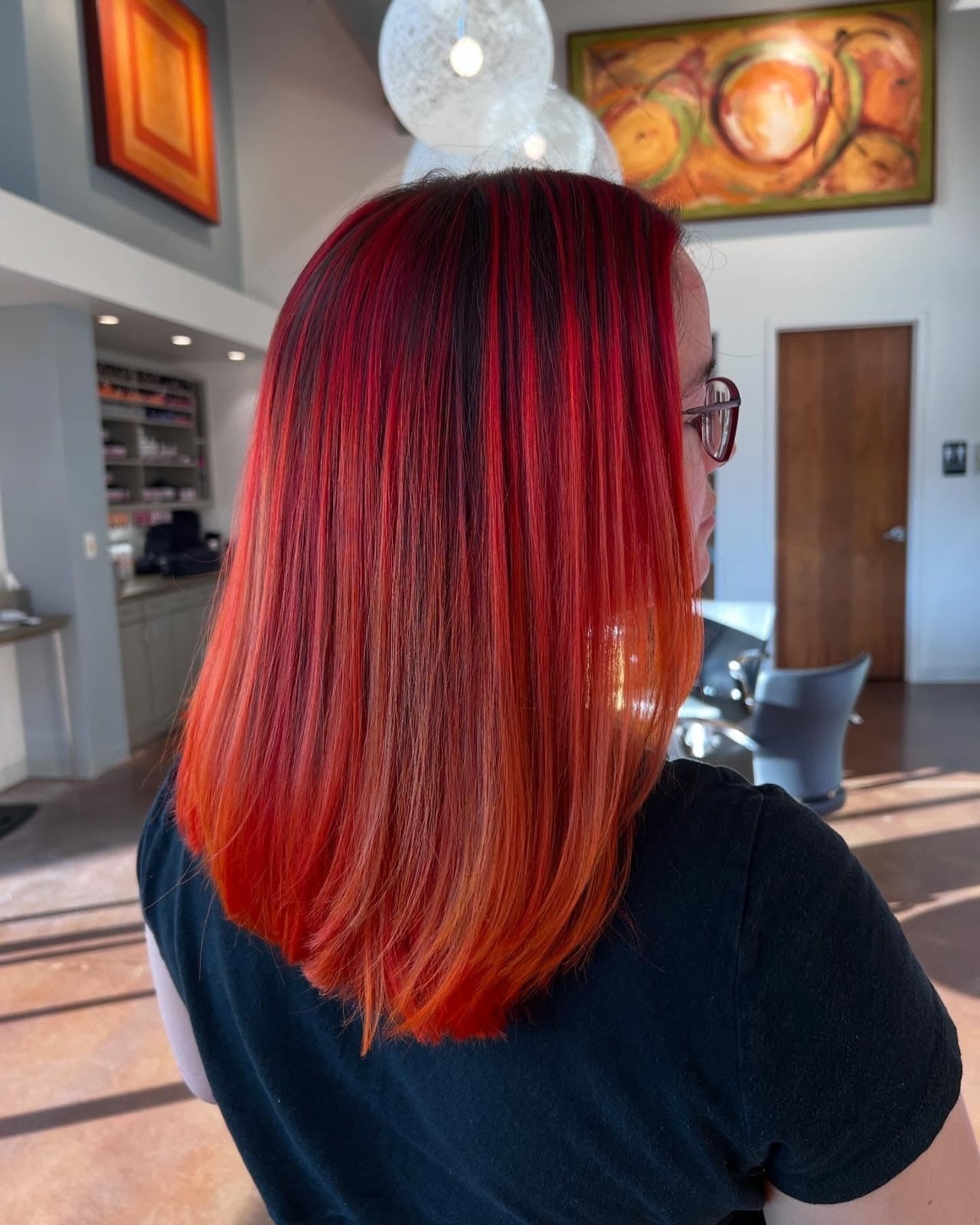
Where a layered cut lets highlights blend softly, a blunt cut demands precision. The dark base anchors the root while red and orange highlights build a gradient that lands strongest at the ends. Straight, fine hair suits this lob because the blunt line needs smoothness to show the color shift. Not for anyone who prefers a soft, layered finish or natural waves that disrupt the edge.
Rich copper red base with subtle lighter copper highlights
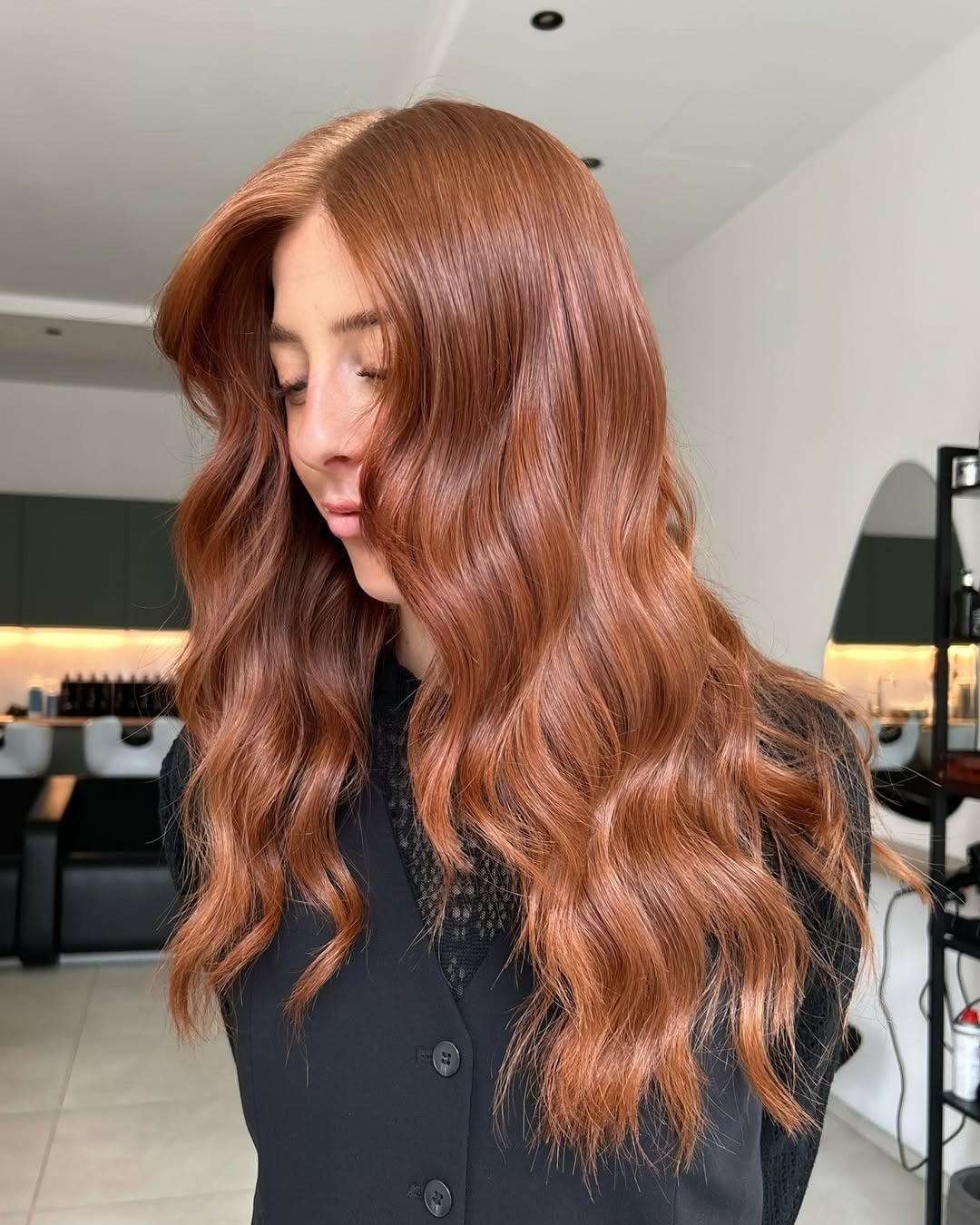
Two tones of copper work together here: a rich base and lighter highlights that lift the overall color without going blonde. The loose waves let the subtle copper pieces catch the eye at different angles. Thick hair gives the layers enough weight to hold the shape. This shade is a deeper, more understated red compared to a bright, bold version.
Blonde base with bright red highlights concentrated on the ends
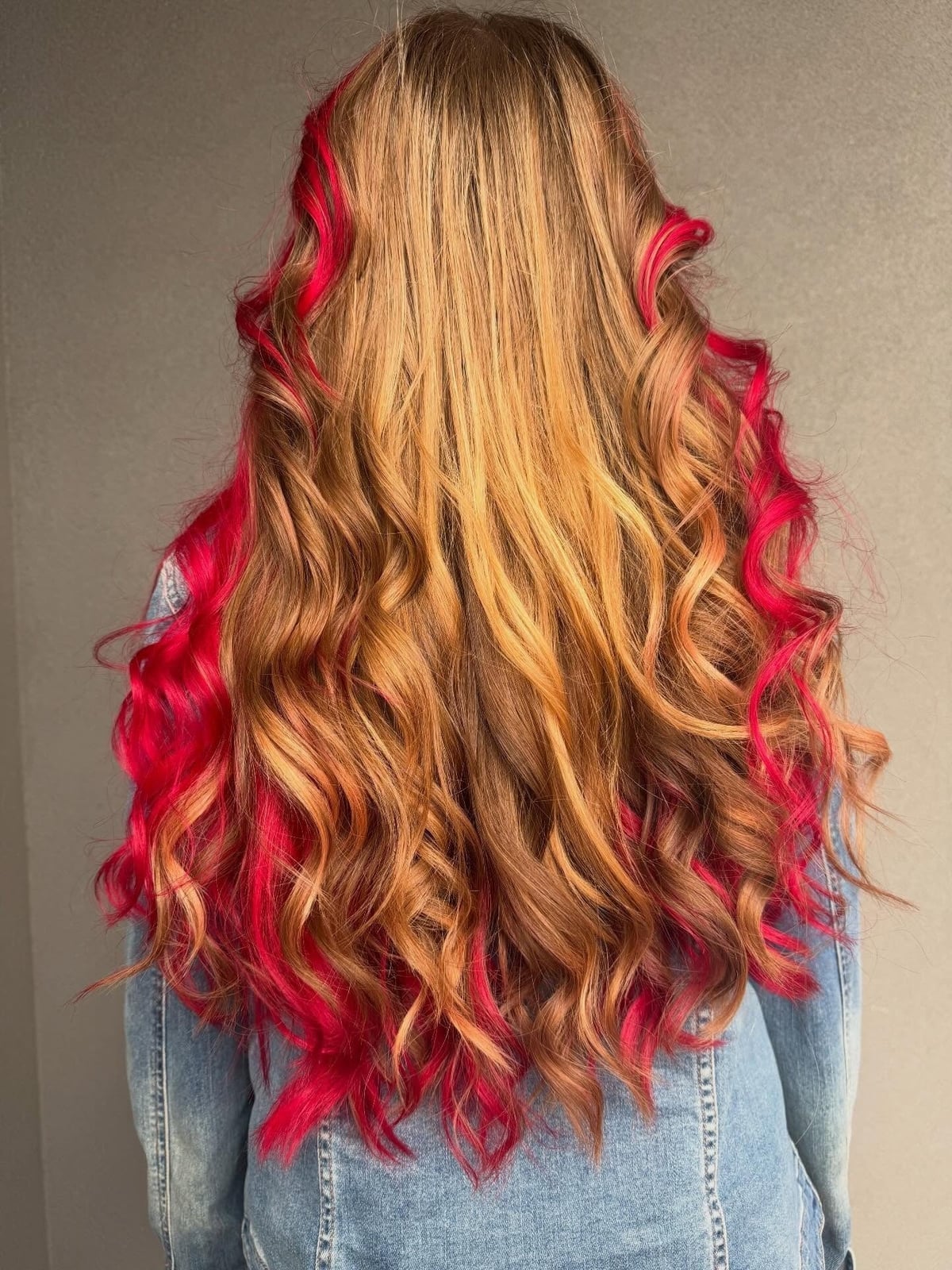
A blonde base with bright red highlights concentrated on the ends creates a color block. The wavy texture and thick density give the red streaks room to appear as a design choice rather than an accident. Tell your colorist: blonde base, bright red highlights on ends. Choose this if you want highlights closer to the root for a more blended grow-out. A curling wand with a medium barrel sets the waves in about fifteen minutes.
Vibrant red hair color with subtle darker undertones in loose waves

A vibrant red hair color with subtle darker undertones avoids the flatness a single shade can have. The loose waves let the deeper tones peek through at the bends, which is the whole trick. Fine hair starting at collarbone length carries the weight of this color without looking heavy. A bright, uniform red with no shadow is a different look.
Lighter copper highlights on vibrant copper red base
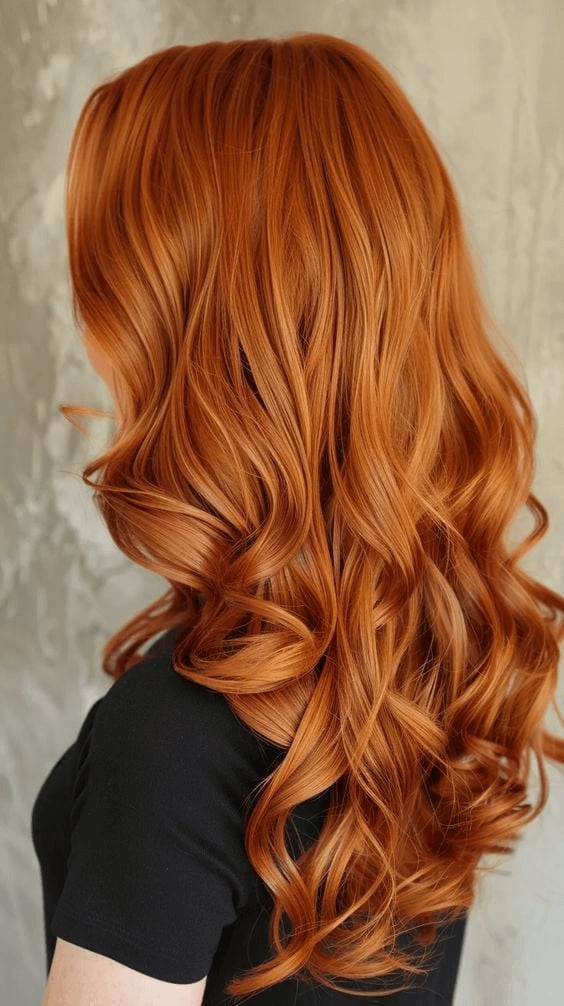
A vibrant copper red base with lighter copper highlights woven through it gives the color a sunlit quality that a single bottle cannot. The side parting and waves let the lighter pieces catch attention without competing. The catch: that even, vibrant copper requires a salon visit every five to six weeks to keep the base from pulling orange. Skip it if you prefer a darker red or no highlights at all.
Auburn base with copper highlights and soft waves
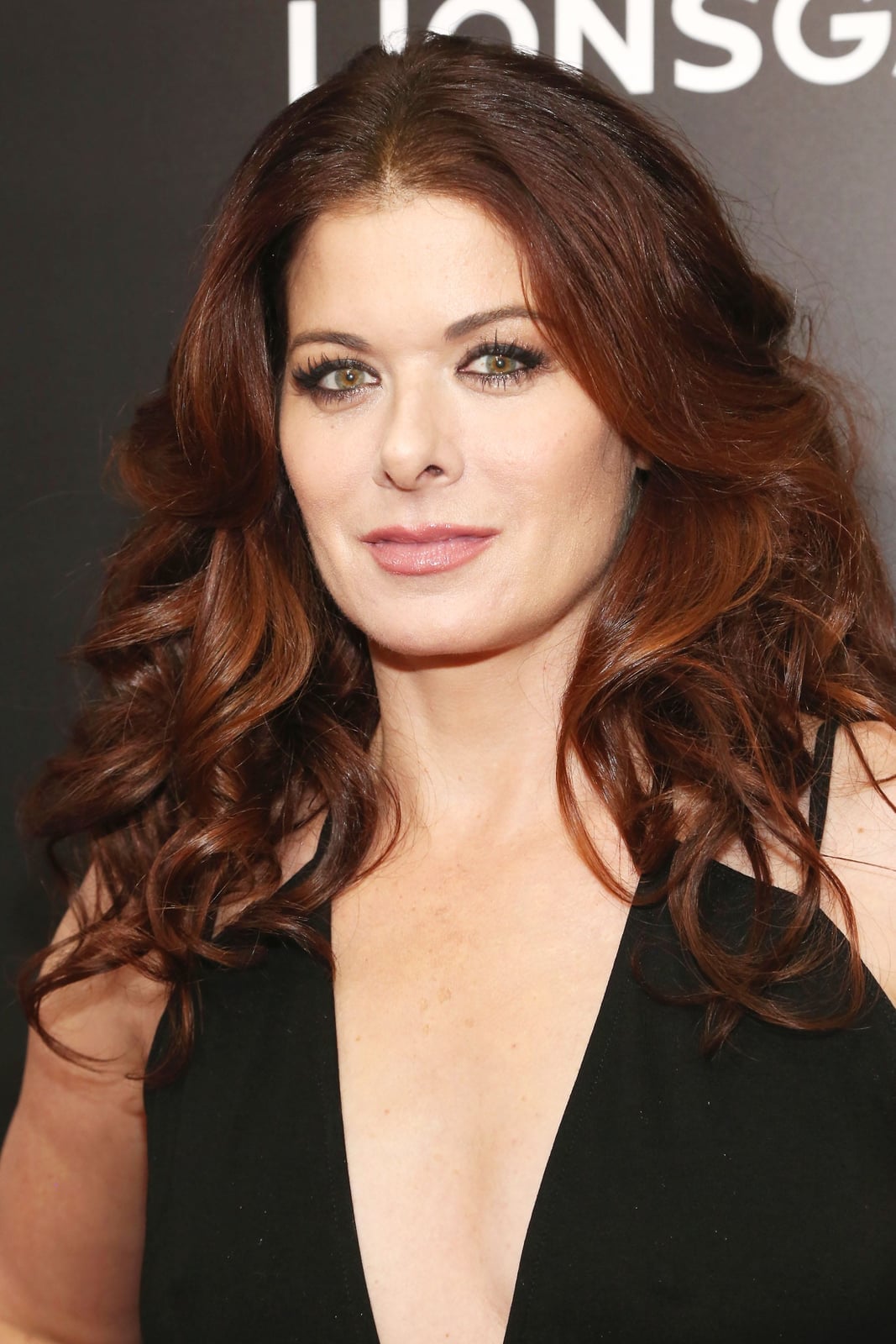
A rich auburn base with subtle copper highlights works best when the layers and the color are decided together. The soft waves and middle part let the copper catch light at different points along the cut. Tell your stylist: rich auburn base, copper highlights, layered cut. Pass when you prefer a bright red or a straight finish that hides the dimension the waves create.
Vibrant red afro with natural volume
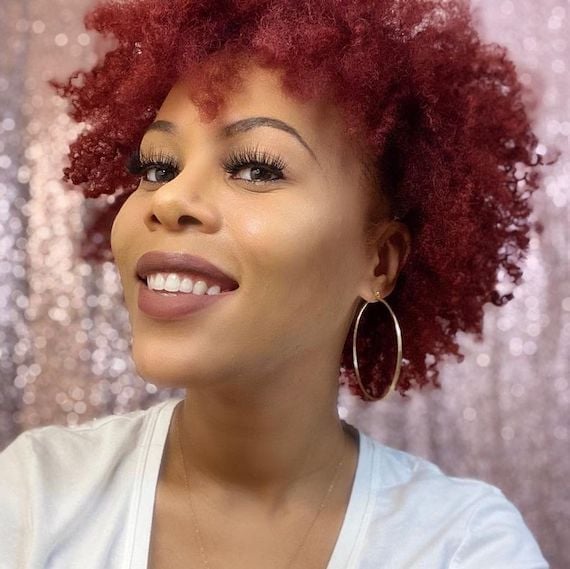
A vibrant red all-over color on an afro cut is a different proposition than highlights on straight hair. The curly, thick texture takes the color evenly, and the natural volume does the shaping work. Not for anyone who prefers straight or wavy hair, since the cut and texture are the whole point.
Auburn base with copper highlights and blunt bangs

Blunt bangs meet a layered cut here, and the auburn base gets its warmth from copper highlights woven through the front sections. The air-dried texture keeps the whole thing from looking too rigid. It works for fine hair that starts at least at the collarbone. The catch: you commit to a fringe that needs trimming every four to six weeks, and the copper needs a gloss every six to eight weeks to stay bright. Skip it if you prefer no bangs or a high-shine finish.
Copper red base with subtle lighter red highlights and waves, wavy
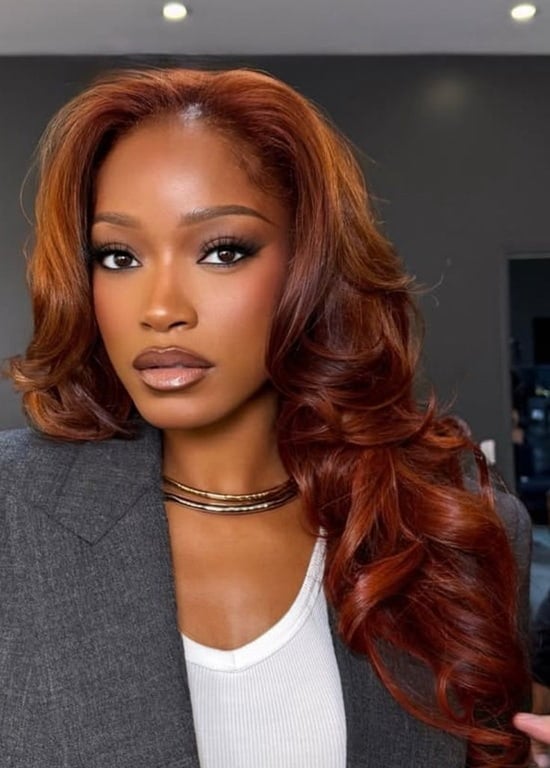
A rich copper red base gets subtle lighter red highlights throughout, and the voluminous blowout with gentle waves makes the most of thick texture. The middle part keeps the weight balanced. This is a look that looks one cohesive color until you turn your head. The layers need trimming every six to eight weeks to keep the shape from getting heavy. A volumizing spray before blow-drying helps the waves hold their lift. Skip it if you prefer a blunt cut or straight hair.
Copper base with subtle blonde highlights and loose waves
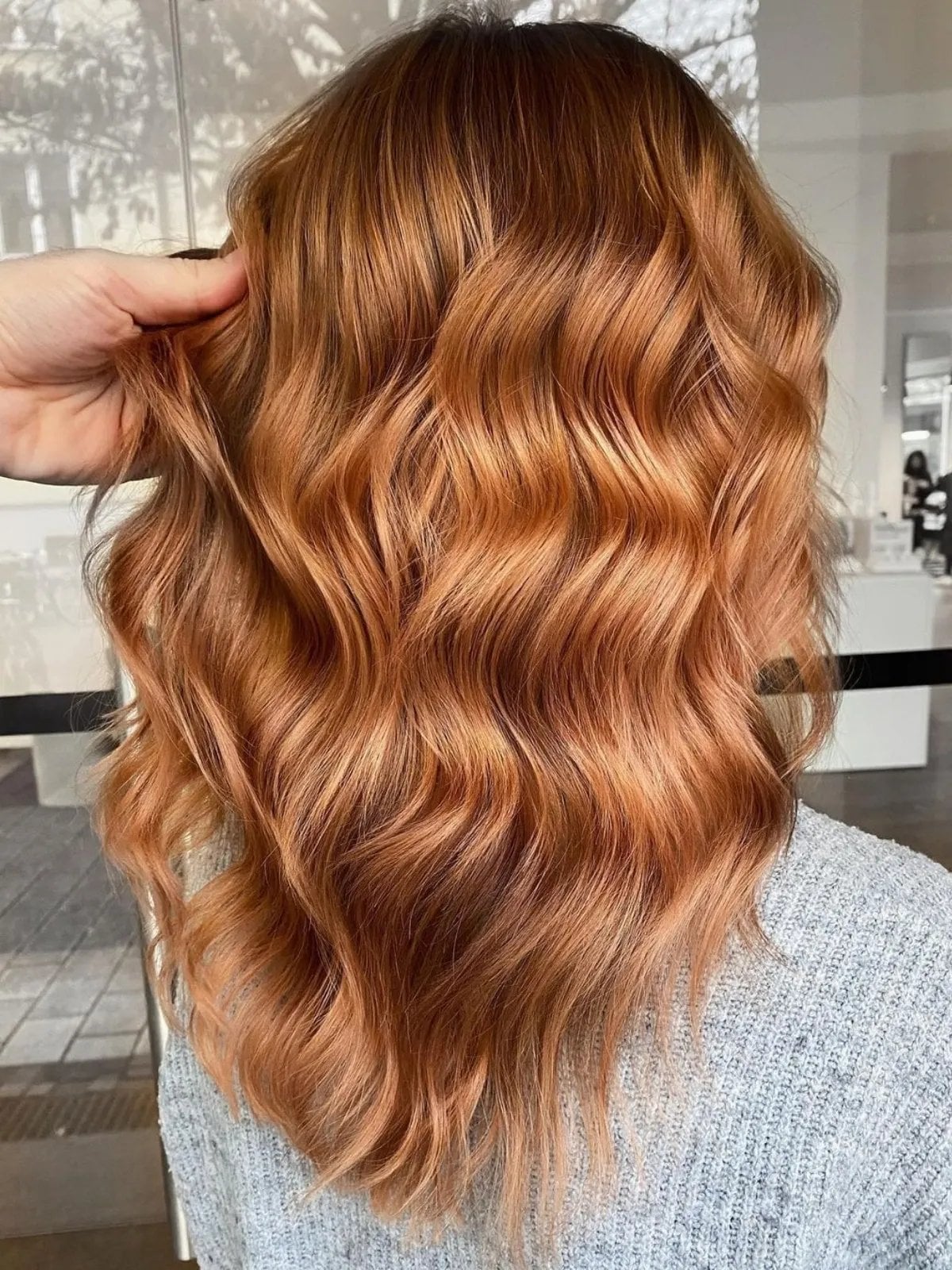
Layers and a centered parting create the foundation for loose waves that show off a copper base with subtle blonde highlights. The blonde pieces are fine and spaced, so the overall tone stays warm rather than going brassy. Thick hair holds the wave pattern best here. The technique relies on the highlights being painted on sections rather than pulled through a cap, which gives that lighter look. Skip it if you prefer a deep red or straight hair.
Deep red base with copper highlights and side-swept bangs
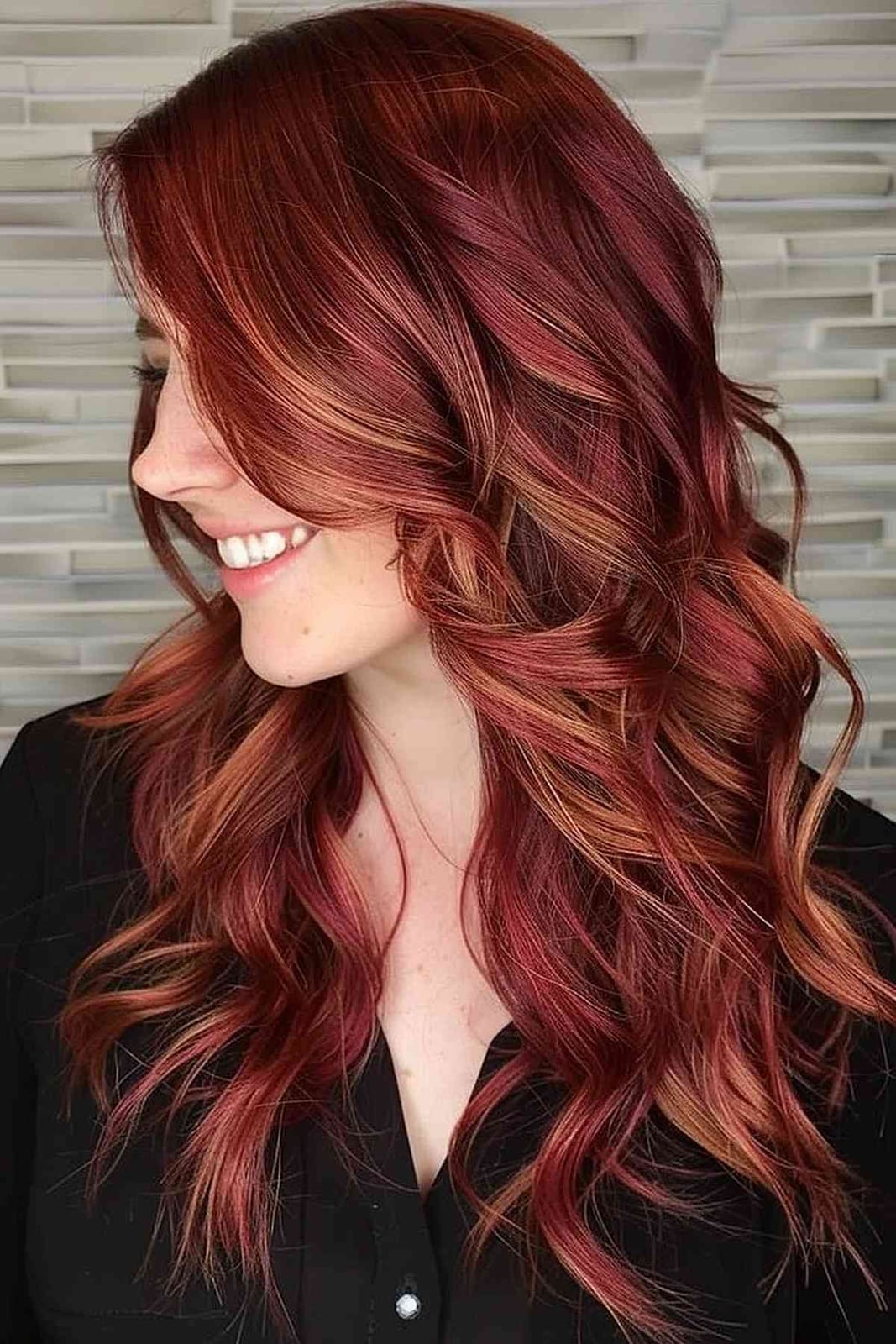
Deep red base with copper highlights woven through the layers, and the side-swept bangs soften the front. The loose waves add movement without losing the richness of the color. One real drawback: the copper highlights will fade faster than the deep red base, so expect a toning appointment around week six. Skip it if you prefer no bangs or a lighter red.
Thick wavy hair with deep red and bright blonde highlights
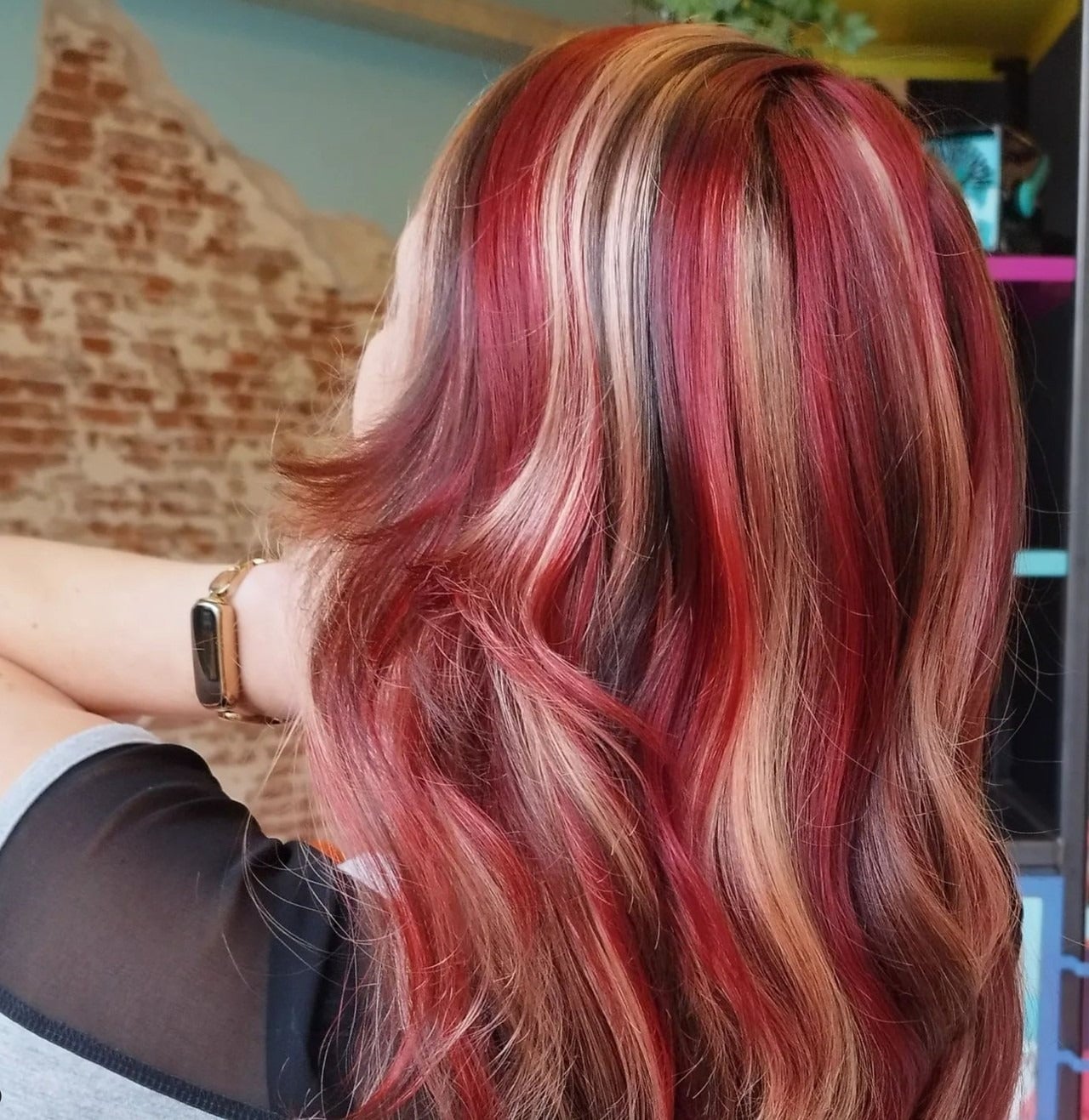
Start with: deep red base, bright blonde highlights, layered cut. The thick wavy texture takes the contrast well because the blonde pieces sit on the surface while the deep red stays underneath. The blowout styling keeps the waves defined and the color separation visible. Two tones this different mean the blonde will need a purple shampoo once a week to stay bright. It works best with high contrast and natural wave.
Strawberry blonde highlights on copper base wavy blowout
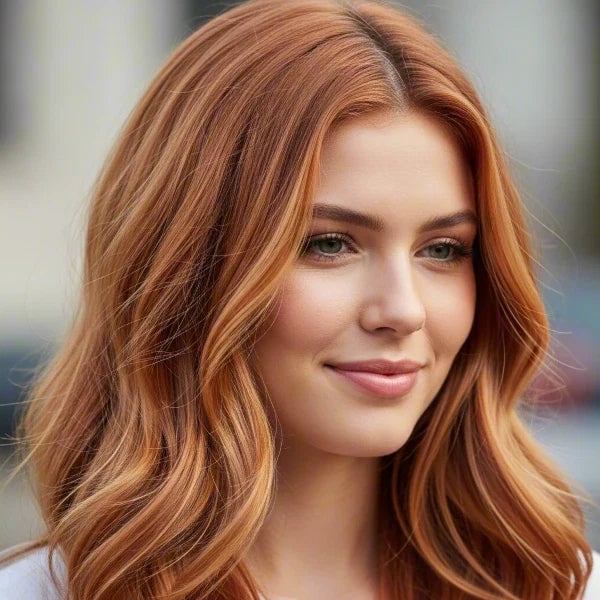
Not every red highlight needs to be bold. This one leans into strawberry blonde, a softer cousin that still warms the copper base without going full flame. The wavy blowout and middle part let those lighter strands fall naturally around the face, which is exactly the point. Thick hair carries the layers best. The blend relies on texture to look deliberate. A volumizing spray at the roots keeps the wave from falling flat by midday. The whole thing takes about twenty minutes with a round brush and a dryer.
Rich red base with subtle copper highlights using balayage
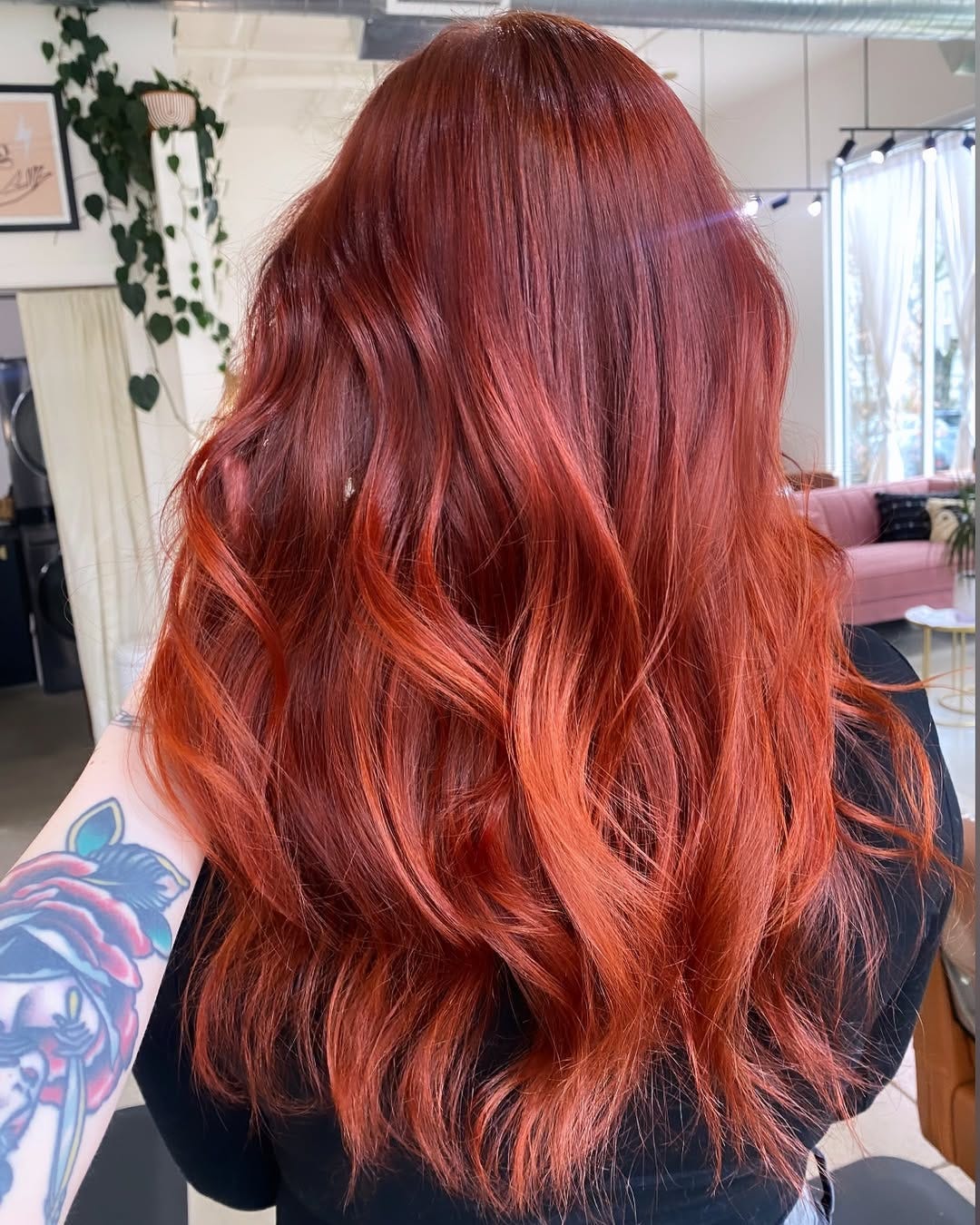
A rich red base with subtle copper highlights relies on a soft transition. Balayage creates that blended effect, pulling the copper through the ends without a hard line. Thick, wavy hair gives the color enough surface to look dimensional. The freehand technique is what keeps this from looking stripey. A texturizing spray enhances the waves, and touch-ups land around every ten to twelve weeks. Two hours in the chair, then minimal fuss between appointments.
Red base with striking blonde highlights applied with balayage
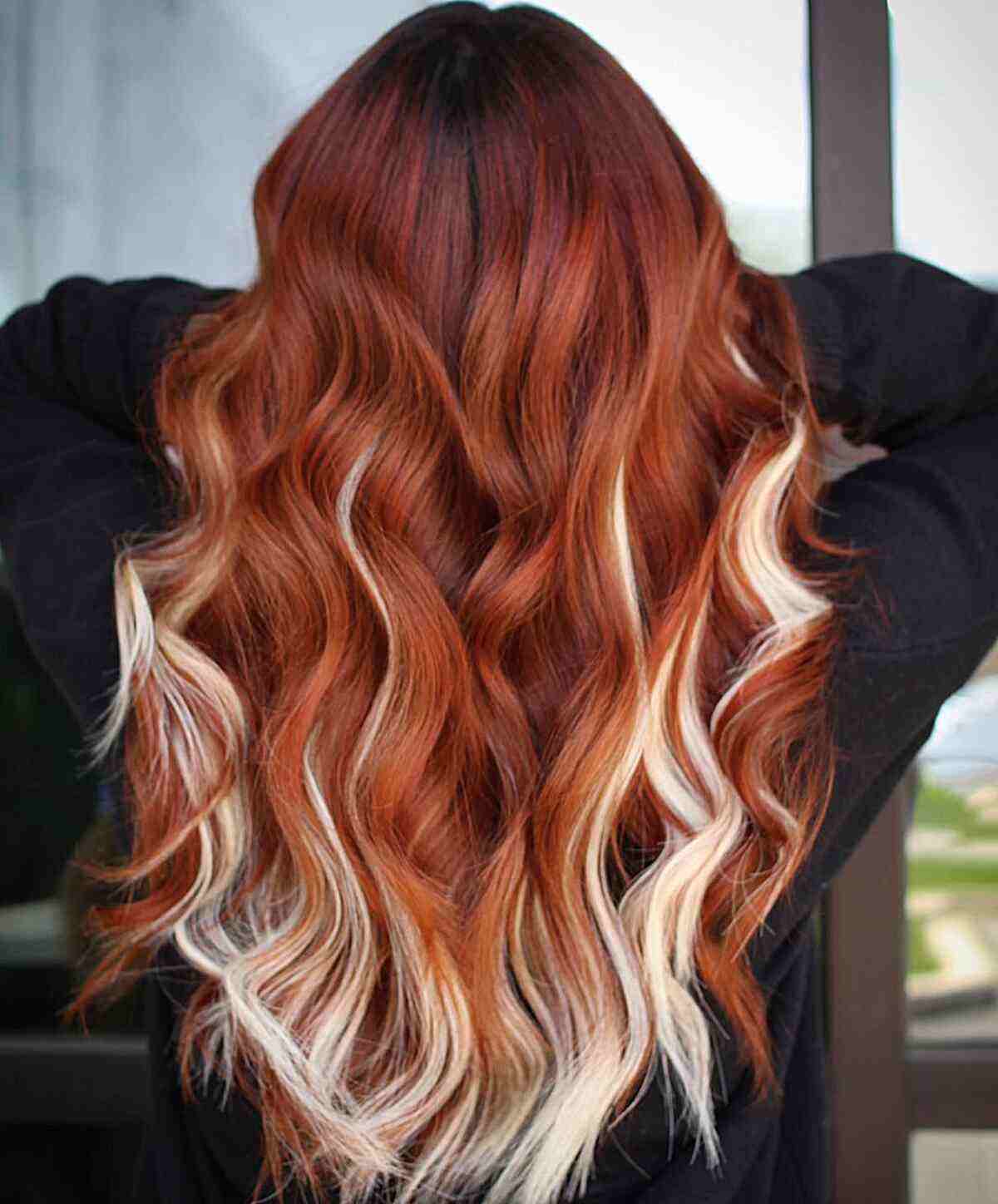
High contrast red and blonde is achieved with a painted, not foiled, application. The freehand technique lets the lighter strands sit deeper in the red base, so the effect is layered and not striped. Thick, wavy hair holds that separation well. The wavy blowout style showcases the contrast, with the blonde strands appearing as if painted through the red.
This is a statement color, not a subtle one. The upkeep is straightforward: a heat protectant before the blowout, and touch-ups every ten to twelve weeks as the roots grow. The contrast needs room to show, so this is for those who want a bold, high-contrast look.
Warm brown base with copper highlights in a lob
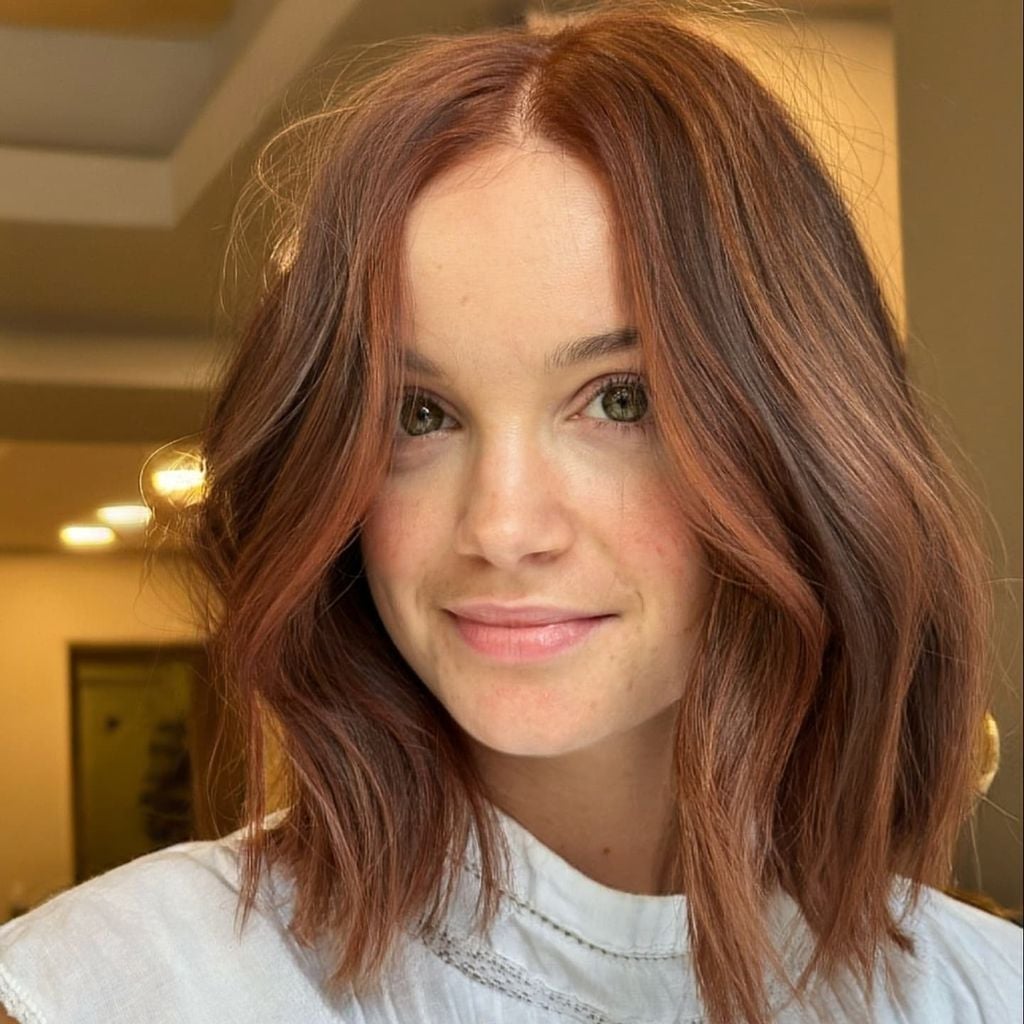
A warm brown base with copper highlights works because the two tones sit close enough on the spectrum to blend without fighting. The lob cut and middle part keep the color visible without needing length. Fine, wavy texture benefits from the lighter pieces, which add the illusion of density. Skip it if you have very thick hair or prefer longer styles; the lob can feel heavy without more layering. Quick to style, easy to maintain.
Dark red base transitioning into vibrant red highlights
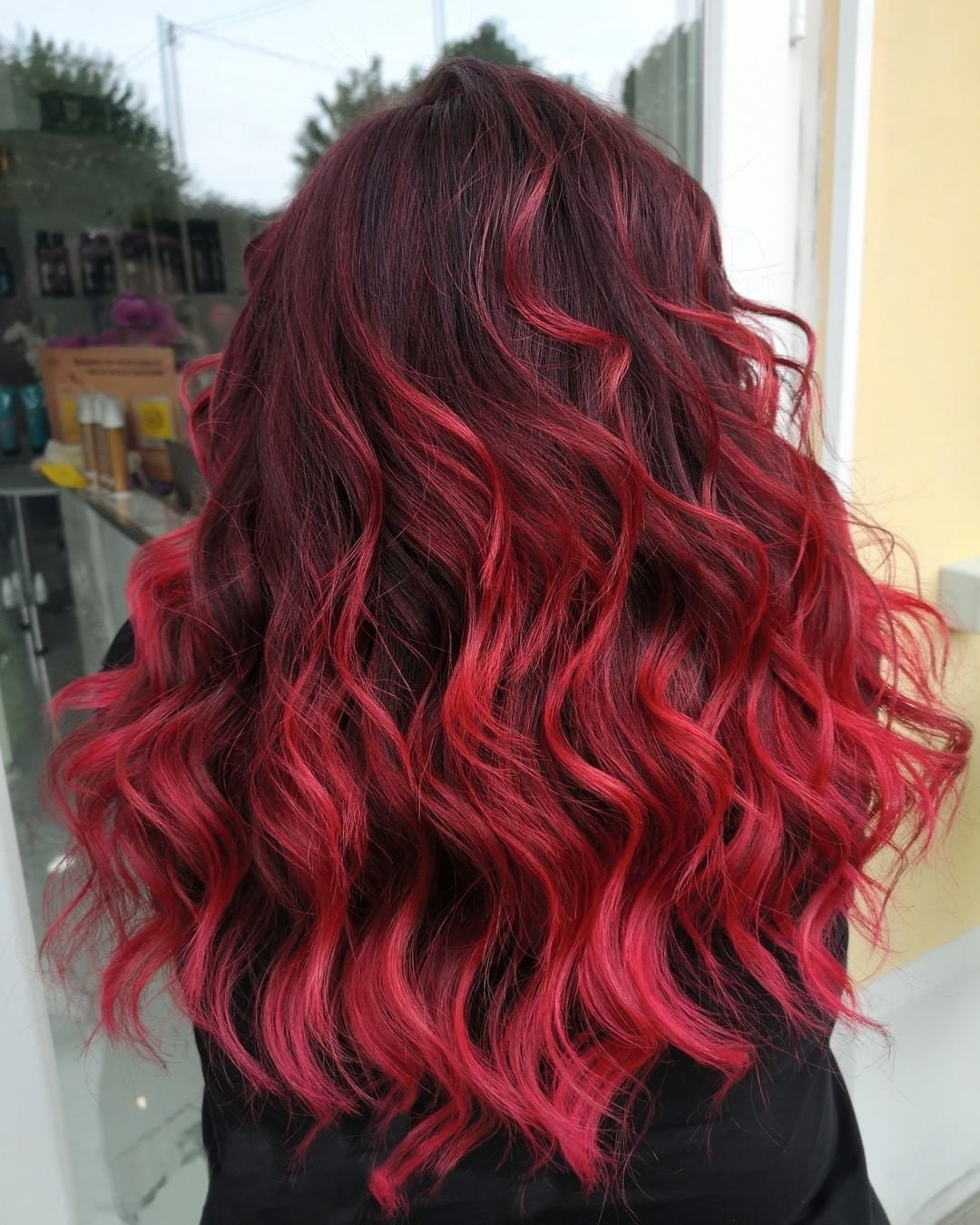
Dark red transitioning into vibrant red is a commitment. The deep base and the bright ends create a dramatic look, but the line of demarcation is visible as it grows. Thick hair carries the gradient best; finer textures may find the transition harsh.
A subtle blend or straight hair is not the goal here. The bold color statement requires a touch-up every eight weeks to keep the transition clean.
Dark brown base with deep red highlights around the face
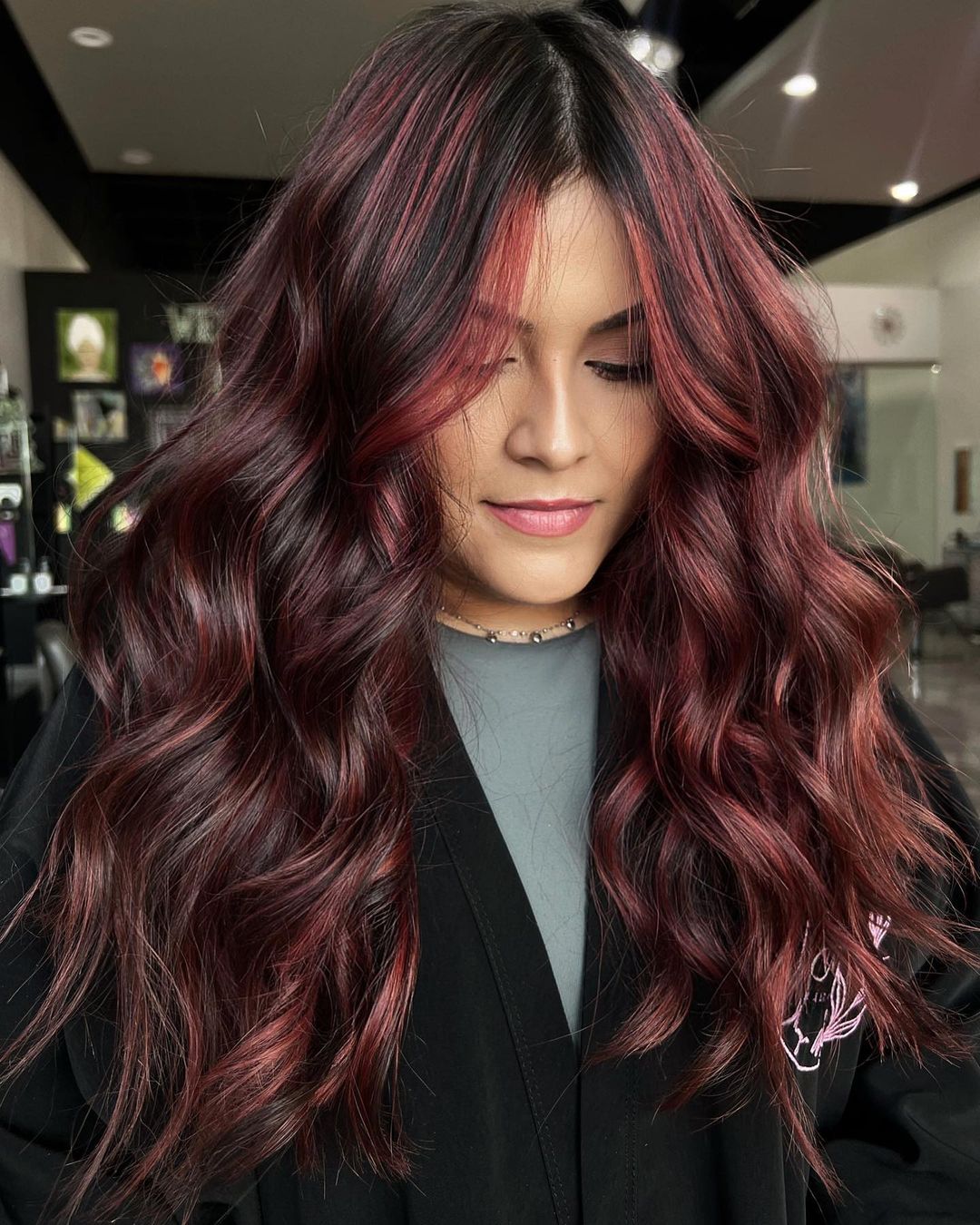
Not quite all-over red and not just a few strands. This sits between the two. A dark brown base keeps the roots low-maintenance while deep red highlights frame the front. Thick, wavy texture gives the color room to stand out. The middle part lets the front sections do the work. Tell your colorist: dark brown base with deep red face-framing highlights. Suits anyone with collarbone-length or longer hair who wants dimension without a full commitment. Skip it if you prefer highlights that start at the root or a single all-over shade.
Deep burgundy base with subtle red undertones, styled straight
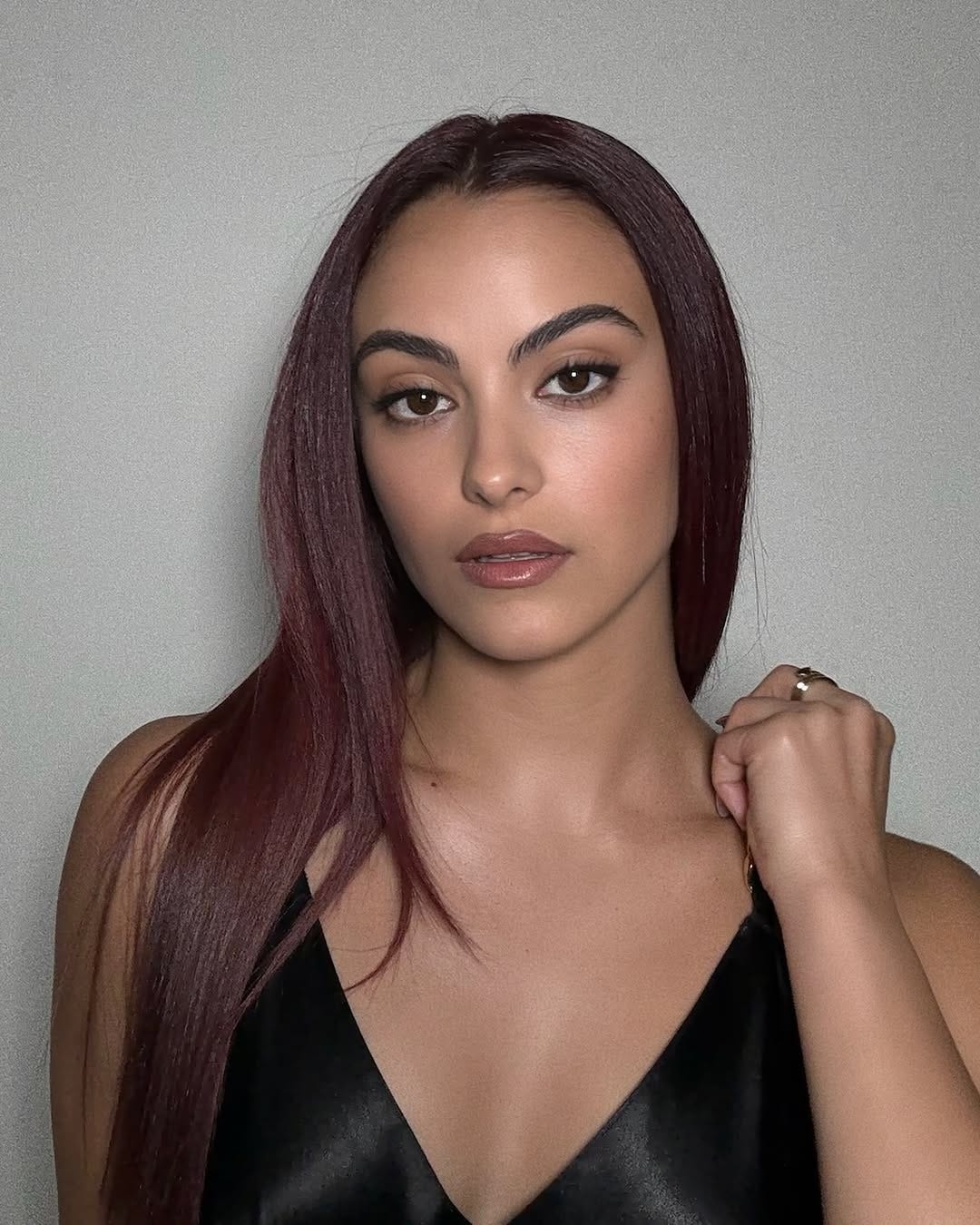
Fine hair and a straight, air-dried finish need a color that carries itself. A deep burgundy base with subtle red undertones does exactly that, rich enough to read from across the room, quiet enough to pass for natural in office light. The middle part and front framing put the depth on display without any styling effort. This one favors those who want a grown-up color that works with minimal morning routine. Pass when you prefer a bright red or a wavy texture that would break up the even tone.
Dark brown with vibrant red highlights in an air-dried finish
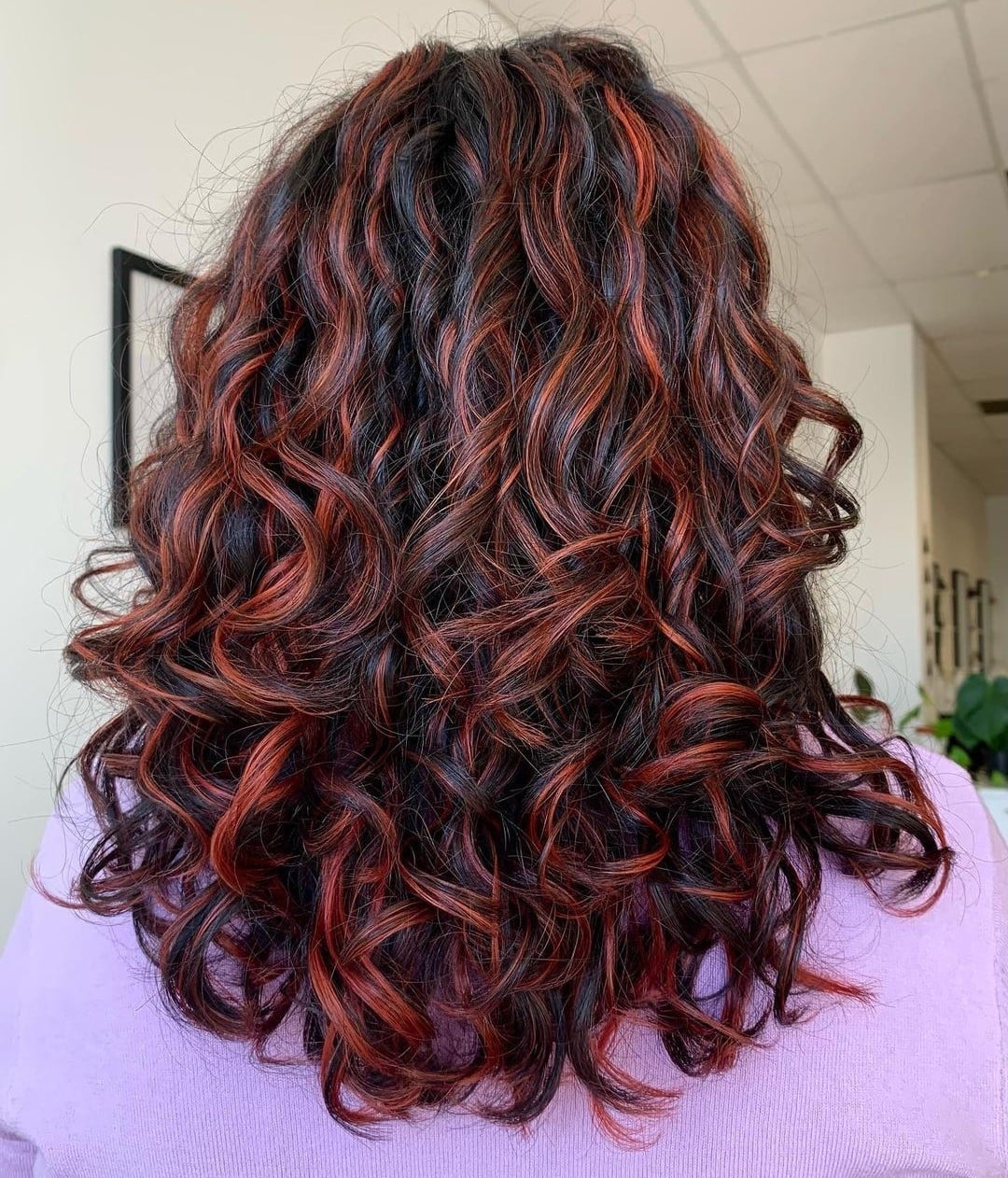
An air-dried finish and bold highlights rarely get along. This one proves otherwise. A dark brown base anchors the look while vibrant red strands cut through the thick, wavy texture with purpose. The layers keep the weight off the ends so the waves form naturally without extra coaxing.
Suits those with thick hair starting at the collarbone who want a natural texture that still makes a statement. A texturizing spray after washing defines the waves and keeps the red visible. Not for anyone who prefers a neat blowout or a straight finish. This look lives in its natural movement.
Final Thoughts
Pick the red highlight that matches your texture and your tolerance for toning.
- Fine hair: keep highlights fine and spaced out.
- Ten minutes in the morning: go for a lived-in balayage.
- Cool base that pulls brassy: a violet gloss every six weeks.
- Natural texture: let the waves define the color placement.
Find the red highlight shade that speaks to your personal style.
