

You are scrolling through saved styles, and the butterfly locs keep appearing. The wrap-around texture and the way they move make them a solid choice for someone who wants a protective style that does not feel flat. The volume holds shape through a work week, and the color placement photographs well without needing a filter.
Which is why Striking Butterfly Locs 2027 fill so many saved boards. The 28 looks here range from subtle single-tone installs to multi-colored, accessorized versions. If you have ever hesitated because the upkeep sounded heavy or the styling felt limited, this collection shows how flexible the technique actually is.
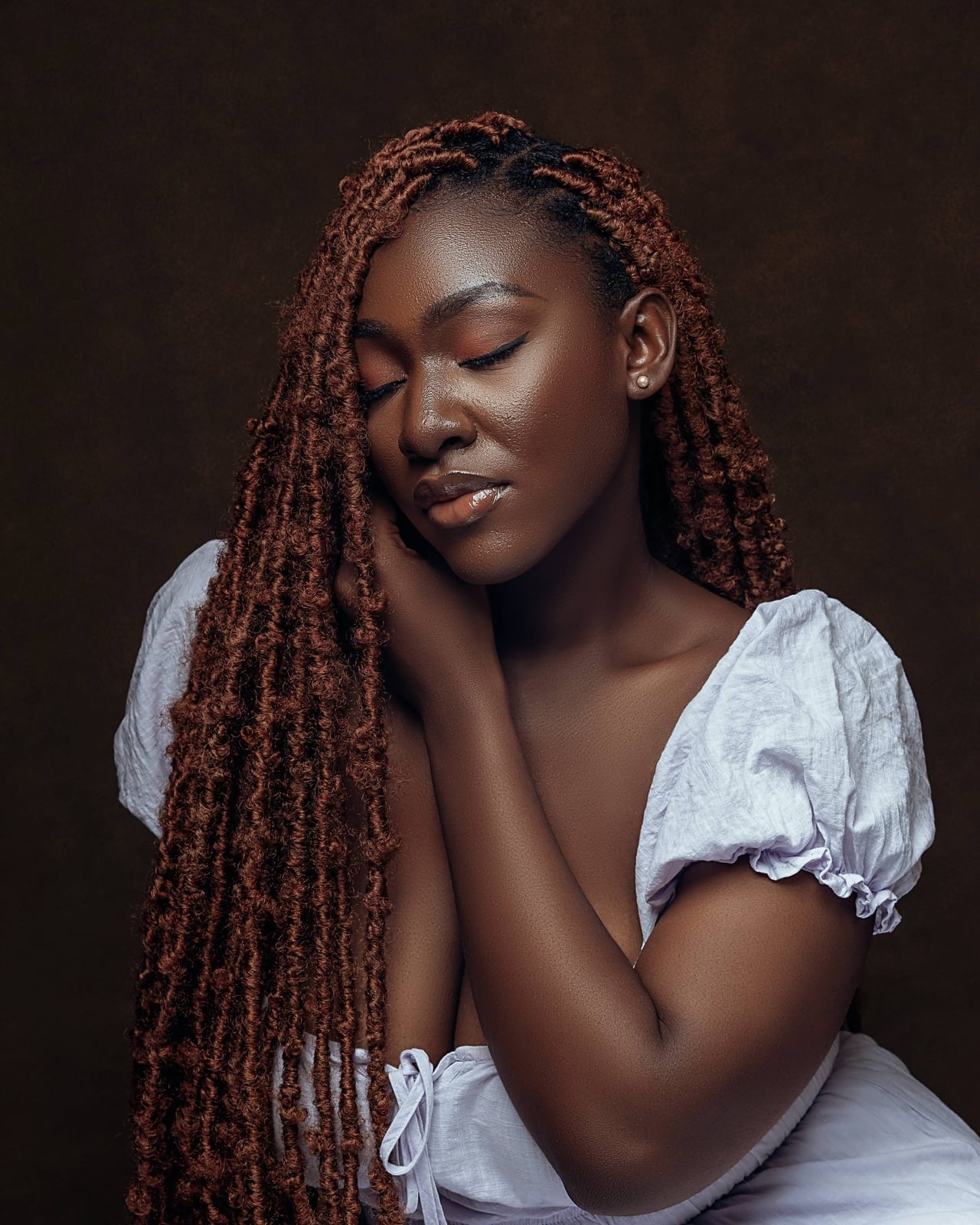
Voluminous butterfly locs with auburn undertones
Medium brown with auburn undertones catches the eye before the volume does. These butterfly locs stack thick, coily texture into a shape that holds its body without deflating by midday. The color reads warm and natural, not painted on. You need hair that can handle the weight of that much extension, fine strands will feel the pull. The catch: this is not a style you walk in and walk out of in an hour. Ask your stylist for: medium brown butterfly locs with auburn undertones, voluminous styling. The finish depends on their wrapping technique, so book someone who works with textured hair regularly.
Two tones of black and blonde highlights in wavy locs
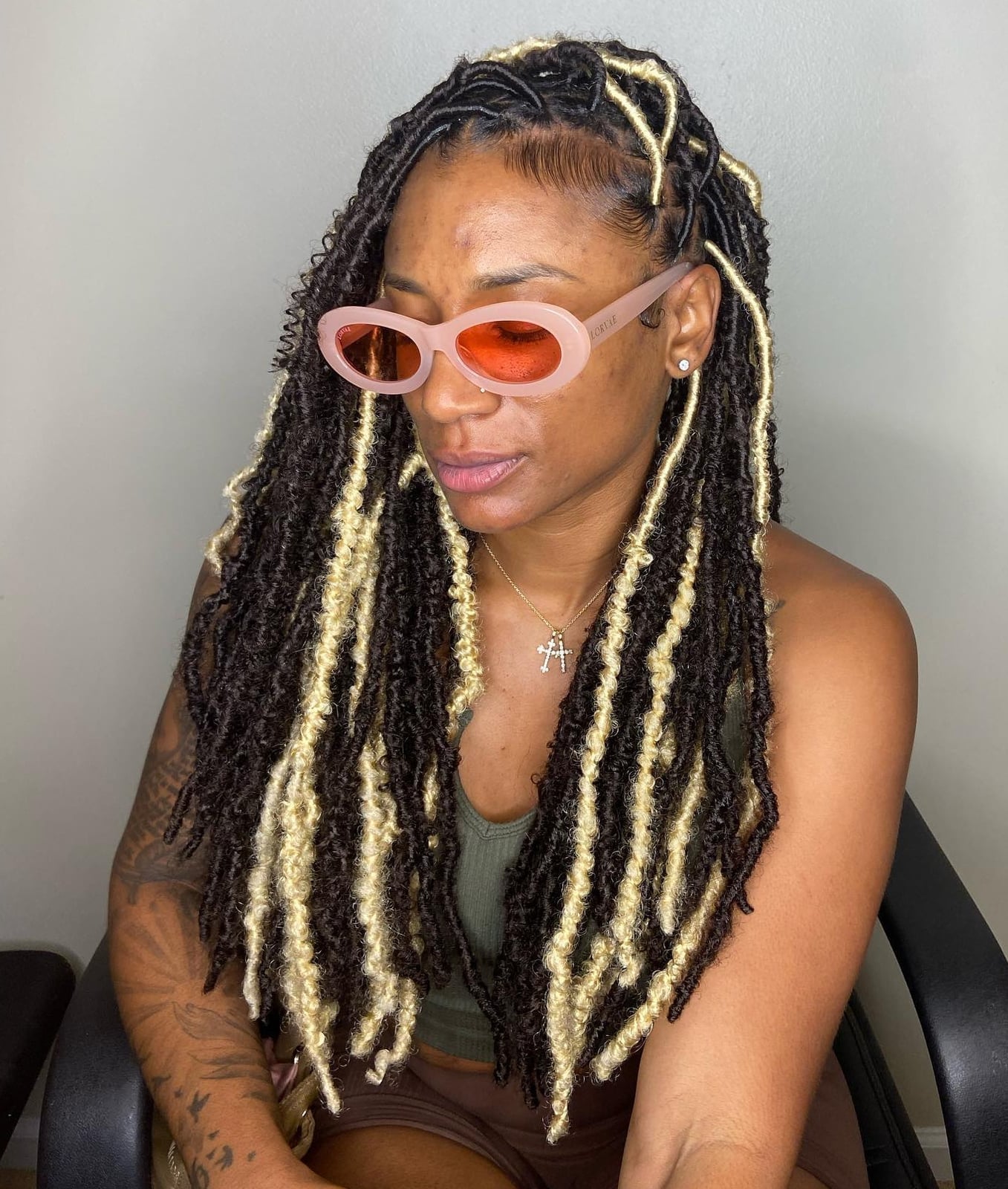
Black as a base with blonde streaks woven through. This one sits between a solid color and a full highlight. The contrast lands sharpest on a middle part, where each side mirrors the other. Wavy texture keeps the blonde from looking like a single stripe; it breaks up the line. Thick, wavy hair carries this best because the pattern needs density to look intentional. It suits a single-tone loc or a deep side part. The blonde shows up best against a true black, not a dark brown.
Half-up, half-down butterfly locs with braided sections
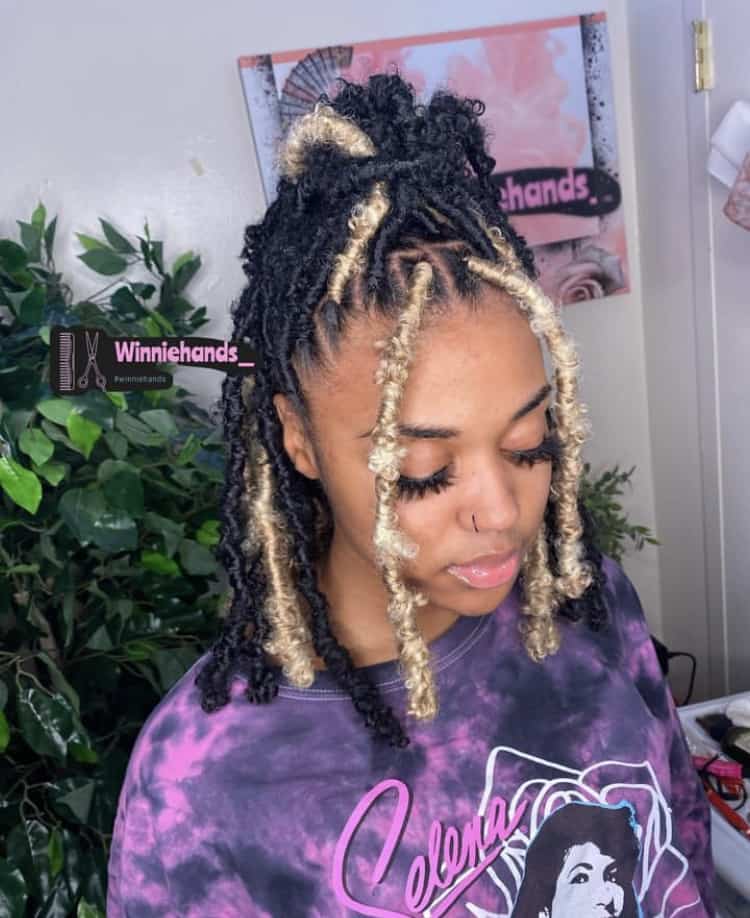
How do you keep the locs off your neck without losing the length? Half up, half down with braided sections. The top portion gets pulled back and braided into place, while the rest falls forward. Black with blonde highlights carries through both sections, so the color does not disappear when you gather it. The braiding holds the crown secure, no slipping after a few hours. Thick, coily texture gives the braids enough grip to stay neat. This style keeps the locs contained while maintaining length. Ask your stylist for: half up half down butterfly locs with braids, blonde highlights.
Butterfly locs with blonde and burgundy highlights in a half updo
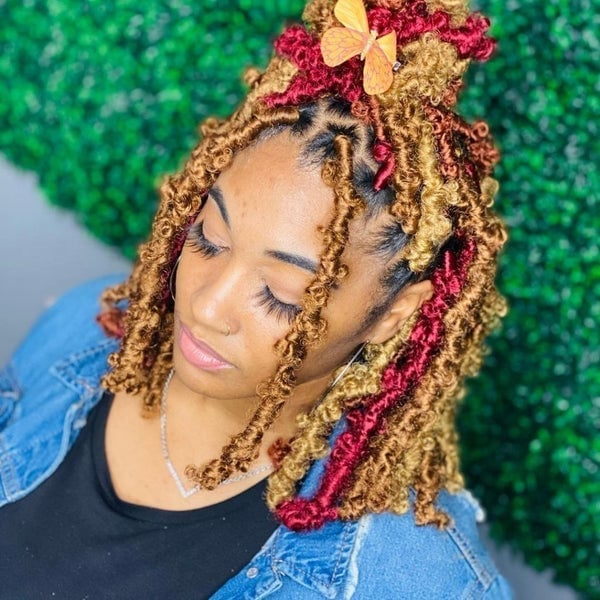
Two highlight colors on one head: blonde and burgundy. The technique layers them through the loc so neither overpowers the other. A half updo pulls the top back and lets the wavy, thick texture show in the lower section. The color placement matters here. The burgundy reads deeper near the roots and the blonde hits the mid-lengths and ends. Thick, wavy hair carries the dual tones without them muddying together. The half updo shape keeps the front clean while the back has movement.
Dark brown locs with honey highlights and gold cuffs
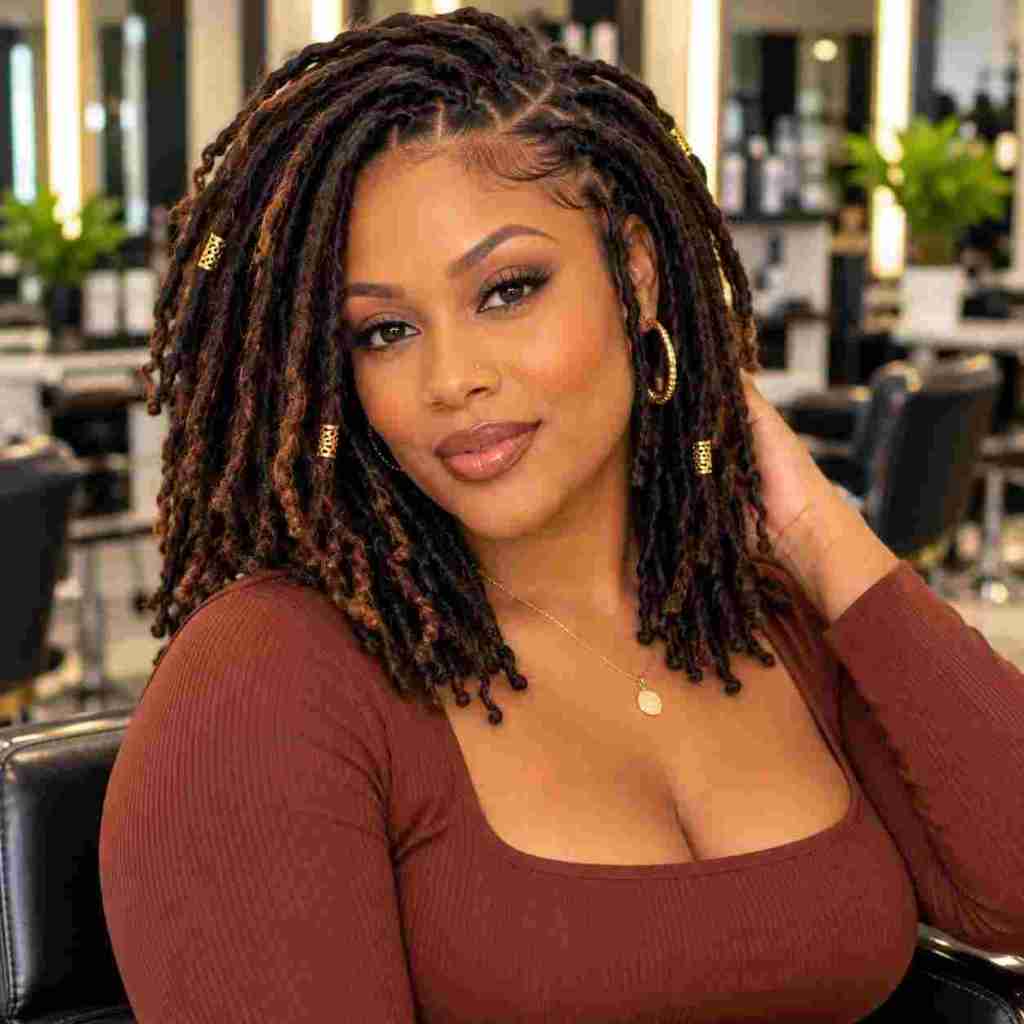
Dark brown base, honey highlights and gold cuffs spaced along the length. The cuffs contrast with the hair, so the eye moves between the warm highlight and the metal. A side parting lets the cuffs sit asymmetrically, which keeps the look from feeling too symmetrical. Wavy, thick texture gives the cuffs something to grip. They stay put better on textured hair than on slick, straight extensions. Skip it if hair accessories bother you or if you want a uniform color without lighter pieces. Ask your stylist for: dark brown butterfly locs with honey highlights, gold cuffs.
Black locs with loose curly ends and side swept front pieces
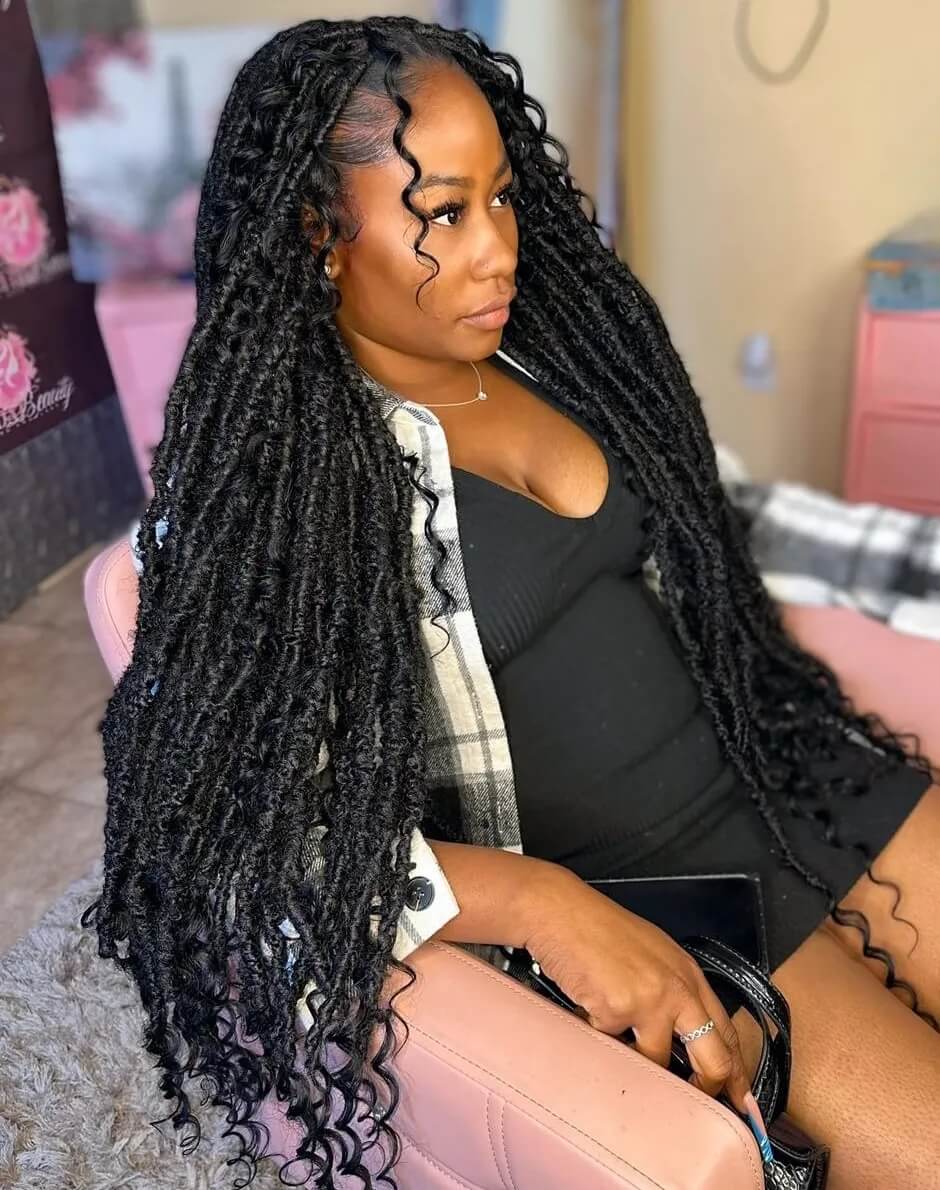
Uniform locs are reliable. These take a different road. The deep black hue stays consistent from root to mid-length, then each loc opens into a loose wavy curl. Side-swept front pieces break the symmetry and frame the face without needing bangs. The texture shift means the ends move differently than the braided sections above. It works best when you want a contrast in texture from top to tip. The salon time runs long with this one, intricate braiding and the end curl technique add a solid hour.
Honey blonde highlights with curled tendrils frame face
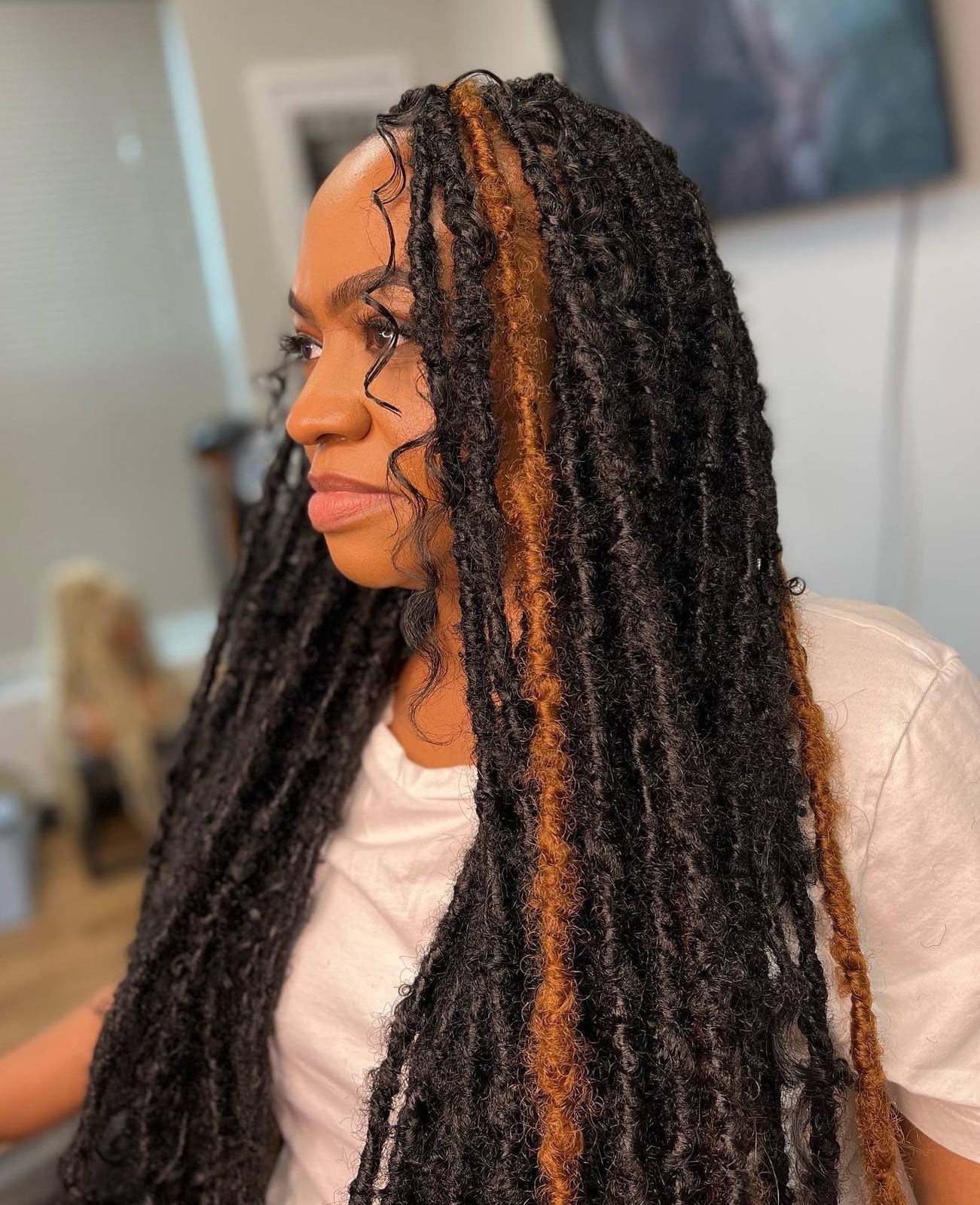
Wondering how to get those face-framing pieces without cutting into the length? The answer is curled tendrils. This style keeps the base black and threads honey blonde highlights through select locs for contrast. A few locs around the face are left loose and curled, while the rest fall in a thick wavy cascade. The middle part keeps it balanced. Tell your stylist: long black butterfly locs with honey blonde highlights and curled tendrils. The tendrils are wrapped around a rod while the set is braided, a two-step process that adds time but gives control.
Medium brown locs with lighter brown highlights and spiral curls
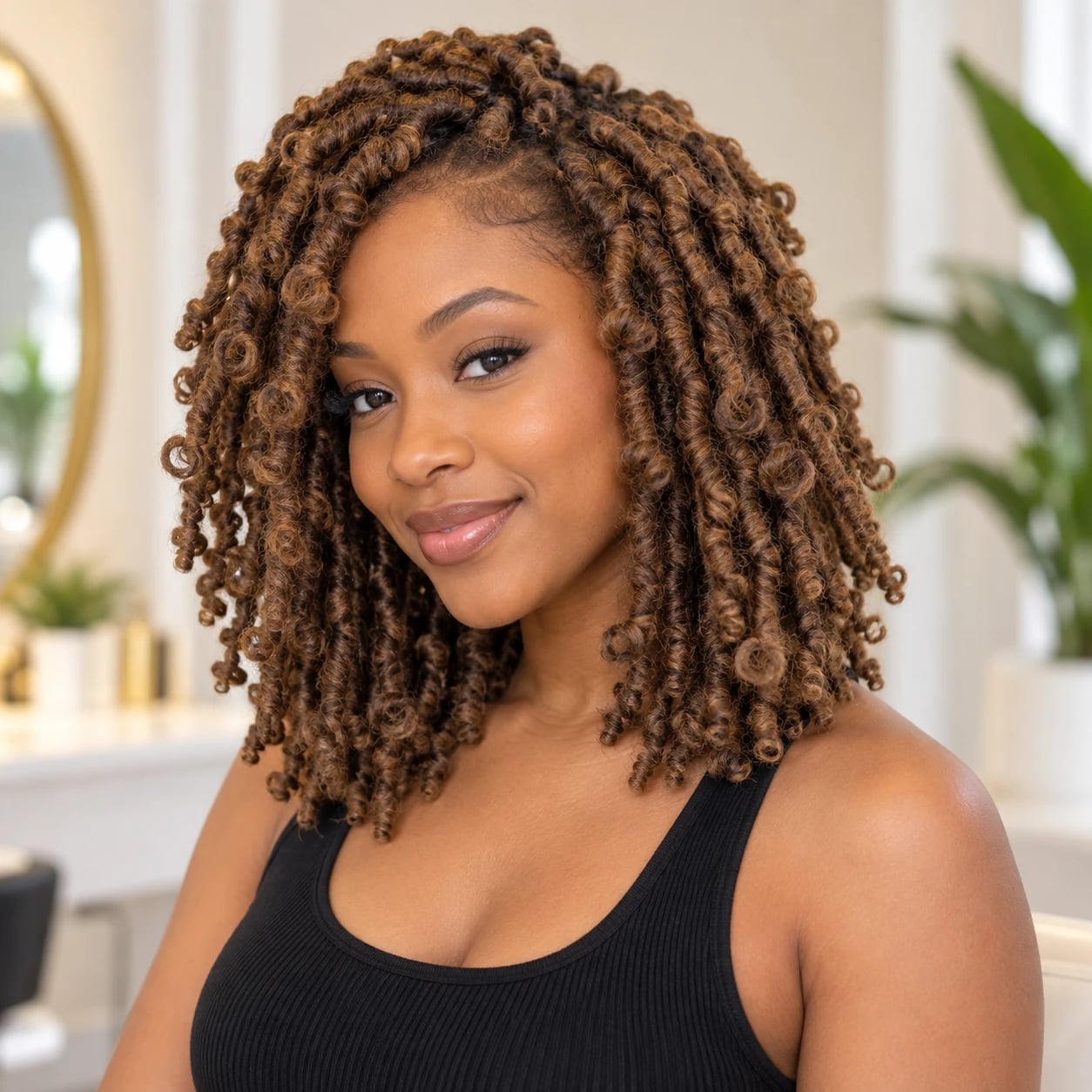
Solid brown locs are one thing. This version adds subtle lighter brown highlights that draw the eye. The coily, thick texture is the real draw here, each loc forms a defined spiral curl that holds its shape through the day. The side parting lets the curls fall forward. Where this differs from a straight or wavy set is the wrapping technique: each section is twisted tightly around a rod to set the coil pattern. Request medium brown butterfly locs with lighter highlights and defined spiral curls from your stylist. This style is not suited for those who want a smooth, uniform loc surface.
Thick wavy butterfly locs with colorful charms
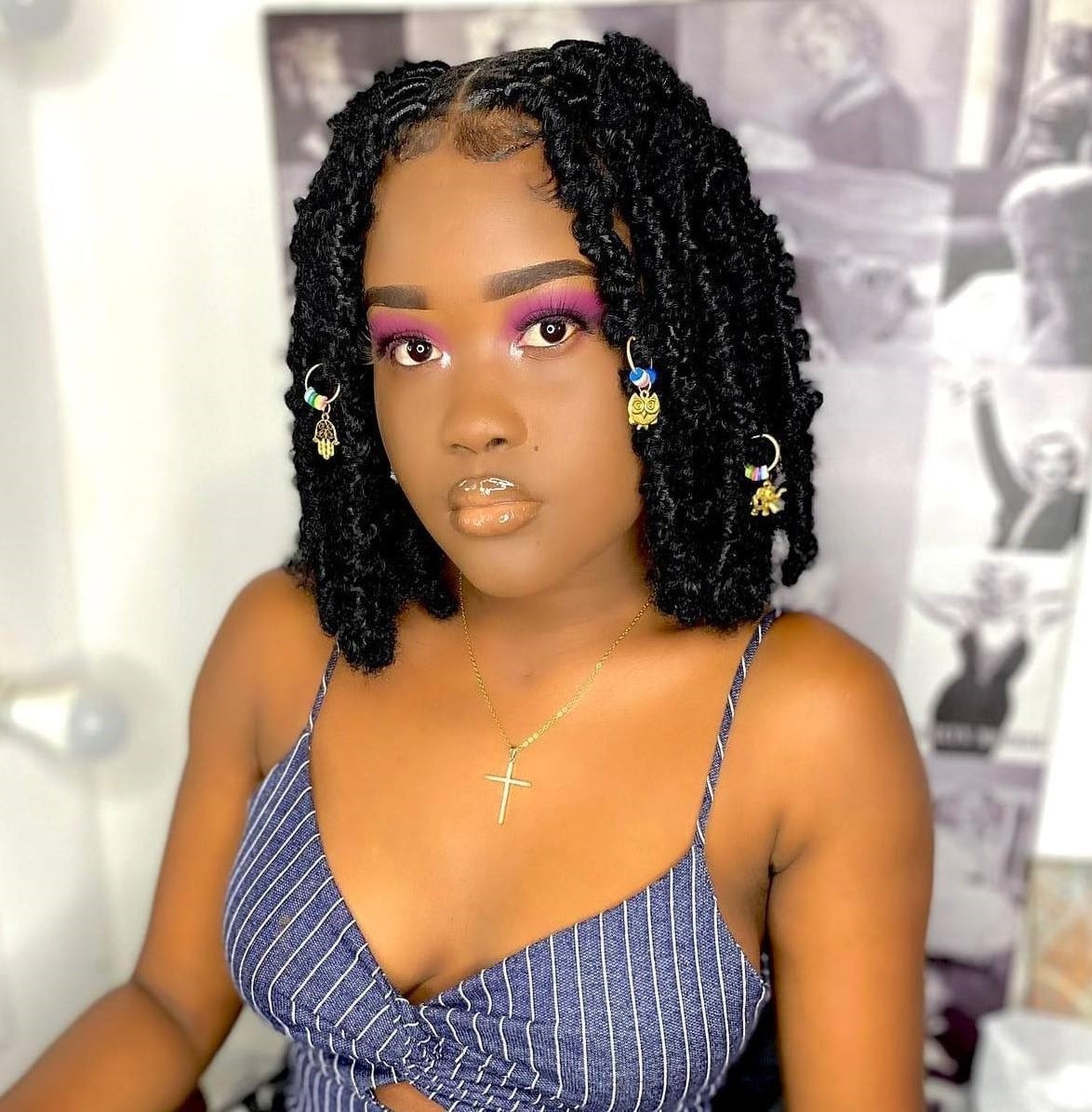
Charms change the whole silhouette. Here the thick wavy butterfly locs are parted down the middle, and small colorful charms are threaded onto individual locs at intervals. The black base lets the accessories stand out without competition. Each charm sits at a different height, which keeps the eye moving rather than landing on a single focal point. The wavy texture gives the charms room to shift and catch attention as the locs move. Ask your stylist for wavy butterfly locs with colorful charms. The charm placement is done during installation, so decide on spacing before the braiding starts.
Elaborate black loc updo with gold accessories
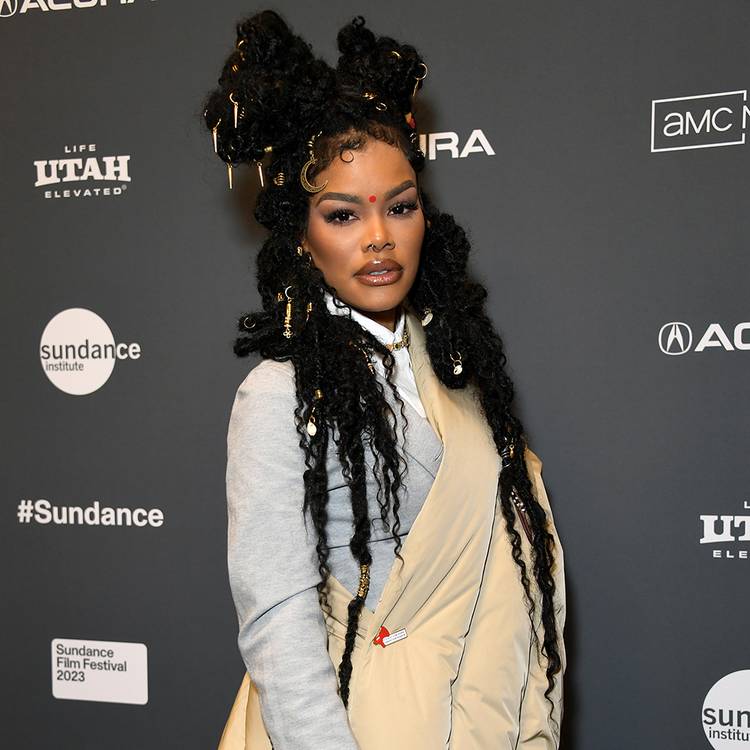
An updo built from locs works differently than one built from loose hair. Here the thick coily black locs are gathered into multiple braided sections that wrap around the crown. Gold rings and charms are woven through at intervals, catching light against the black base. The structure relies on the braided sections being secured at the base before any accessory is added. The gold pieces are added after each section is pinned, not before. This one is a salon-only project. The braiding and pinning sequence takes planning, not just skill.
Black butterfly locs with butterfly accessories and colorful threads
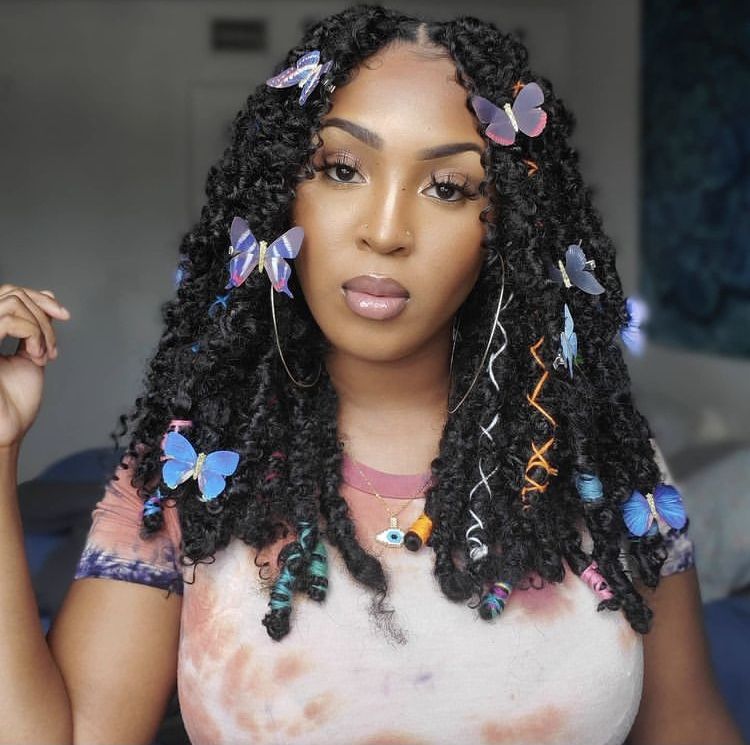
Butterfly hair accessories woven through rich black locs catch the eye before the color does. The decorative accents sit along a middle part, with colorful thread wraps adding small bursts of brightness against the wavy, thick texture. Ask your stylist for: black butterfly locs with butterfly accessories and colorful threads. Suits thick, wavy hair that can support the weight of added charms and wrapped sections. Skip it if a more natural or subtle finish is the goal. The salon time runs longer here because each thread accent and accessory placement takes precision.
Loose, textured butterfly locs for a free-flowing look
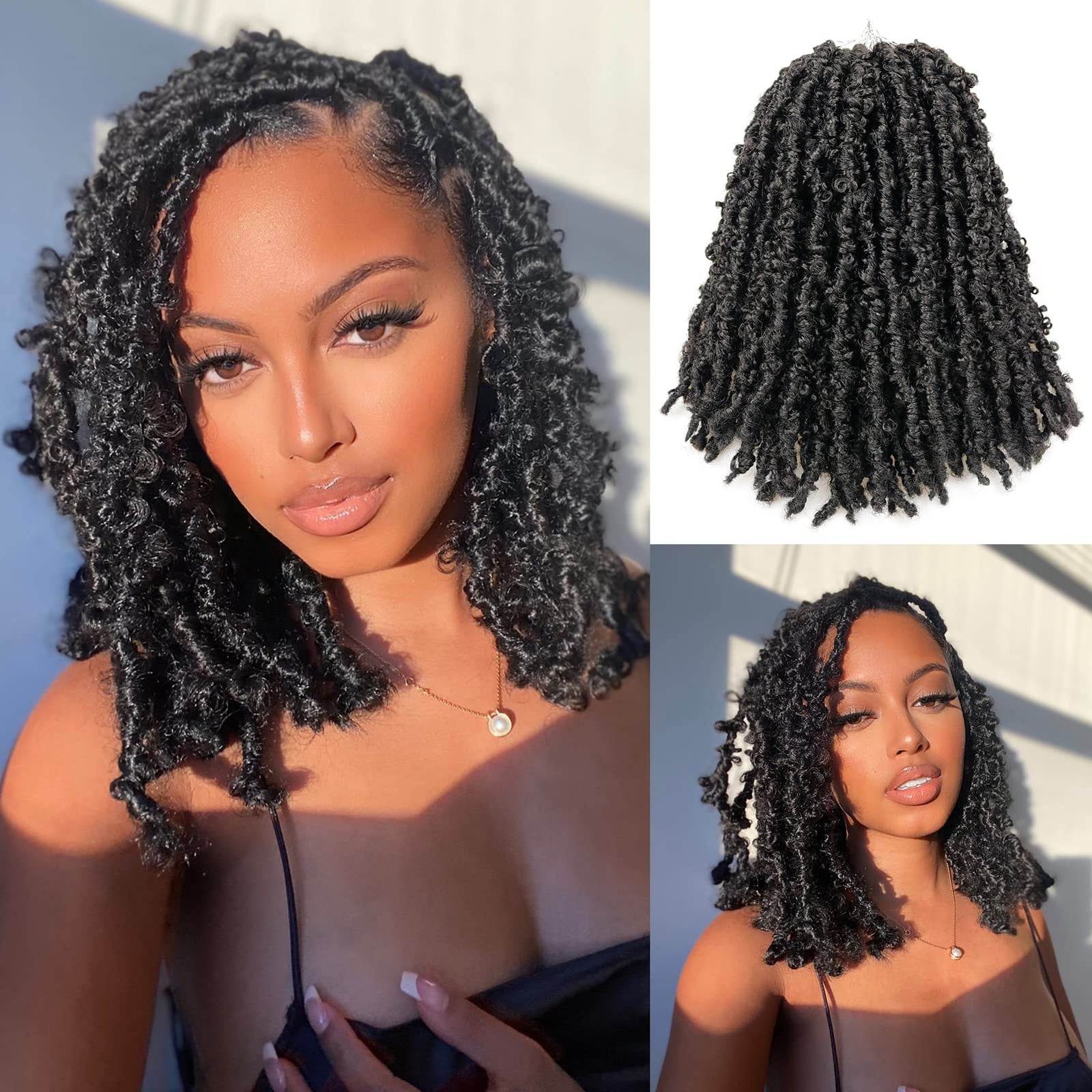
Coily texture and a middle part let these deep black locs look undone in the best way. The wrapping and looping technique creates a soft, irregular silhouette that moves rather than sits still. Length lands somewhere past the shoulders, though the coily spring shortens the visual drop. This design works for anyone who wants locs that look like they settled into place on their own. The catch: achieving that loose shape requires precise wrapping during installation, so a salon appointment is the smarter route.
Voluminous, textured butterfly locs with a centered parting
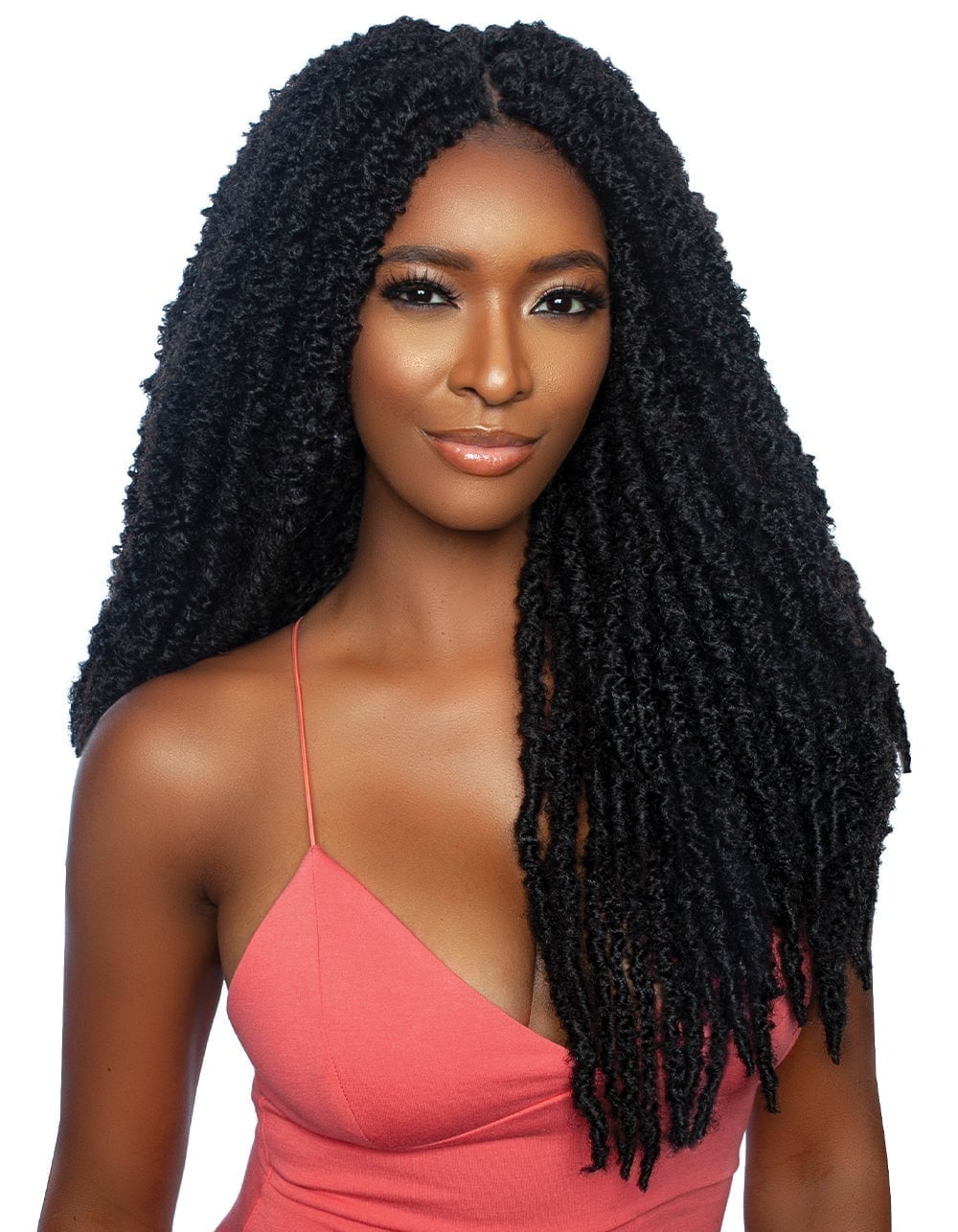
Where loose locs look relaxed, this version pushes the volume up. The centered parting splits the deep black coils evenly, and the thick texture fans out instead of hanging flat. The difference between this and a sleeker loc style comes down to the braiding technique: wider sections and less tension create that full silhouette. Suits anyone with coily hair who wants a shape that holds its body through the day. Ask your stylist for: deep black voluminous butterfly locs. The intricate braiding means a longer chair session, but the payoff is a shape that stays.
Butterfly locs styled into two high space buns with face-framing
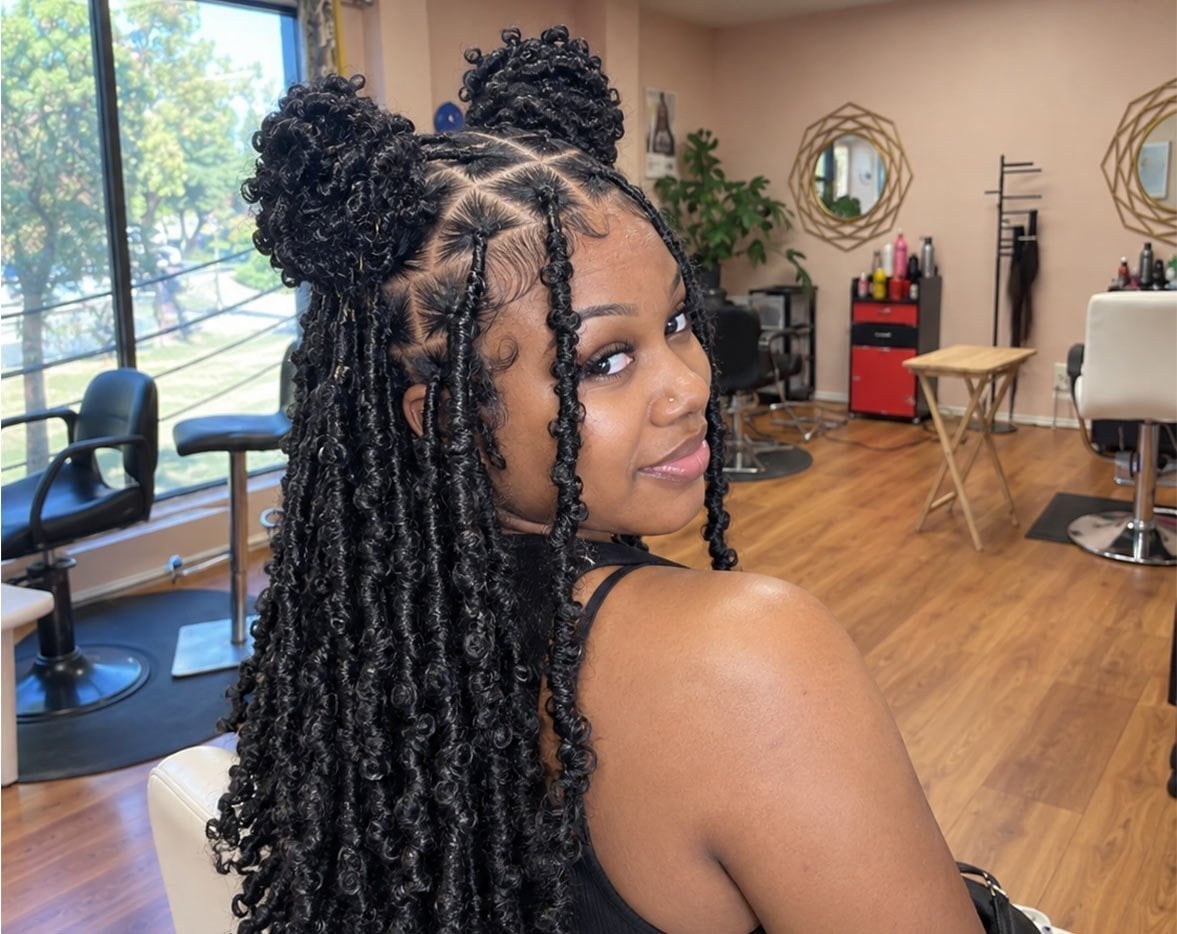
Two high space buns pull the bulk of the deep black locs up while leaving face-framing pieces to fall forward. The middle part stays visible at the crown, then the locs divide into two rounded sections that sit above the ears. A side view shows how the coiled texture gives each bun a full, rounded shape without needing extra padding. Suits anyone who wants an updo that still has movement around the face. Request deep black butterfly locs in two high space buns from your stylist. The installation requires careful parting and loc placement to keep the buns balanced.
Black and honey blonde butterfly locs with striking highlights
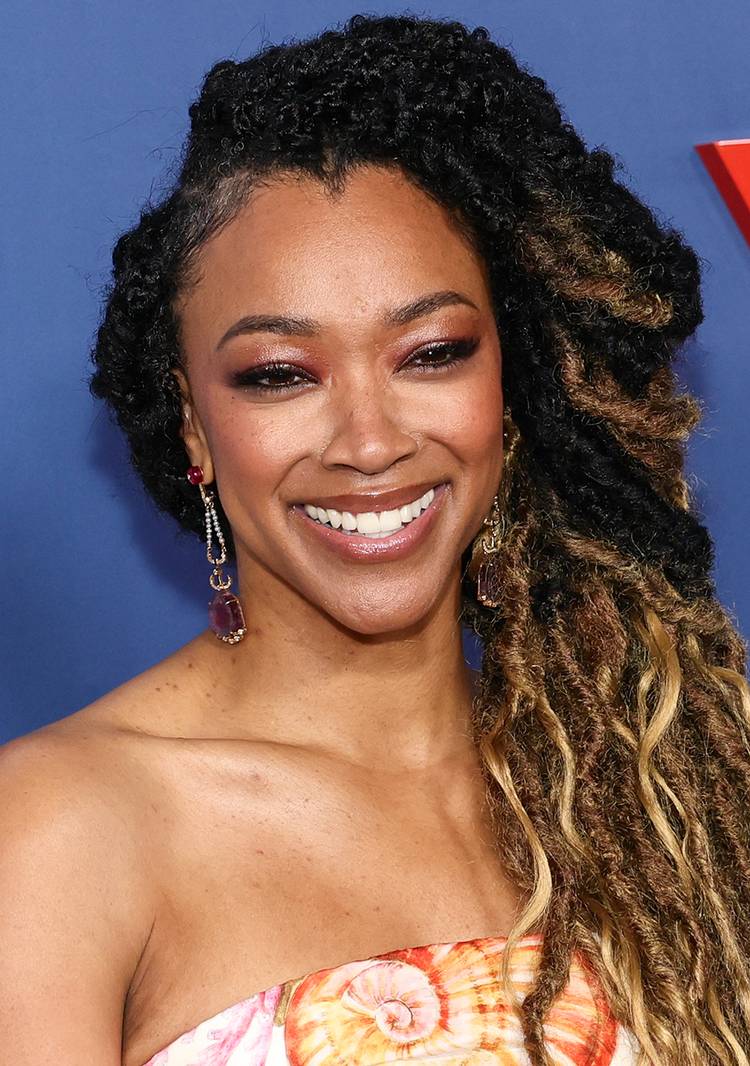
A side part lets the contrast between deep black and honey blonde do the work. The honey blonde pieces are woven through the front and crown, catching more light than the darker sections below. Coily, thick texture keeps the highlights from blending into a single wash of color. Suits anyone who wants a bold two-tone look without a full color change. Request black butterfly locs with honey blonde highlights, side part from your stylist. The color placement requires a skilled hand to keep the contrast readable against the thick texture.
Black butterfly locs with loose curls at the ends and baby hairs
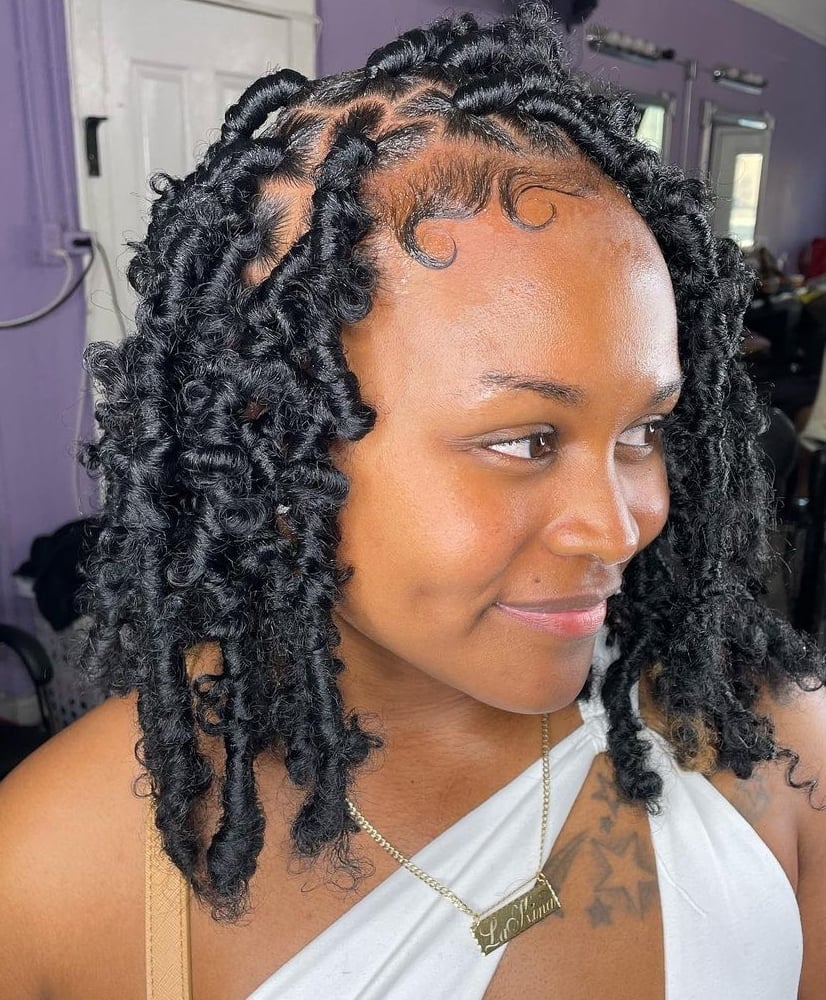
Not every protective style needs blunt ends. These black butterfly locs keep a wavy, thick texture throughout, then finish with loose curls at the tips. The baby hairs frame the face, softening the overall shape. A middle part keeps the look grounded. A cleaner edge or no face-framing detail is a different preference. Tell your stylist: black butterfly locs with loose curls and baby hairs. The technique here requires precise braiding, so plan for a full chair session.
Dark red to burgundy Ombre butterfly locs
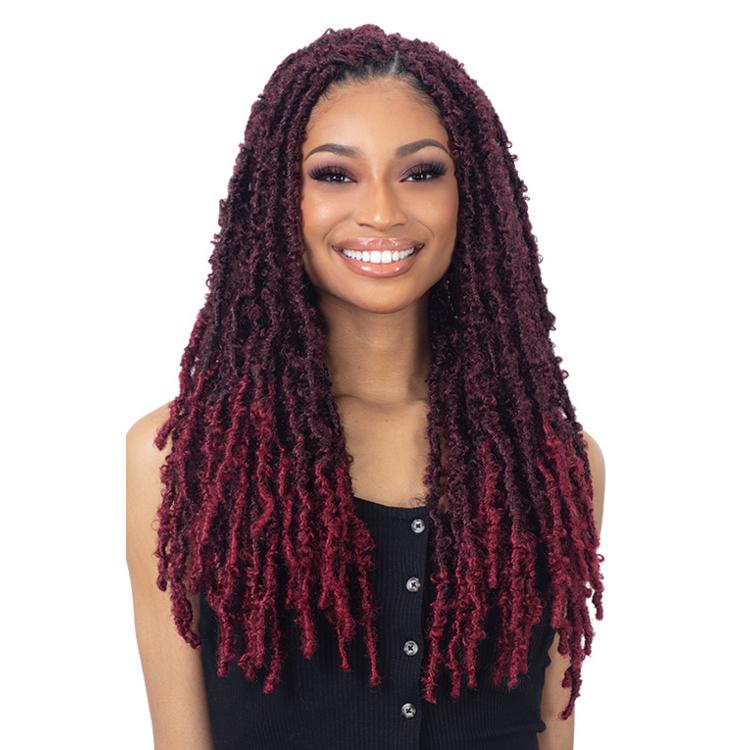
A dark red to burgundy ombre fade changes the character of butterfly locs entirely. The roots stay deep, then the color shifts gradually through the wavy, coily strands. A middle parting lets the gradient read clearly from root to tip. Thick texture carries the fade well. The alternative is a solid burgundy, which reads flatter. This version keeps the color transition as the main event.
Long black locs styled with middle part full look
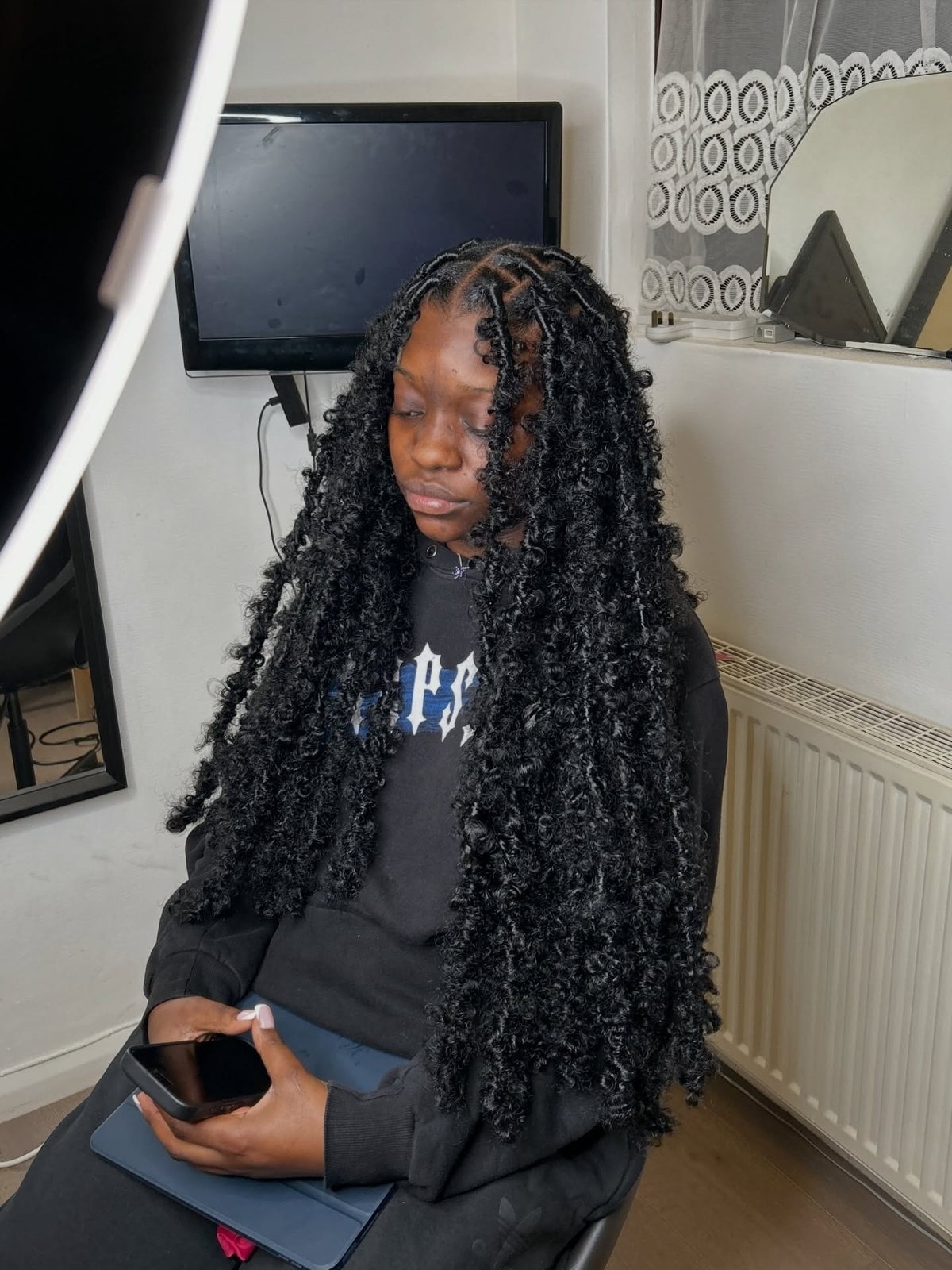
Long and full is the brief here. These black butterfly locs drop past the shoulders with a wavy texture and a middle part that splits the volume evenly. The loose strands create a soft, airy feel without losing density. Thick hair carries the weight well. A middle part suits round face shapes by elongating the silhouette. This protective style leans toward salon application for even parting and consistent wave pattern. The result is a straightforward, wearable silhouette.
Heart-shaped parting at crown on black locs
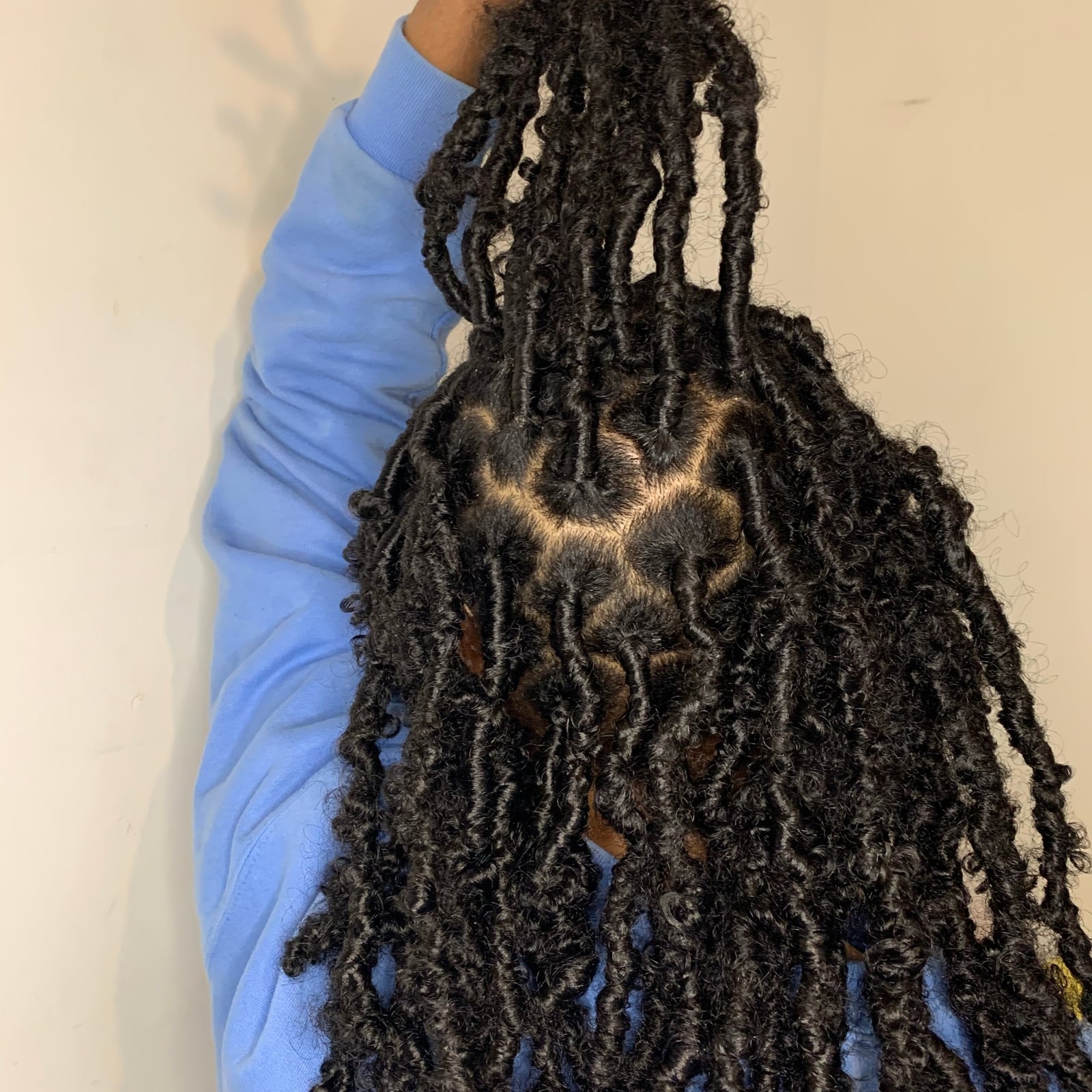
A heart-shaped parting at the crown turns a standard black loc style into a deliberate design choice. The deep black color and thick, wavy texture stay consistent throughout. The parting sits at the crown, visible from the side. Pass when you prefer a standard part or a simpler layout. Tell your stylist: deep black butterfly locs with heart-shaped parting. The technique requires careful sectioning during installation, so this is not a last-minute decision. The shape holds as long as the style does.
Dark brown to auburn Ombre butterfly locs cascading mid-back
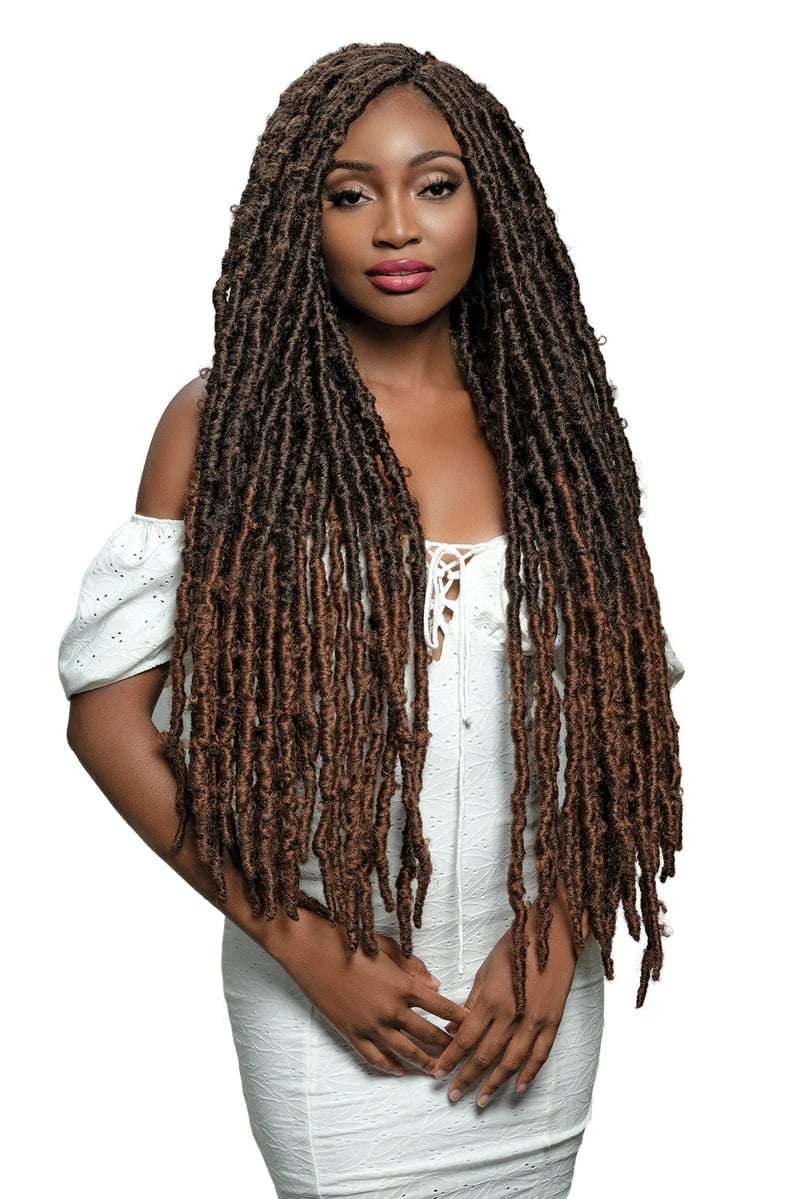
Length and a color transition make this version stand out. These butterfly locs reach mid-back, starting dark brown at the roots and fading to warm auburn toward the ends. The thick, coily texture holds the ombre gradient without losing definition. A middle part keeps the weight balanced. Skip it if you prefer solid colors or shorter locs. The technique here demands precise color placement during installation, so expect a longer chair session.
Cascading black butterfly locs with side-swept bangs and wavy texture
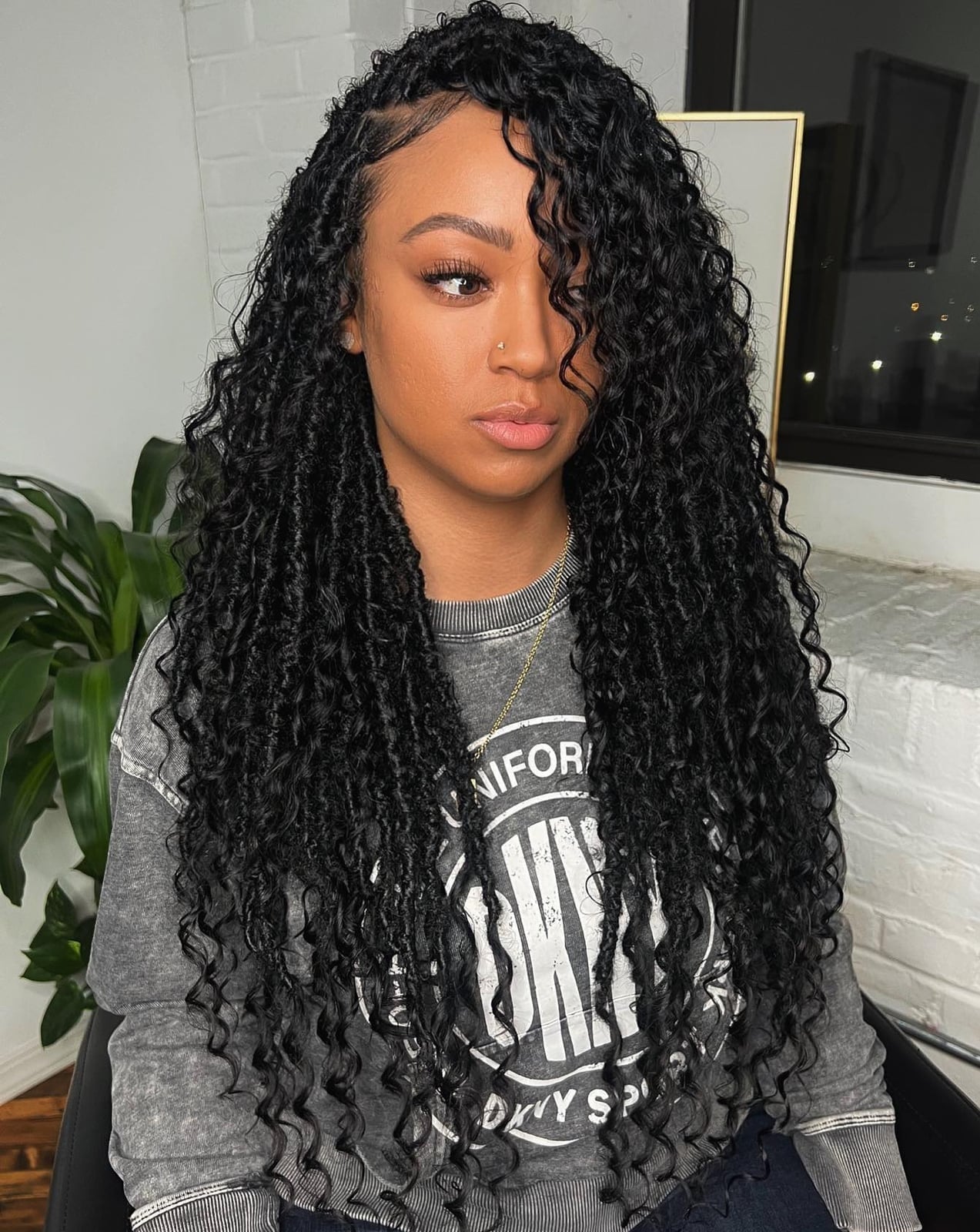
Side-swept bangs change the whole dynamic of butterfly locs. Where a middle part can feel symmetrical and calm, a deep side part with a dramatic bang adds an asymmetrical energy that draws the eye across the face. The deep black hue here keeps the look grounded, while the loose, wavy and coily textures create the volume that gives the bangs a deliberate shape. Thick, wavy or coily hair takes this shape best. The bangs need enough weight to sweep rather than float. A side-swept bang that short requires commitment at every refresh. The texture mix means you are not fighting for hold, just letting the locs settle where they fall. About three hours in the chair for the braiding alone, then a trim at week eight to keep the bangs at the right length.
Textured, thick butterfly locs styled to frame the face
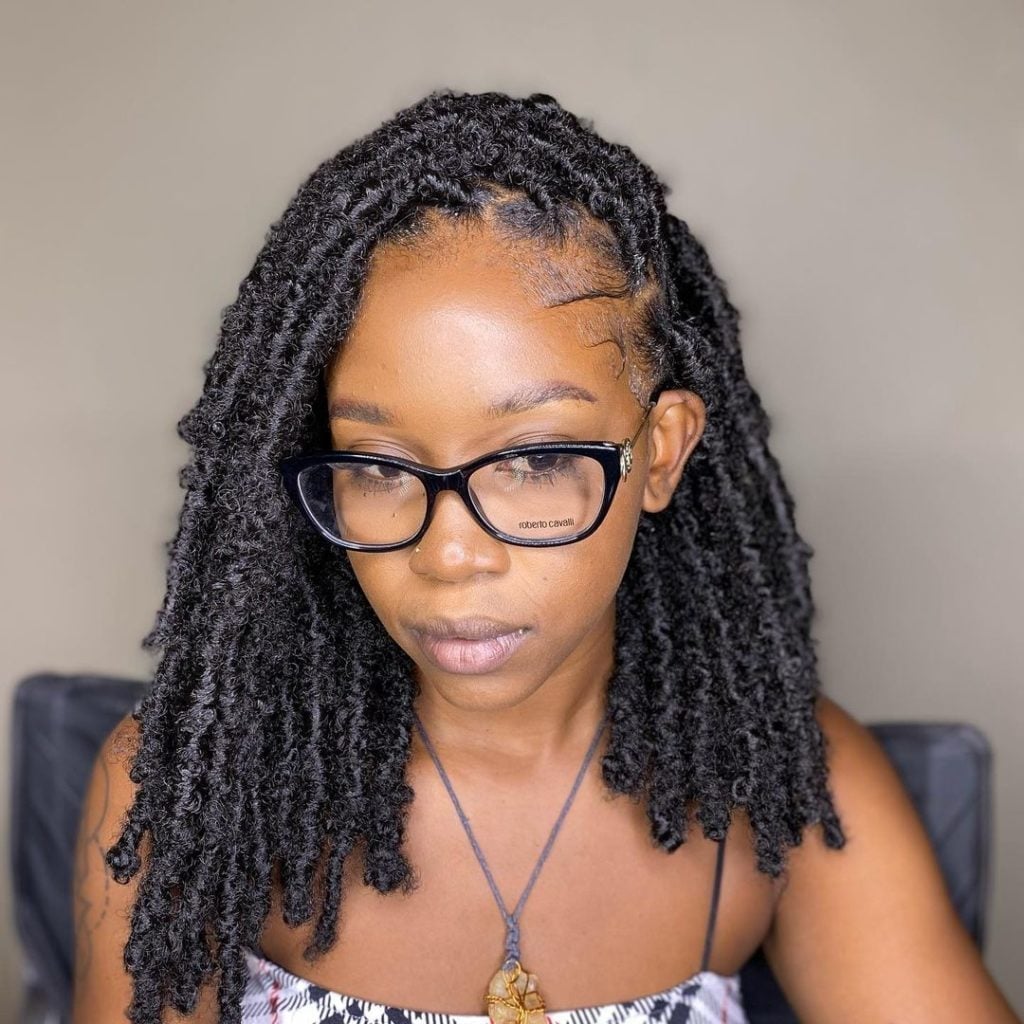
Thick coily butterfly locs are a statement before you add a single accessory. The side part here lets the locs fall forward, wrapping around the face rather than hanging straight down. That framing effect works best on a round or square face shape. The volume at the sides creates vertical lines that soften the jaw. The texture is the star: each loc has that slightly rough, wrapped surface that catches light differently than a smooth twist. Skip it if you want a style that keeps the hair off your face entirely, because this cut is built to sit forward. Request thick coily butterfly locs with face-framing style from your stylist. The salon application takes time, but the result holds its shape for weeks with minimal fuss.
Platinum blonde butterfly locs with loose curly ends
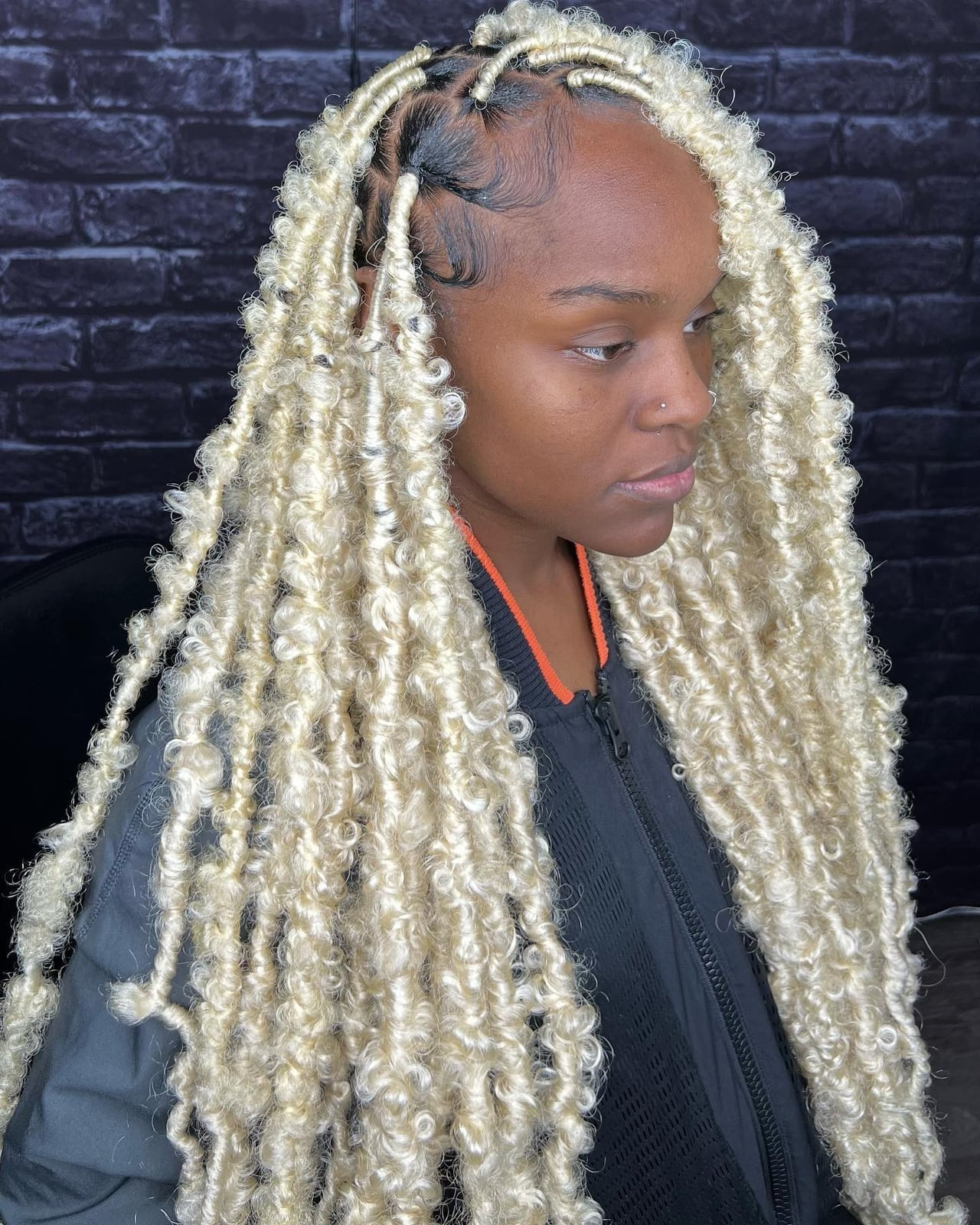
Platinum blonde on butterfly locs is a commitment that starts before the first loc is wrapped. The centered parting and intricate crown braiding give the style a structured foundation, but the loose curly ends soften the whole silhouette. That color requires a pre-lightened base if your natural is dark, and the brassiness shows faster on blonde than on brown or black. A purple shampoo at week three keeps the tone cool. The contrast between the tight crown and the loose ends is the whole point. This is a salon-only situation; the braiding technique alone takes skill, and the color work adds another layer. The hold is solid, but the tone needs maintenance every four to six weeks.
Blonde locs with honey highlights arranged half up
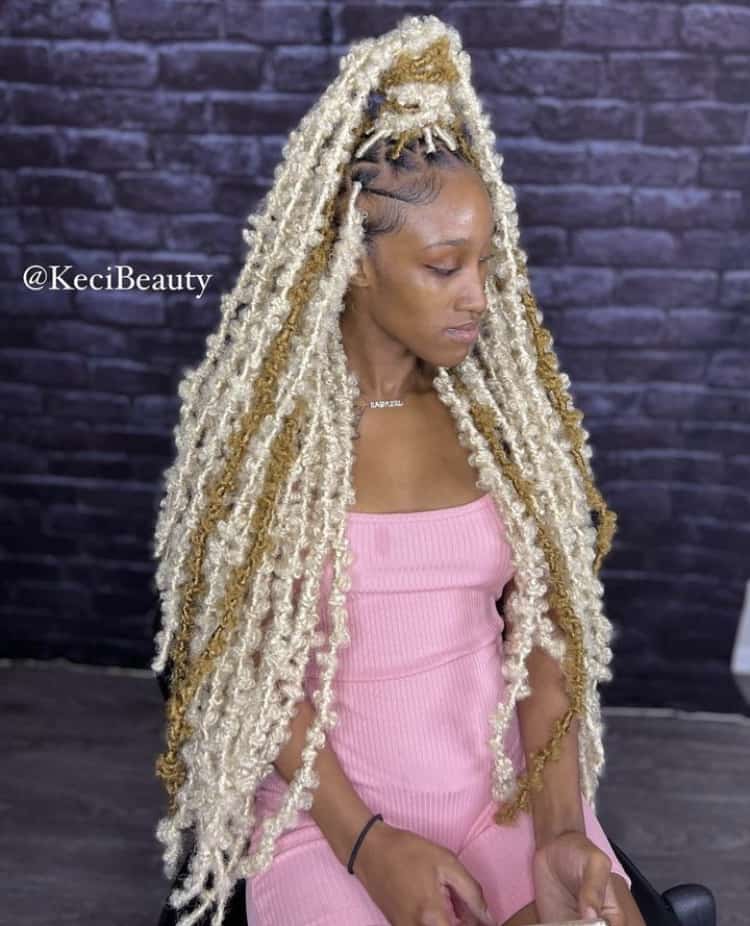
Blonde with honey highlights reads warmer than a solid platinum. The half-up, half-down arrangement here keeps the length visible while pulling the top section back, which works well for anyone who wants the volume without the weight on their neck. The middle part balances the style, and the honey tones add a subtle dimension that moves with the loose, wavy locs. Thick, wavy hair holds this shape best; finer textures may need extra wraps per loc to achieve the same fullness. Not for anyone set on a darker palette or locs that stay fully down. Tell your stylist: blonde butterfly locs with honey highlights, half up half down. The intricate braiding takes time, but the half-up styling takes seconds once the locs are in.
Rich brown locs styled middle part cascade down
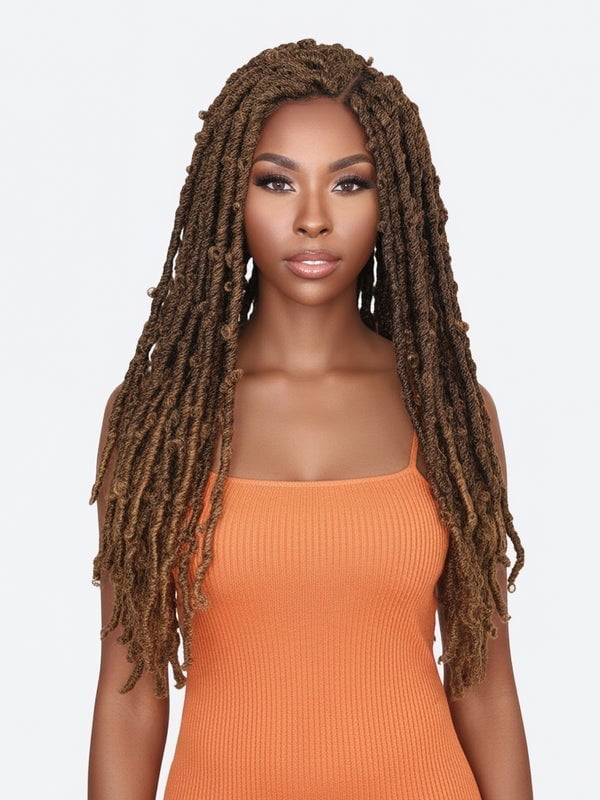
Rich brown is the shade that does not ask for maintenance. The middle part here lets the voluminous locs fall symmetrically, creating a full, textured curtain that works on almost any face shape. The volume comes from the coily texture. Each loc has enough body to stand away from the next, so the style never looks flat or sparse. Thick, coily hair takes this shape naturally; the locs hold their structure without product. Skip it if you prefer lighter colors or intricate styling like buns or braids, because this cut is designed to cascade. The salon time is significant, the loc creation itself takes hours, but the daily styling is zero. A trim every eight weeks keeps the ends tidy. The hold is strong from installation to removal.
Sharp, voluminous dark brown butterfly locs in layers
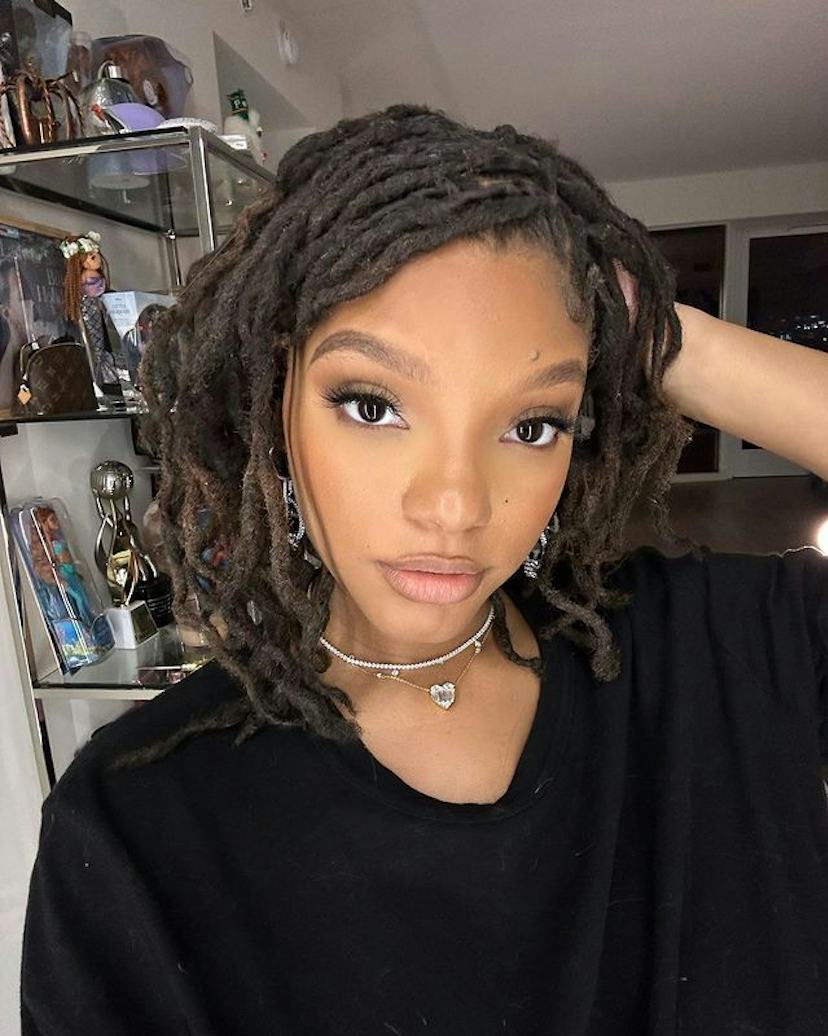
Layers in locs work differently than layers in loose hair. Each section is built separately, so the volume comes from the difference in length between the crown pieces and the ones at the perimeter. Dark brown, coily hair takes this technique well because the natural texture adds body at every level. The centered parting keeps the weight balanced on both sides. Ask your stylist for dark brown layered butterfly locs. This is a salon-leaning application, not a weekend project. Plan for a full day in the chair to get the graduation right.
Deep burgundy butterfly locs with loose, wispy ends
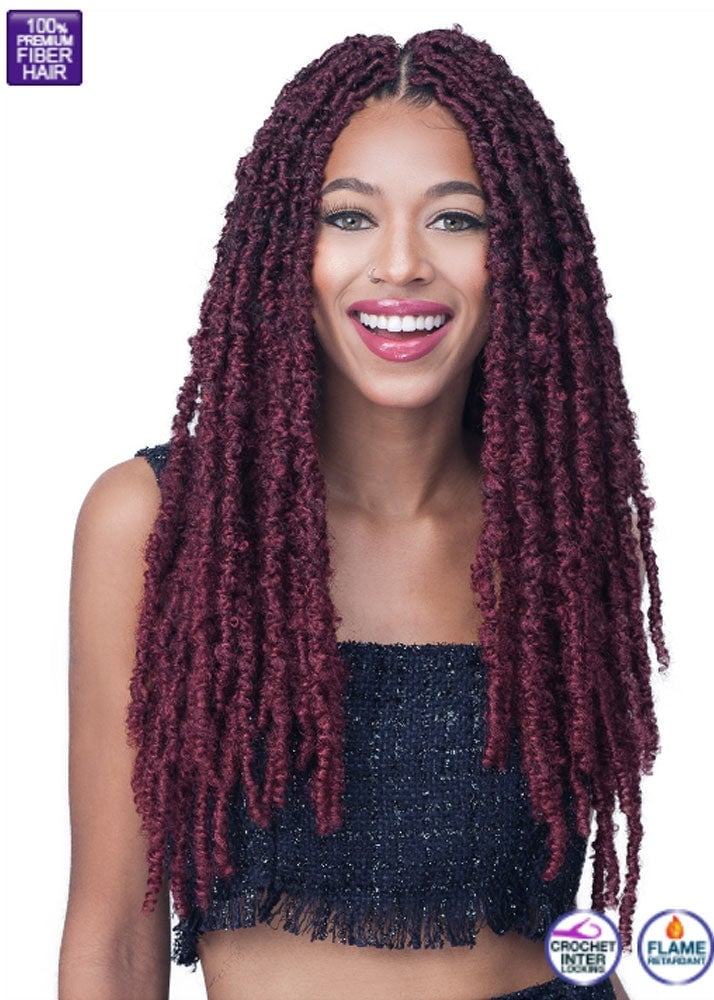
A clear one-line assessment: the loose ends are the whole point. Deep burgundy looks almost black in low light, then shifts to a wine tone when the sun hits it. The wavy texture of the locs softens the overall shape, and the wispy ends keep it from looking heavy. The middle parting lets the color show evenly on both sides. This look requires braiding skill to get the taper right. It is not a style for those who prefer a blunt, uniform hemline.
Vibrant deep red butterfly locs with loose waves
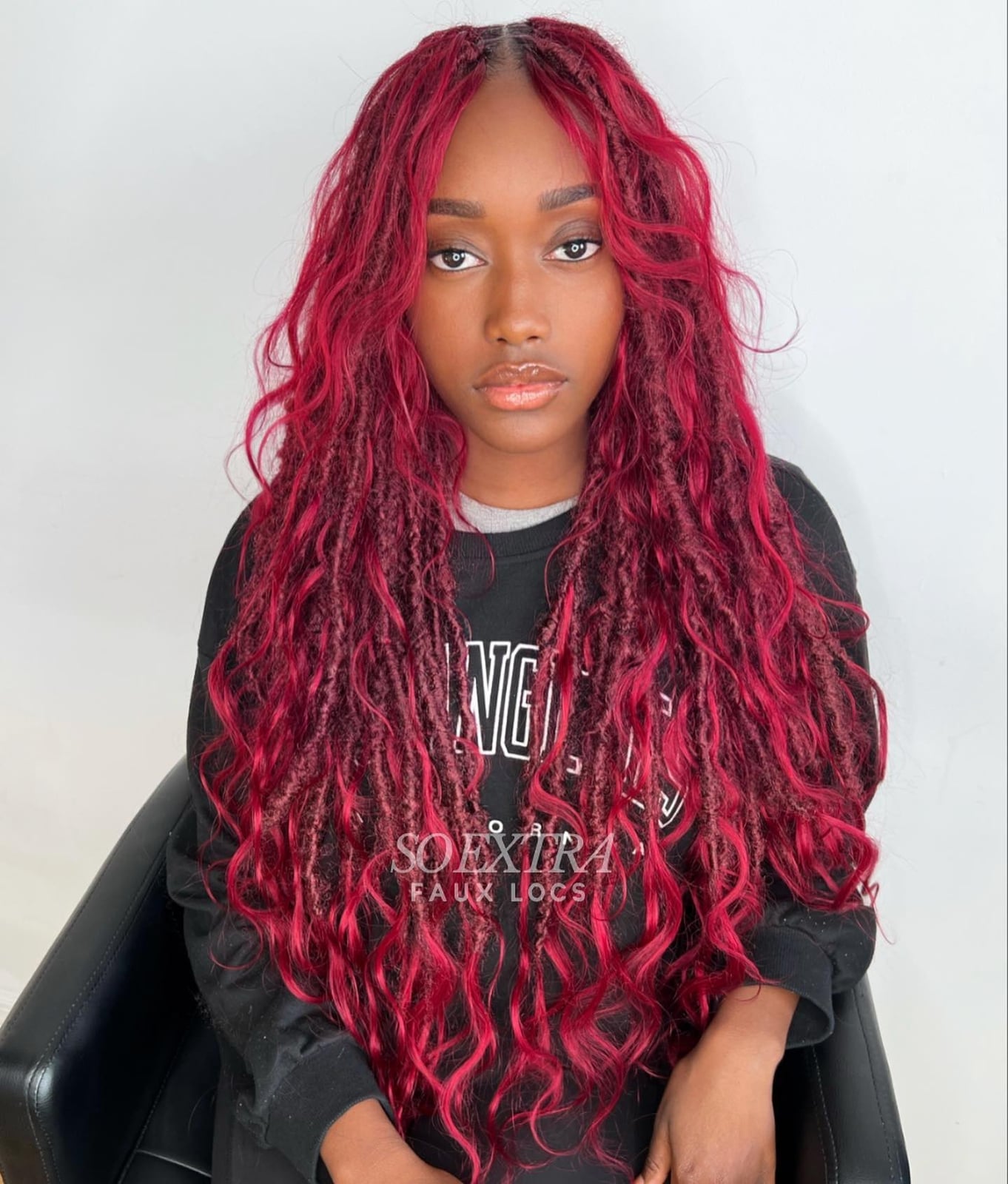
Color this bold changes the timeline. Vibrant deep red with darker undertones takes multiple passes to get the depth right, and the locs need to be pre-colored before installation. The thick, coily texture holds the loose waves well, but the wave pattern is set during wrapping, not added afterward. A middle parting shows the color distribution cleanly on both sides. Request vibrant deep red butterfly locs with loose waves from your stylist.
Plan for a full installation session. The red will fade faster than a neutral shade, so a color-depositing conditioner becomes a regular part of the routine. The drama is worth the extra steps, but know that going in.
Final Thoughts
Pick the version that matches how much time you want to spend in the chair and how often you want to restyle.
- Professional installation is recommended for intricate braiding and loc formation.
- Regularly moisturize the scalp to keep it healthy beneath the locs.
- Avoid excessive manipulation to prevent frizz and maintain loc integrity.
- Schedule touch-ups or re-installation every 6-8 weeks depending on growth.
Butterfly locs offer a world of creative expression.
