

You are scrolling honey blonde inspo, bookmarking everything, and still unsure which version lands on you. The 2027 take on this shade skips the flat, one-note blondes of past years and leans into lived-in warmth that grows out without a harsh line, a practical win for anyone who books a colorist every eight weeks, not four.
All 27 looks here share a honey-blonde base but diverge in technique, tone, and texture so you can match one to your hair type and styling patience. Fine, thick, straight, or wavy. There is a version that works without a full overhaul. Which is why Stylish Honey Blonde 2027 fills so many saved boards: it solves the too-bright or too-dark struggle.
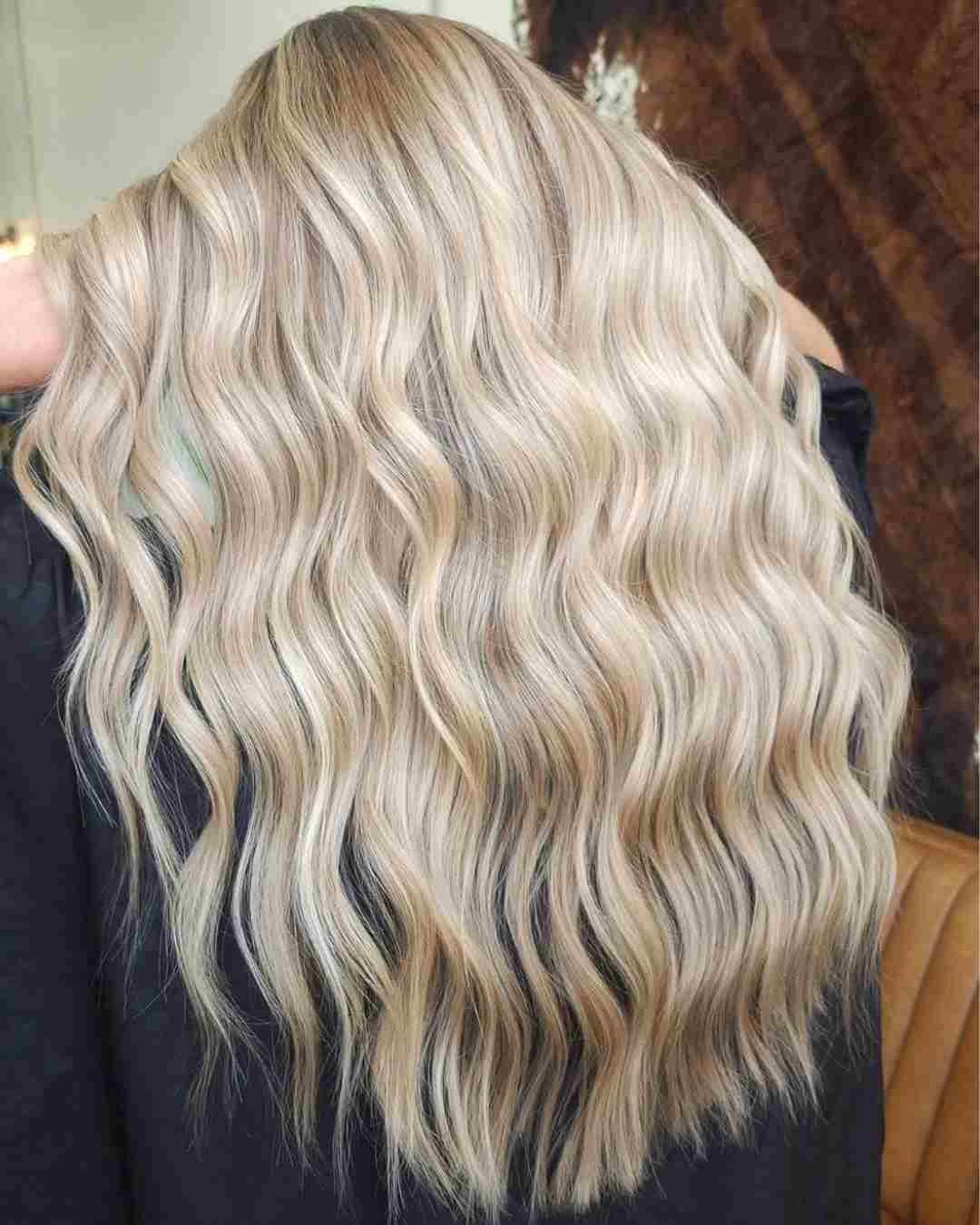
Honey blonde balayage with light blonde highlights
Balayage here doesn’t just add dimension; it builds structure. The technique paints lighter blonde highlights into a honey blonde base, keeping the root deeper so the wave looks movement, not regrowth. Thick, wavy hair is the ideal canvas because the texture catches each painted section differently. A back view shows the payoff: no harsh lines, just a smooth gradient from darker at the crown to lighter at the ends. This look demands a skilled hand at the bowl, not a box dye. Ask your colorist for honey blonde balayage with lighter highlights, loose waves.
Dimensional warmth with subtle golden highlights
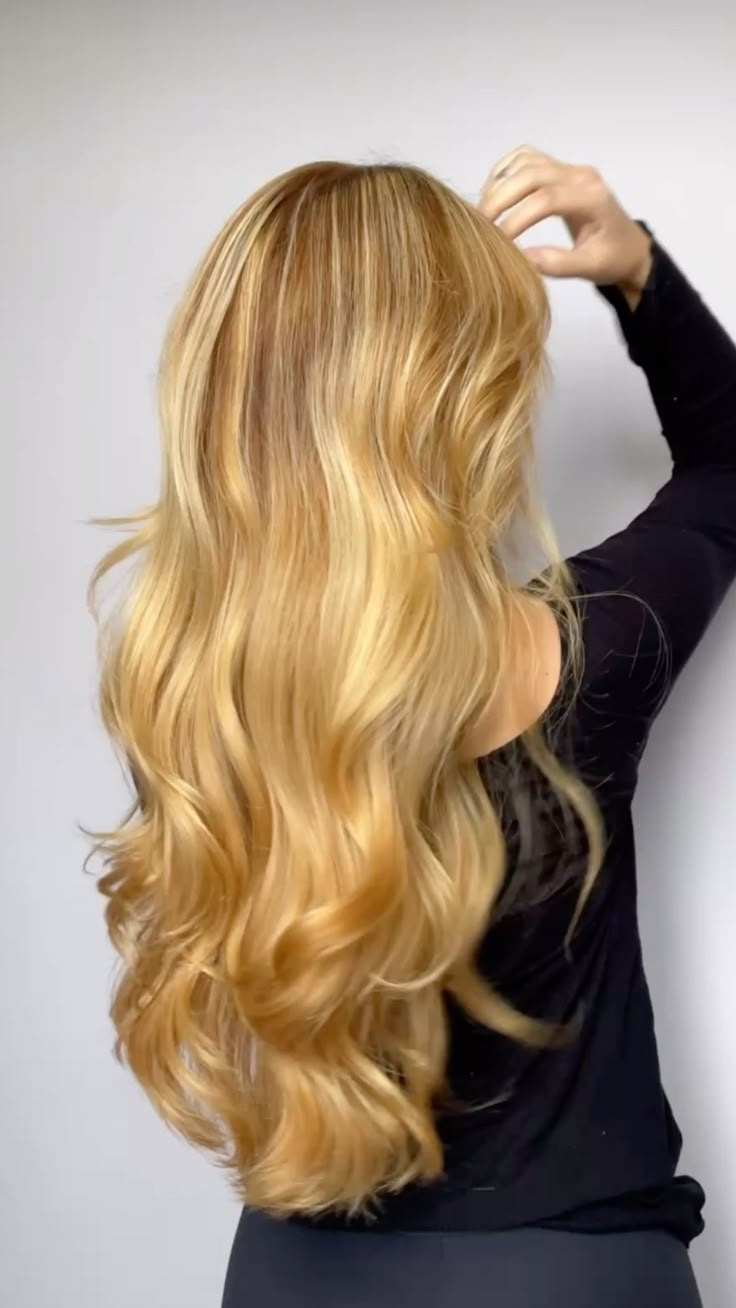
Golden highlights can look brassy or warm, and the difference is in the placement. Here, subtle golden strands are woven through a honey blonde base at a fine density, so the tone stays dimensional without tipping into yellow. Thick, wavy hair benefits most because the natural wave scatters the lighter pieces, creating soft contrast rather than stripes. Not for anyone who prefers a cool, ash-based blonde. The upkeep: a round brush blowout can enhance the waves, and a trim every 6-8 weeks keeps the shape fresh.
Neat blowout with a side part
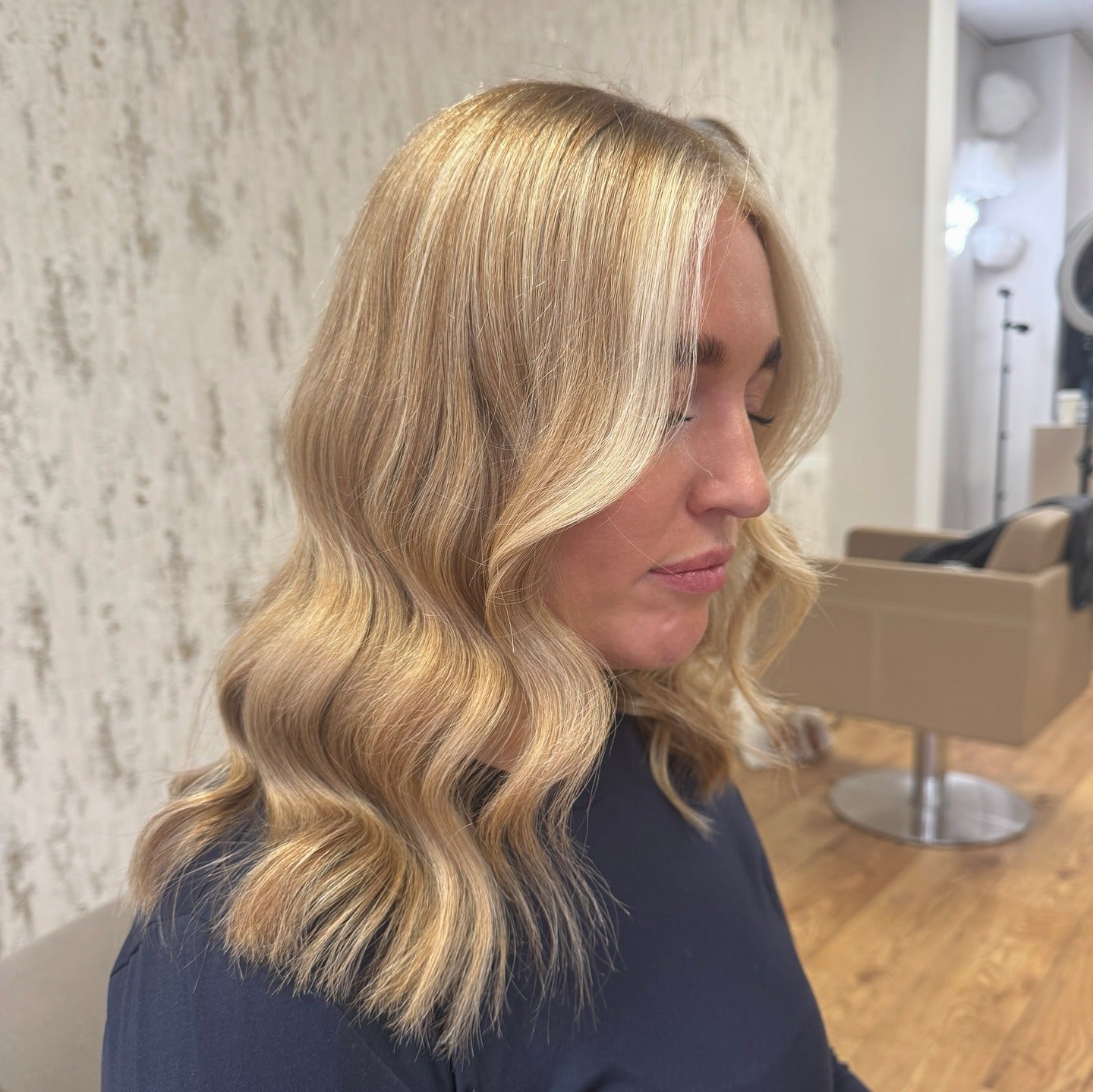
Does a side part still work when every trend says middle? Yes, when the volume is on the lighter side of the part. This honey blonde with subtle highlights uses a deep side part to lift the crown, and the soft waves break up what could be a heavy sweep. The layers are cut to move with the thicker wavy texture, so the blowout holds its shape without product buildup. One real drawback: a side part can expose root regrowth faster than a center part, so toning appointments may land closer to six weeks than eight. Pass when you prefer a middle part or have very straight hair that won’t hold soft waves. Request from your colorist: layers, fine highlights, soft waves, side part blowout.
Dark blonde base with honey blonde balayage
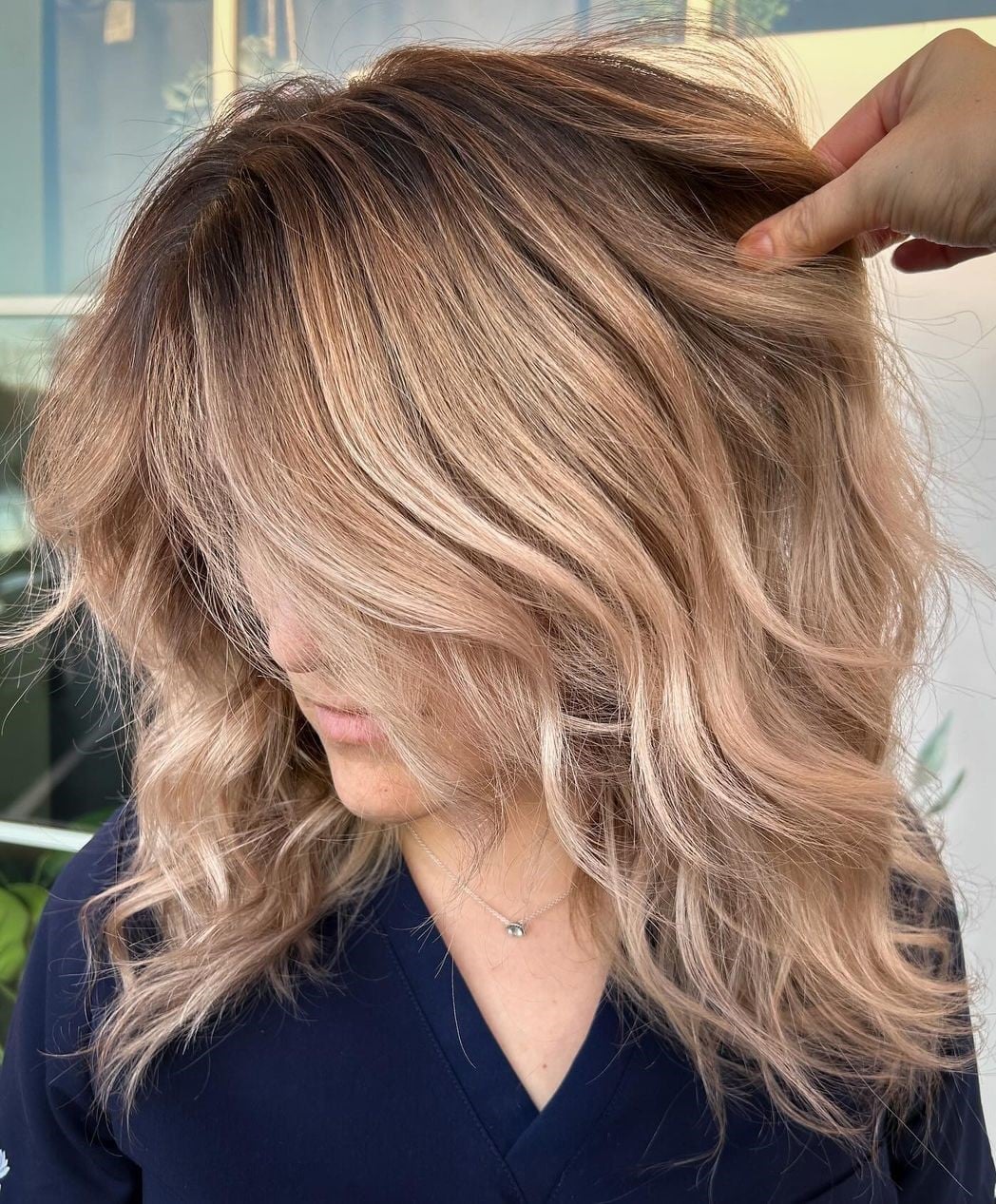
A dark blonde base gives this honey blonde balayage weight. The depth sits at the root and mid-lengths, while the balayage lifts the ends into a warmer tone. Thick, wavy hair carries the transition well because the wave breaks up any solid color blocks. The technique keeps the root line soft, so grow-out is less obvious than with traditional highlights. Fine hair might not hold the layered cut, and a lighter all-over base is an alternative. No length is specified here, so the effect works from collarbone to mid-back.
Voluminous blowout with subtle highlights
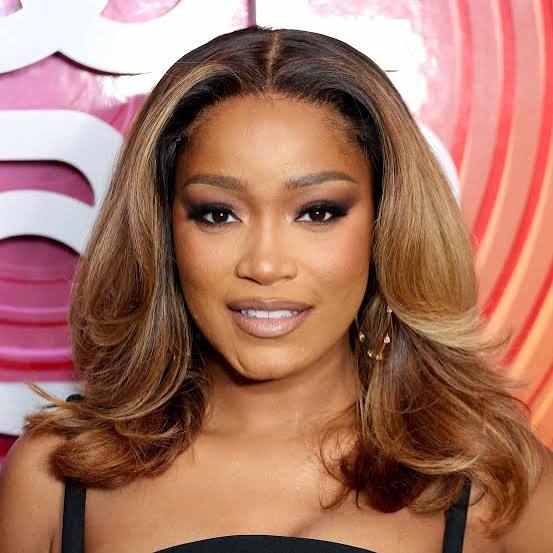
Volume in a blowout is about the cut, not the brush. Soft layers are cut into thick, wavy hair, and thin lighter strands are woven through the honey blonde base to break up the mass. The middle part keeps the shape symmetrical, which matters when the volume is high. A salon blowout is the standard here because the subtle highlights and blended layers need a professional eye for placement. For a similar effect at home, a volumizing spray at the roots can help maintain lift. Skip it if you prefer a sleek, straight style or have very fine hair that won’t hold volume. Ask your colorist for soft layers, subtle highlights, voluminous blowout, middle part.
Natural lighter balayage with subtle layers
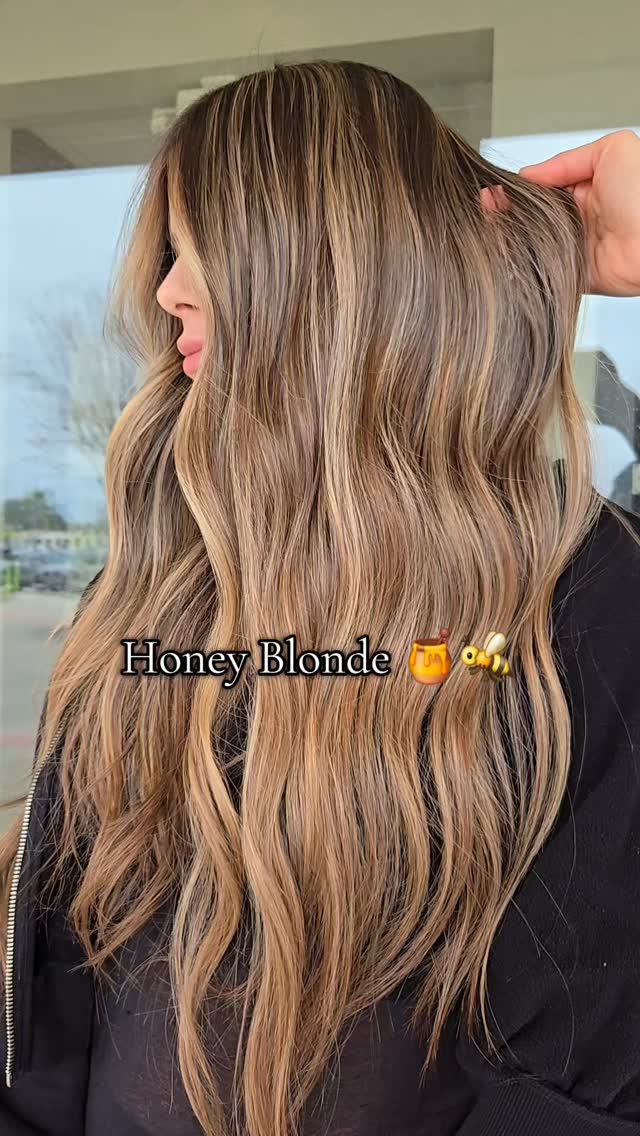
You know a balayage that aims for lighter and lands on stripe-y. This one takes the other path. The honey blonde is painted freehand from the mid-lengths down, so the roots stay darker and the ends have a bright finish without a harsh regrowth line. Thick, wavy hair needs the weight taken out, and the subtle layers do exactly that. A middle part keeps the whole thing balanced.
It works best if you want a solid blunt hemline. The waves and layers need a trim every eight to ten weeks to hold their shape. A texturizing spray gives the wave pattern more definition on day two.
Face-framing curtain bangs and subtle highlights
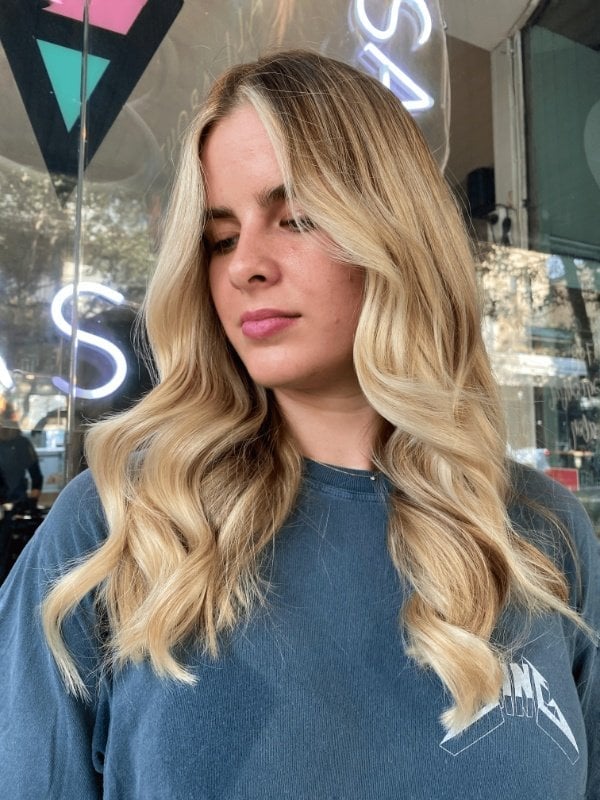
Curtain bangs work because they frame without committing to a full fringe. Here, they are cut to sweep outward, blending into the layered length. The honey blonde base carries subtle blonde highlights painted around the face, so the lighter pieces brighten the front. Thick, wavy hair holds the shape well. A blow-dry with a round brush directs the bangs forward, then you sweep them to each side.
Tell your colorist: curtain bangs with face-framing highlights on a honey blonde base. The layers are cut to move, not stack, so the volume sits through the mid-lengths. The catch: the lighter pieces around your face will need a toner refresh sooner than the rest. Plan for a gloss at week six.
Warm honey blonde base with delicate highlights
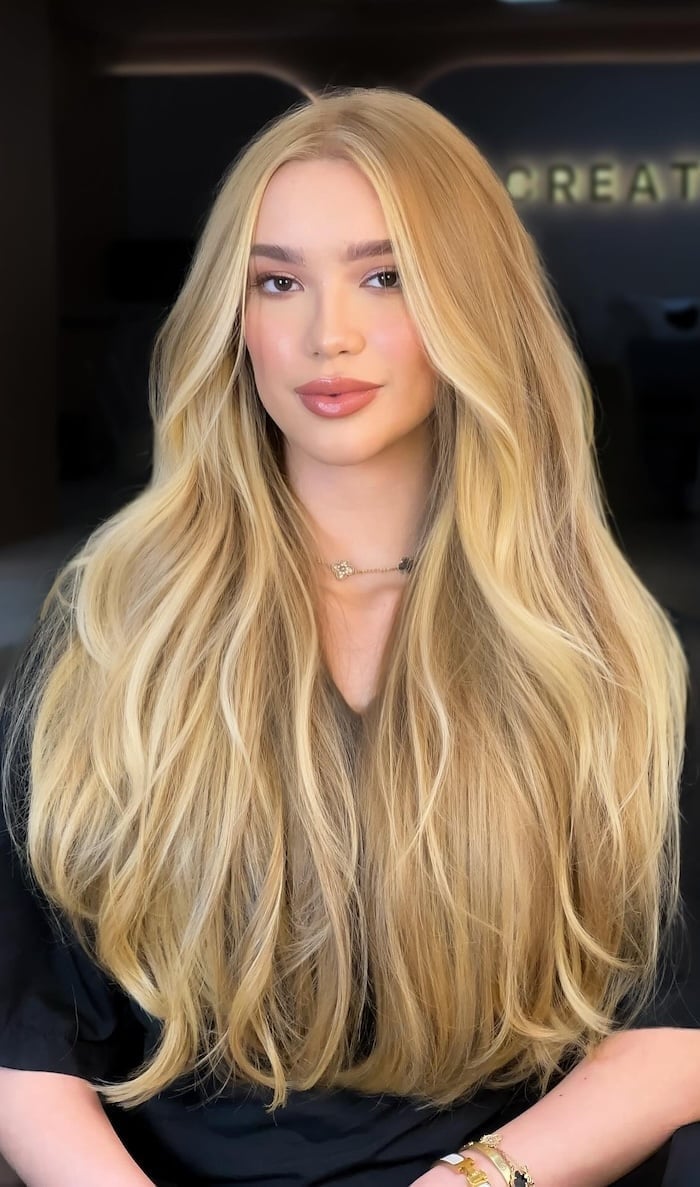
Does a warm honey blonde base with delicate highlights work for fine hair? Yes, when the color is painted in thin sections rather than chunky foils. The subtle layers keep the weight off the ends, and the middle part blowout lifts the crown without heavy product. Fine, wavy texture benefits from this approach because the soft blowout adds volume without heat damage. Skip it if your hair is very thick and tends to puff out with subtle layers. A root-lifting spray at the crown holds the shape until the next wash.
Fine texture with blended blonde tones
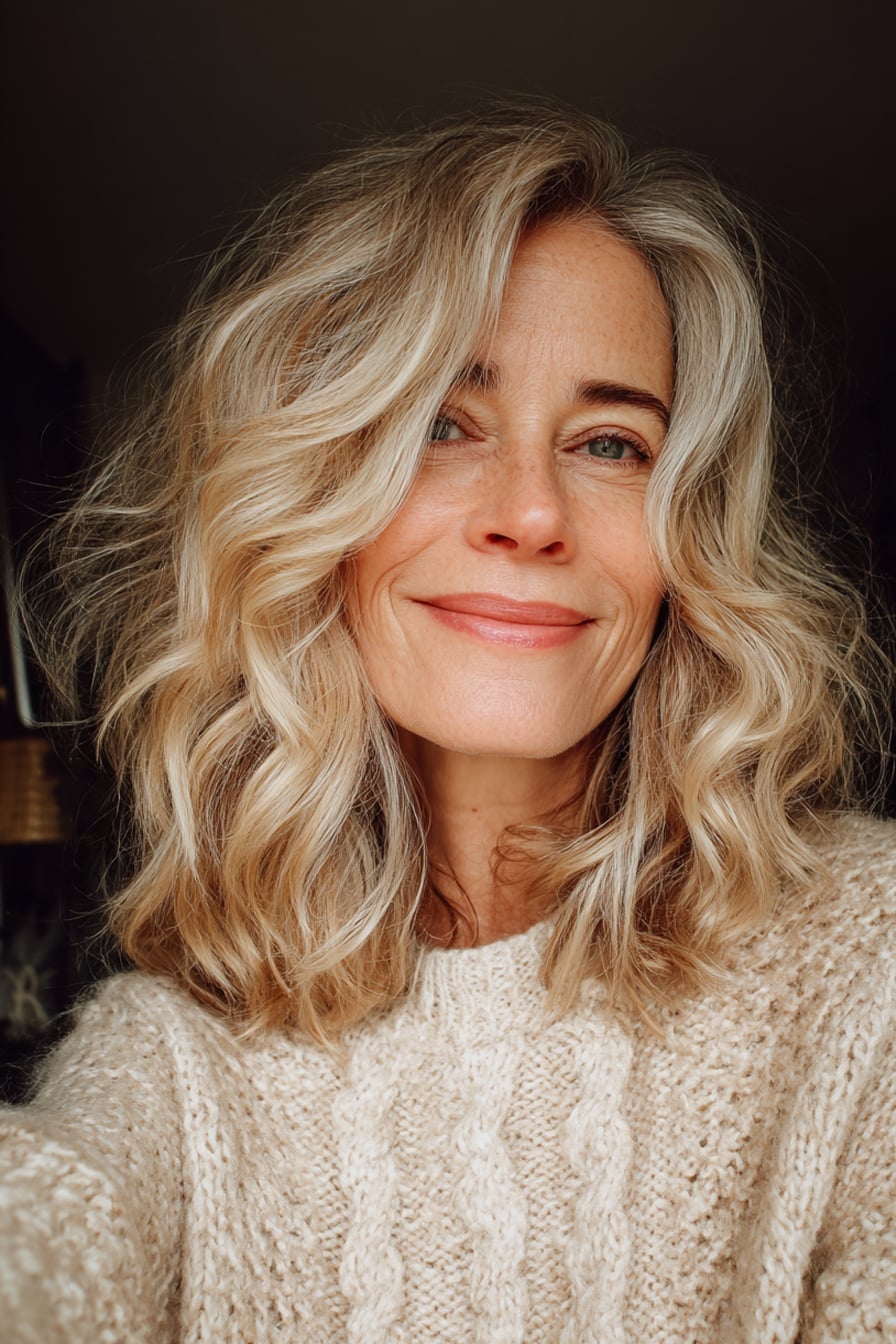
Compare it with a chunky highlight pattern: this side part wave style uses a blend of blonde tones rather than distinct stripes. The fine texture carries the subtle highlights through the lengths, so the honey blonde base looks one tonal wash rather than a painted section. Face-framing layers soften the weight at the jaw. The side part adds volume to the lighter side. The upkeep is simple: a purple shampoo once a week keeps the blonde from pulling yellow.
Side-swept bang with warm honey blonde tone
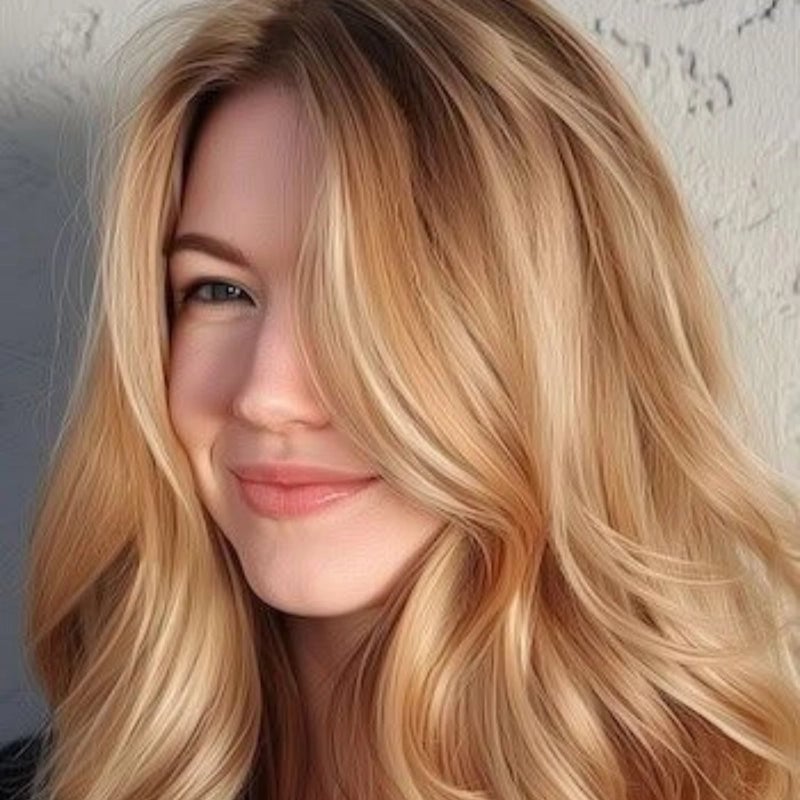
Side-swept bangs that land right at the brow bone need a colorist who paints the face-framing pieces lighter. The warm honey blonde tone here carries subtle highlights woven through the wavy blowout, so the lighter strands catch the light where the bang breaks the hairline. Fine, wavy texture holds the sweep best because the hair bends naturally at the root. Tell your colorist: face-framing pieces with subtle highlights on a honey blonde base. The waves give the cut motion, but the bang is the anchor.
Wavy layers and curtain bangs with balayage
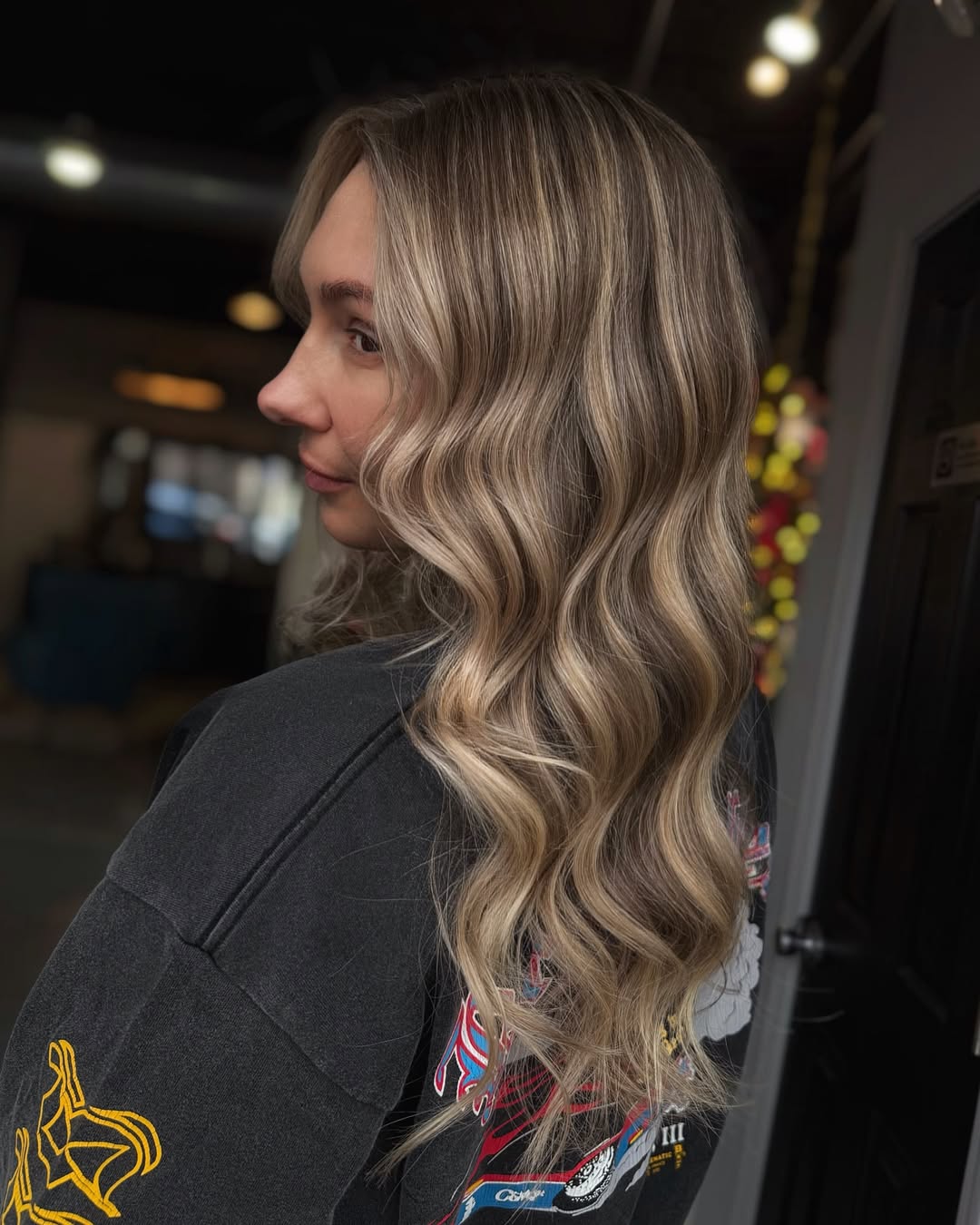
Curtain bangs and wavy layers share the same structure here: the bangs sweep outward and the layers fall below the jaw. The honey blonde balayage with lighter blonde highlights creates dimension without a stripe, because the color is painted freehand from the mid-lengths down. Thick, wavy hair is the canvas this design expects. For styling, blow-dry the bangs forward with a round brush, then switch to a large barrel for the layers. The waves hold the shape with a texture spray and a cool shot.
Natural lighter look with air-dried texture
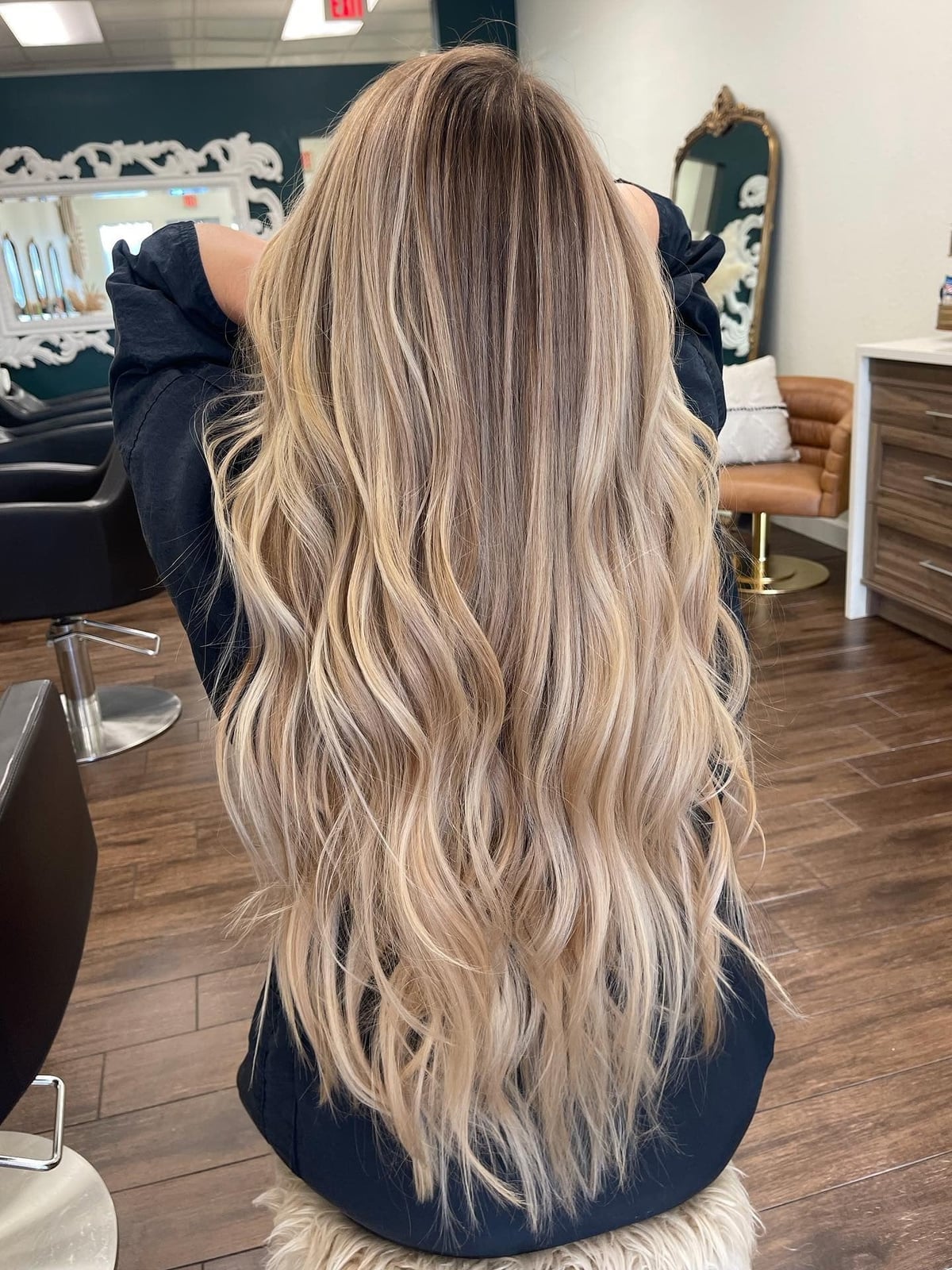
Thick, wavy hair air-dries into loose waves that this honey blonde balayage was built for. The center part and subtle root shadow mean the color grows out without a hard line, so the lighter effect lasts longer between appointments. Balayage requires blending, and a skilled colorist paints the lighter tones where the wave crests naturally. No bangs here, just a layered cut that lets the texture do the work. Skip it if you reach for a blow-dryer every morning. Air-dried styling needs a texturizing cream worked through damp lengths, then left alone.
Honey blonde balayage with voluminous curls
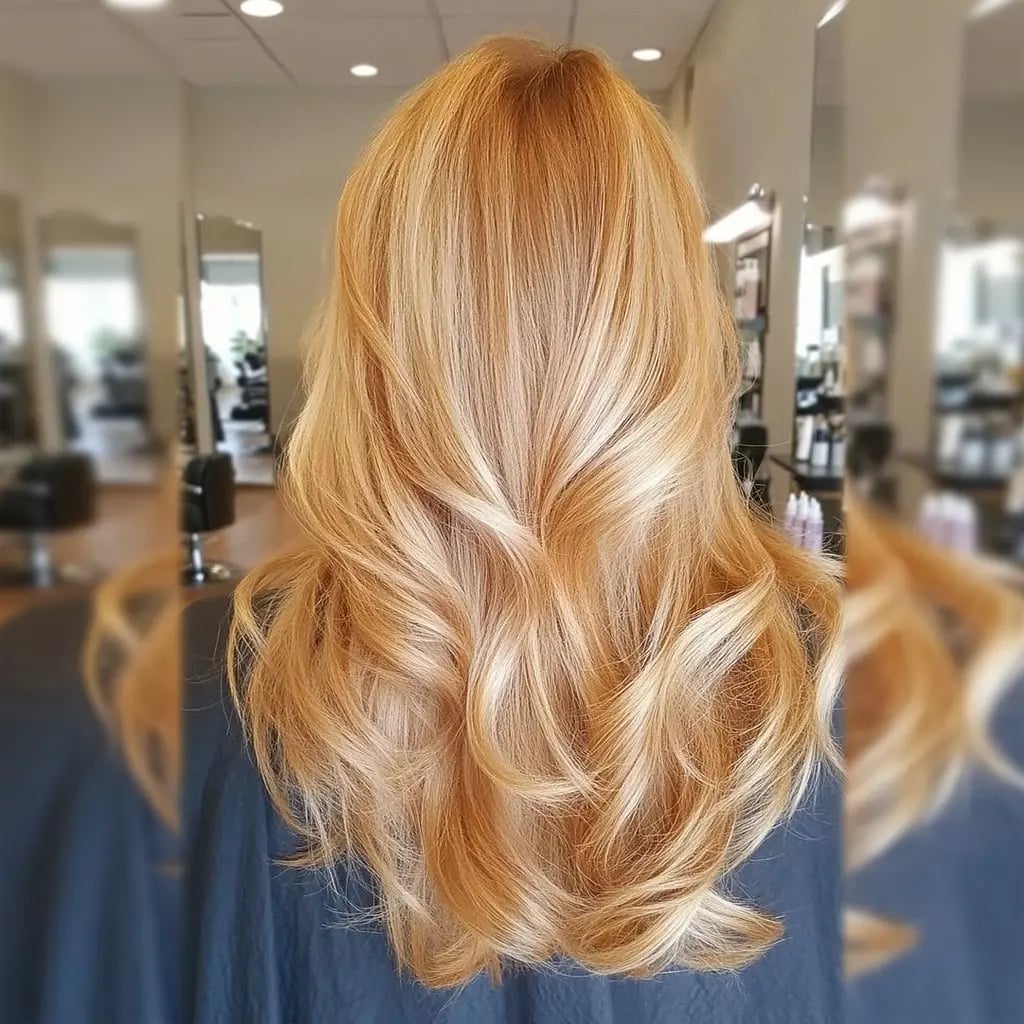
Set this against a balayage that sits flat: voluminous curls need a cut that builds shape from the inside. The honey blonde balayage here weaves subtle lighter strands through thick, wavy hair, so the wave pattern looks movement rather than random curl. Soft, voluminous curls are styled with a blowout that lifts the root. The layered cut adds dimension without thinning the bulk. Thick hair that can hold a curl for hours works best. Not for fine hair that drops shape by midday.
Loose blowout with subtle blended highlights
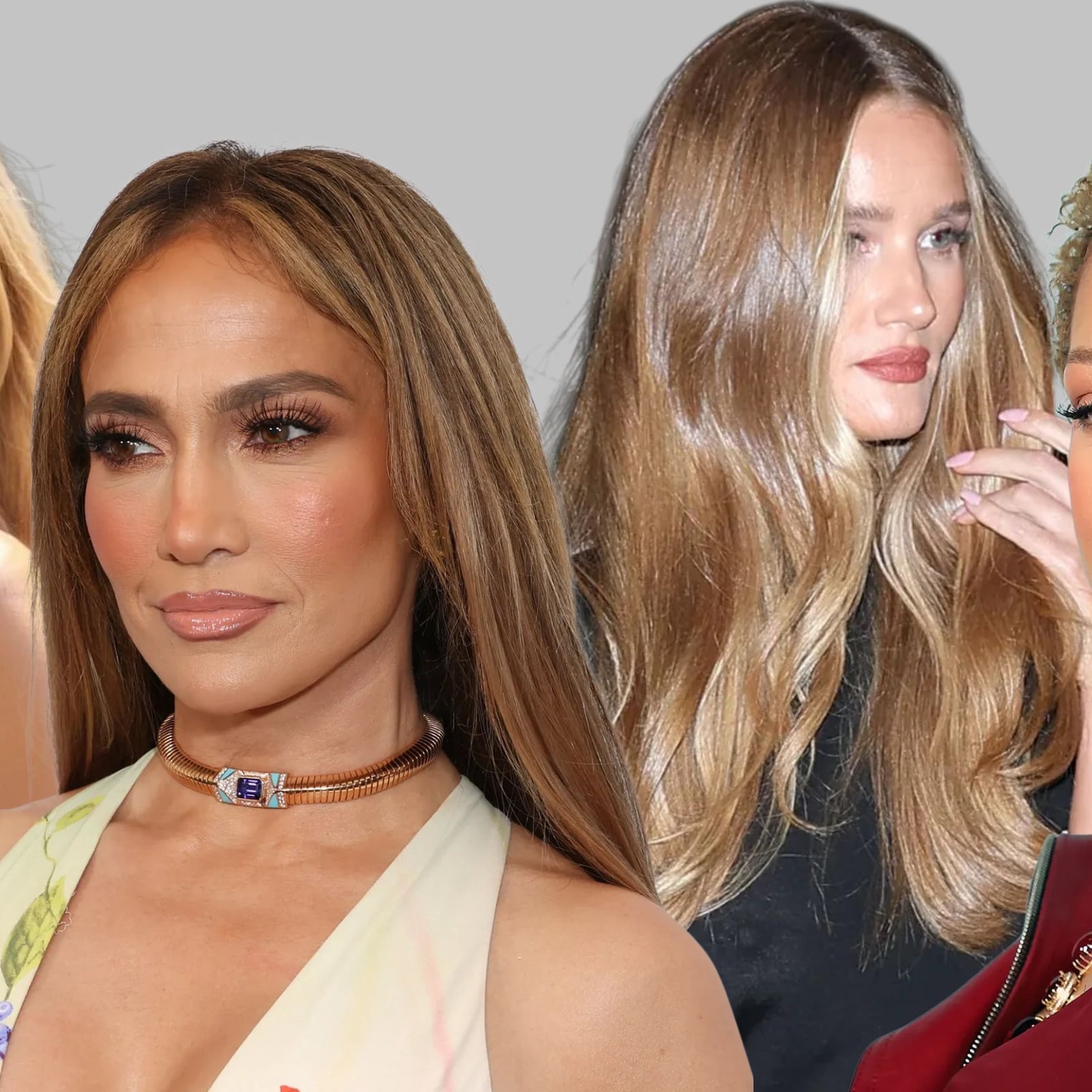
Subtle blended highlights in a honey blonde base are about restraint. The color is woven through the soft layers in fine sections, so the loose blowout shows one warm tone with a few lighter strands. Wavy, fine texture holds this best because the wave pattern breaks up any hint of a stripe. For very thick hair, the subtlety gets swallowed by density, and you end up paying for highlights nobody sees. Tell your colorist: subtle blended highlights, soft layers, loose blowout, middle part.
Face-framing layers and side-swept bang
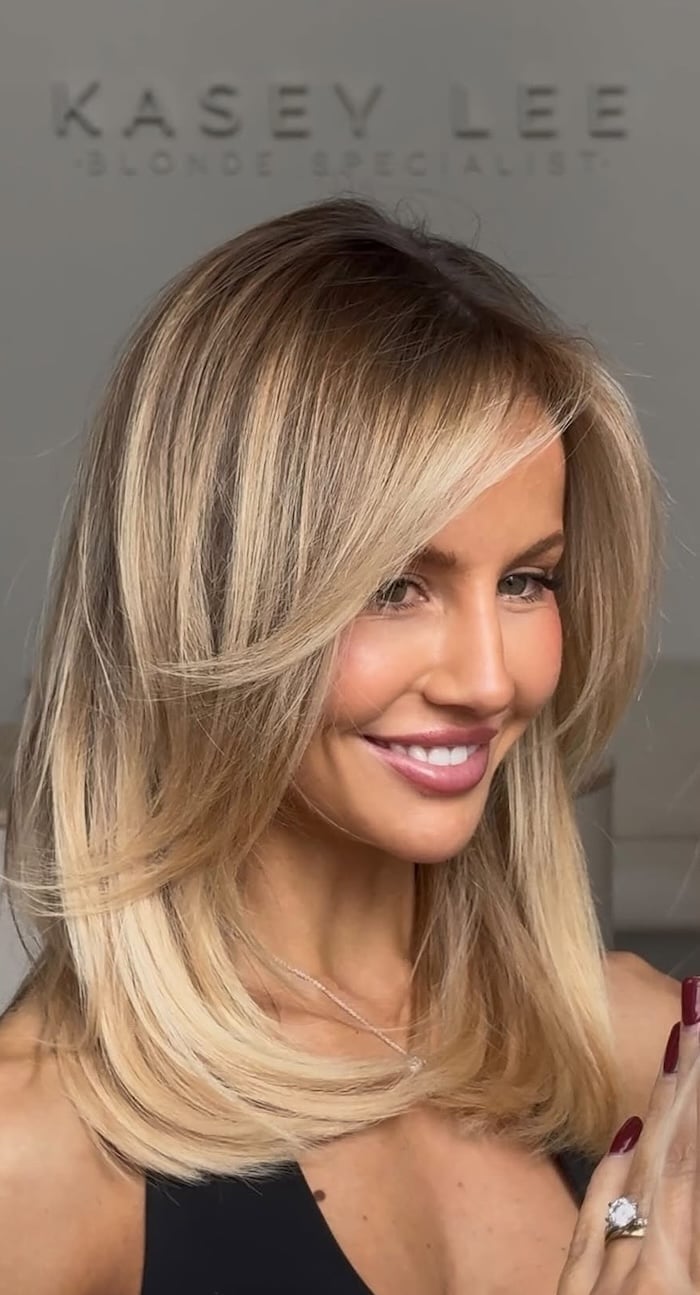
A practical rule for a side-swept bang: it lands best when the shorter front sections are cut to blend into the length rather than sitting as a separate piece. Here, the face-framing layers and side-swept bang are carved into fine, wavy texture, so the honey blonde balayage flows from root to tip without a hard line.
Set this against a blunt fringe that demands daily heat styling. The side-swept bang needs a quick pass with a flat iron to shape the front pieces, but the rest of the soft blowout air-dries into a wave.
Dimensional blonde highlights with side-swept bangs
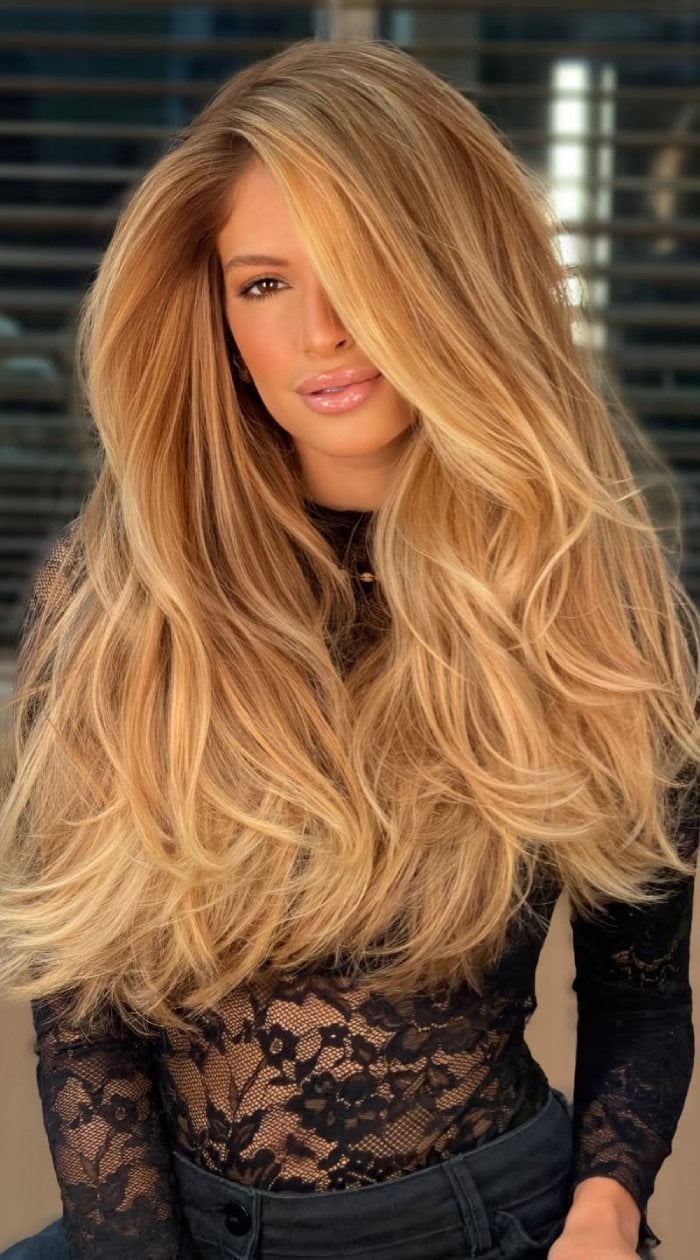
Side-swept bangs and a layered cut create the structure here. The voluminous blowout lifts the honey blonde base, while dimensional blonde highlights add depth without looking stripey. Thick, wavy texture holds the shape best.
Skip it if your hair is fine and tends to fall flat by midday. This look relies on body. Tell your colorist: layered cut, subtle side-swept bangs, dimensional blonde highlights.
Balayage with curtain bangs and waves
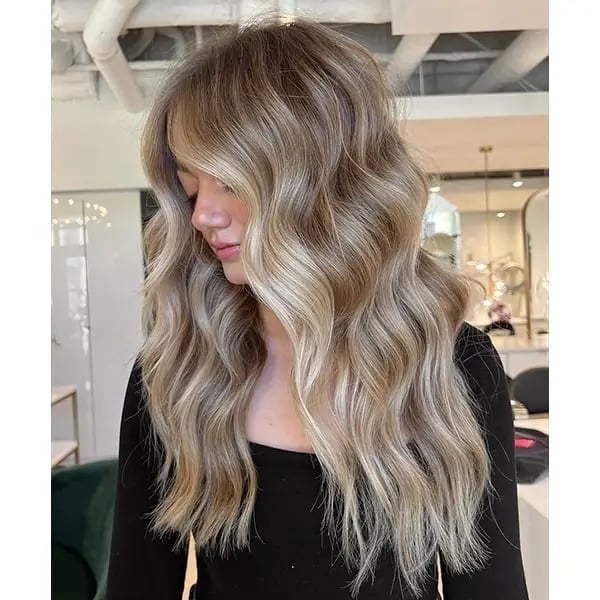
Curtain bangs meet a warm honey base with lighter blonde tones painted freehand. The difference between this and a standard highlight is the graduation: balayage places color where the light naturally hits, so the waves look grown-in rather than sectioned.
Book it as: layered cut, curtain bangs, honey blonde balayage, side part. Not for straight hair. The piecey effect needs wave to read. Your colorist paints each section by eye, which means the chair time is longer but the grow-out is softer.
A blunt bob in a warm honey blonde shade
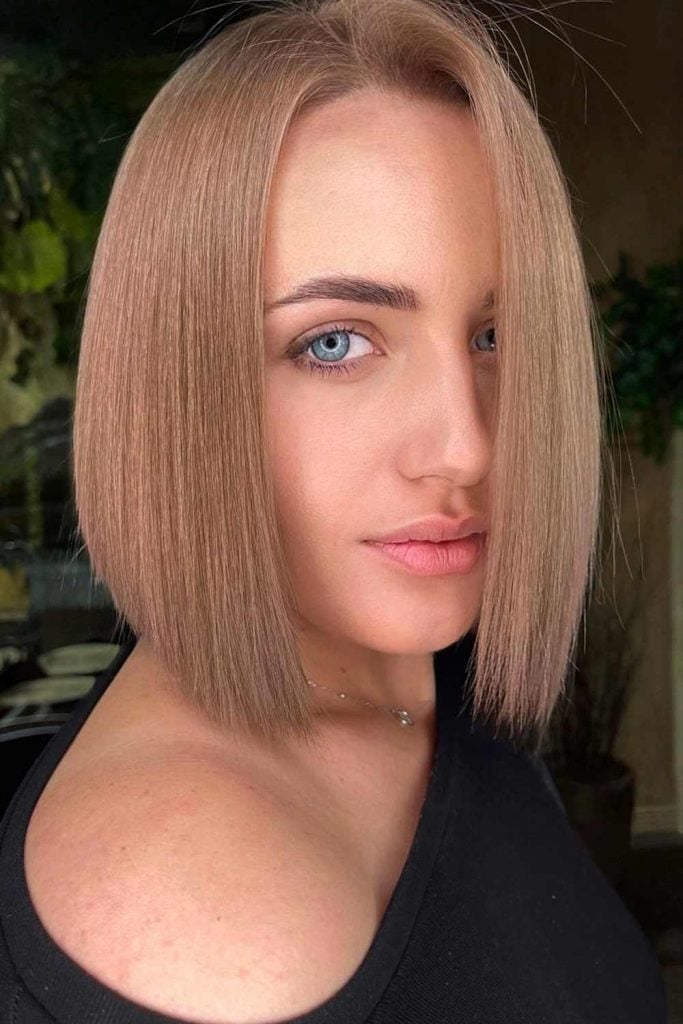
A blunt bob and a middle part demand precision. The warm honey blonde shade looks one solid block of color, so every split end shows. Poker-straight styling is the only way this cut works. Any wave breaks the sharp line.
This is a salon-only proposition. Fine, straight hair holds the shape best; thick or curly textures will fight it.
Natural lighter balayage with wavy blowout
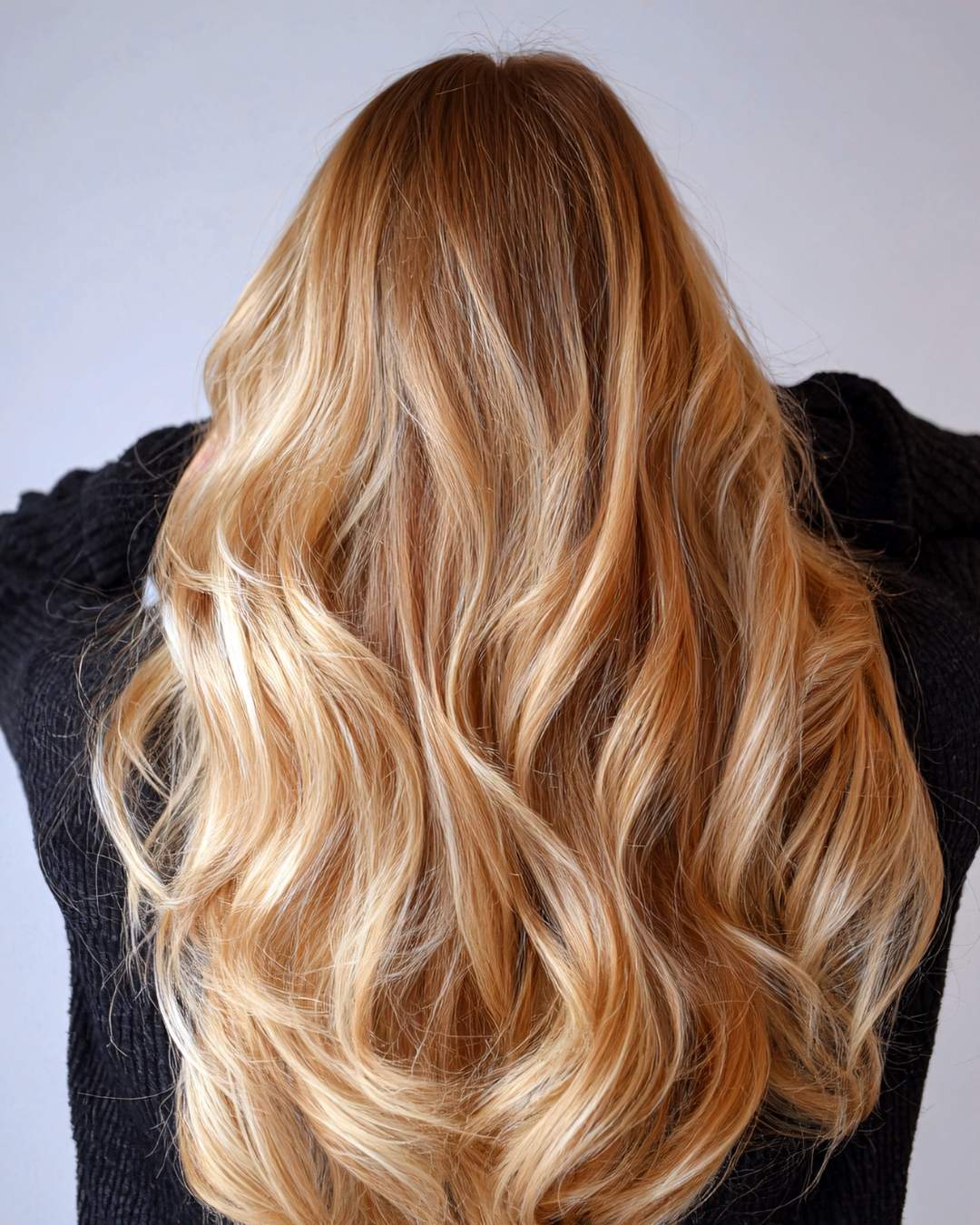
Thick, wavy hair is the canvas here. A honey blonde balayage with blended highlights creates a lighter effect that starts darker at the roots and lightens toward the ends. The wavy blowout styling adds volume without heat damage, if you have the texture for it.
The catch: this look requires natural wave or a curling iron commitment. Fine hair won’t hold the shape, and the balayage placement needs enough length to show the gradient.
Easy style with air-dried texture
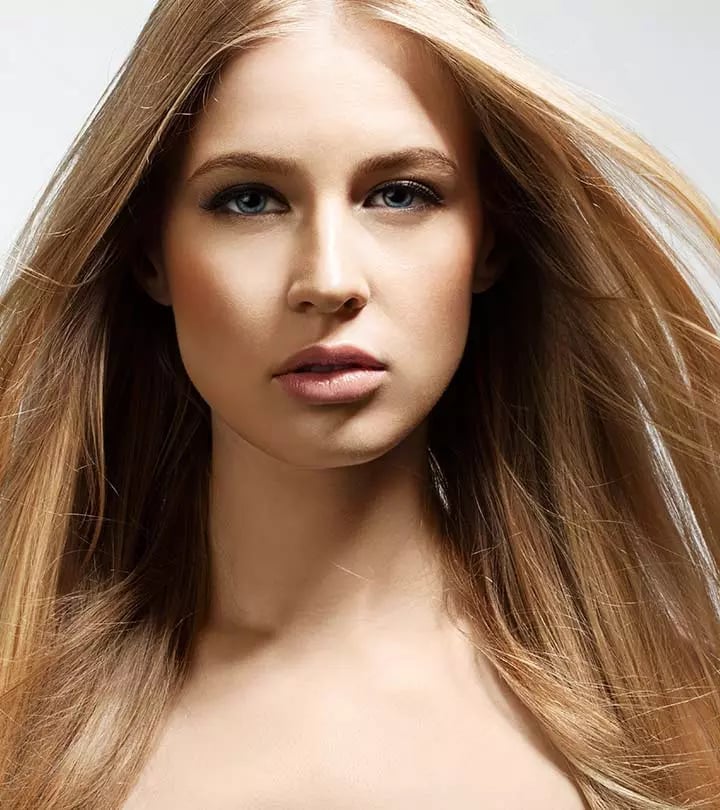
Fine hair gets a vote here. Soft layers and thin lighter strands woven through a honey blonde base create a natural, lighter effect without heavy product. The middle part and air-dried texture keep the look low-effort.
Skip it if your hair is very thick. This style relies on the weightless quality of fine strands. A leave-in conditioner on damp hair is all the styling you need.
Voluminous waves with face-framing layers
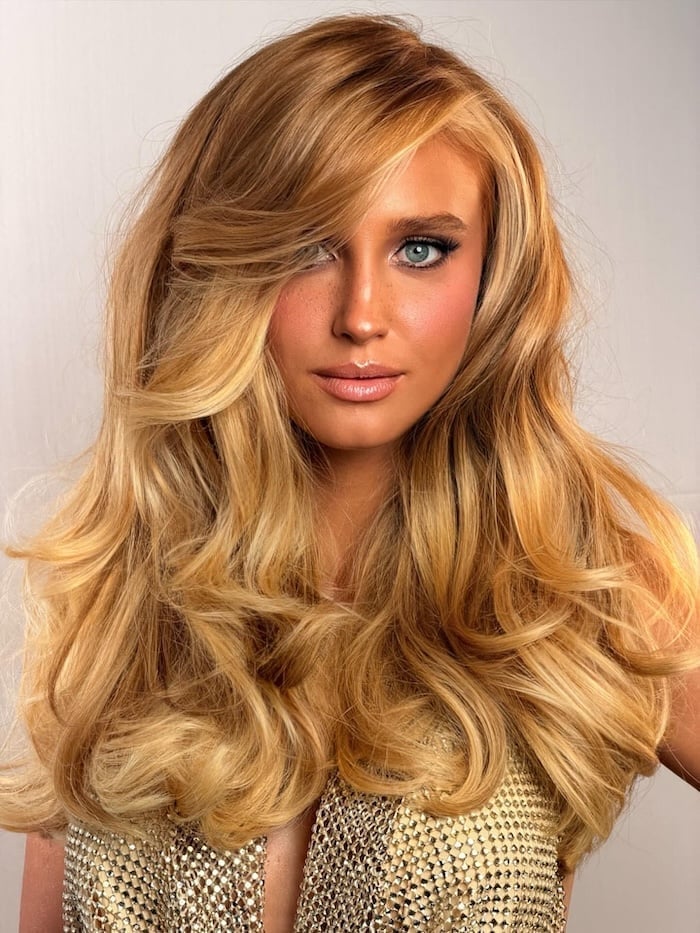
Set this against heavy, uniform curls: the face-framing layers and side-swept bang keep the volume from turning into a single mass. Warm honey tones with lighter highlights run through the wave pattern, with a side part breaking up the shape. It works best for straight or fine hair that has difficulty holding curl from a large barrel curling iron. Thick hair at medium to long lengths will get the most lift from this cut.
Soft, lived-in look with fine highlights
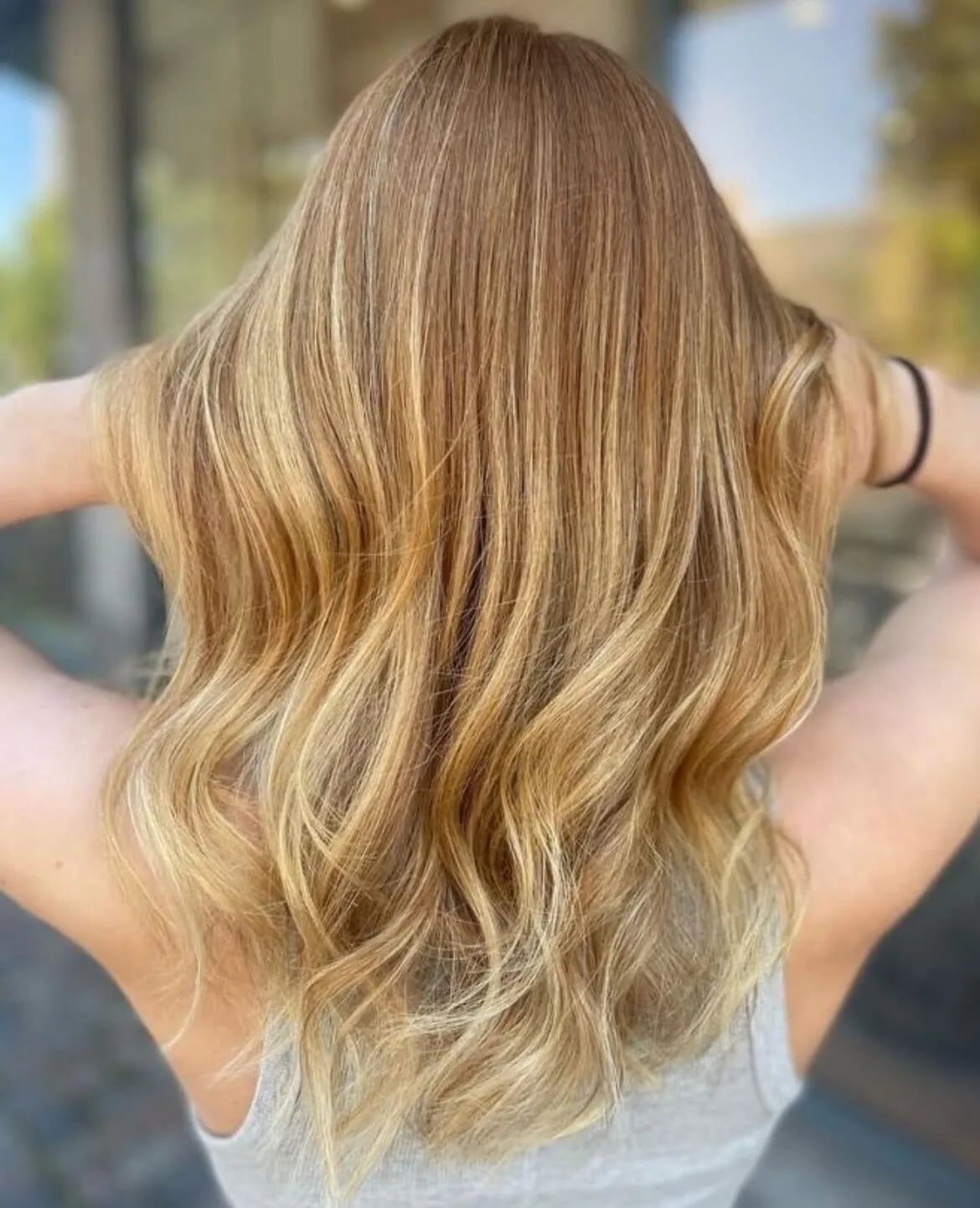
Fine highlights are woven through the honey blonde base in a back-view wave pattern that looks natural lighter effect. No single section is lighter than the next; the strand-by-strand placement builds dimension without a hard line. The texture here is fine and wavy, so the highlight technique matters more than the cut. Ask your colorist for fine highlights with soft wave pattern. Toning at week eight keeps the honey tone from tipping into brass.
Dark brown base with honey blonde balayage, wavy
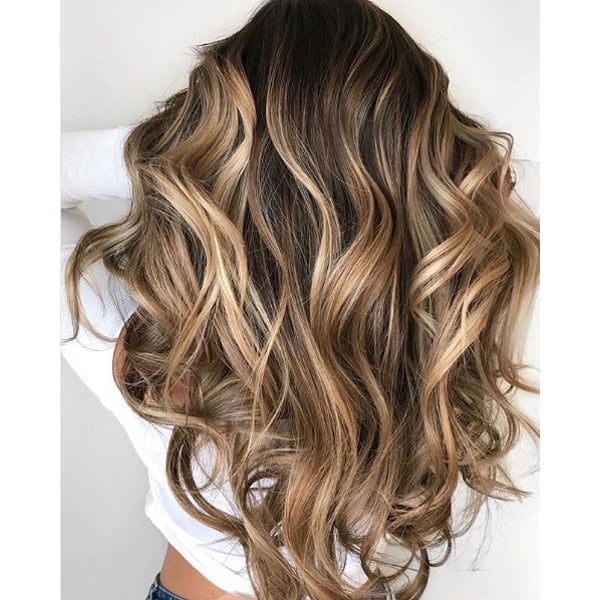
A clear one-line assessment: this is a high-contrast balayage that keeps the root dark and lets the honey blonde sit lower. The dark brown base grounds the look while the balayage sweeps through the mid-lengths and ends in loose waves. Subtle layers add movement without thinning the thick texture. The words matter because a standard balayage might lift too high. A toner refresh at week six keeps the honey tone from washing into the brown.
A striking money piece with dark roots
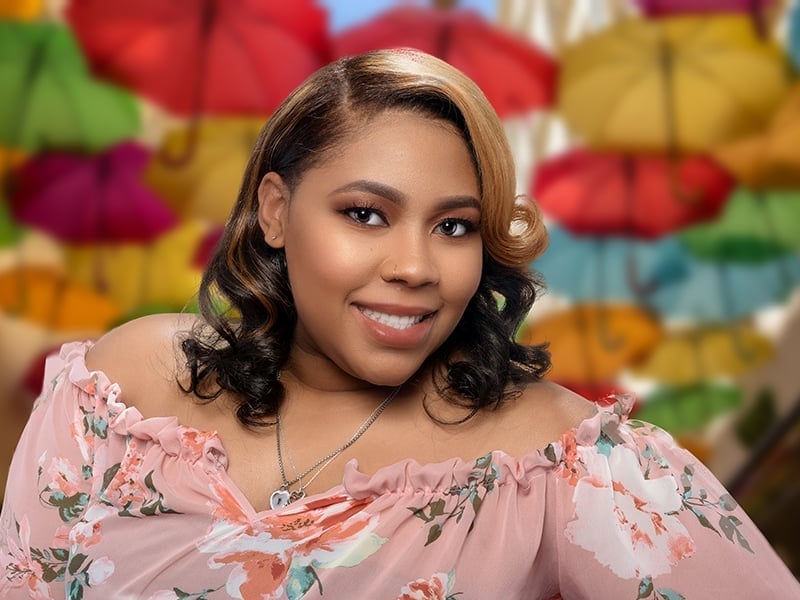
For a money piece with dark roots, the front section stays lighter than the rest, so root touch-ups matter mostly at the hairline. The contrast is deliberate here. The honey blonde money piece sits against the dark base, with layers and soft waves softening the line. One real drawback: the money piece shows regrowth faster than a full balayage. A smooth blend or fine hair that does not hold wave patterns are better suited to other techniques. A gloss every four to six weeks keeps the front section from turning brassy against the dark root.
Dimensional warmth with subtle highlights, close-up take
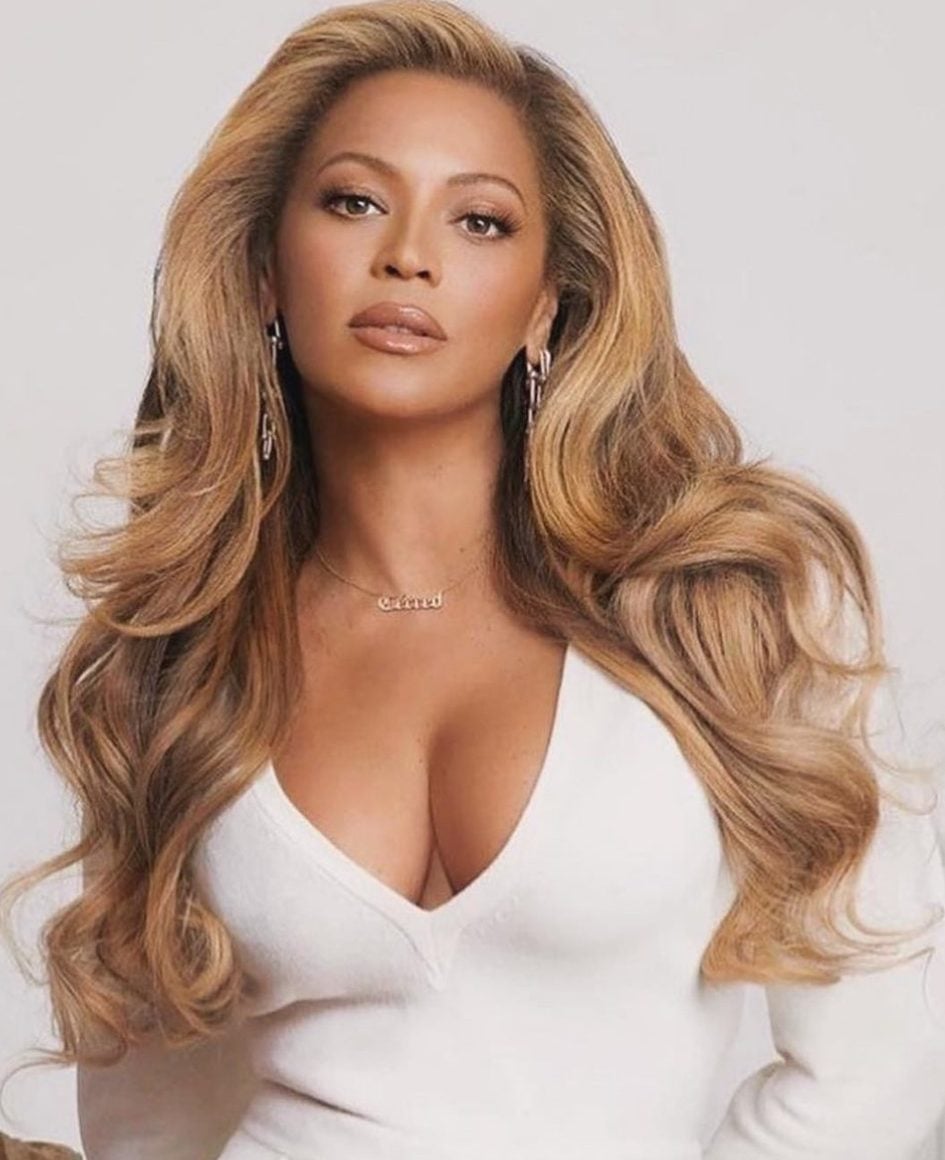
A fair look at the trade-off: subtle highlights woven through a honey blonde base create dimensional warmth, but the technique requires skill. The highlights here are fine enough to blend with the base tone, so the wave pattern and side part look natural. It works best for thick hair at medium to long lengths, where the layers hold their movement.
Soft, grown-up look with face-framing layers
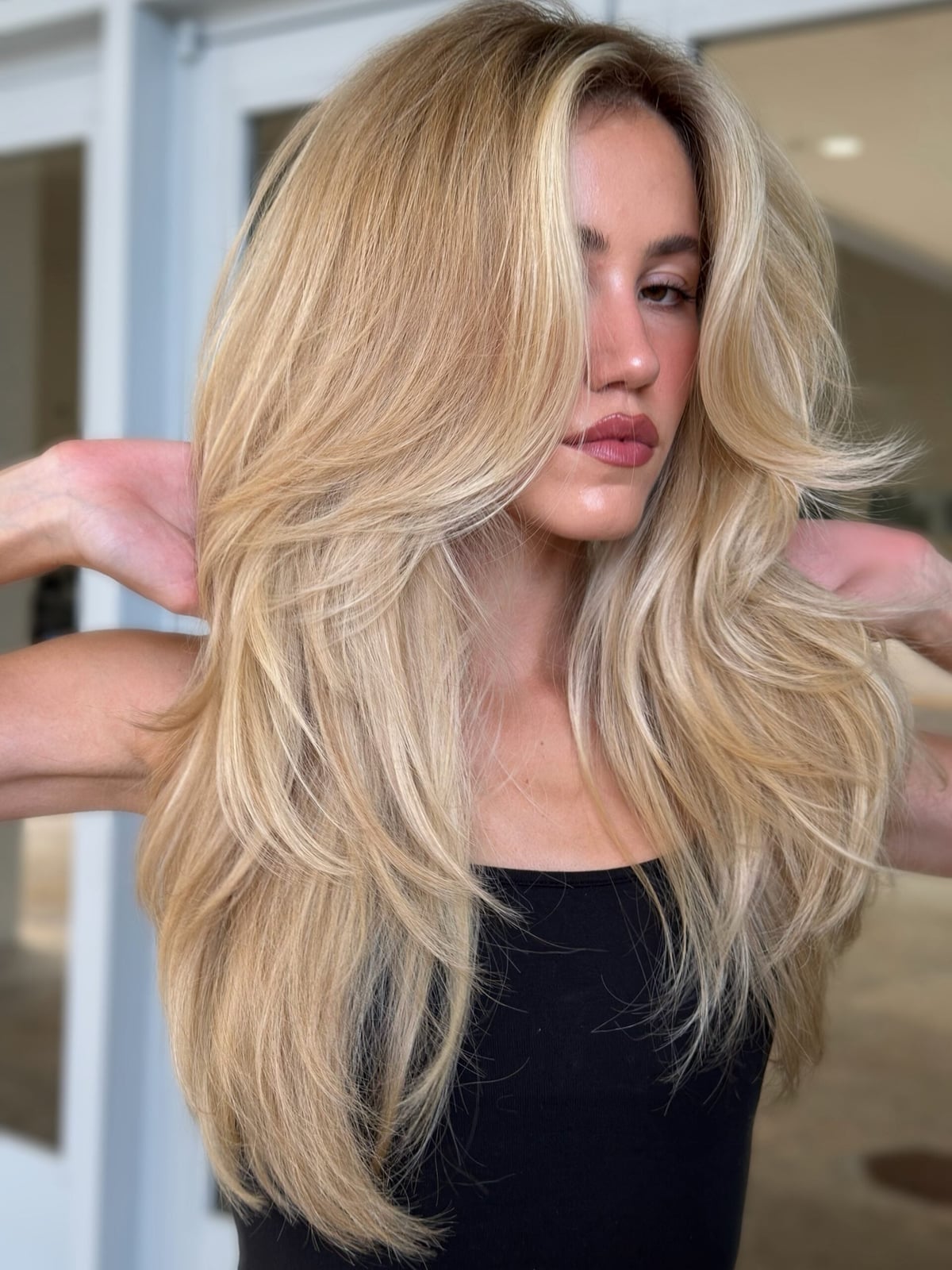
Thick hair with a side part and a voluminous blowout holds face-framing layers best. The layers here hit around the cheekbone and jaw, so the shape softens a square face without losing structure. It works best for medium to thick hair density. Fine hair can look sparse with these layers. Tell your stylist: layered cut with face-framing pieces. A root-lifting spray at the crown buys you the volume you see here until the next wash.
Creamy blonde base with fine highlights
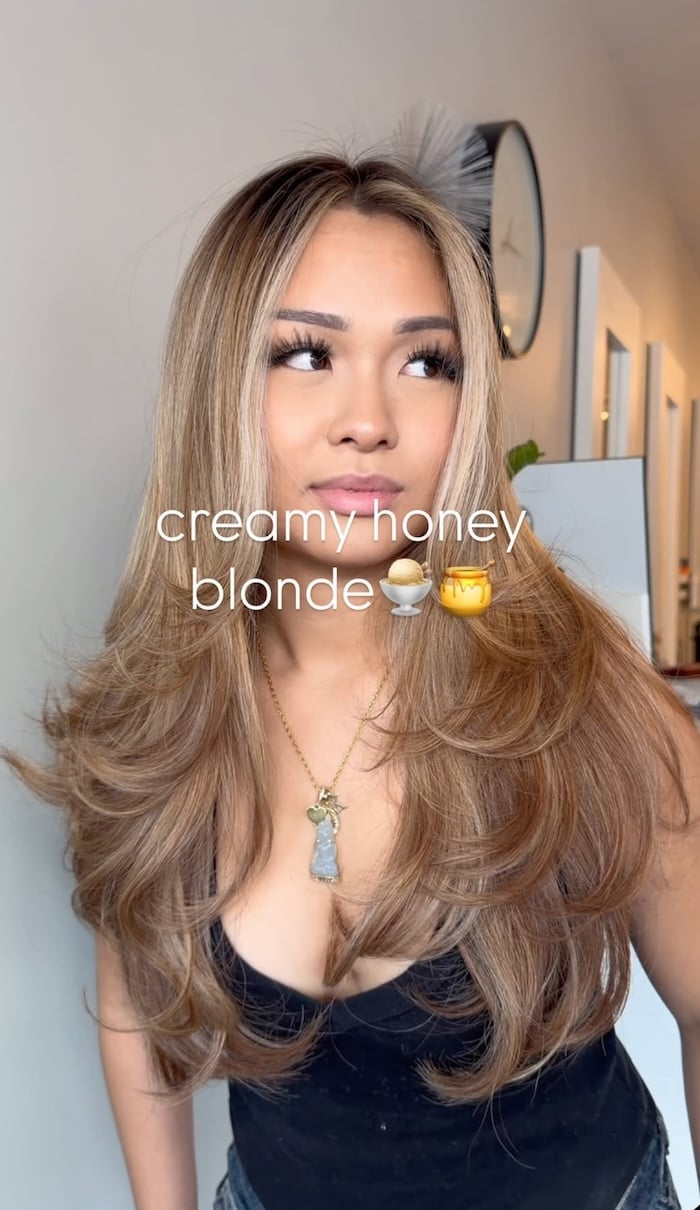
A warm creamy blonde base with fine highlights gives a lighter look without brassiness. The technique uses a middle part and soft waves, so the dimension lands evenly through the lengths instead of stacking at the crown.
Compare it with a chunkier highlight placement: fine highlights on a layered cut like this one require a colorist who paints thin sections and blends at the root line. Use a smoothing serum on the ends between trims, and book a toner refresh at week eight when the warmth starts to pull yellow.
Final Thoughts
The honey blonde that makes you look awake and put-together is the one you will actually maintain. Pick by your real life:
- Fine hair: ask for a balayage, not a full foil, to keep the root soft.
- Ten minutes in the morning: leave the waves air-dried and add a texture spray.
- Cool base that pulls brassy: book a toner every six weeks without fail.
- Thick, wavy texture: request a heavy balayage with subtle highlights so the color lands where the wave bends.
Find the honey blonde that best suits your lifestyle and hair goals.
