

Your colorist pulls out that color book, and suddenly every option feels like a promise you might not keep. A fringe that needs daily styling, a lightener that will outgrow your patience. That is the real consultation. Highlighting in 2027 is about the cut and color that actually fit your life, not just a board.
Which is why Gorgeous Highlighting Hair 2027 fill so many saved boards: 15 ideas spanning blunt bobs and long layers, bold money pieces and sunkissed blends. You get the chair words, the upkeep truth, and the honest skip-it moment for each one. No fluff, just the decisions you need before you go.
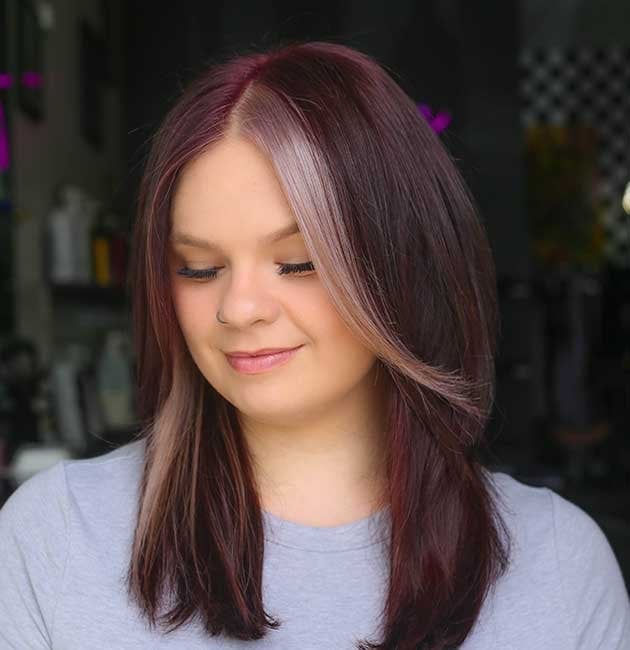
Dark red base with a bold blonde money piece
Two distinct colors share one cut. The dark red base runs deep, then a blonde money piece jumps forward around the face. Fine, straight texture keeps the contrast clean rather than muddled. Ask your colorist for: subtle layers, dark red base, bold blonde money piece. The upkeep has a rhythm: the blonde section needs a toning gloss every four to six weeks or it pulls brassy. Skip it if you prefer low-contrast color or have very thick hair that makes precise placement harder to control.
Blunt bob with striking blonde highlights
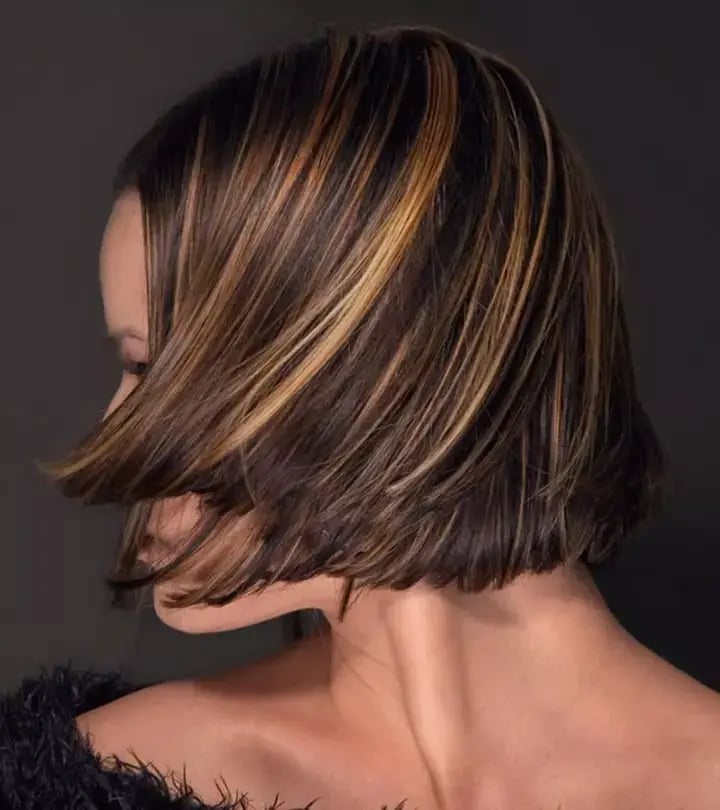
A blunt bob holds its shape best when the hair is fine to medium. Thicker strands tend to push the line outward and soften the edge you paid for. This version keeps a side part and a straight blowout, so the dark brown base and blonde highlights look deliberate stripes. Expect a trim every six to eight weeks. The blunt line is unforgiving when it grows past the jaw.
Soft waves with caramel highlights on dark brown
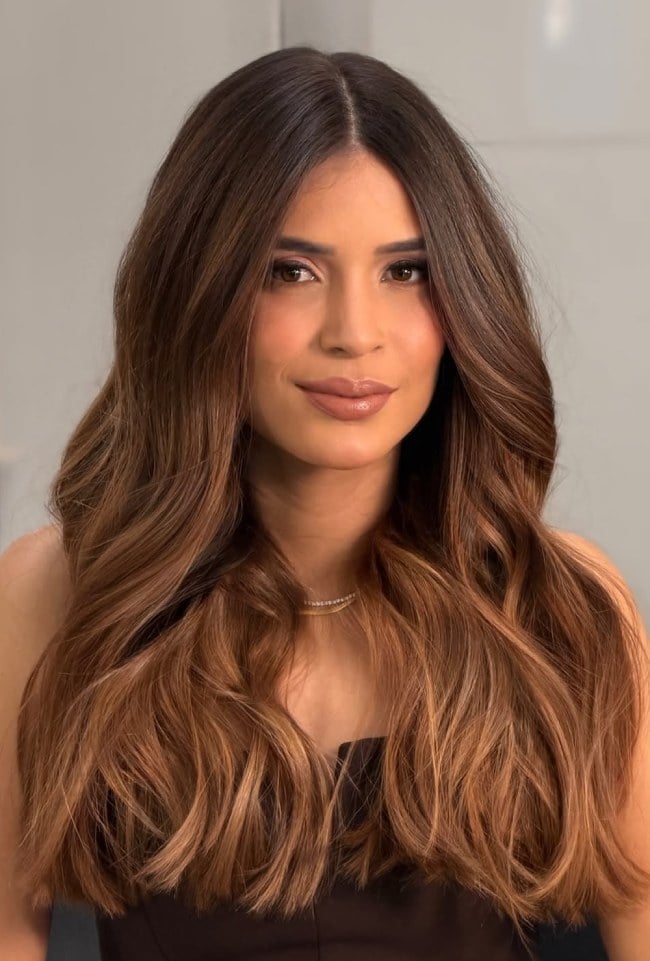
Does fine, wavy hair actually hold a balayage? Yes, if the layers are cut to match the wave pattern. The caramel here sits soft rather than saturated, so the dark base stays dominant. The catch: fine texture shows every uneven section. A middle part and loose waves hide the line where the color stops. Book it as: layers, dark brown base, soft caramel balayage. The drawback is that the same fine hair that takes the color well also fades faster at the ends.
A subtler take on blonde highlights with long wavy hair
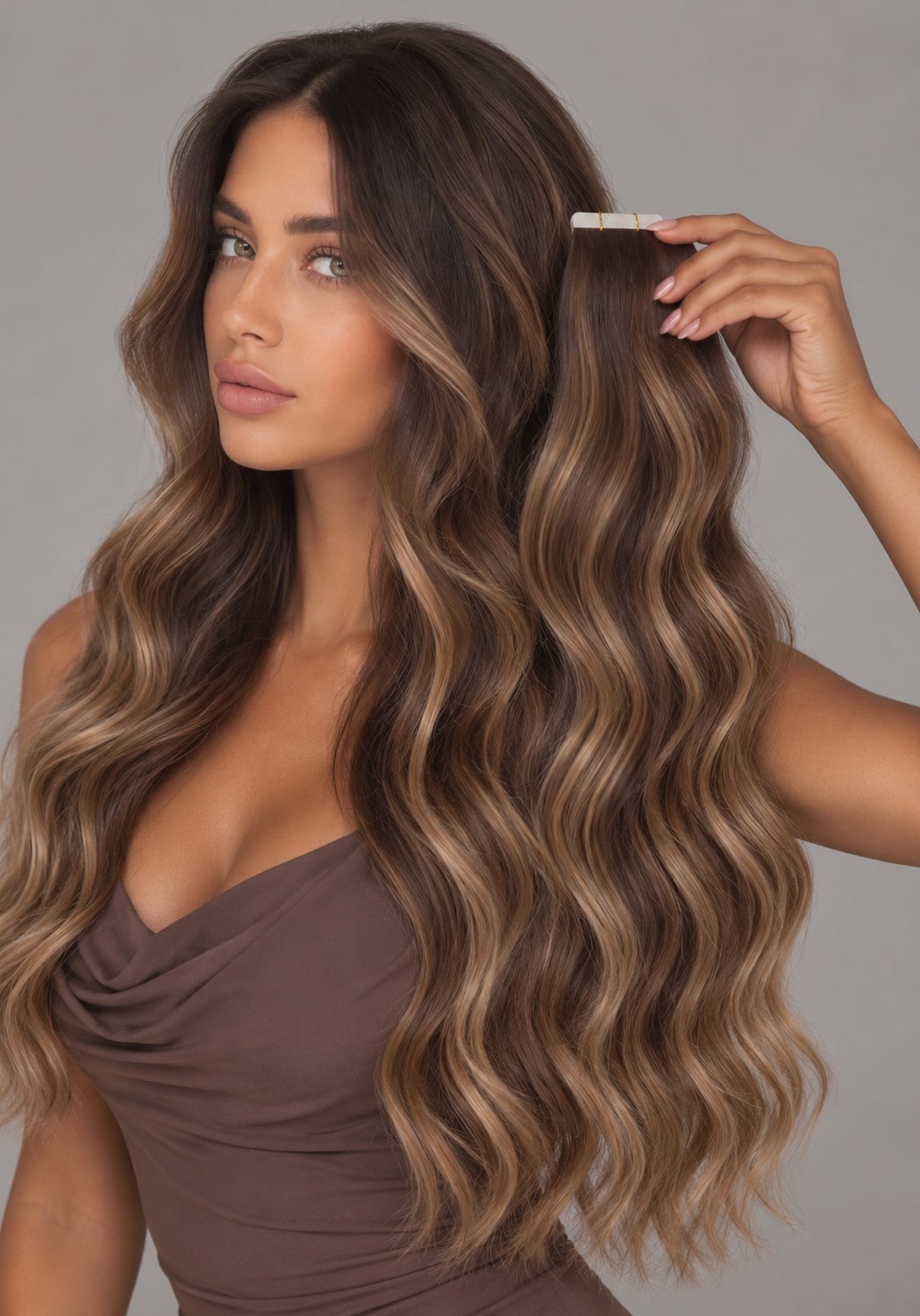
Fine hair needs tighter spacing for highlights to read. Thick wavy hair can spread them out. This version uses blended blonde on a dark brown base, so the effect is lighter. The middle part and long layers let the wave pattern do the work. A salon does the blending. The thick texture holds the wave longer without product. Compare it to the previous section: fine hair demands precision; thick hair gives you margin for error.
Face-framing layers with subtle blonde highlights
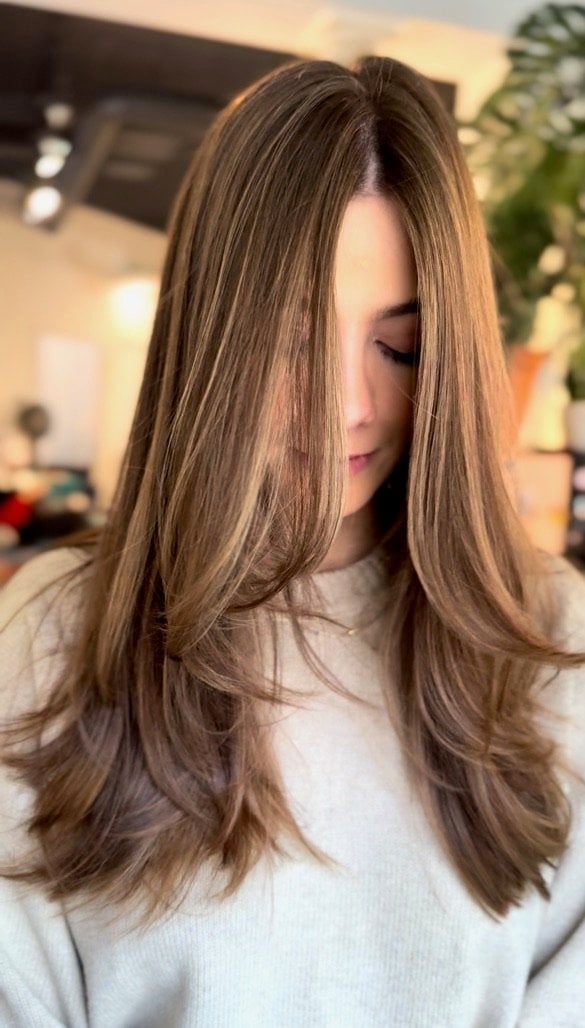
Face-framing layers start around the collarbone and get longer toward the back. The subtle blonde highlights sit mostly in those front sections, so the color moves when you turn your head. Straight, fine texture needs a smooth blowout here, any frizz and the layers look choppy rather than intentional. Tell your stylist: long face-framing layers, brunette base, subtle blonde highlights. The words matter: say “face-framing” not “long layers” or you get a uniform cut. A middle part keeps both sides even.
Lob with lighter blonde balayage
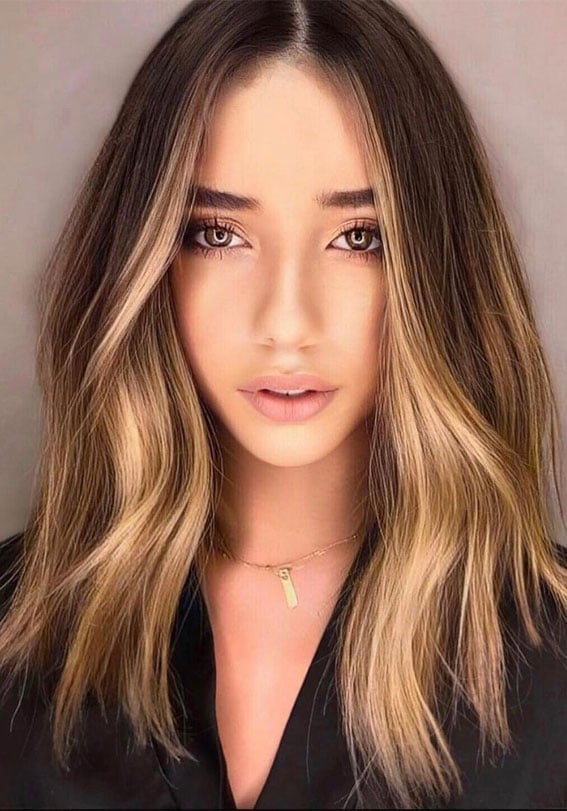
A lob with subtle layers and a middle part lets the dark brown base anchor the look. The blonde balayage highlights start lower, so the regrowth line stays soft. Fine hair that can hold a wave benefits most from this cut. The layers add volume without removing density. No bangs means the front pieces fall forward naturally, and the loose waves keep the shape from looking severe. A lob needs a trim every six to eight weeks to keep the ends blunt and the layers visible. Between cuts, a texture spray refreshes the wave pattern without heat.
Striking blonde highlights on dark brown base
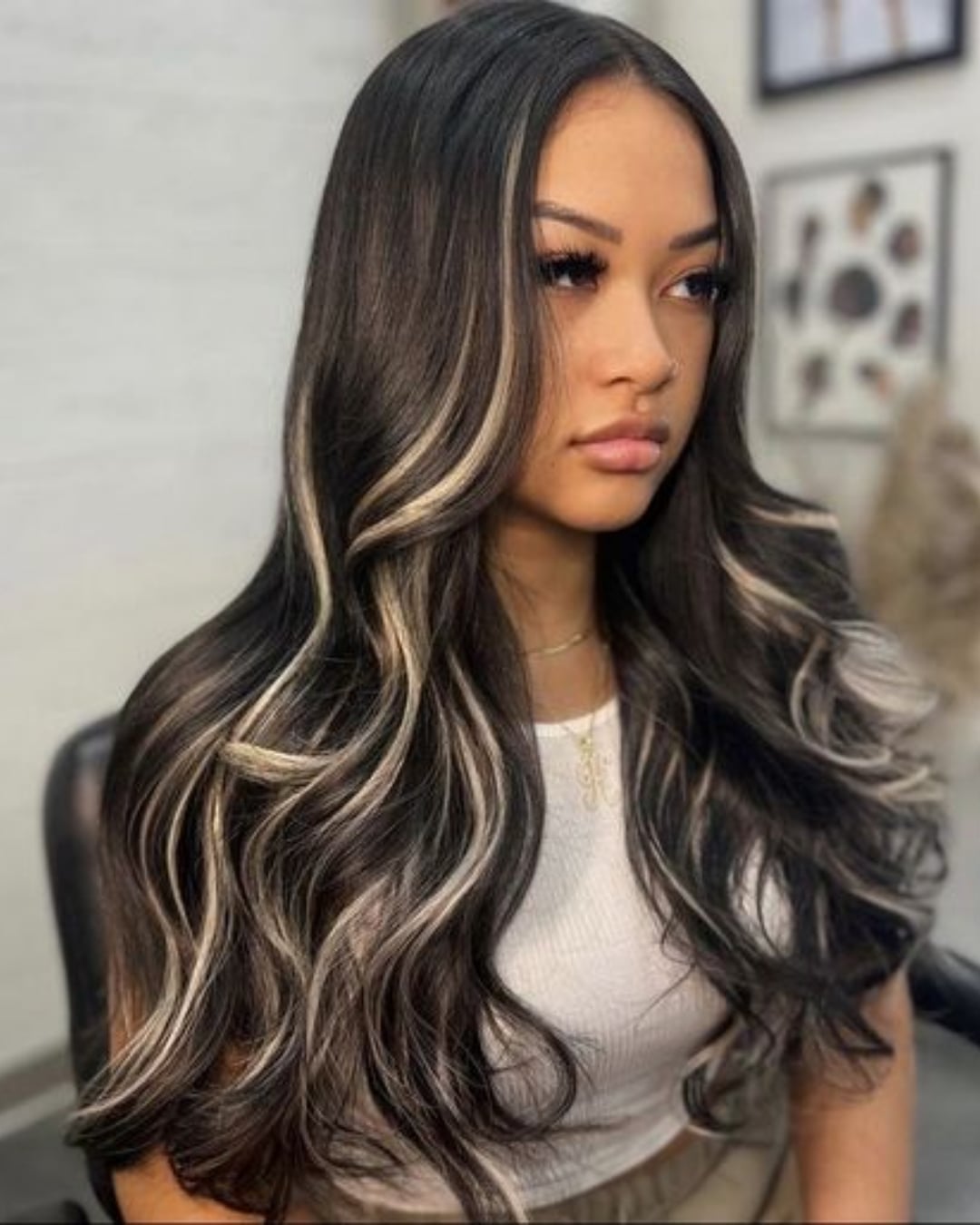
Long layers and a middle part on thick, wavy hair create the canvas for striking blonde highlights. The contrast is deliberate: dark brown base against lighter pieces pulled forward around the face. That smooth blowout finish takes effort, thick hair holds heat well, so a heat protectant is necessary before drying. The catch: this much contrast on thick hair means visible roots at week four. You are either booking a toning appointment or learning to like the grow-out. A single-process color or a blunt cut that hides layers entirely is a different look. No bangs keeps the weight at the jawline, which suits rounder face shapes best.
Ash blonde with lighter highlights
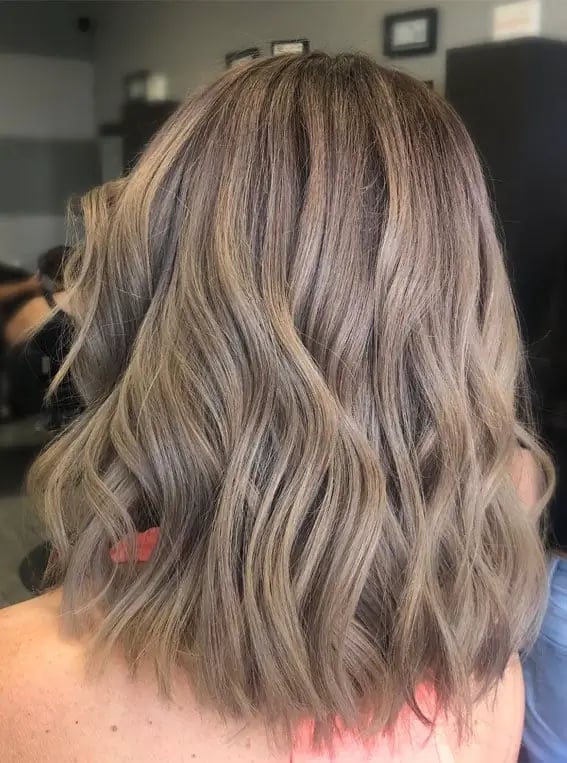
Where warm blonde leans golden, ash blonde with delicate highlights reads cooler and more subdued. The layers and soft waves give the color room to shift in different light, ash tones catch gray and blue notes instead of yellow. Fine hair works well here because the subtle highlights add dimension without weighing strands down. No bangs means the front sections can be tucked behind the ear or left loose. This is a fall and winter color: ash blonde needs a cooler season to look its best. The salon visit includes a toner application, and a purple shampoo every other wash keeps the brass away.
Lighter highlights on dark brown wavy hair
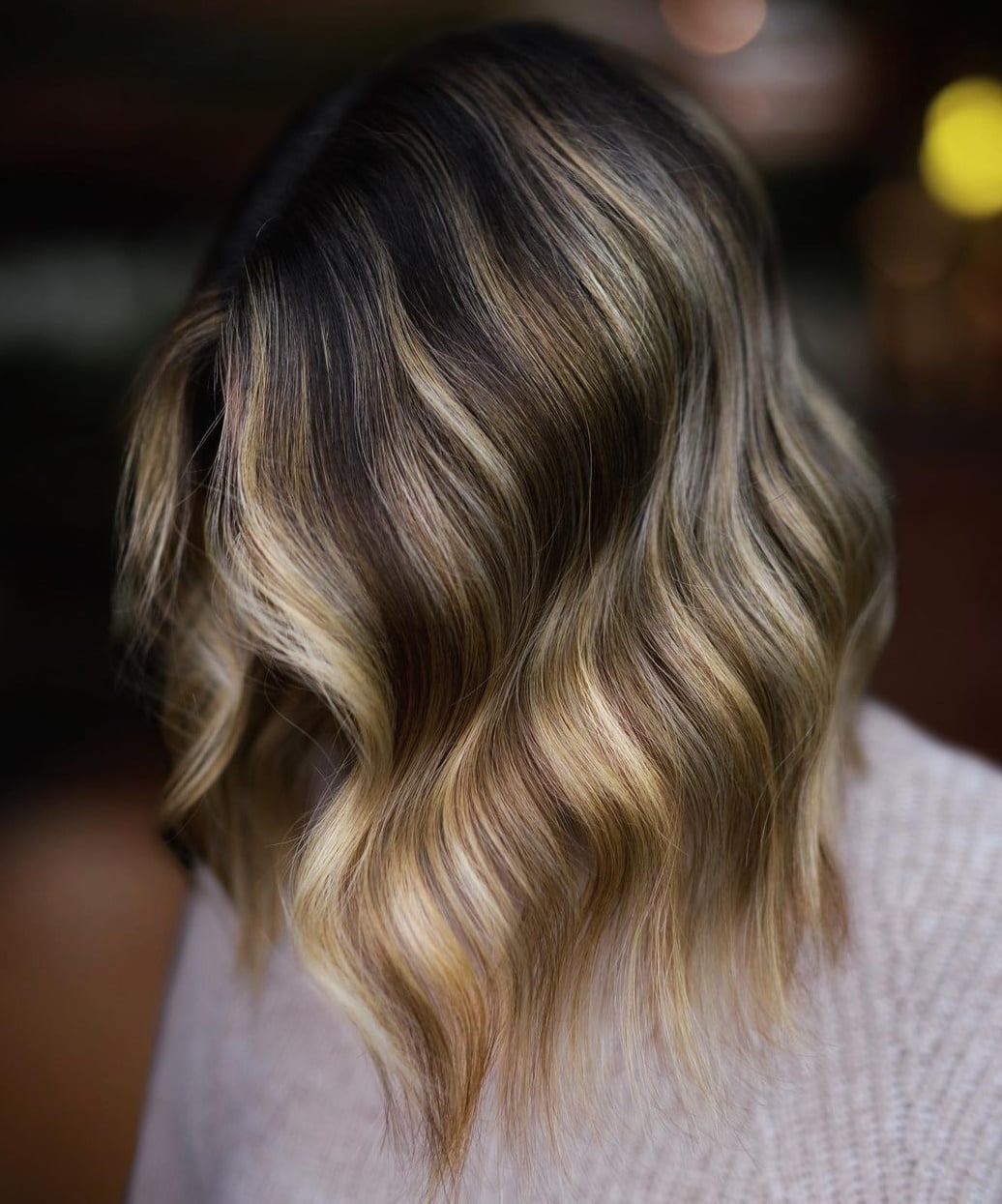
Can you do blended blonde highlights on dark brown hair at home? Technically yes, practically no. The middle parting and soft waves in this look rely on a professional hand to place the lighter pieces where the sun would naturally hit. Fine wavy hair accepts color faster, so a box dye can turn muddy or too warm. The layers are cut to encourage the wave pattern, no bangs, just graduated lengths that stack around the shoulders. A leave-in conditioner applied to damp hair helps the wave pattern hold without frizz.
Dark blonde base with lighter highlights
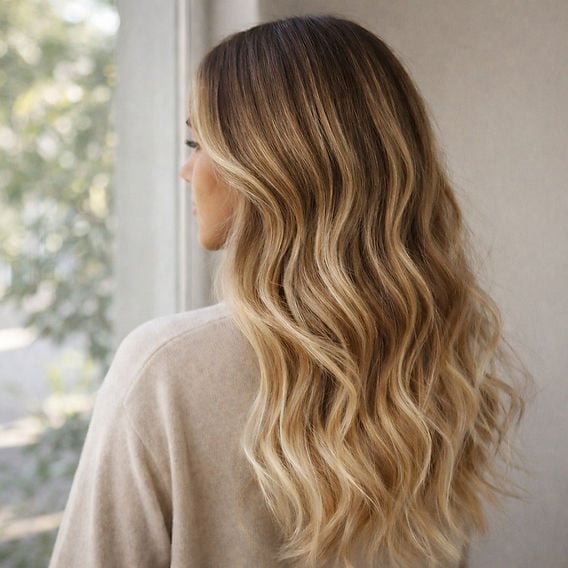
Thick, wavy hair with a dark blonde base and lighter blonde highlights creates a layered color effect that shifts with movement. The middle part and subtle layers let the waves fall in S-shapes rather than tight curls. Who it suits: anyone with medium to thick density who wants dimension without a dramatic root line. The lighter pieces are painted close to the part, so the color looks a natural highlight rather than a stripe. No bangs means the face stays open, which balances a longer face shape. Pass when your hair is very fine. The layers can thin out the ends faster than expected. A wave spray on damp hair and a diffuser attachment give the soft blowout without heat damage.
Thick wavy hair with caramel highlights
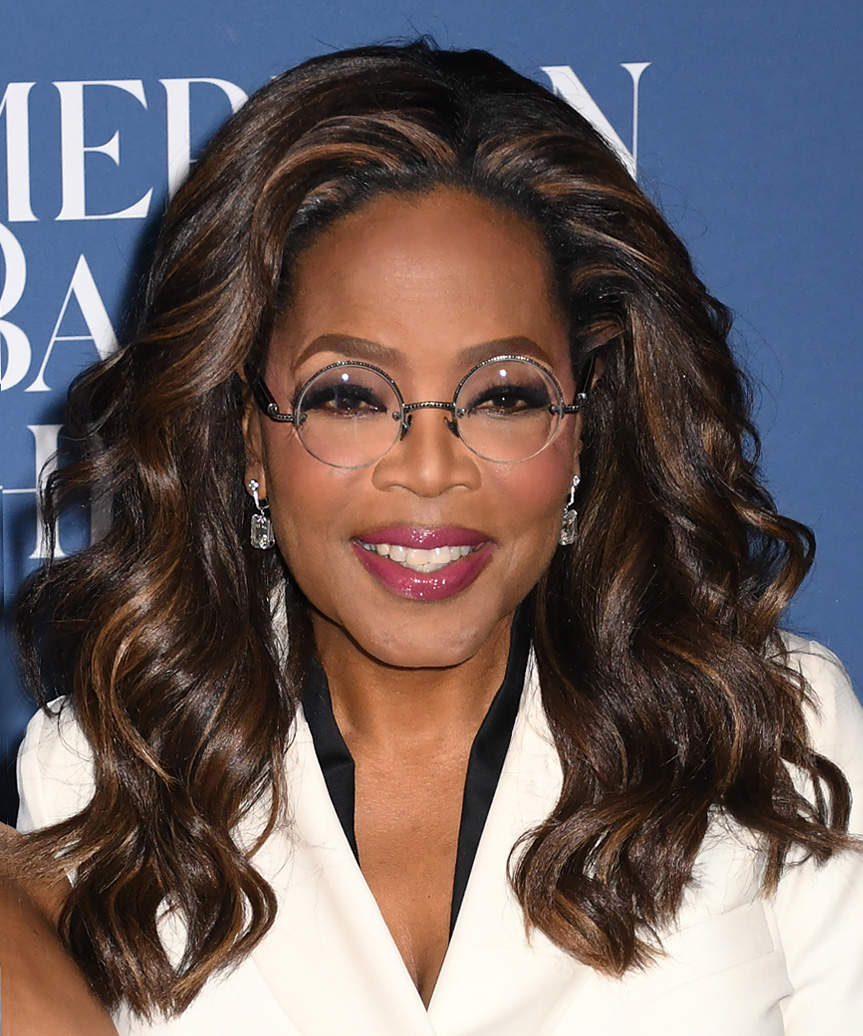
Caramel highlights on a dark brown base make thick, wavy texture look almost too neat. The mistake? Letting the color go too light. Over-processed caramel washes out the depth that makes the contrast work. Soft layers and a side parting keep the weight distributed evenly, no triangle head. Fine hair cannot hold the volume a voluminous blowout demands. Tell your stylist: soft layers, side parting, dark brown base, subtle caramel highlights. A powerful dryer and a large round brush are required; thin hair flattens in ten minutes.
Mid-back waves with lighter blonde highlights
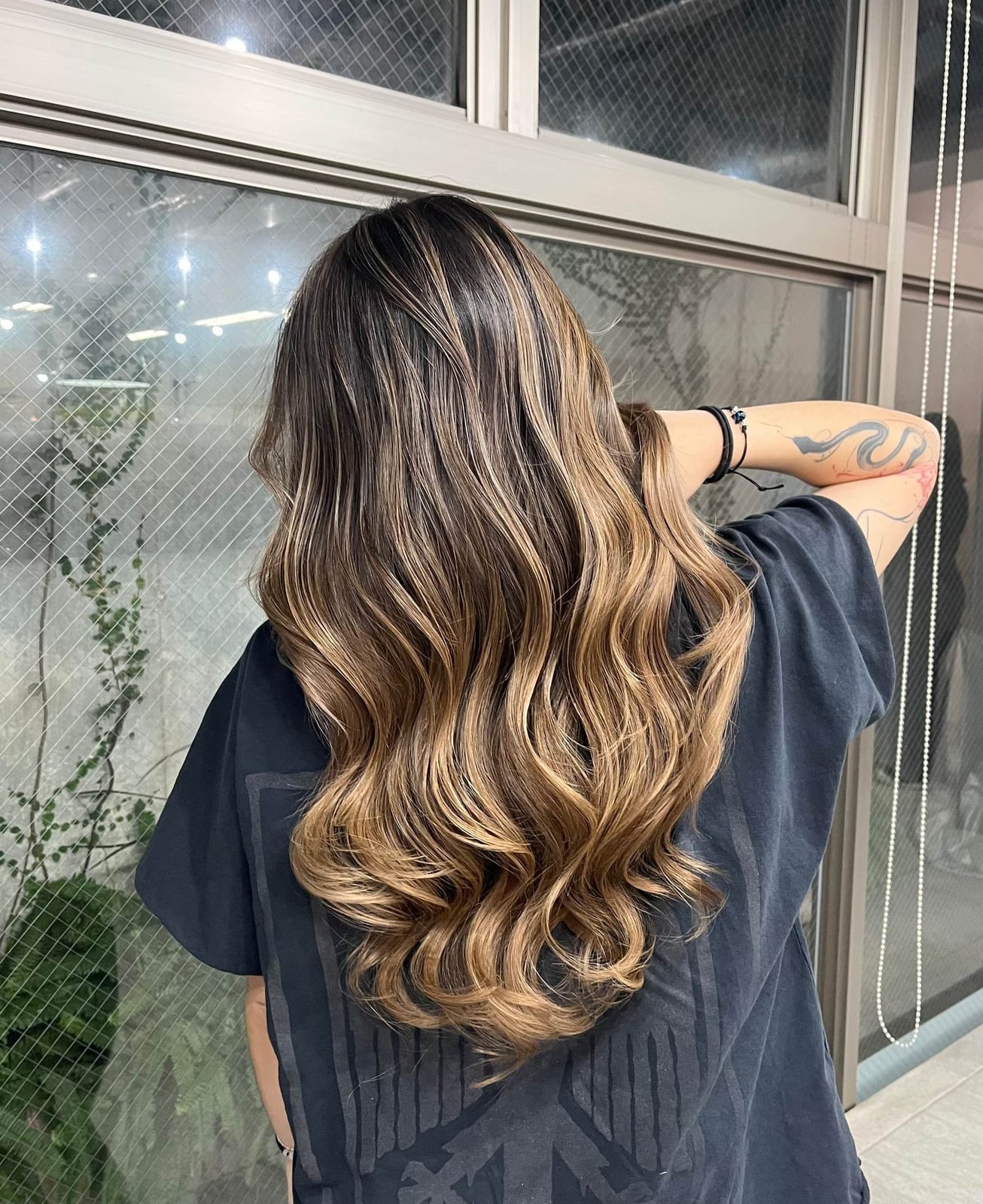
Lighter blonde highlights on a dark brown base create a dimensional look. Long, thick hair at mid-back demands a deep conditioning mask once a week. Layers add movement without sacrificing density.
This style works for most face shapes. A wavy blowout finishes the style without heat damage. The catch: fine hair may not hold loose waves long enough to justify the upkeep.
Caramel balayage on dark brown base
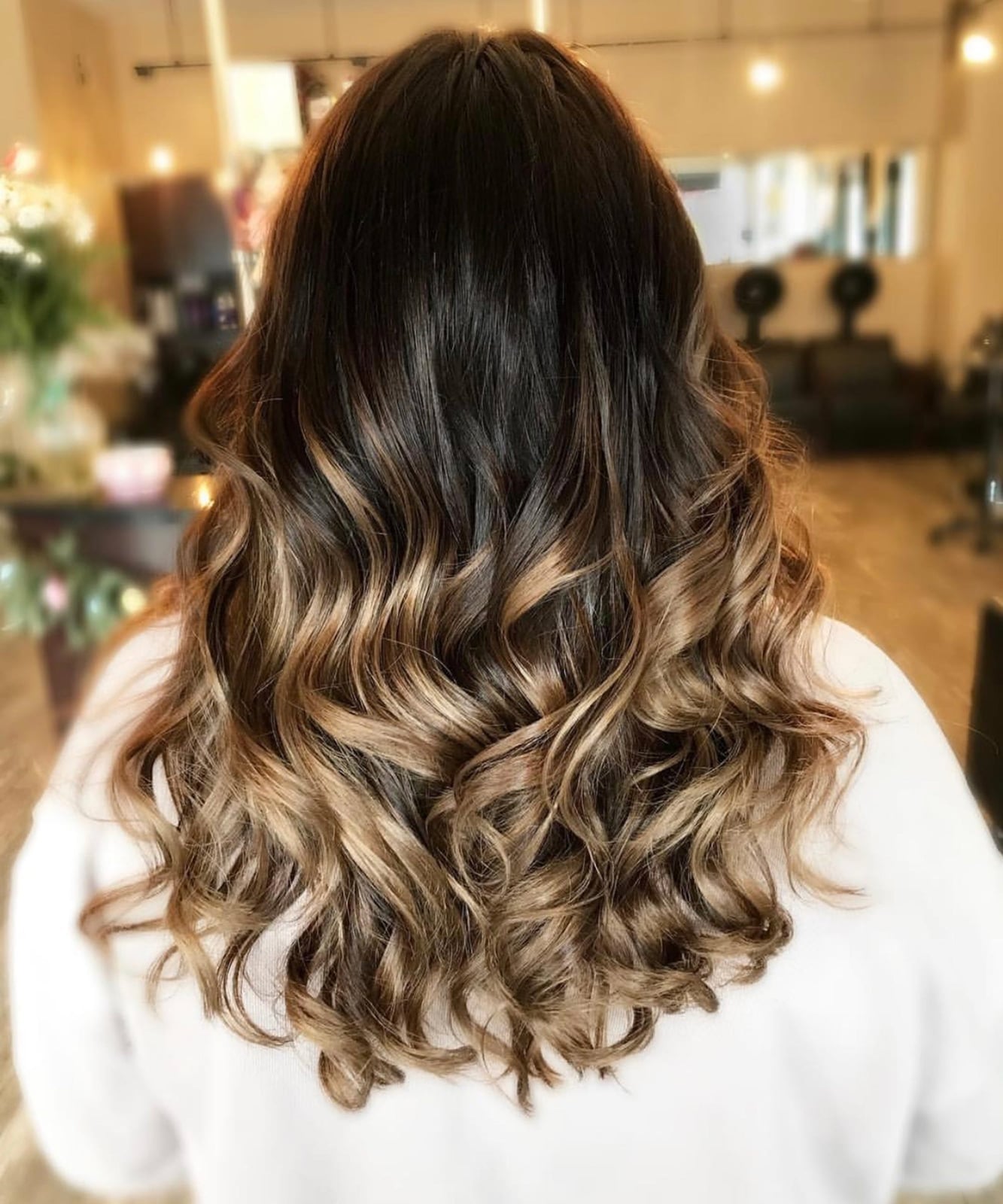
Balayage builds the caramel from mid-lengths to ends, leaving the root untouched. A middle part lets the dark brown base anchor the color. Loose, bouncy curls show off the gradient. This is a salon-only technique. Trying it at home risks uneven saturation and a muddy result. Thick, wavy hair holds the shape best, but any texture works as long as the base is long enough for the color to travel. Tell your colorist: layers, dark brown base, caramel balayage. A diffuser attachment on your dryer enhances natural curl without frizz.
One long layered cut with brown and blonde highlights
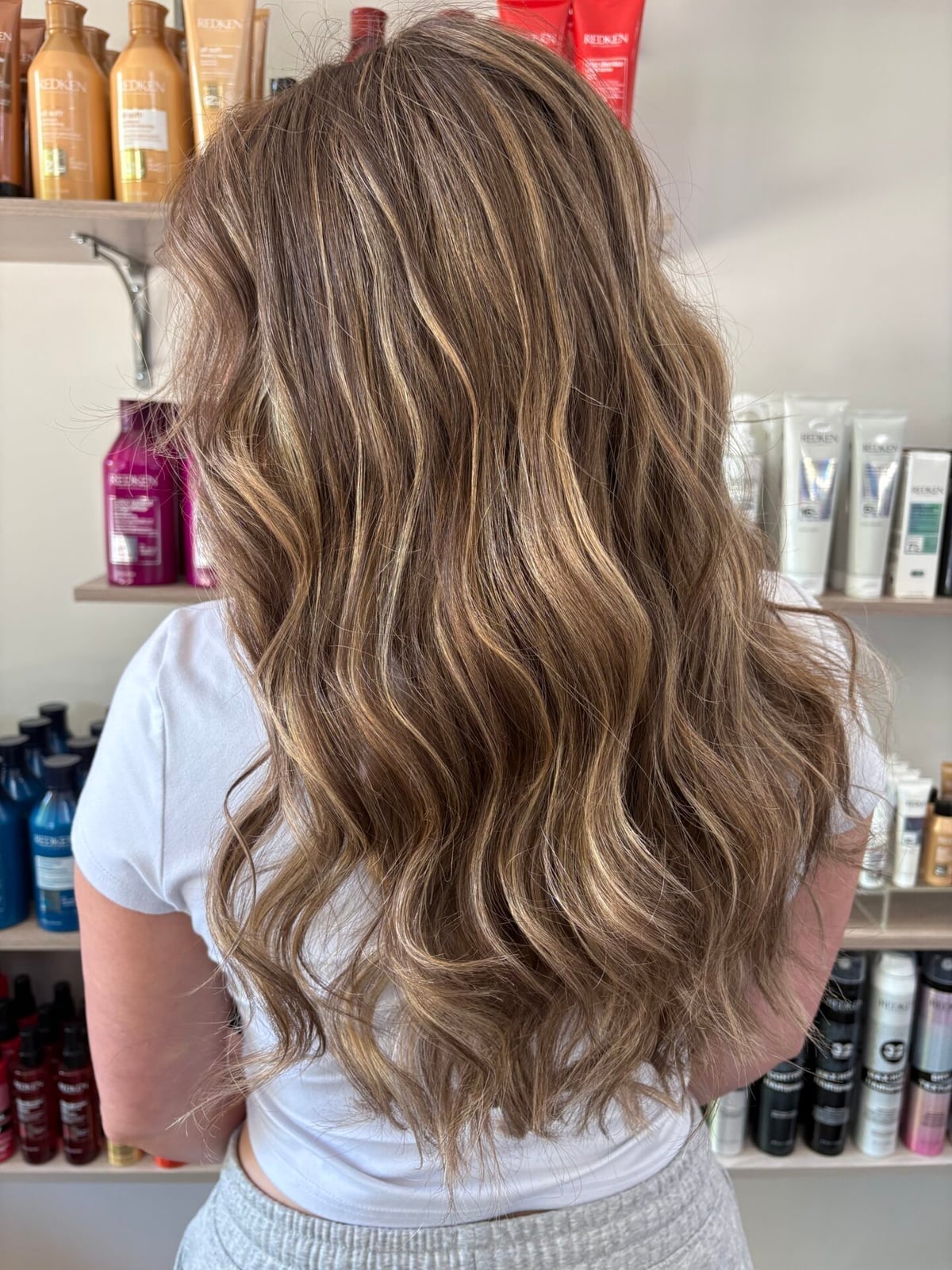
A middle part and a blowout keep the look neat for everyday wear. The drawback: long layers can thin out the ends if you have fine hair. Thick, wavy hair handles them well. A smoothing serum on the ends after drying controls frizz without weighing the root down.
Blonde highlights create face-framing effect
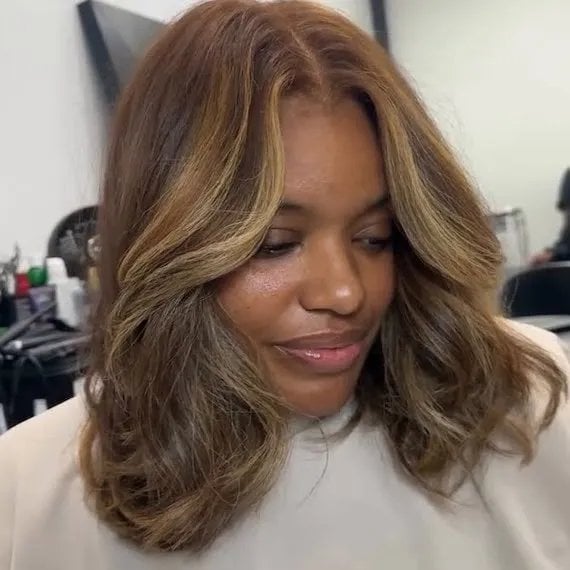
Face-framing highlights work because they follow the natural line of the jaw and cheekbone. A centered parting and soft layers let the blonde sit where it catches light first. Subtle blonde highlights woven through a brown base suit most face shapes. The effect relies on placement, not density. Skip it if you want the highlights to start at the root. Tell your colorist: soft layers, brown base, subtle face-framing blonde highlights. For a voluminous blowout, lift sections at the root with a round brush while drying, flat sections kill the contrast.
Final Thoughts
Every one of these 15 looks works because the cut and the color agree with each other. Pick the one that matches your morning and your salon schedule.
- Fine hair: ask for full highlights, not a balayage that sinks in.
- Ten minutes in the morning: a blunt bob with low layers.
- Cool base that pulls brassy: a purple shampoo every other wash.
- Wavy texture: let the layers do the lift, skip the hot tool.
Find the highlighting style that fits your life and your salon schedule.
