

That dark brown base you have? It wants caramel ribbons. Or auburn threads. Or maybe ash blonde pieces that catch the light. A single-process shade is fine, but layered color on the same dark canvas gives you depth without the grow-out panic. Curtain bangs and soft waves make it look lived-in, not just colored.
35 options here, from subtle tonal shifts to bold ends. Fine hair, thick hair, straight or wavy, the technique adjusts. Which is why Pretty Dark Hair Color 2027 fill so many saved boards. The struggle is choosing just one.
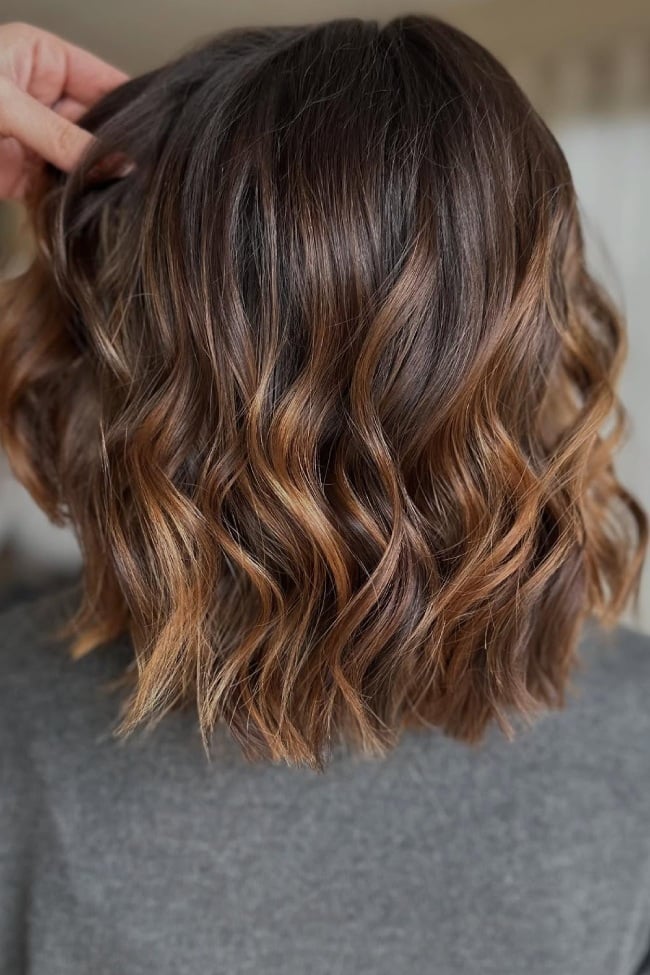
Smooth caramel balayage on a dark brown lob
Caramel balayage on a dark brown base works because the transition is soft enough to look intentional but not so blended that it disappears. The wavy blowout styling lifts the caramel pieces away from the root, so the lighter strands catch the light separately from the deeper brown. Thick, wavy texture holds that lift naturally, which means the shape stays readable between washes. The middle part keeps the color distribution even on both sides. Tell your colorist: dark brown base, smooth caramel balayage. Skip it if your hair is very fine and tends to fall flat in waves, since the dimension depends on volume at the mid-lengths.
Subtle auburn highlights on dark brown hair
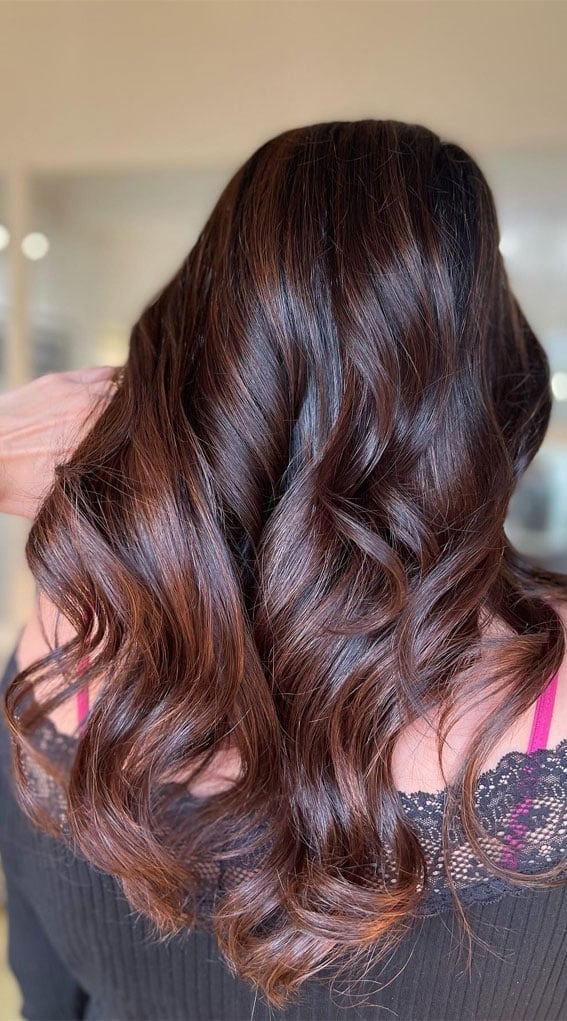
Auburn highlights on dark brown read warmer than caramel but less committed than copper. The difference is in the placement: subtle, spaced strands rather than a full wash of color, so the base still dominates. Loose waves let those auburn pieces surface in a few spots instead of a solid stripe. Thick, wavy texture gives the highlights enough surface to show without needing a heavy hand. Not for anyone who wants a solid color or whose skin tone leans cool, since the warmth can clash.
Cool undertones in dark brown hair
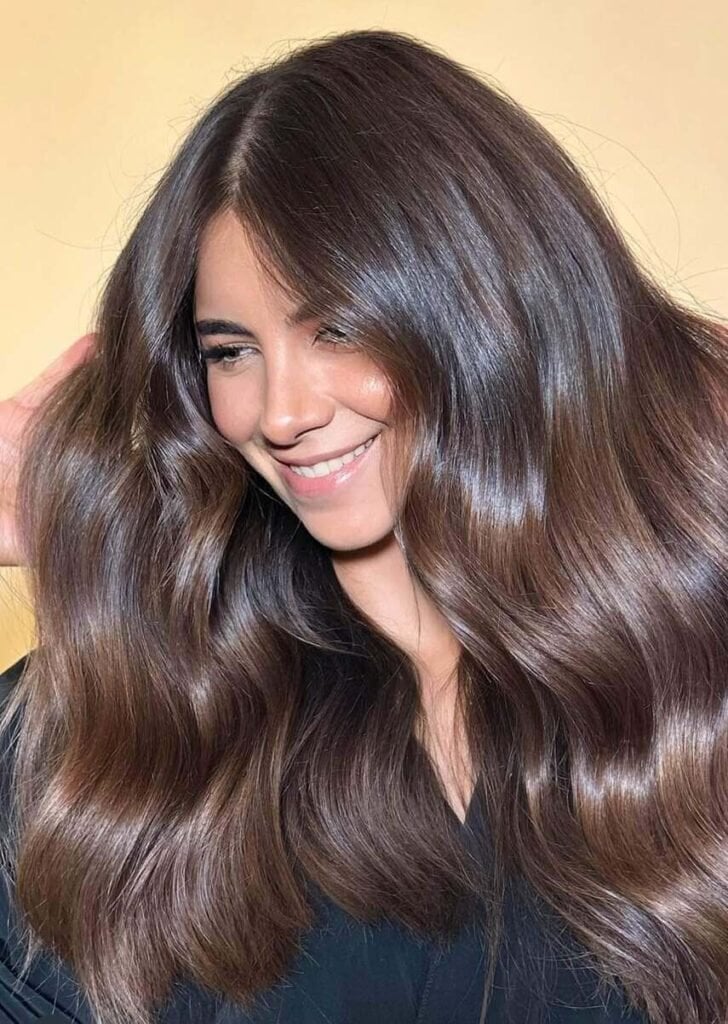
Do you want a dark brown that looks smoky rather than warm? The undertone here stays cool, which keeps the color from pulling red or orange in sunlight. Soft waves and a middle parting let the subtle layers break up the surface so the cool tone looks depth, not flatness. Thick texture holds the wave pattern without product buildup. The catch: cool undertones can look ashy if the base is too light, so the brown needs to stay deep. Ask your colorist for: dark brown base with cool undertones.
Auburn undertones in dark brown hair
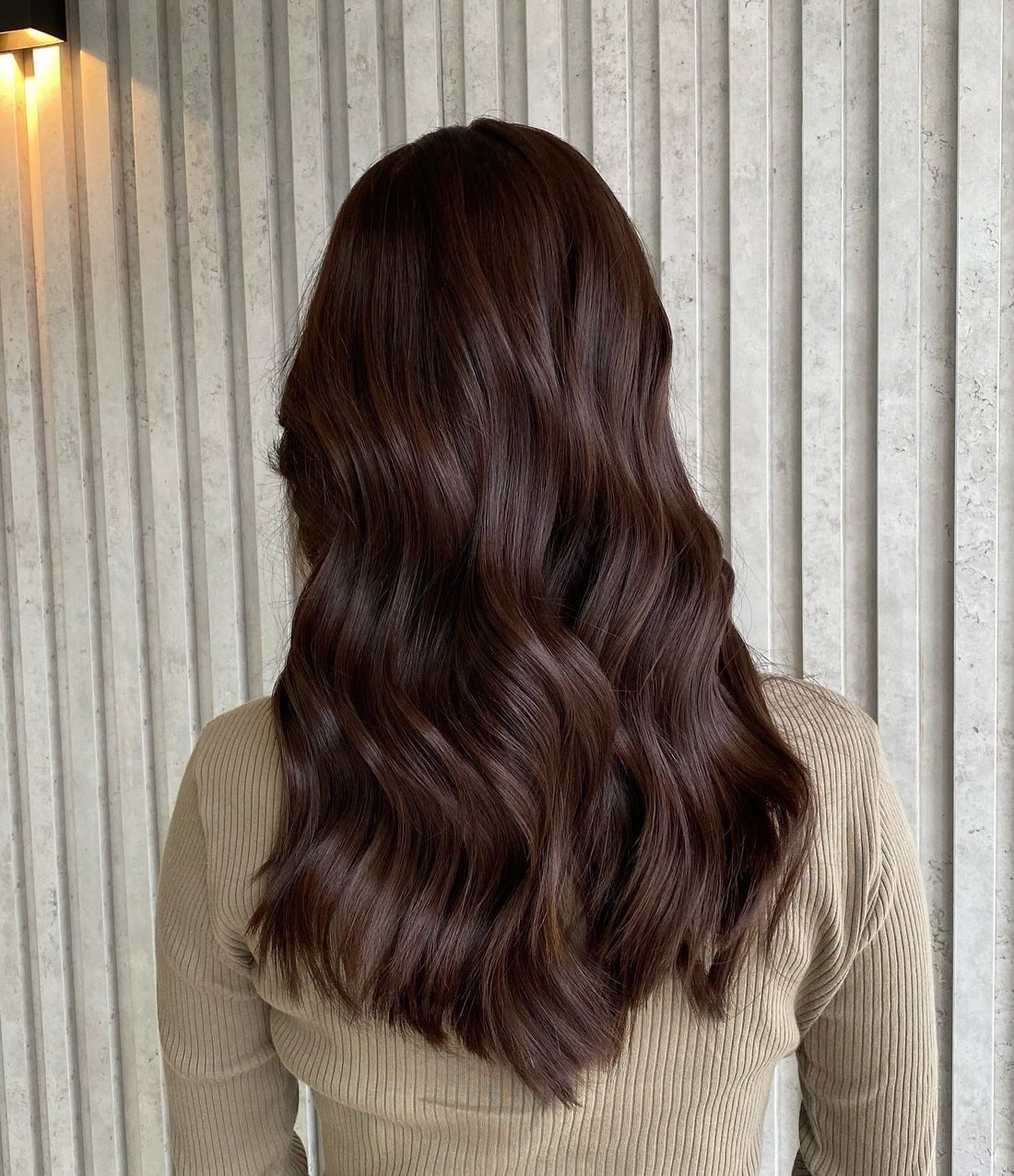
Auburn undertones sit beneath the brown, which is the technical difference between a tint and a highlight. The wave pattern pushes that warmth to the surface in the bends, so the color looks rich and dimensional. Thick, wavy texture helps the undertone catch light at multiple angles. A middle part keeps the color distribution symmetrical. Choose a neutral brown with no red shift, since auburn will warm up the whole look over time.
Blonde highlights on dark brown hair
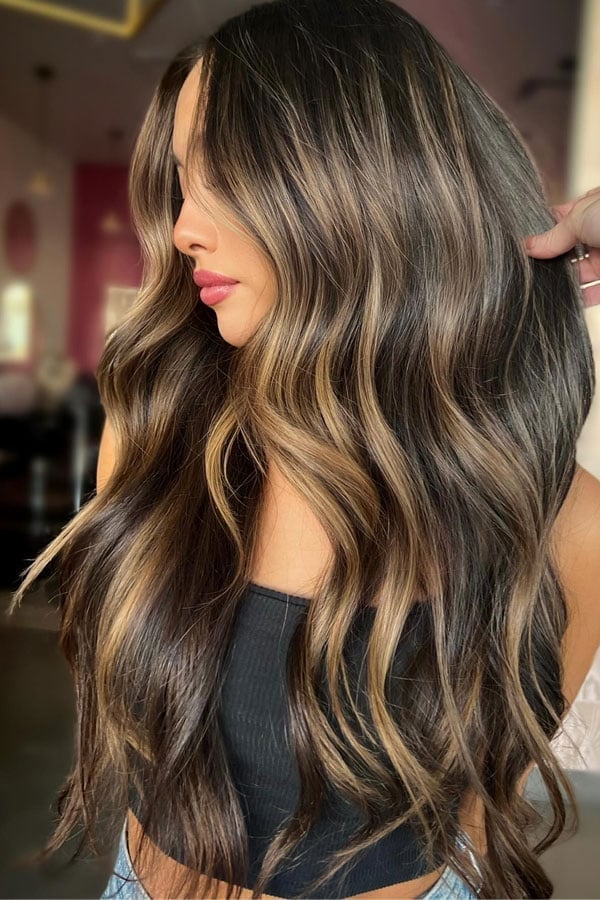
Blonde highlights on dark brown create contrast that caramel or auburn do not. The key is blending: the highlights here are subtle and spaced, so the transition looks natural rather than striped. A side parting shifts the highlight weight to one side, which gives the wavy blowout styling a directional flow. Thick, wavy texture keeps those lighter pieces from looking sparse. The layered cut supports the wave shape without adding bulk at the ends.
Ask your colorist for: dark brown base, subtle blended blonde highlights. Skip it if you want a low-contrast look, since the difference between the base and the blonde is noticeable even in dim light.
Deep black hair with curtain bangs
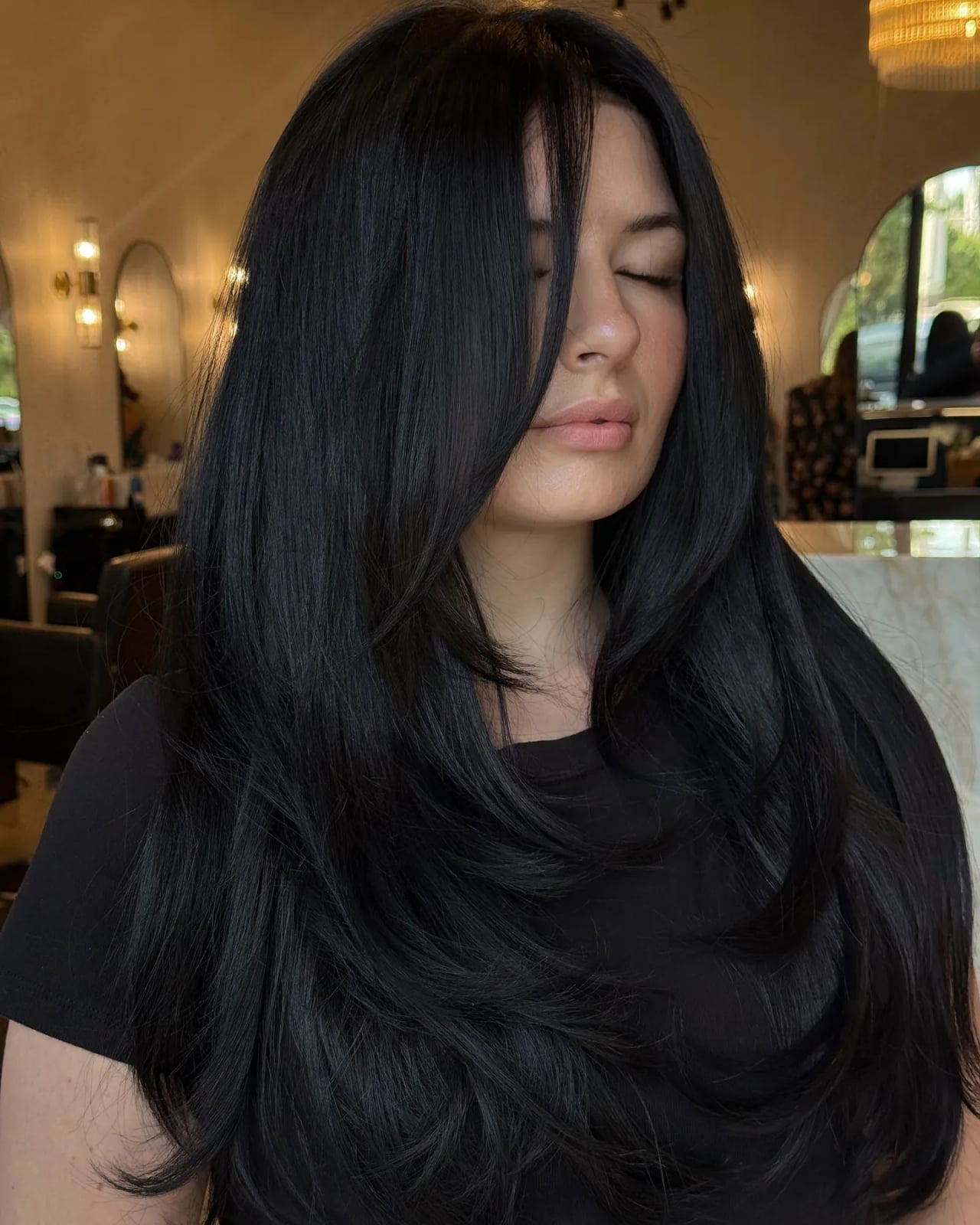
How deep can a single shade go? Deep black, no highlights, no shimmer, just a flat-out rich base that looks one solid note. The curtain bangs break the weight, framing the face with soft layers that sweep to either side. Thick, wavy texture keeps the color from looking flat. The movement adds dimension instead. A middle part and smooth blowout finish the silhouette. Choose this style only if you commit to a darker base color and daily bang styling. Curtain bangs require daily styling; trim the baseline every 6-8 weeks.
Dimensional caramel highlights in dark brown waves
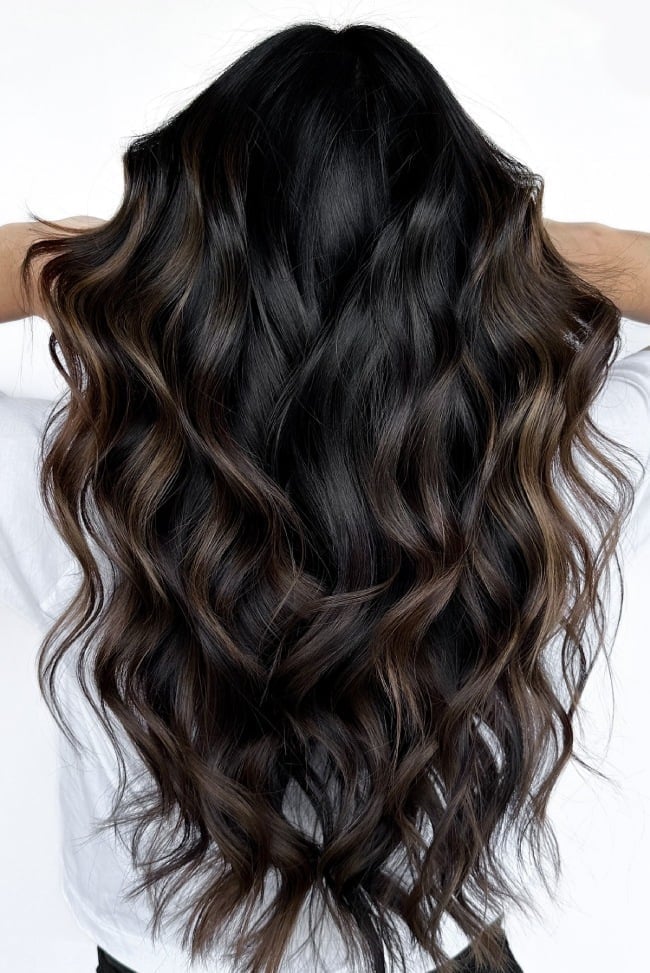
Caramel highlights on dark brown versus solid dark brown: one adds depth, the other stays flat. Here the caramel is subtle, woven through thick waves so the color shifts as the hair moves. No chunky streaks, no obvious stripes, just a blended lift that creates natural dimension. The loose waves help the highlights catch light at different angles. A gloss every 8-10 weeks keeps the caramel from turning brassy. Ask your colorist for: dark brown base, subtle caramel highlights, loose waves.
Plum tones on dark brown ends
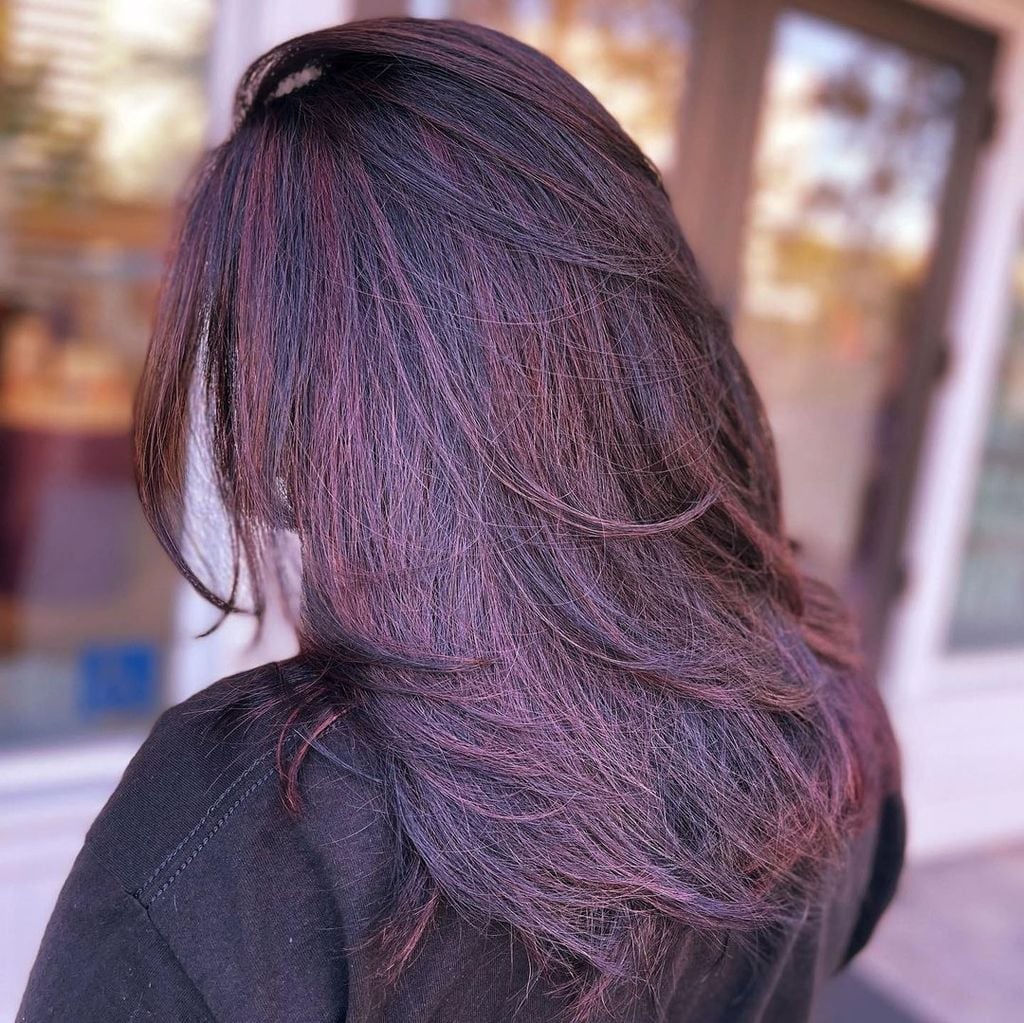
Deep plum highlights concentrated toward the ends, not scattered through the roots. The layered cut lets the jewel tone peek through the dark brown base without overwhelming it. Fine, wavy texture air-dries into soft separation, so the color looks deliberate. The trade-off: plum fades faster than warm tones. A DIY tinted conditioner every few washes helps, but the salon precision of the highlights means touch-ups are best left to a pro. It works best with warm tones or very thick hair that air dries well.
Warm caramel highlights on dark brown hair
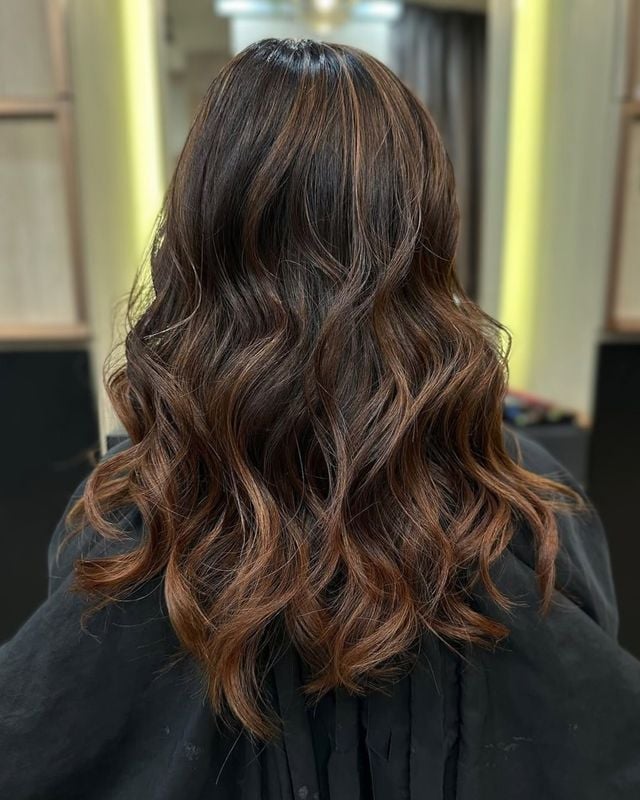
The caramel here is woven through the entire head, not just the ends. That changes the effect: the warmth creates an overall glow instead of a dip-dye moment. Soft waves help the blended shades merge without hard lines. Thick texture holds the wave pattern, so the highlights catch light from root to tip. A copper or gold-toned conditioner keeps the warmth from going muddy between trims every 8-10 weeks. It suits cool tones or fine hair that won’t hold waves. Ask your colorist for: dark brown base, warm caramel highlights, soft waves.
Auburn highlights on air-dried dark brown hair
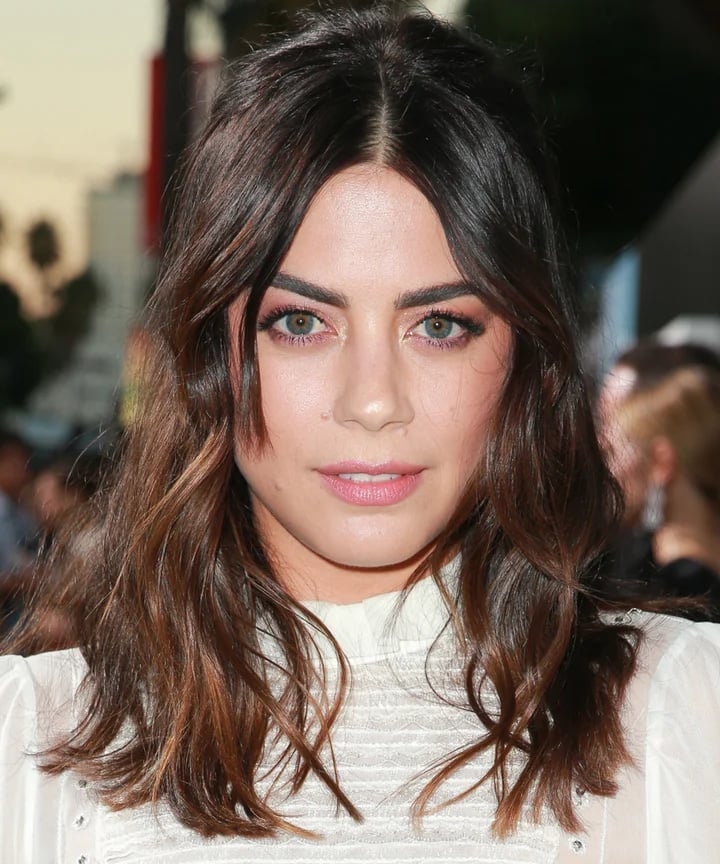
Auburn highlights woven through a dark brown base add warmth without shifting the overall depth. The layers and middle part let the color fall naturally, while the air-dried finish keeps the texture soft and undone. Fine, wavy hair benefits from the subtle lift. The auburn appears as a warm glow, not a stripe. Upkeep is straightforward: minimal product preserves the air-dried look, and a monthly toning refresh keeps the auburn from fading to orange. It works best for those who prefer a neat, heat-styled look or have very thick hair.
Dimensional caramel highlights on dark brown hair, close-up take
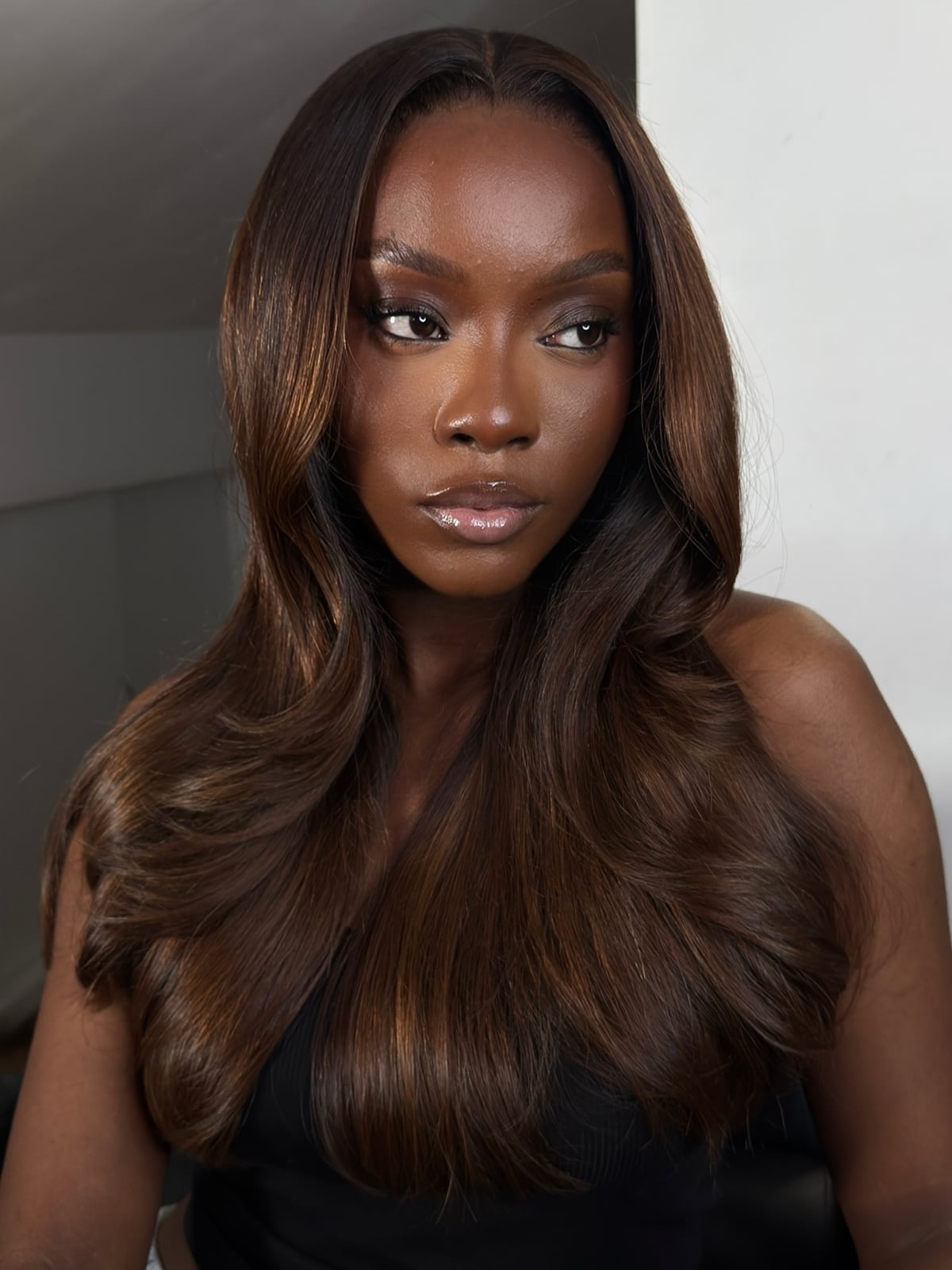
Waves catch the caramel in a way solid color never can. Dark brown base, subtle caramel highlights woven through with a balayage technique. The blend is soft enough that no harsh line forms at the root. Thick, wavy hair of any length holds this well. The middle parting lets the lighter pieces fall evenly on both sides. Skip it if you prefer a solid color or have fine hair that won’t hold waves. Tell your colorist: dark brown base, dimensional caramel highlights, balayage. Balayage grows out softly; plan a touch-up every 10-14 weeks.
Auburn highlights on dark red hair
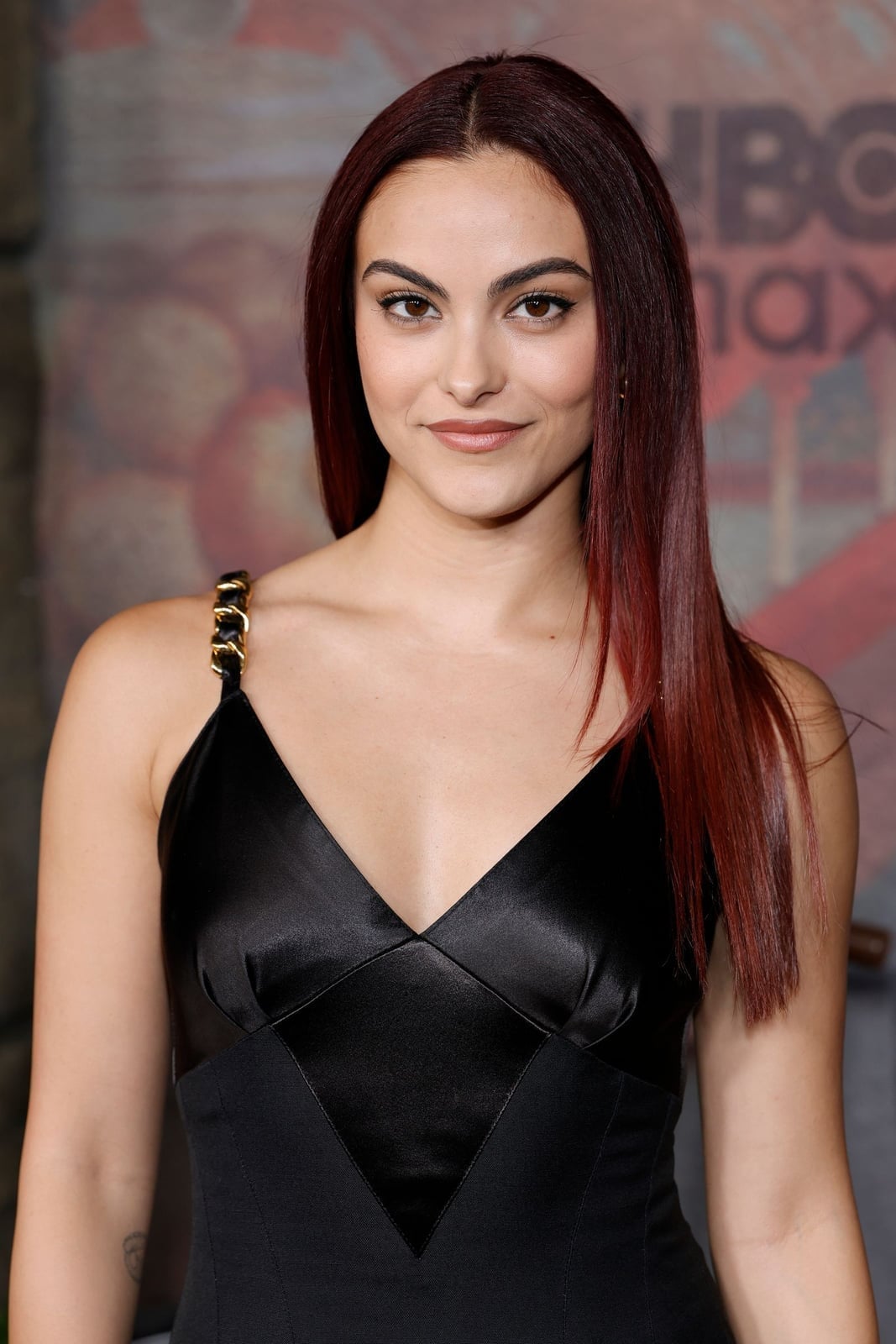
Dark red on its own reads flat. Add auburn highlights and the base gains heat without turning orange. Fine, straight hair with a middle parting keeps the color visible from root to end. The air-dried finish suits this combination better than a high-gloss blowout. The texture lets the highlights look natural, not applied. Skip it if you have thick, wavy hair or prefer a neat, high-shine look.
Rich auburn undertones in dark brown hair with wavy thick
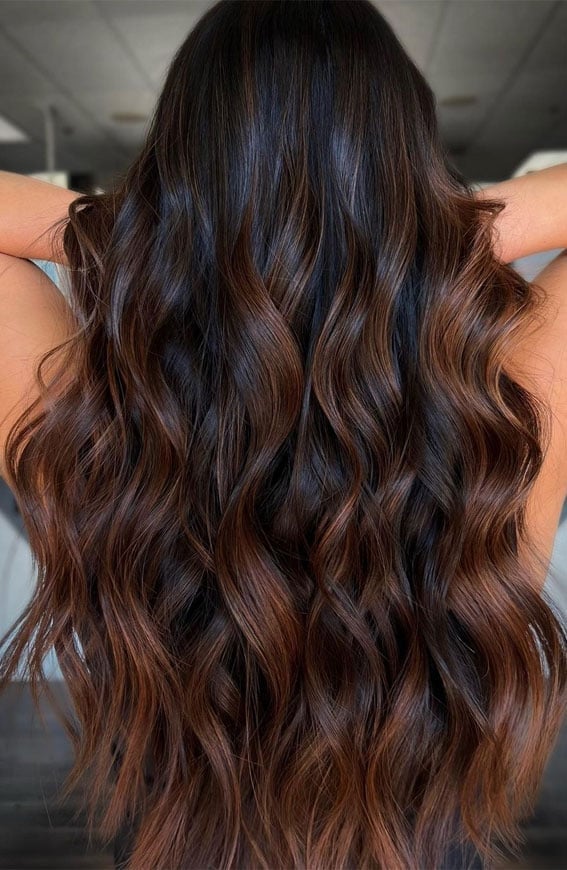
Dark brown with subtle auburn highlights works because the contrast is low. The auburn sits close to the base shade, so the transition looks like a natural glow rather than a stripe. Thick, wavy hair benefits from the extra dimension, as waves scatter light and keep the color from looking heavy.
It suits those who prefer warm tones and have thick, wavy hair that can hold a wavy blowout. The wavy blowout styling is what makes the auburn visible through the density. Ask your colorist for: dark brown base, subtle auburn highlights, wavy blowout.
Rich dark brown base with auburn highlights
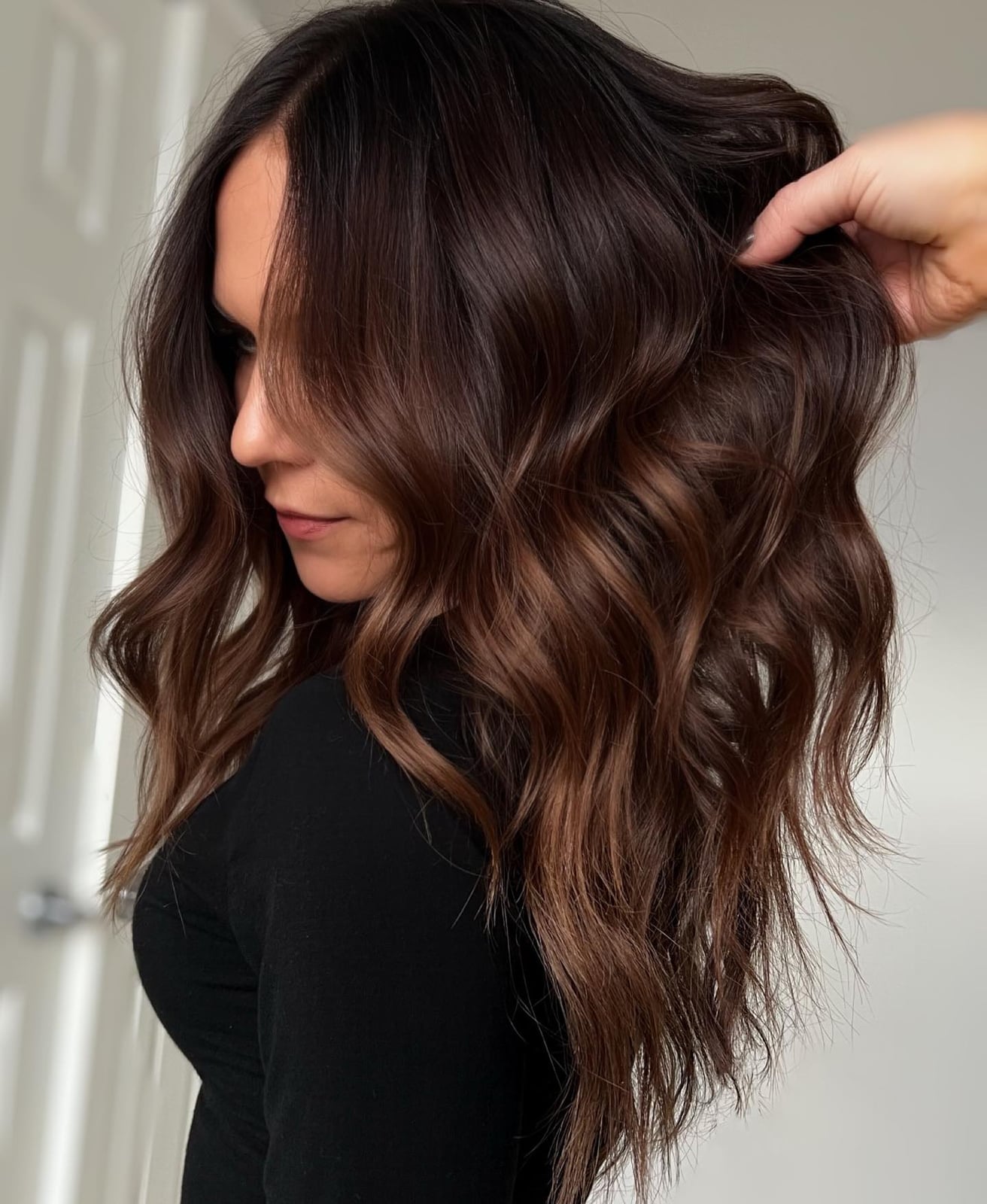
Auburn highlights woven through a rich dark brown base create depth without shifting the overall color warm. The technique matters here: the highlights sit inside the layers, not on top of them, so the movement of a wavy blowout reveals the auburn at different angles. Thick, wavy hair of any length takes this well. The middle parting keeps the placement balanced. Skip it if you prefer cool tones or have fine hair that won’t hold waves.
Dark ash brown with ash tone
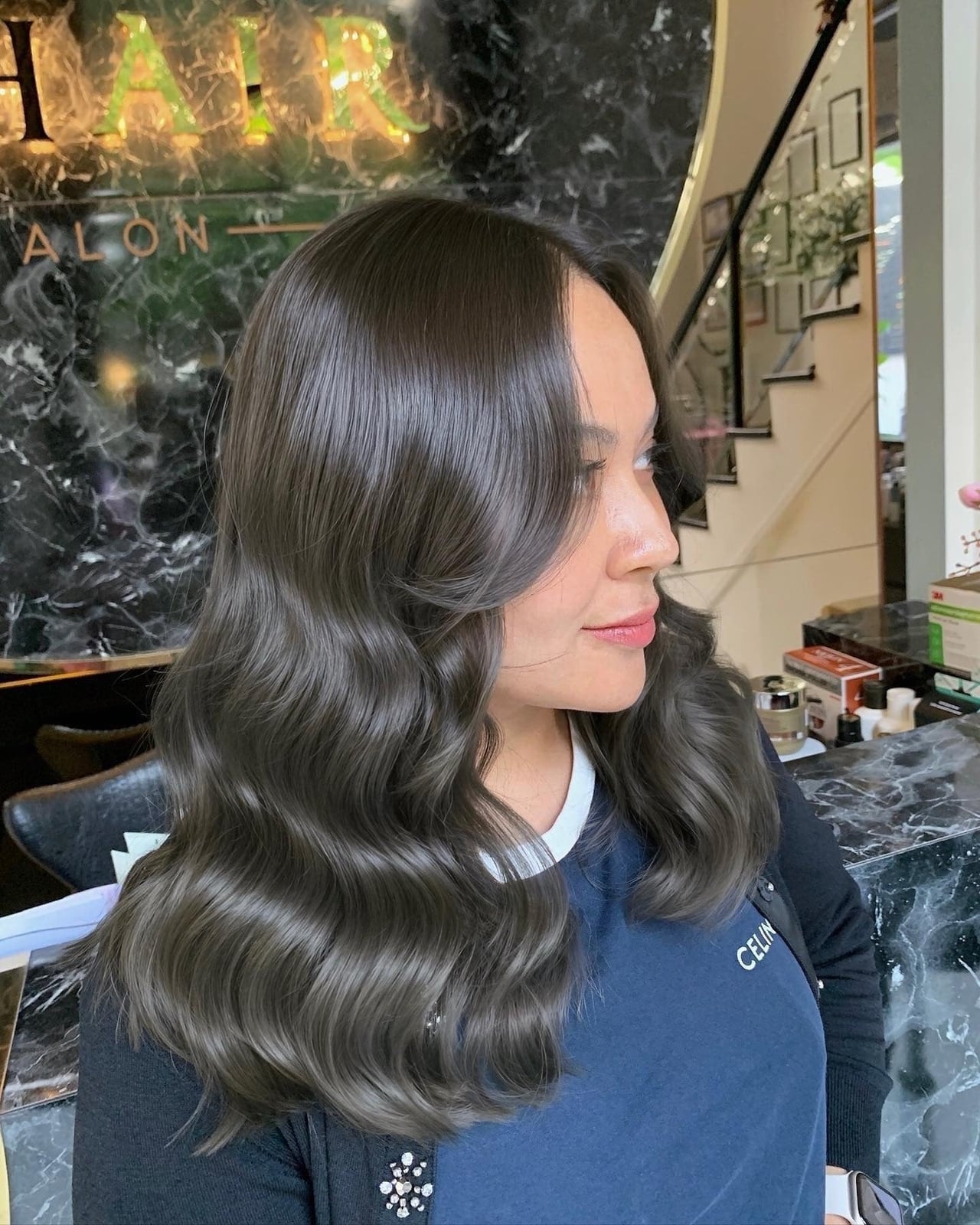
Ash tone on a dark brown base is a subtle shift, not a statement. The layers in the cut give the color room to look dimensional rather than flat. Wavy, thick hair with a side parting and blowout styling keeps the ash visible, straight hair can swallow the tone entirely. Skip it if you have naturally warm undertones or prefer warmer hair colors. Ask your colorist for: dark ash brown base, subtle ash tone, layers, blowout.
Blue-black hair with subtle layers
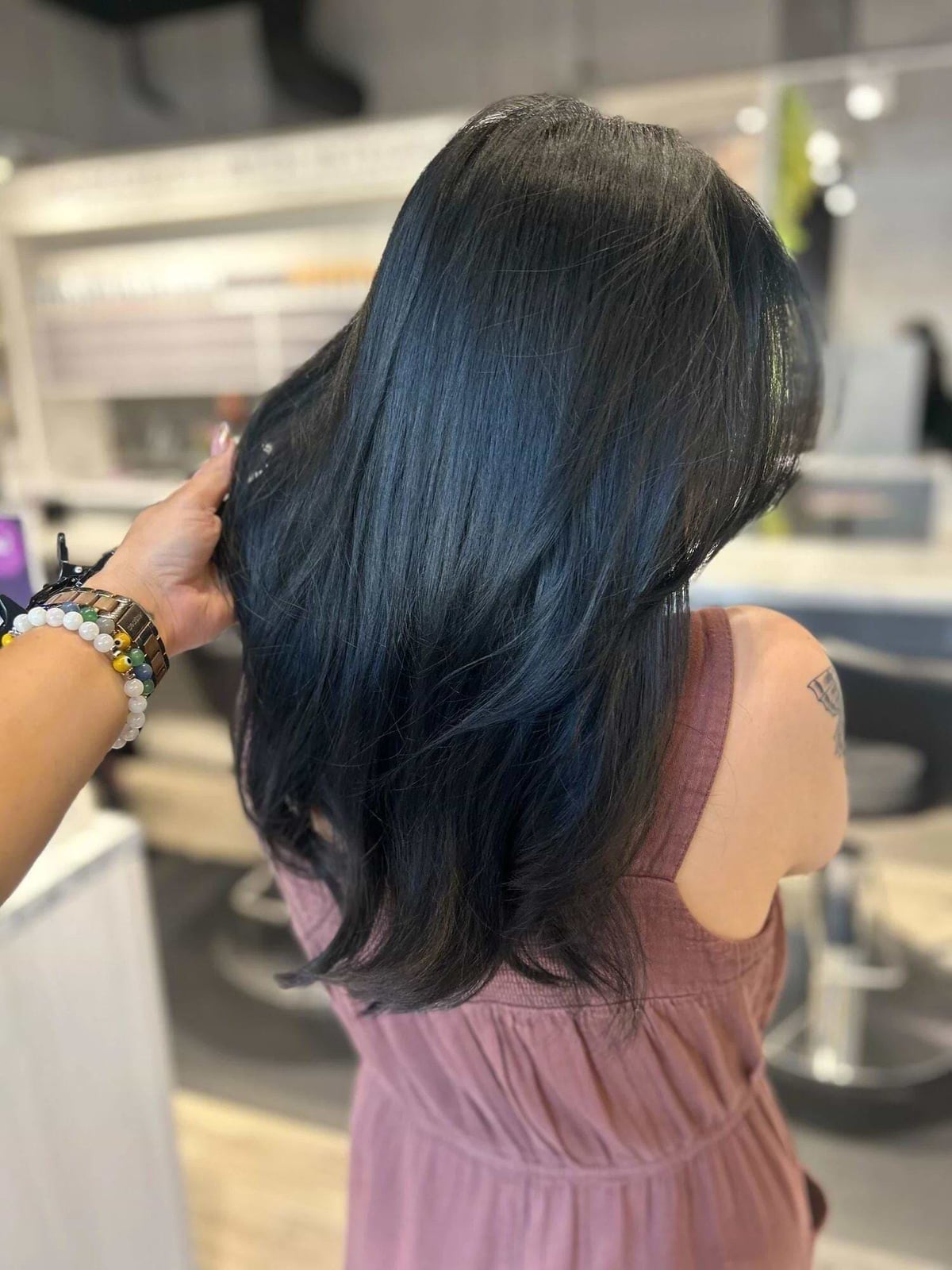
Dark blue-black looks almost black until light hits it, then the blue note surfaces. The subtle layers cut into thick, wavy texture keep the shape from turning into a solid block. A middle part and air-dried finish let the color do the talking. This one suits thick, wavy hair of any length and cooler skin tones. Skip it if your hair is fine and won’t hold shape, or if you prefer warm tones.
The deep hue can fade; use a color-safe shampoo and a tinted conditioner monthly to keep the blue from turning muddy. About three hours in the chair for the initial application.
Ash blonde balayage on dark brown hair
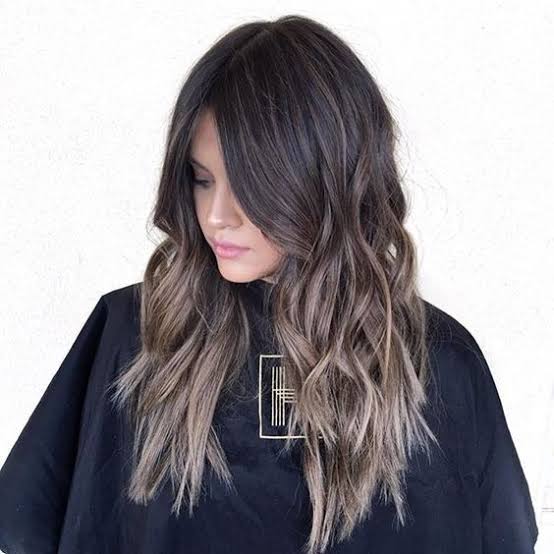
Ash blonde balayage on a dark brown base reads cooler than caramel or honey options. The ash tone sits close to the base, so the transition is soft rather than stark. Side bangs and layers give wavy, thick texture a frame without losing weight. This works for thick, wavy hair of any length and cooler skin tones. Pass when you prefer warm tones or have fine hair that won’t hold waves. Ash blonde balayage needs a toning session every six to eight weeks to keep the cool note from warming up.
Ash highlights on dark brown hair
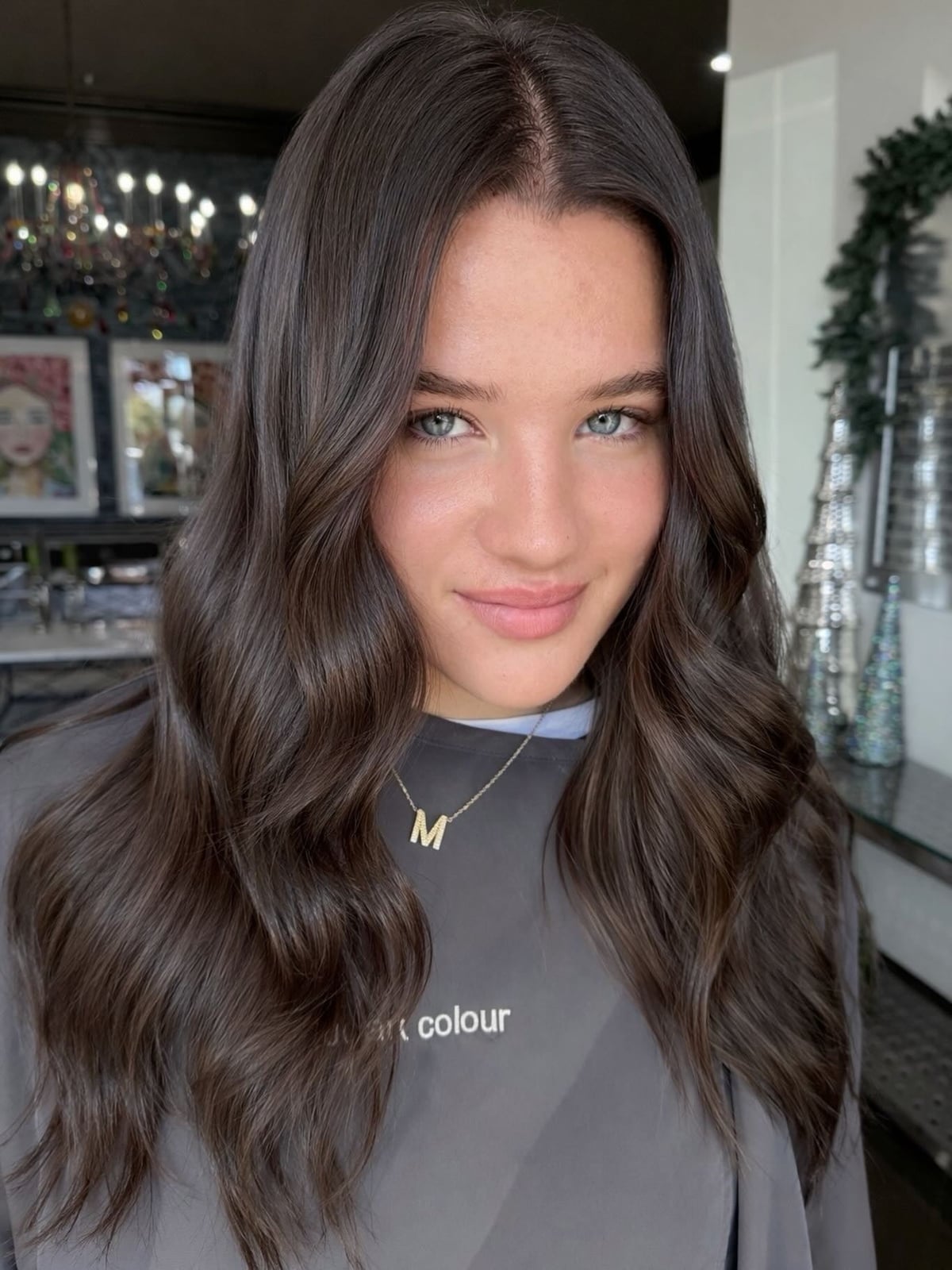
Ash highlights woven through a dark brown base add dimension without shifting the overall tone cool. The layers are cut to let the soft waves settle naturally, and a middle part keeps the look balanced. This is a salon color, not a box job, ash tones pull green if applied unevenly. One real drawback: ash highlights fade faster than warm tones and can leave a brassy cast. A silver or purple toning shampoo used weekly helps, but it is not a set-and-forget color. Skip it if you want low maintenance or prefer warm undertones.
Burgundy hue with red undertones
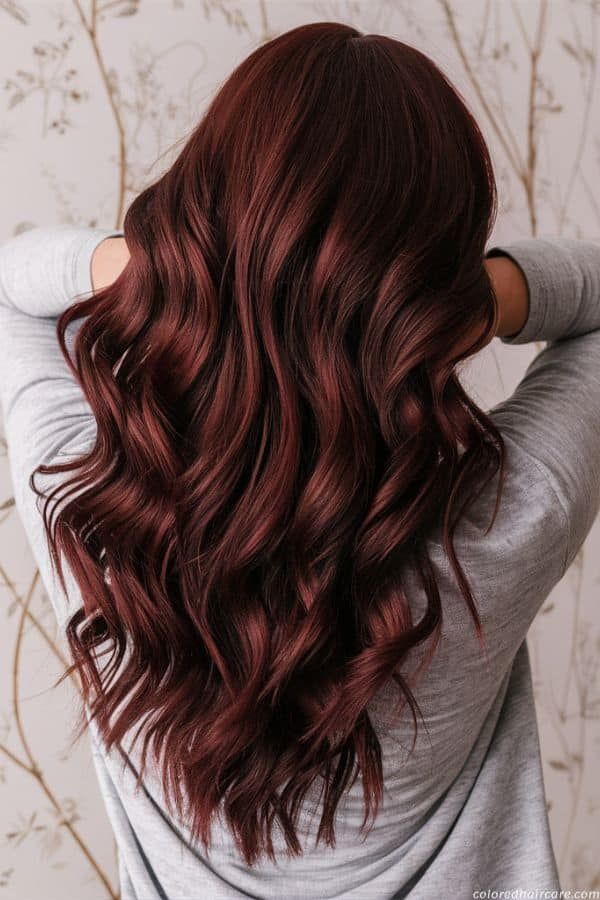
Deep burgundy with red undertones shifts between wine and cherry depending on the light. The loose waves in thick, wavy texture catch the red note at the bends, which is why the color reads dimensional rather than flat. A back view shows the even saturation, no banding, no patchiness. This is a full-head color, not a highlight or gloss. The depth works on thick, wavy hair of any length and most skin tones. Not for anyone who prefers cool tones or has fine hair that won’t hold a wave.
Face-framing blonde highlights on dark brown hair
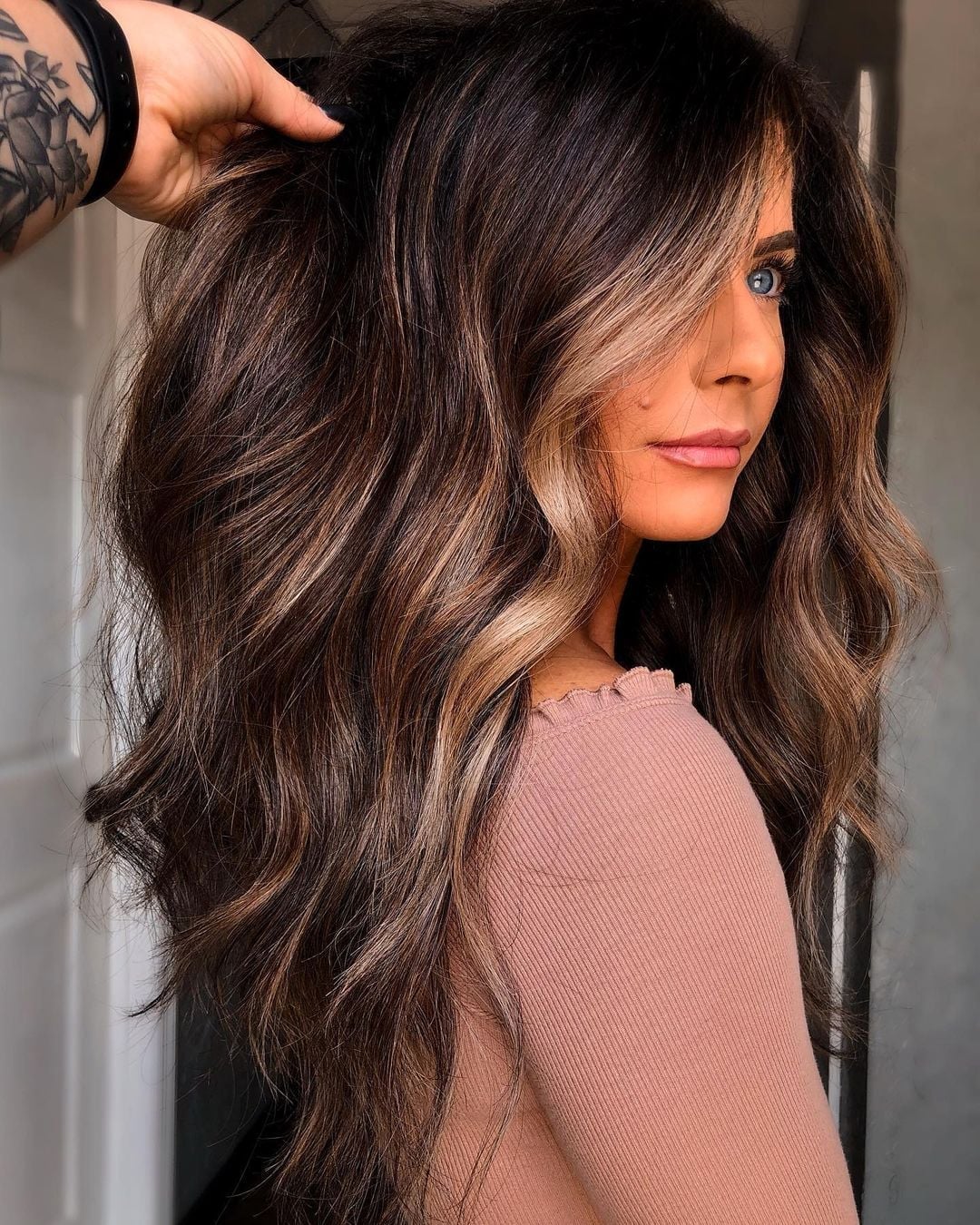
Face-framing blonde highlights on a dark brown base use a balayage technique for a soft transition at the root. The lighter pieces sit around the front layers, drawing attention without a full highlight pattern. A side part and wavy styling push the blonde forward. Thick, wavy texture of any length works here, the waves break up the contrast. Balayage grows out softly, so a touch-up every ten to fourteen weeks is typical. About three hours in the chair for the initial application.
Glossy brown with auburn highlights, wavy
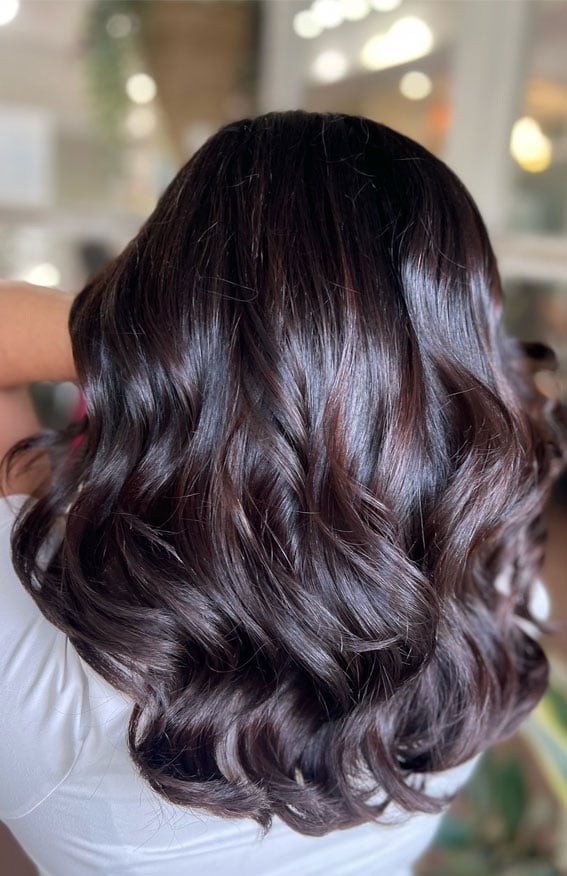
Dark brown holds auburn highlights like a deep wood holds firelight. The layered cut catches the glow, each wave turning the tone into a warm, glossy finish. Ask your colorist for: dark brown base, auburn highlights, layered cut. Thick, wavy hair of any length suits this best. A shine serum keeps the gloss going; auburn tones need refreshing monthly.
Soft wavy layers with caramel highlights
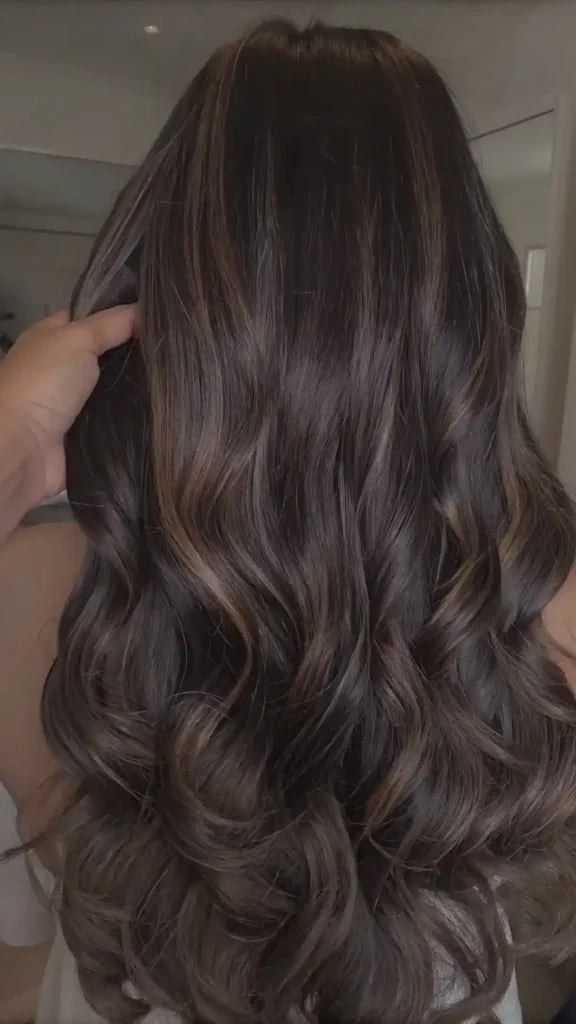
Balayage caramel versus foiled caramel: this is the softer sibling. The subtle caramel highlights are painted freehand, so the dark brown base stays dark at the root. Soft, wavy layers let the color drift down without a hard line. Thick, wavy hair of any length wears it well. Skip it if you prefer a solid color or have fine hair that won’t hold waves. The balayage grows out softly, so a touch-up lands every ten to fourteen weeks.
Ash blonde highlights for dimension on dark brown, close-up take
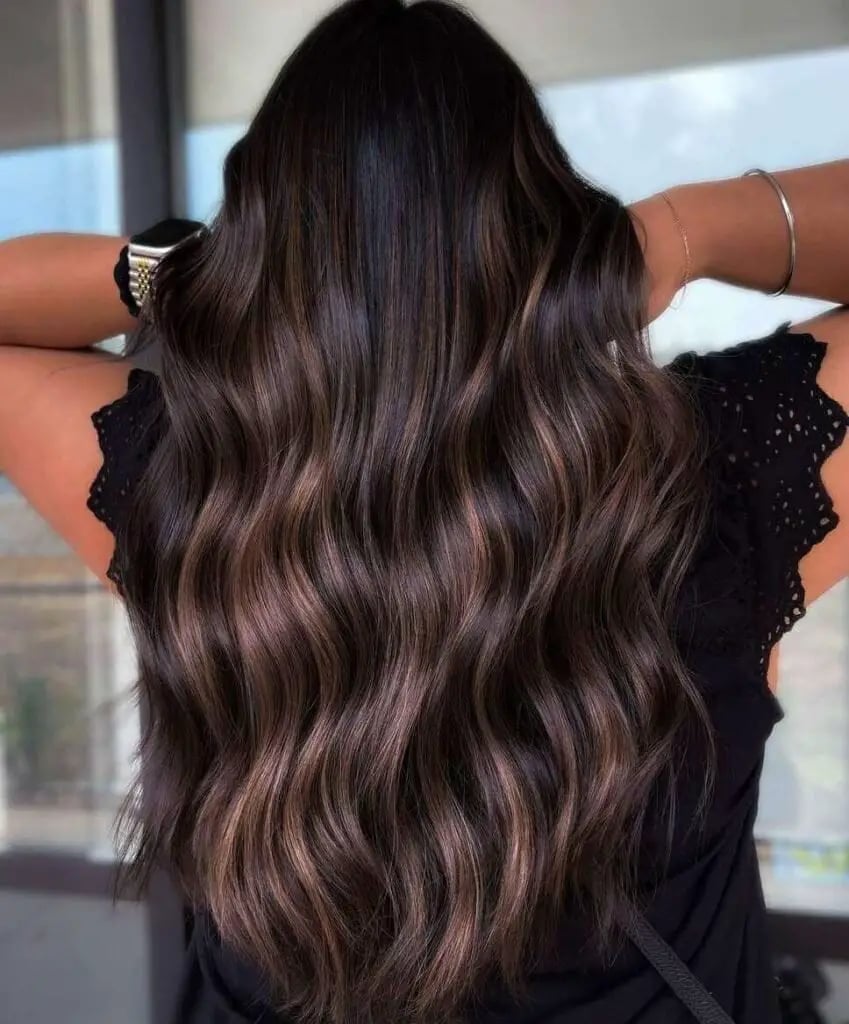
Subtle ash blonde highlights on dark brown create dimension without shifting the base cool. The wavy blowout lifts the lighter strands above the deeper mass, so the color looks layered rather than flat. Thick, wavy texture holds the wave pattern well, and a middle part keeps the distribution even. Skip it if you lean toward warm tones or your hair is fine enough that waves fall flat by midday.
Ash blonde against dark brown works because the contrast is present but soft. The salon technique places the lighter pieces deep inside the layers, so the regrowth line stays gentle. Ask your colorist for: dark brown base, ash blonde highlights.
Bright yellow ends on a dark brown bob
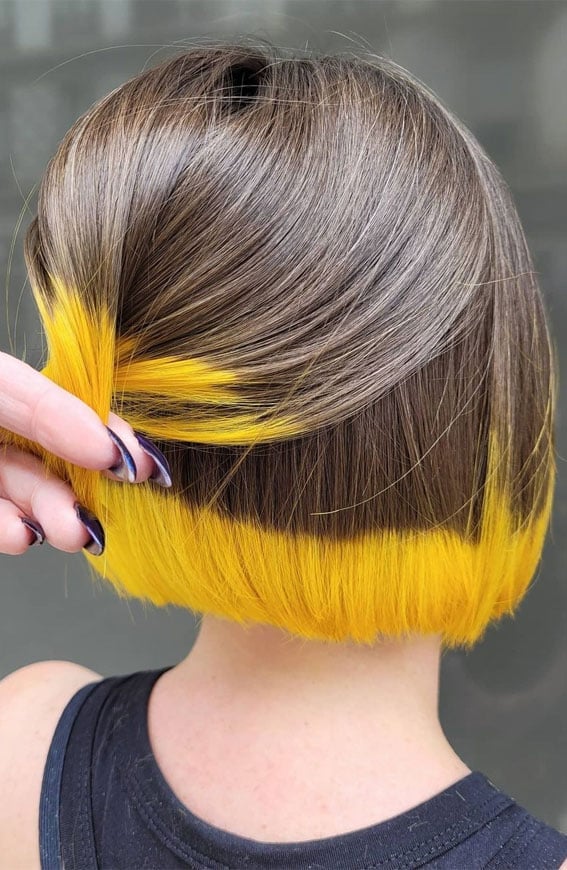
A blunt dip-dye builds this look: the dark brown bob stays solid from root to mid-length, then switches to bright yellow ends in a clean horizontal line. Straight, fine hair cut into a bob shows the contrast best. Skip it if you prefer subtle color or have wavy hair that won’t show blunt ends. The dip-dye needs a refresh every four to six weeks to keep the yellow vibrant.
Copper highlights on dark brown hair
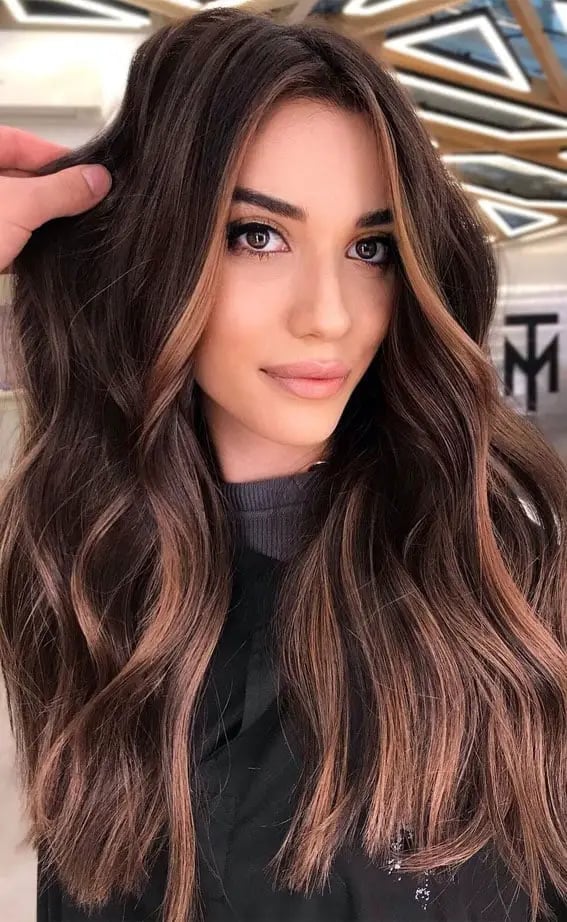
Copper highlights versus auburn highlights: copper leans warmer and brighter. Subtle copper pieces weave through the dark brown base, with face-framing strands around the layered cut. Wavy styling lifts the copper into the light. Ask your colorist for: dark brown base, subtle copper highlights, wavy layered cut. Copper fades faster than auburn; a color-depositing conditioner weekly keeps it alive.
Sleek look with dark brown to blonde balayage, straight
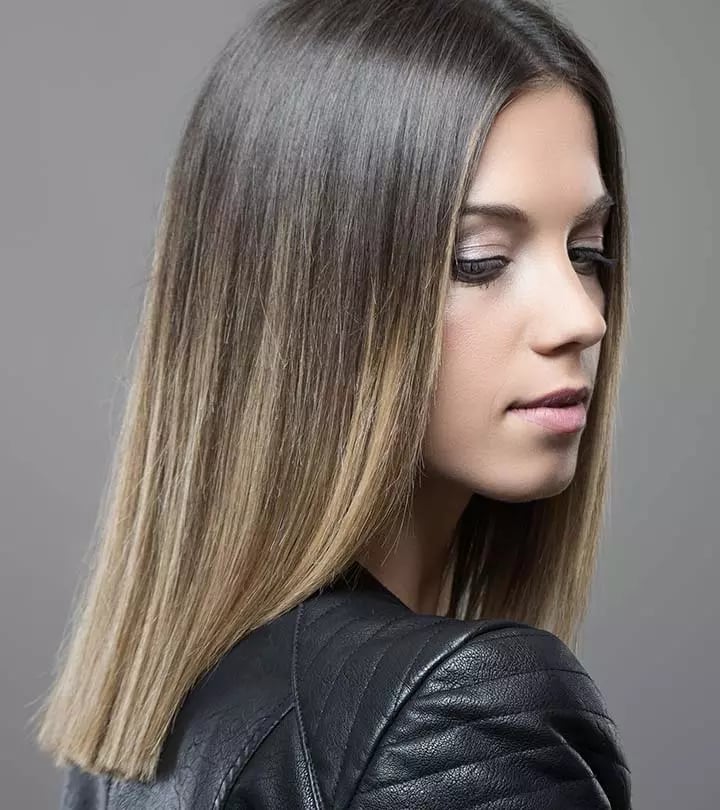
Fine, straight hair shows a balayage best when the transition is deliberate. The dark brown base shifts into lighter blonde tones toward the ends, with the blunt cut holding the line clean. Straight styling keeps the gradient visible from root to tip. Blonde ends need toning every six to eight weeks; trim the blunt ends on the same schedule.
The middle part lets the color sit evenly on both sides. A subtle blend like this one avoids harsh lines, so the grow-out phase stays presentable longer than a traditional highlight. Skip this look if you want a solid color or have wavy hair that won’t show blunt ends clearly.
Blue hair with violet undertones
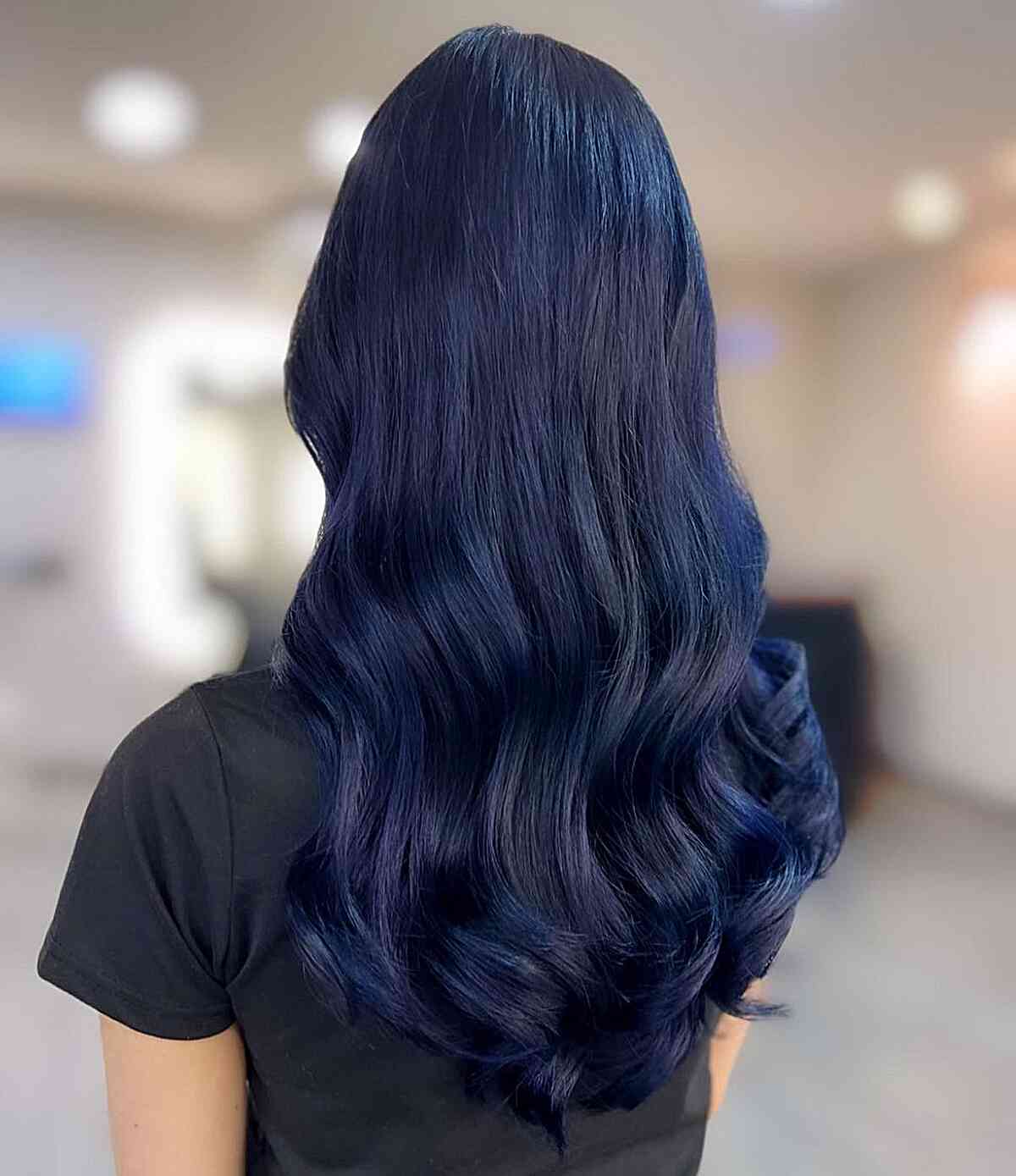
Deep blue sits close to black in low light, but the violet undertones pull it away from a flat navy. Thick, wavy hair catches the richness across the layers, with loose waves breaking up the color into visible shifts. The middle part keeps the look balanced. Blue tones fade faster than standard browns; a color-safe shampoo and a tinted conditioner used monthly keep the hue from turning muddy.
Auburn undertones on a blunt cut dark brown
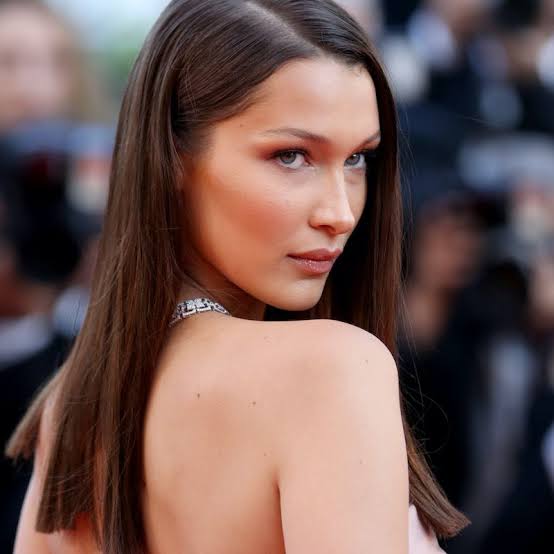
Dark brown with subtle auburn undertones looks warm without tipping into red. The blunt cut gives the color a sharp edge, while air-dried texture keeps it from feeling too neat. A middle part centers the tone evenly. The catch: achieving a subtle auburn undertone takes a skilled colorist; a DIY gloss can land unevenly on dark bases. Not for those who prefer cool tones or have thick, wavy hair that would soften the blunt line.
Ash blonde face-framing highlights, wavy
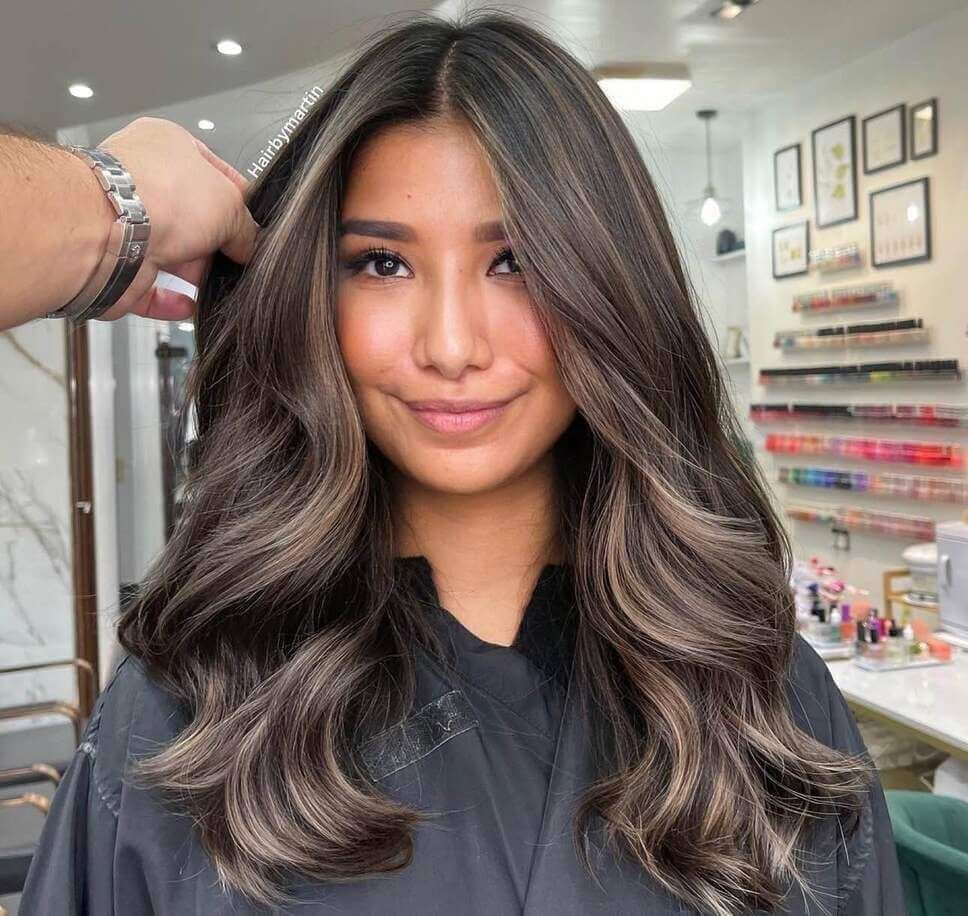
Cool tones need contrast to read clearly, and ash blonde against dark brown delivers that without competing with the base. The balayage technique places the lighter pieces around the face, so the color catches light when you turn your head. Thick, wavy hair holds the wave pattern long enough to show the highlights from every angle. A middle part lets the face-framing sections fall evenly. Ash blonde highlights need toning every six to eight weeks to keep the cool undertone from warming up.
Caramel highlights on layered dark brown, wavy
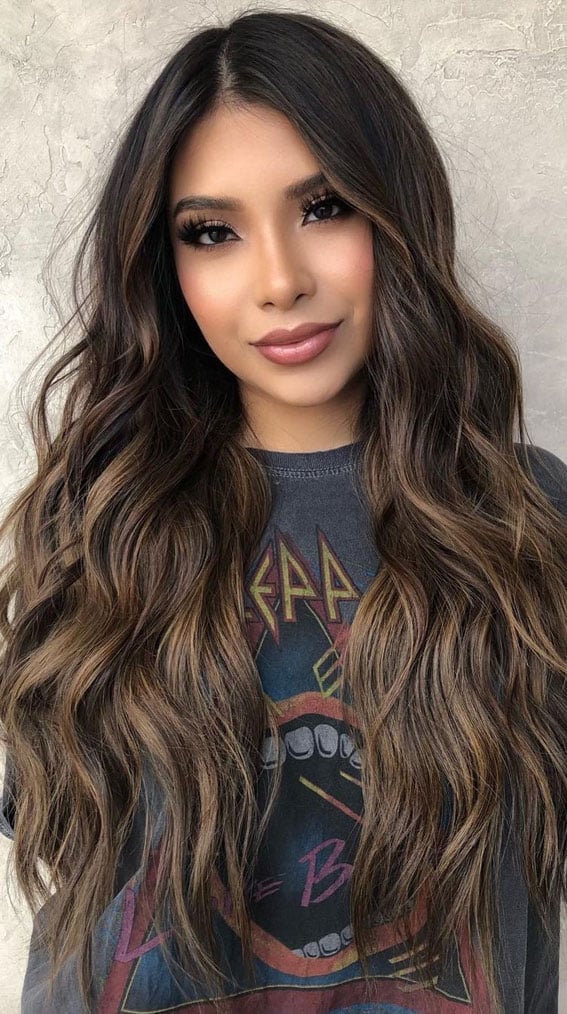
Caramel highlights on dark brown create warmth without shifting the base color. The wavy blowout lifts the layers, letting the lighter pieces sit on top of the waves rather than sinking into the mass. A middle part and layered cut give the caramel room to show at different depths. Fine hair may not hold the wave structure long enough to make the highlights visible throughout the day.
Auburn undertones in air-dried dark brown waves
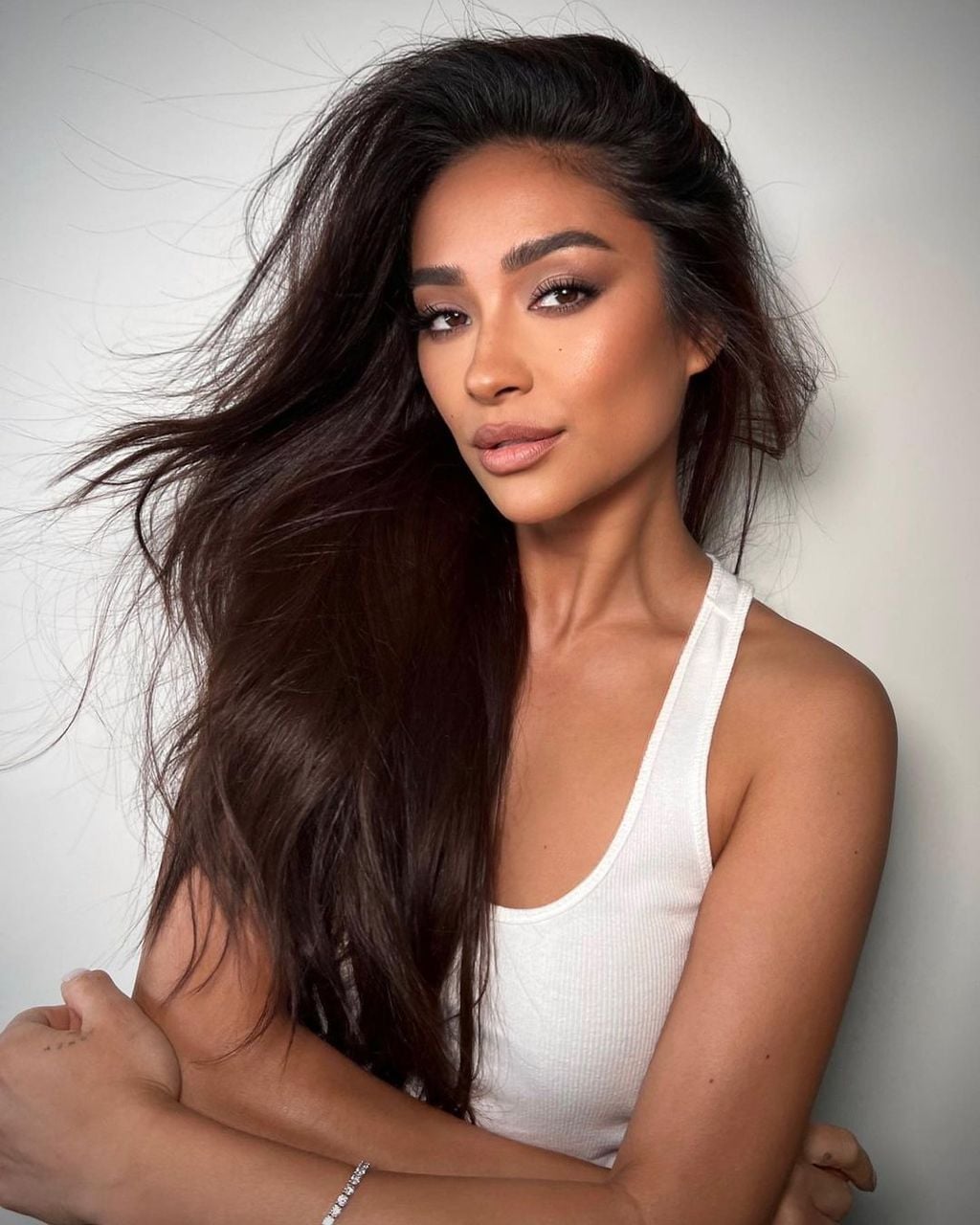
Thick, wavy hair takes well to subtle auburn undertones on a dark brown base. The middle parting lets the color look natural, not applied. You get the warmth without committing to full-on red. Tell your colorist: dark brown base, subtle auburn undertones. Air-dried texture needs minimal product to stay defined. Refresh those auburn tones monthly with a color-depositing conditioner.
Caramel highlights with side bangs on layered hair
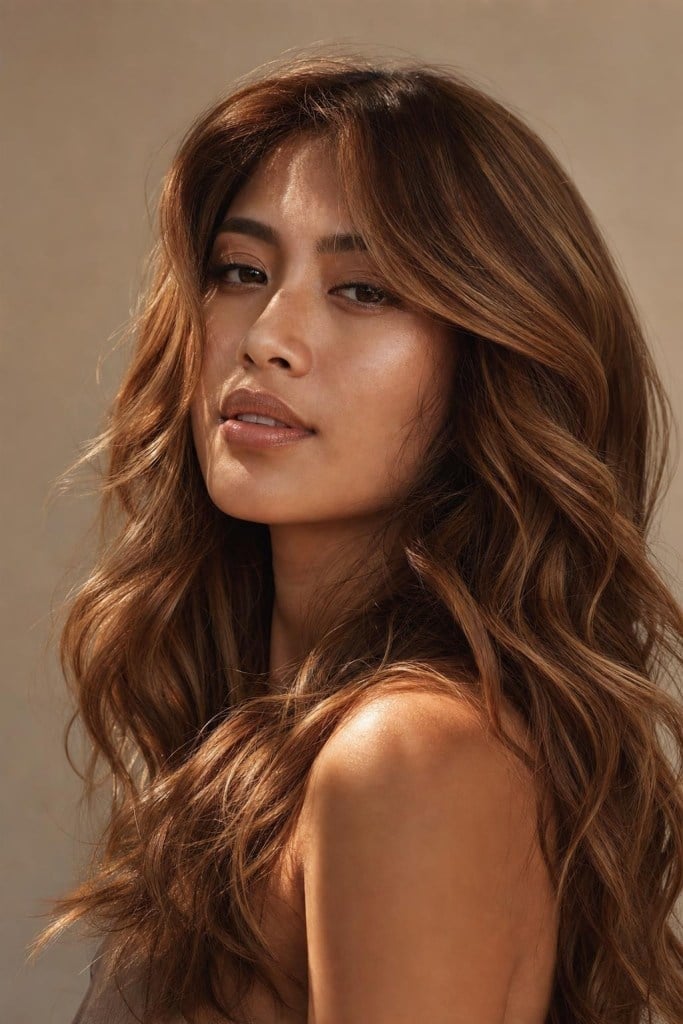
Caramel highlights on a dark brown base with side bangs and a wavy layered cut create a lot of movement. It works for most face shapes, especially if you want soft framing. Pass when you prefer a solid color or your hair is fine and struggles to hold a wave.
Copper highlights with side swept fringe
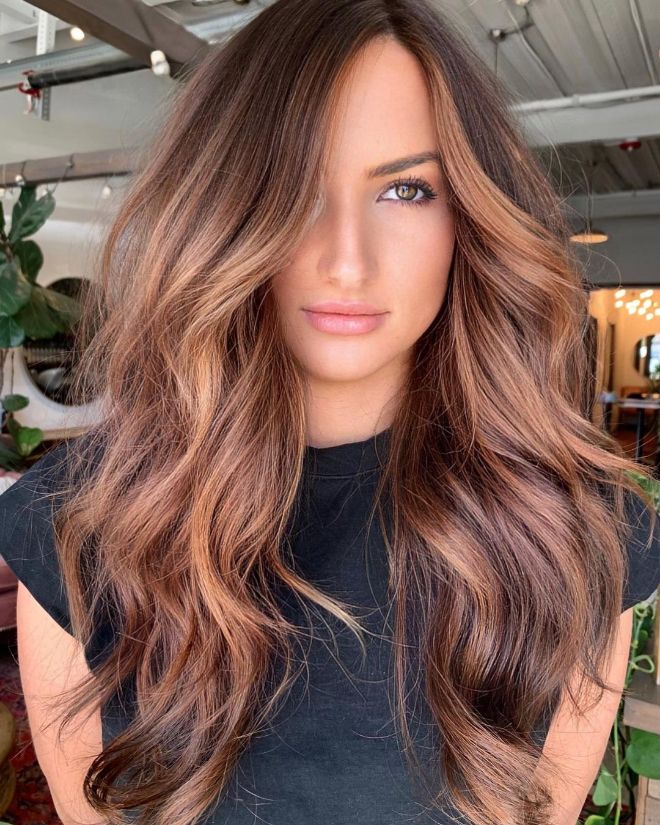
Dark brown with copper highlights and a side-swept fringe suits thick, wavy hair. The soft waves let the copper look warm dimension rather than a stripe. Skip it if you lean toward cool tones or your hair is fine. The catch: copper fades fast. Use a color-depositing conditioner weekly. Tell your colorist: dark brown base, subtle copper highlights, side-swept fringe.
Ash blonde highlights with balayage on dark brown, wavy
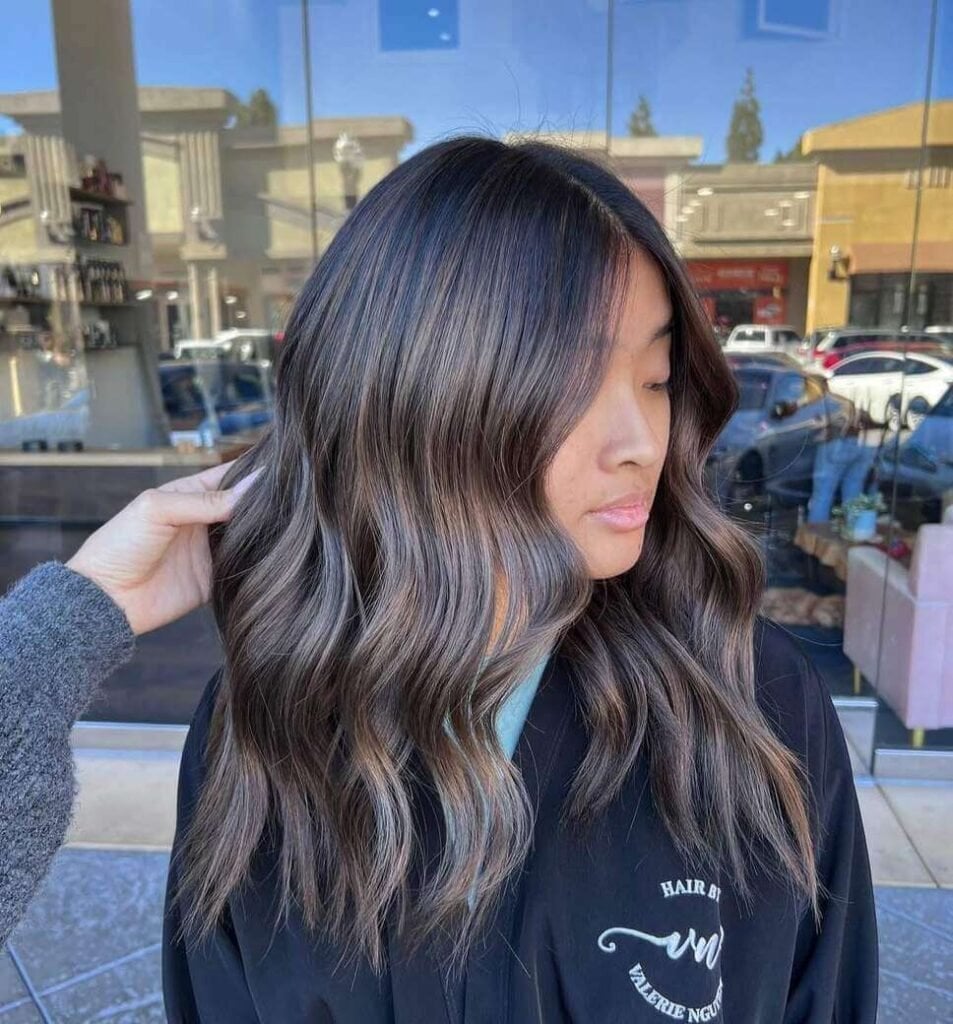
Ash blonde highlights on a dark brown base, applied with a balayage technique, give a natural blend that avoids a harsh regrowth line. The waves help the ash tone look cool dimension. Ash tones need a toning session every six to eight weeks to stay silver instead of muddy.
Rich auburn highlights on dark brown waves, wavy
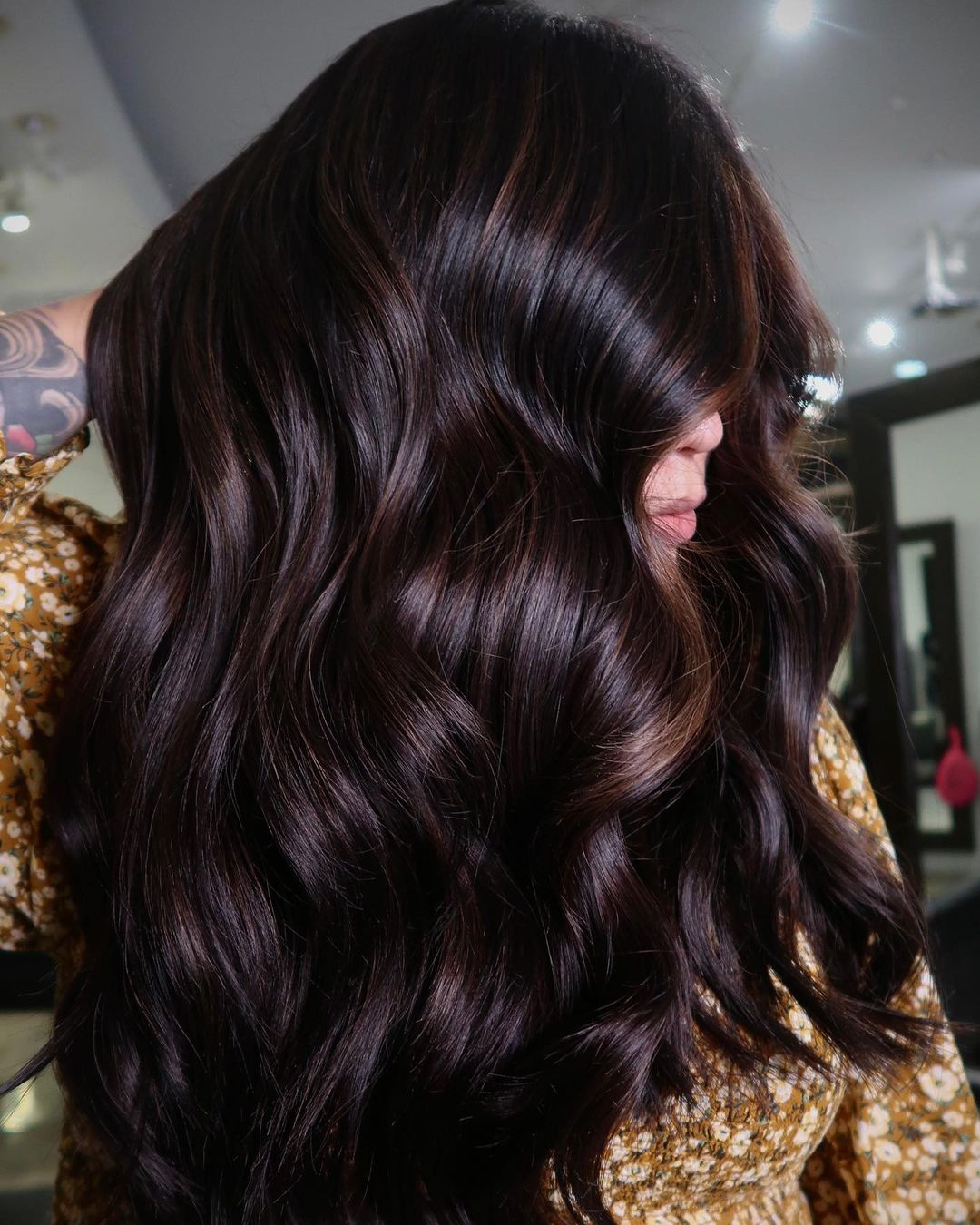
The mistake people make with rich auburn highlights on dark brown is letting them fade to orange. Loose waves show off the multi-dimensional color, but the warmth requires maintenance. Skip it if you prefer cool tones or your hair is fine. The fix: use a color-depositing conditioner weekly to keep the auburn from turning brassy. Tell your colorist: dark brown base, subtle auburn highlights. The look stays grown-up when you refresh the tone regularly.
Final Thoughts
Pick the one that matches your morning routine and your hair’s natural temperament.
- Fine hair: caramel balayage adds movement without weight.
- Ten minutes in the morning: air-dried auburn undertones.
- Cool base that pulls brassy: ash blonde highlights and a purple shampoo once a week.
- Thick texture that needs control: deep black with curtain bangs.
Dark hair offers endless rich possibilities.
