

You walk into the salon with a dark brown base and a vague idea of something lighter. The colorist pulls up a photo of caramel sweeping through waves, and you realize that balayage is the technique you needed all along, low-commitment on the roots, high-impact on the ends.
26 examples cover the spectrum from warm caramel to cool ash, on textures from fine to thick. That is why Striking Balayage Hair 2027 fill so many saved boards: the grow-out is graceful, the tone can shift with the seasons, and you do not need a full head of foils to get there.
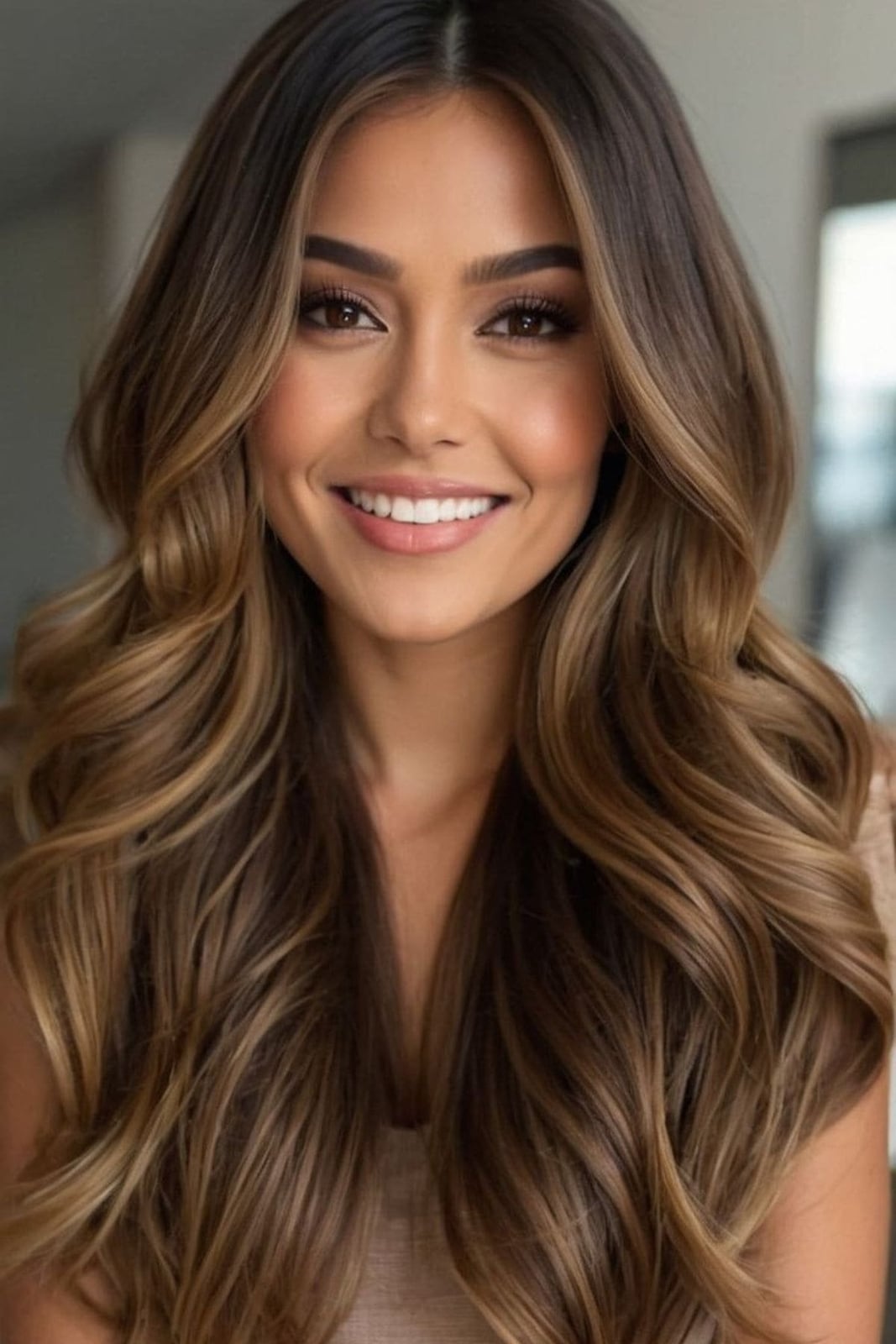
Caramel balayage on a dark brown base with soft waves
Dark brown base, caramel balayage, and a middle part that lets the color breathe. The soft waves catch every tone. This one works best on thick, wavy hair starting at the collarbone. It suits those who want subtle blending over very bright, high-contrast highlights. Tell your colorist: dark brown base with smooth caramel balayage. A trim every six to eight weeks keeps the blend from turning into a grown-out stripe. The blowout adds volume, but the real payoff is how the caramel sits against the dark base.
Grown-up balayage for a dark brown base
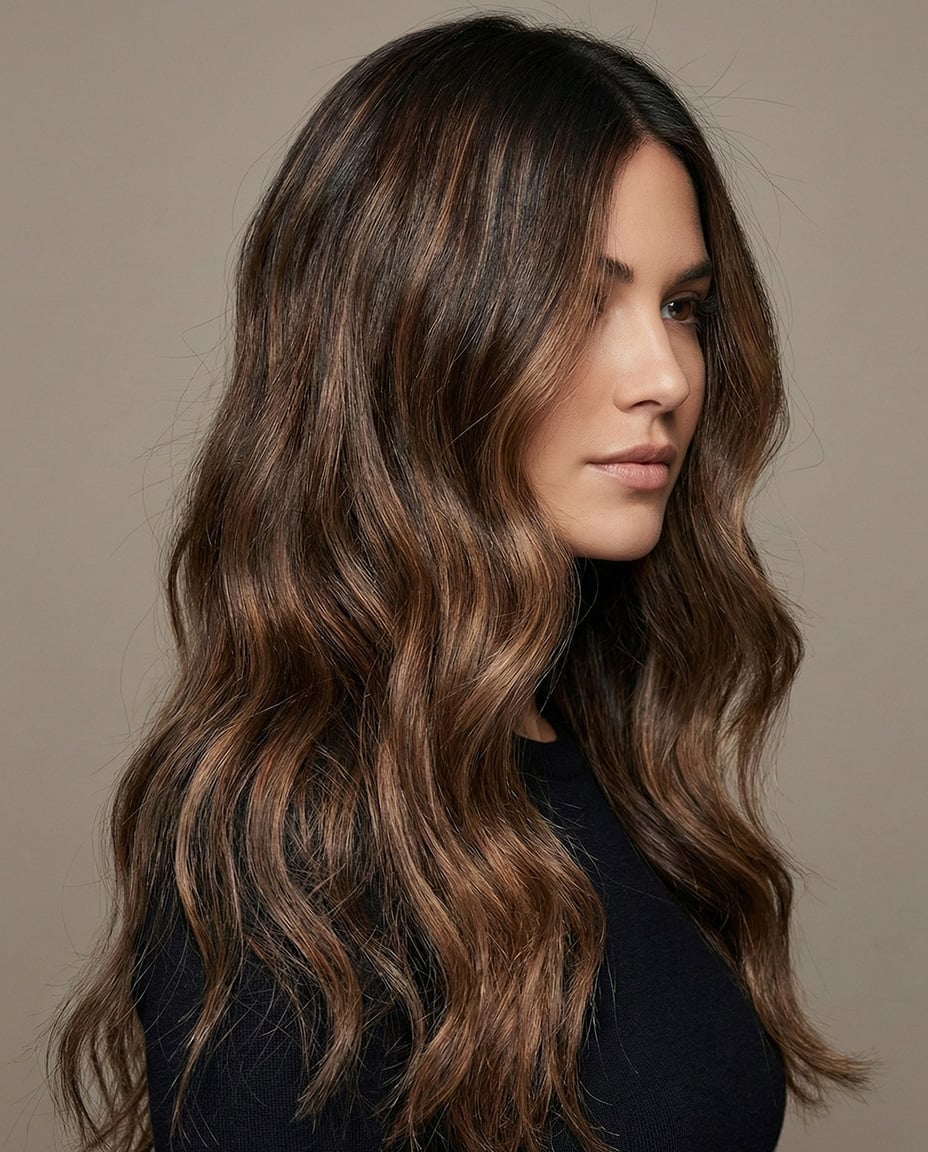
Compared to the first look, this one leans warmer and looser. The side part shifts where the light lands. Thick, wavy hair with a side parting handles this best. Skip it if you have very fine hair that struggles to hold waves. Regular toning every six to eight weeks maintains the warmth. The loose waves do the rest.
Two tones: caramel and blonde balayage on dark brown
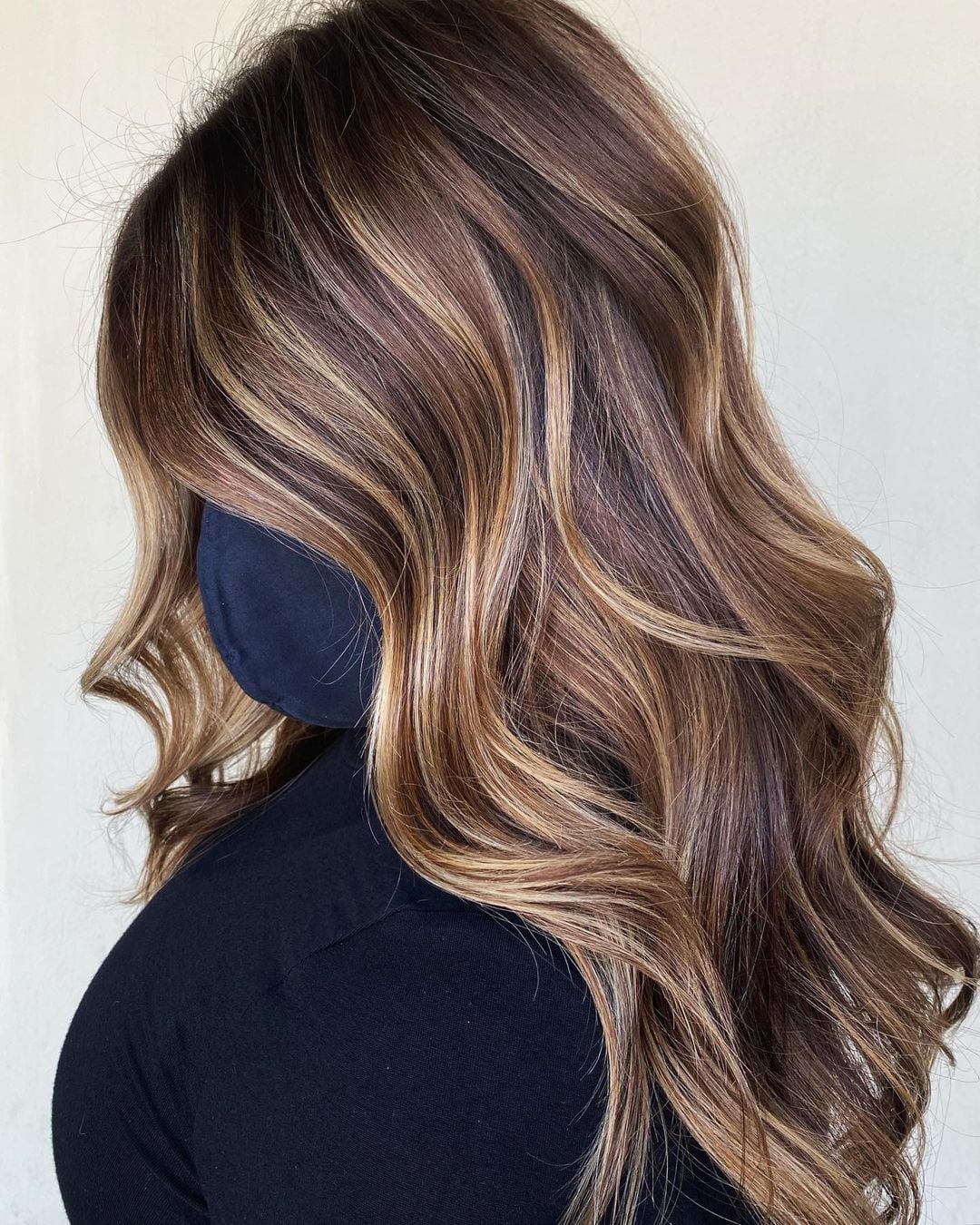
Two tones on one dark brown base. The caramel sits closer to the root, the blonde hits the ends. Thick, wavy hair at least collarbone length carries the contrast best. For a single highlight tone, this is not the right choice. Book it as: dark brown base with caramel and blonde balayage. A trim every six to eight weeks keeps the layers fresh.
Layers with caramel and blonde tones
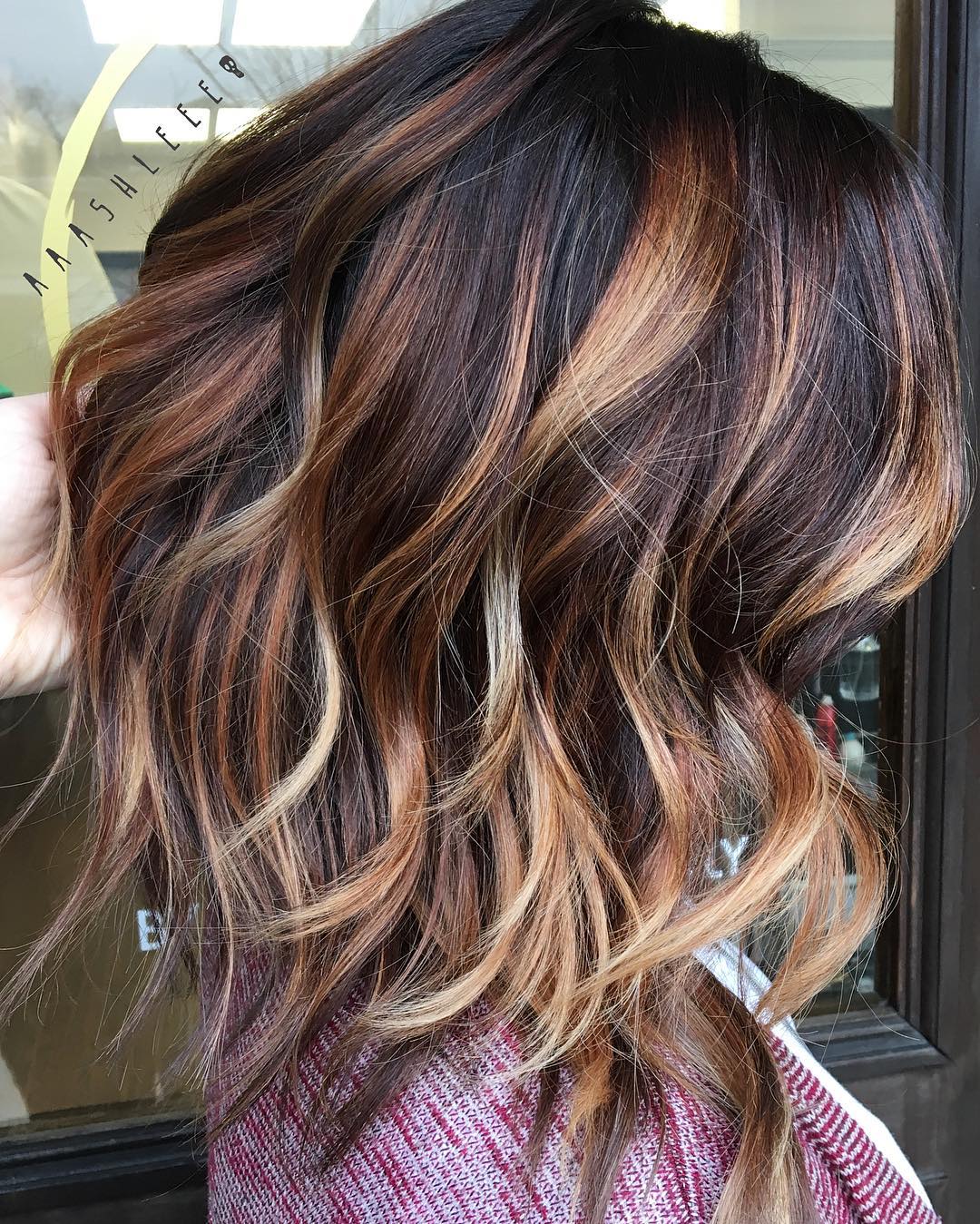
Wondering if layers work with two-tone balayage? They do. The side part and front framing let the caramel and blonde land where they show most. Thick, wavy hair at the collarbone or longer is the safe bet. Skip it if you have very fine hair that needs significant volume. Ask your colorist for: dark brown base with caramel and blonde balayage, layered cut. Blow-dry with a round brush to set the shape.
Lighter caramel tones from balayage
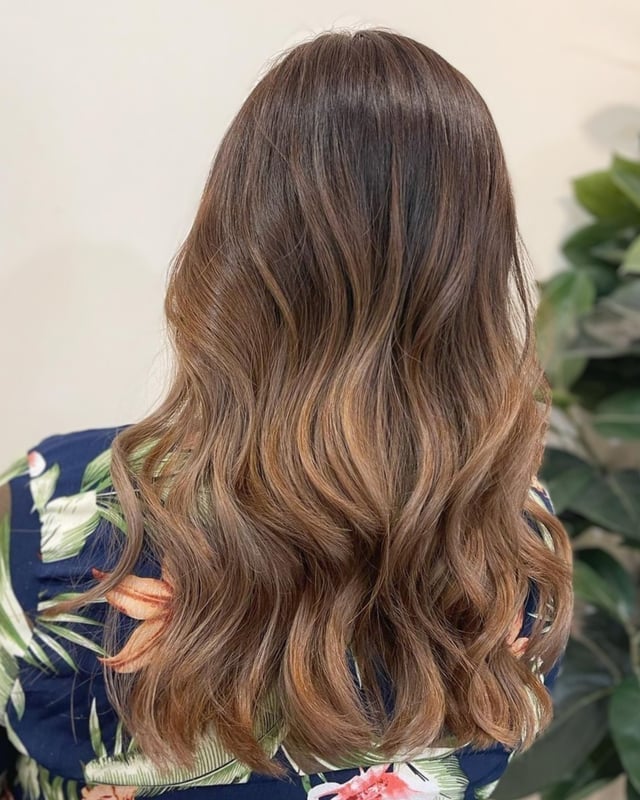
Back view, and the payoff is clear. The dark brown base fades into lighter caramel tones without a hard line. Thick, wavy hair carries the gradient naturally. For a cooler tone, consider a different approach. A sea salt spray adds texture. Tone every six to eight weeks to keep the caramel from turning brassy.
Easy balayage for thick, wavy hair
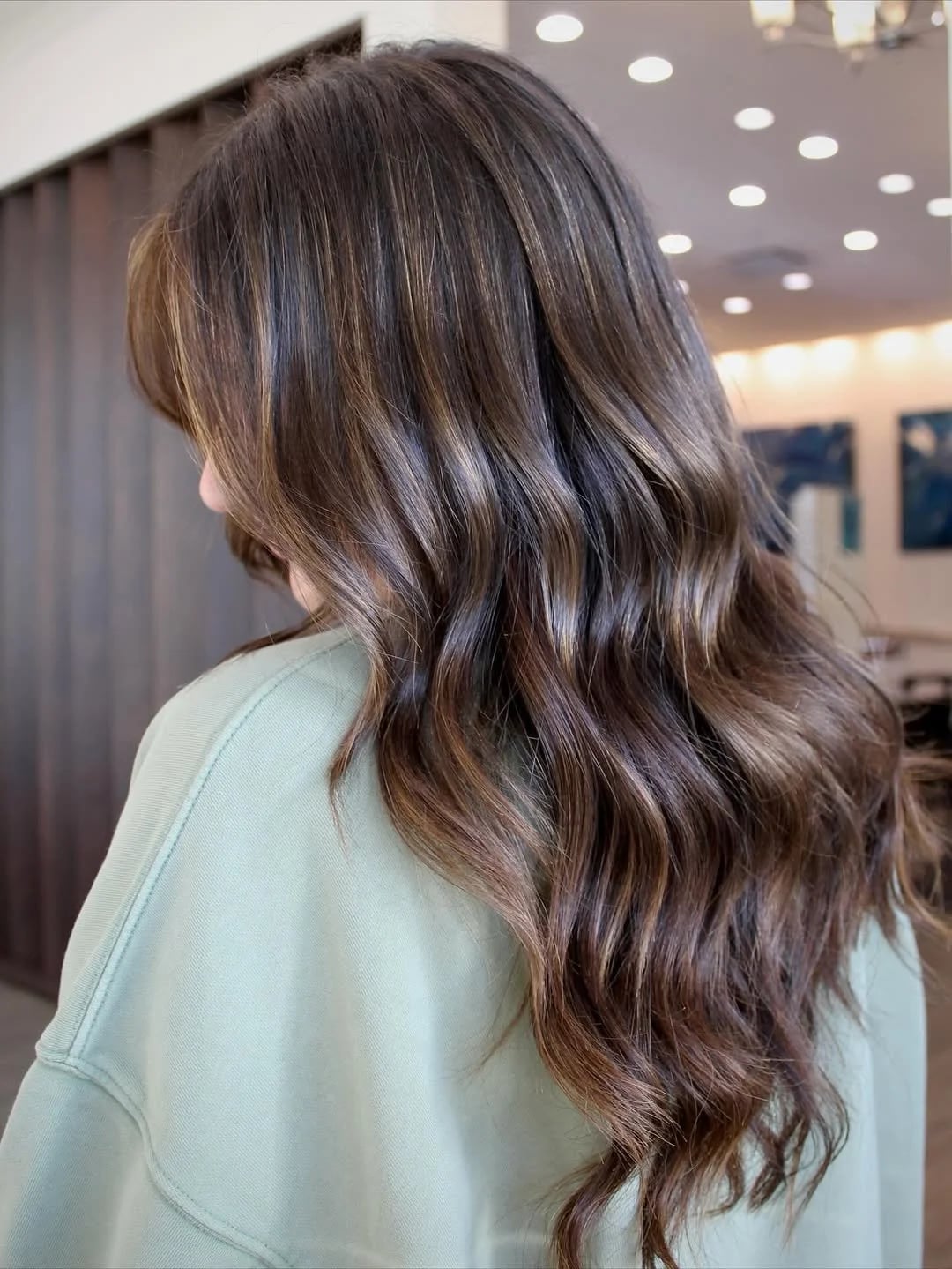
What exactly do you say to get caramel balayage that actually looks like it belongs, not like it landed? The trick is in the base: a dark brown foundation with caramel balayage highlights painted freehand through the mid-lengths and ends. The wavy texture here does the blending for you. Tell your colorist: dark brown base with caramel balayage highlights, wavy style. Skip if you prefer a sleek, straight finish. The soft waves are what sell the dimension.
Long, blended layers with caramel balayage
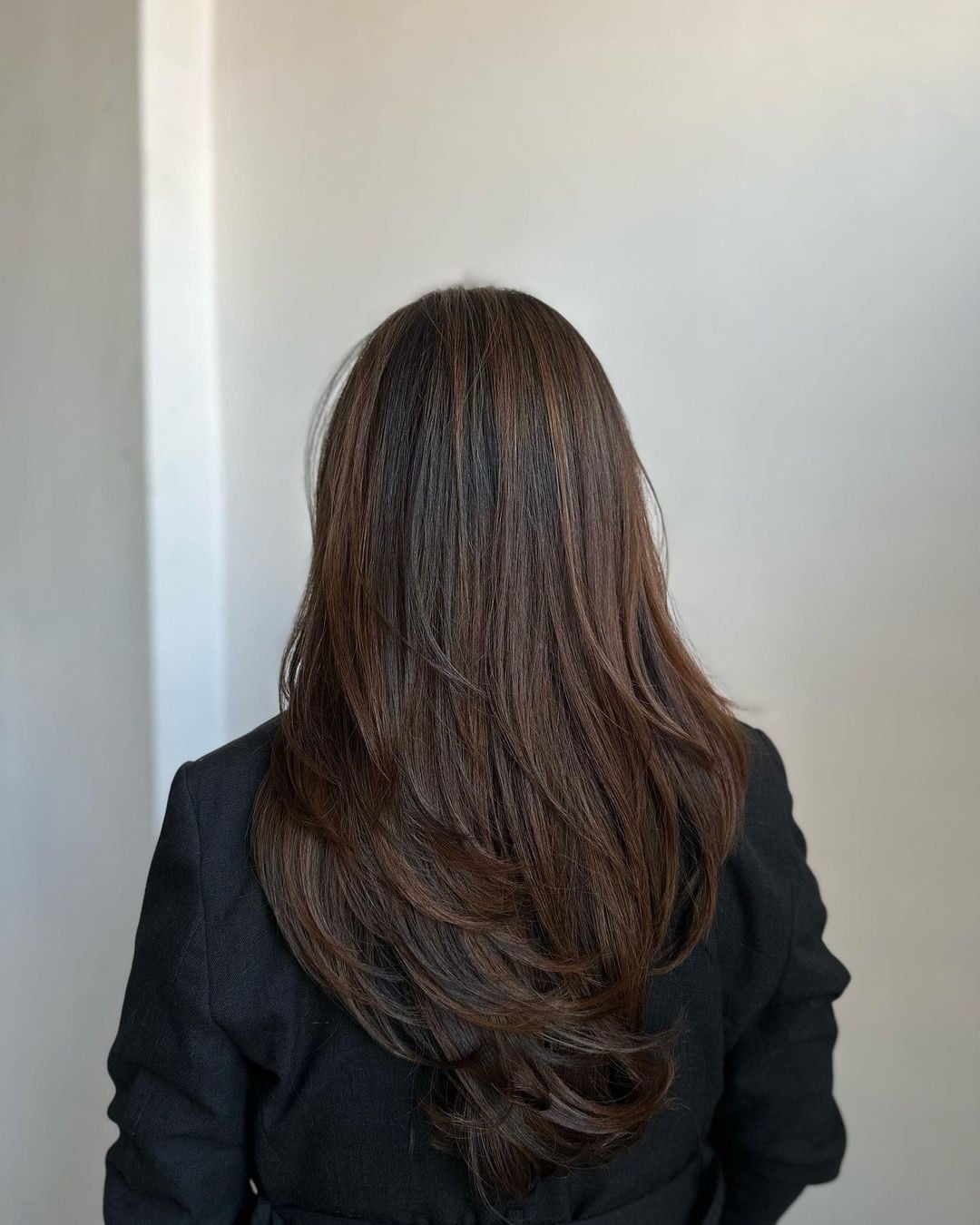
A middle part and a blowout are the fastest way to make subtle caramel balayage look intentional. The dark brown base stays rich at the root while the lighter pieces catch light along the long layers. Short sentence. The wavy, thick texture holds the shape without product buildup.
Upkeep is straightforward: use a heat protectant before any blow-dry. Without that rhythm, the ends start to look see-through. Not dramatic, just dull. The color itself grows out softly, so you can stretch salon visits to ten or twelve weeks if you want.
A bolder take on balayage with copper tones
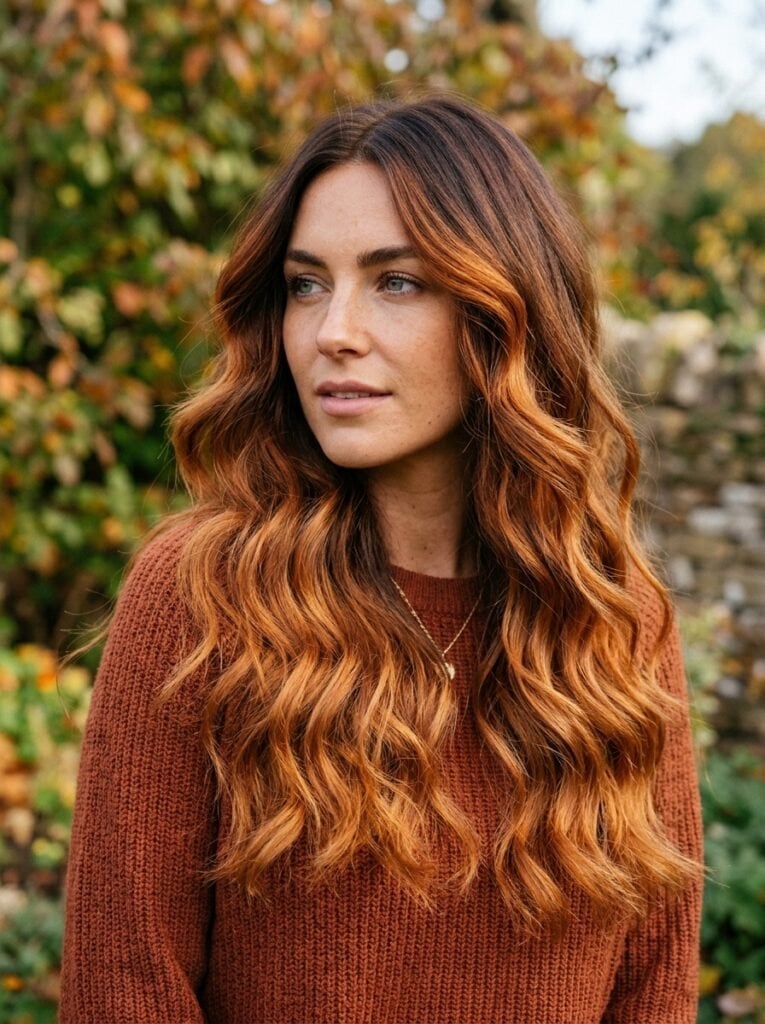
Standard caramel balayage plays it safe. This one does not. The dark brown base shifts into vibrant copper tones, not warm blonde, not brown. The balayage technique places the copper through the ends, so the root stays dark and the transition looks grown-in. The wavy, thick texture and loose blowout give the copper room to move. Copper fades fast, plan for a toning gloss every four to six weeks, or the vibrancy turns brassy.
Waves with caramel balayage and curtain bangs
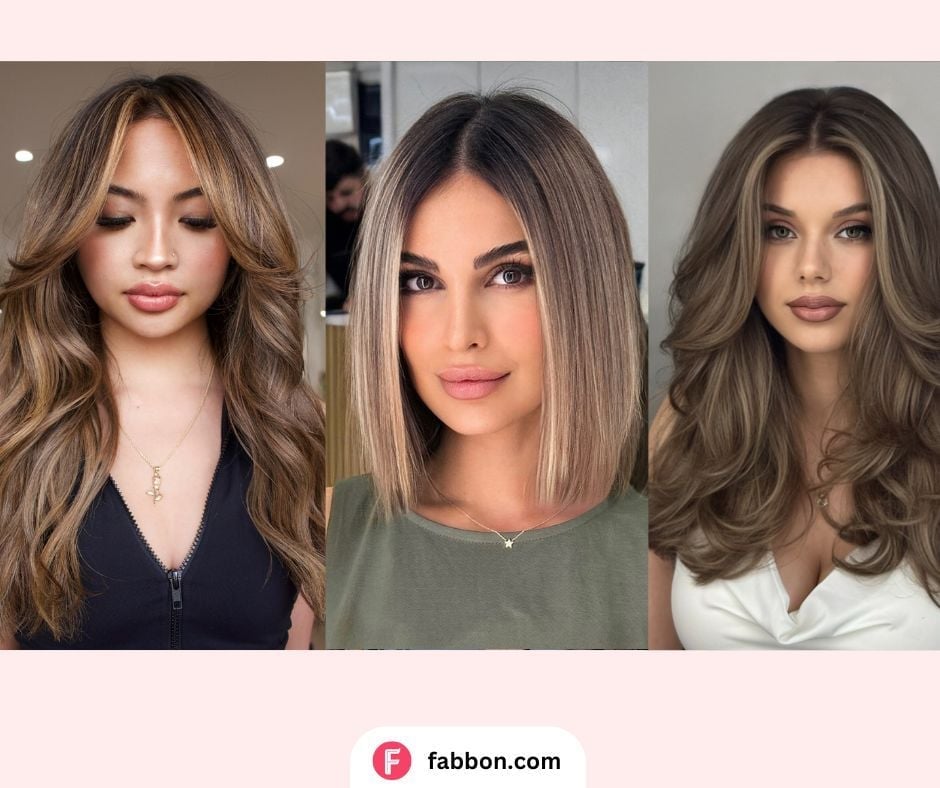
The curtain bangs here do not fight the caramel balayage; they frame it. The dark brown base stays deep at the root, and the caramel pieces land right where the bangs meet the rest of the hair. That placement makes the face-framing feel deliberate, not accidental. The wavy blowout ties it together. This works for work, for dinner, for a Tuesday. Tell your colorist: dark brown base with caramel balayage, curtain bangs. Blow-dry the bangs first with a small round brush, or they will fall flat by noon.
Lighter balayage transition on dark brown
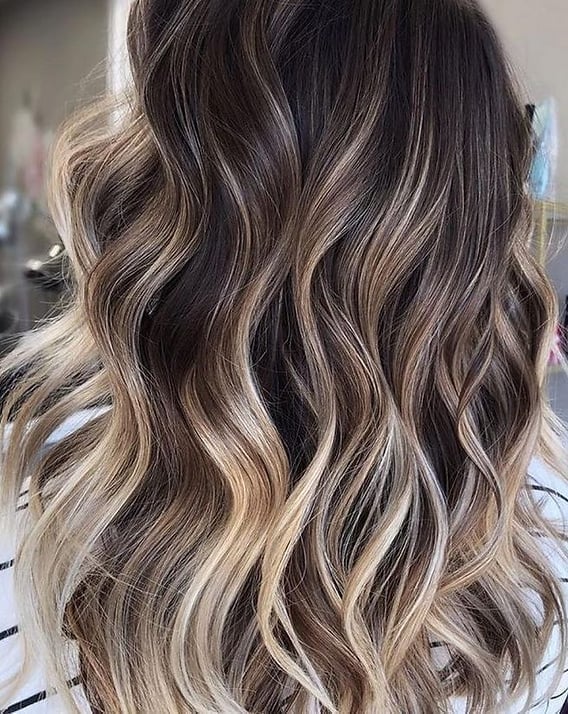
The technique here is a gradient, not a highlight pattern. The dark brown base lightens gradually into blonde balayage, with no hard line where one shade stops and the next starts. The wavy blowout enhances the movement, making the transition look like it happened outdoors, not in a bowl. Thick, wavy hair carries this kind of blend well because the texture scatters the light. Skip if you prefer cooler, ashy tones. This leans warm. The color grows out softly, so you can wait ten to twelve weeks between appointments.
Natural blonde effect on wavy dark hair
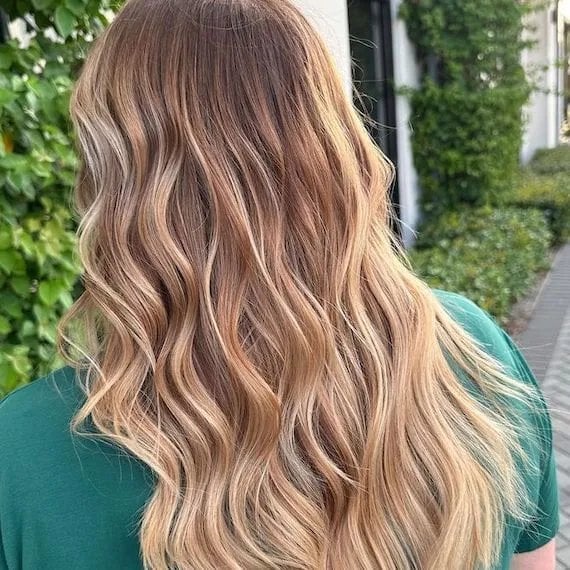
Dark brown base meets soft blonde highlights in a transition that looks grown, not painted. The wavy blowout carries the color from root to end without a hard line. Thick, wavy texture holds the shape best. The volume keeps the blend visible. This look is for those who want subtle spread rather than high contrast. Tell your colorist: dark brown base with blonde balayage, relaxed blowout. Toning every six to eight weeks keeps the blonde from warming up.
Blonde highlights on dark brown with face-framing
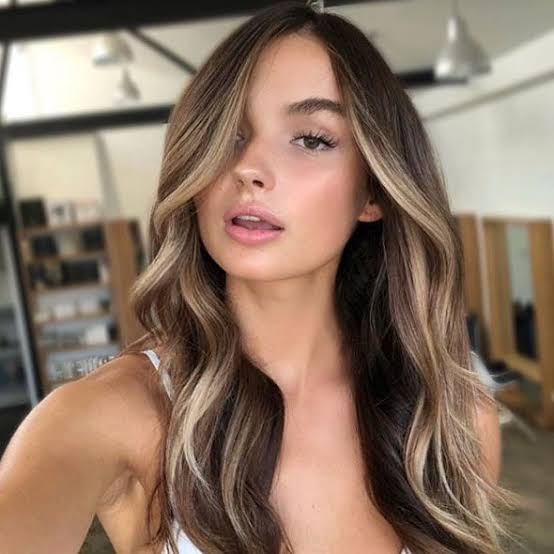
Blonde pieces sit closer to the face here, which pulls attention upward without needing full highlights. The dark brown base stays deep, so regrowth is gentle. Waves give the color movement, and a texturizing spray keeps them from falling flat by midday. Book it as: dark brown base with blonde balayage, face-framing highlights.
Beautiful contrast with ash blonde balayage, close-up take
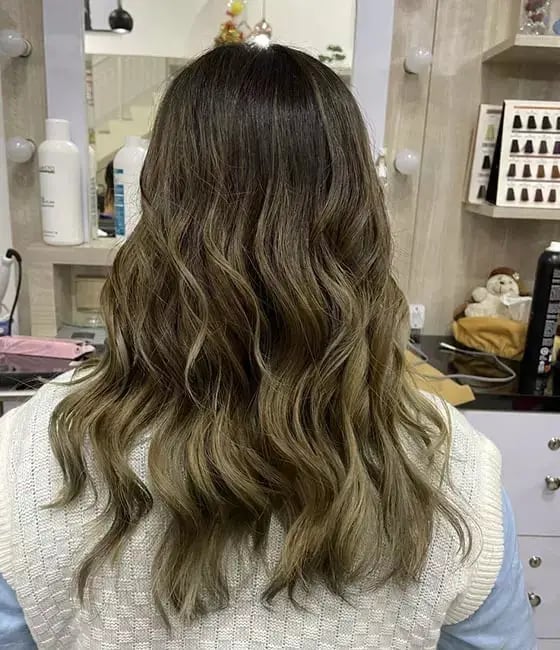
Dark brown with ash blonde reads cooler than caramel, which means it works differently on different natural bases. The dark brown base stays deep at the root while the ash blonde balayage lifts through the mid-lengths and ends. Wavy texture and a middle part keep the contrast from looking striped. Thick hair handles the lift best. Not for you if your natural base pulls warm and brassy quickly. Ask your colorist for: dark brown base with ash blonde balayage, wavy style. A purple shampoo once a week keeps the ash from drifting beige.
Ash blonde balayage on a dark brown base
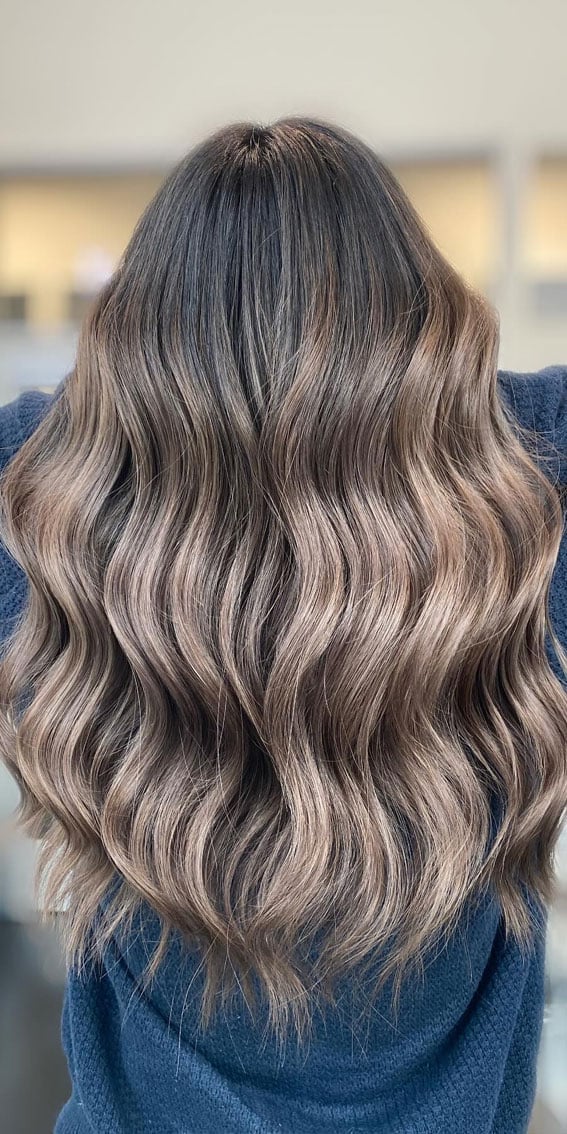
Two tones sit on one head without fighting. The dark brown base grounds the look, while ash blonde lifts from the mid-lengths down. The wavy blowout is the right call here. It lets the blended tones land softly rather than in stripes. Thick, wavy texture gives the color enough surface to read. A heat protectant before blow-drying keeps the ends healthy.
Ash blonde balayage for dimension on dark hair
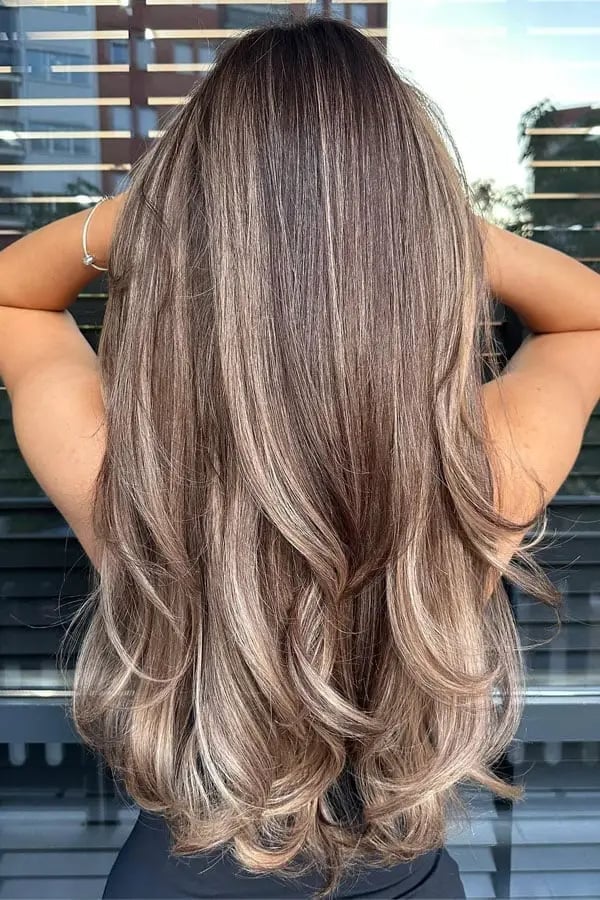
Ash blonde applied as a balayage on dark brown creates depth without weight. The waves break up the color, so no two sections look flat. Thick, wavy texture helps here, fine hair might need more lift to show the contrast. Pass when your hair struggles to hold a wave; the dimension depends on texture. Tell your colorist: dark brown base with ash blonde balayage, wavy style. A texturizing spray extends the wave life between washes.
Subtle ash blonde highlights for dimension
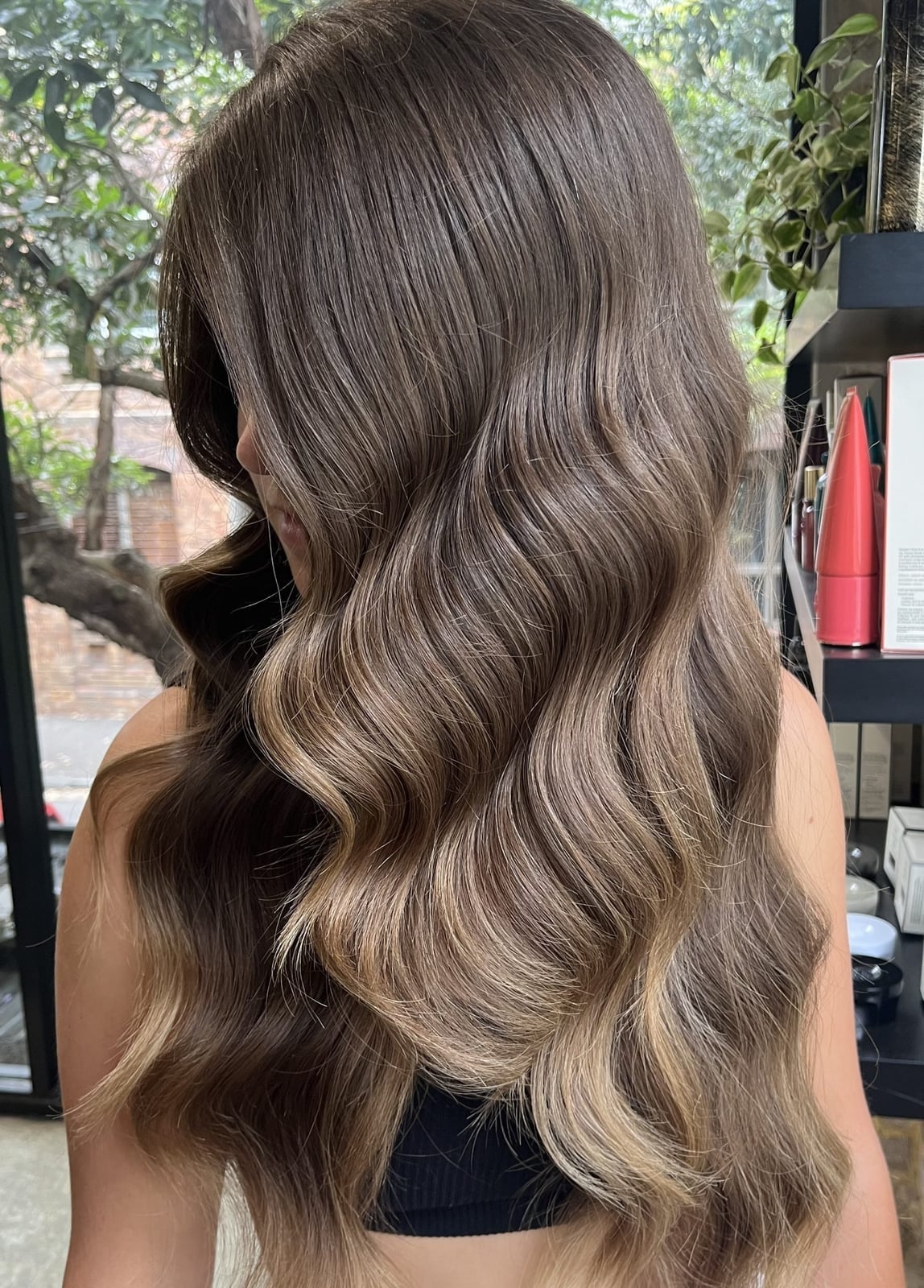
Lighter pieces woven through a dark brown base, but without the warm lift of a caramel version. The ash tone keeps it cool and understated. Thick, wavy hair catches the blend best; the color sits in the wave, not on top of it. The catch: ash on a warm natural base needs a colorist who knows how to neutralize without going flat gray. Warmer tones that catch the sun are a different look. Toning every six to eight weeks keeps the silver from turning brassy.
Low-maintenance ash blonde balayage
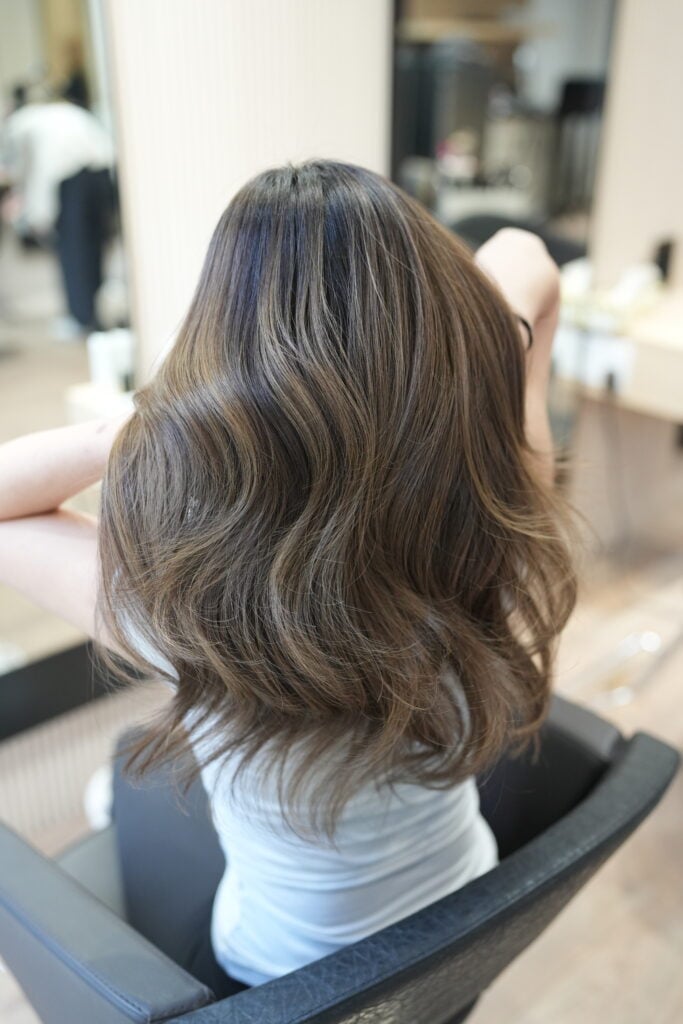
A dark brown base with ash blonde balayage, blended so the root line never shouts for attention. The middle part splits the color evenly, so the lighter pieces sit on both sides without a heavy face-framing stripe. Thick, wavy texture helps the ash look dimensional rather than flat.
The upkeep rhythm is what sells it. No monthly root appointment needed. Ask your colorist for: dark brown base with subtle ash blonde balayage.
High contrast ash blonde balayage on fine hair
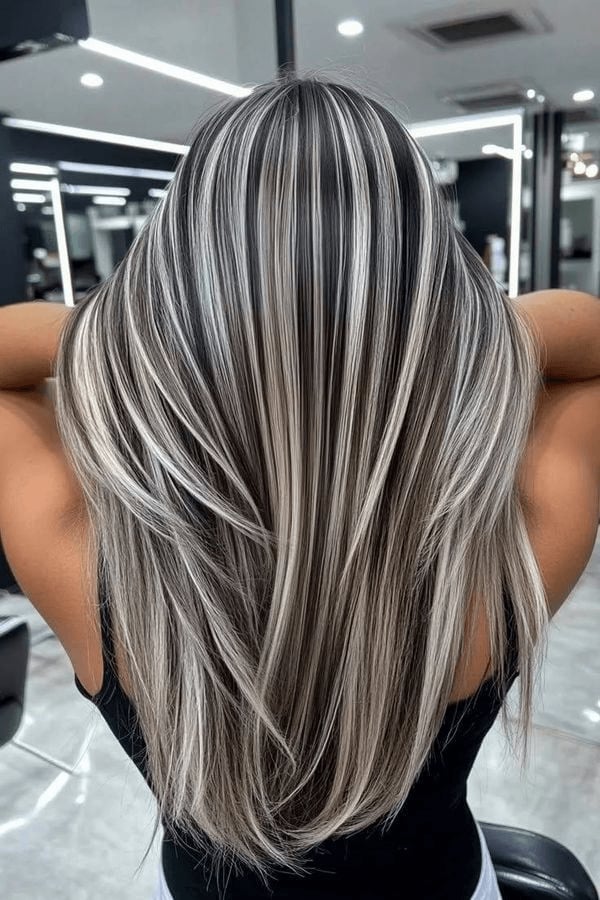
Ash blonde against a deep brown base, but the difference is deliberate. The lighter pieces lift several levels, so the contrast reads clearly even from across the room. Fine, wavy texture holds the separation without needing product. The trade-off: the lighter sections show regrowth faster and need a toner every four to six weeks to stay cool. This look requires precise placement and regular upkeep.
Ash blonde balayage with darker roots on fine hair
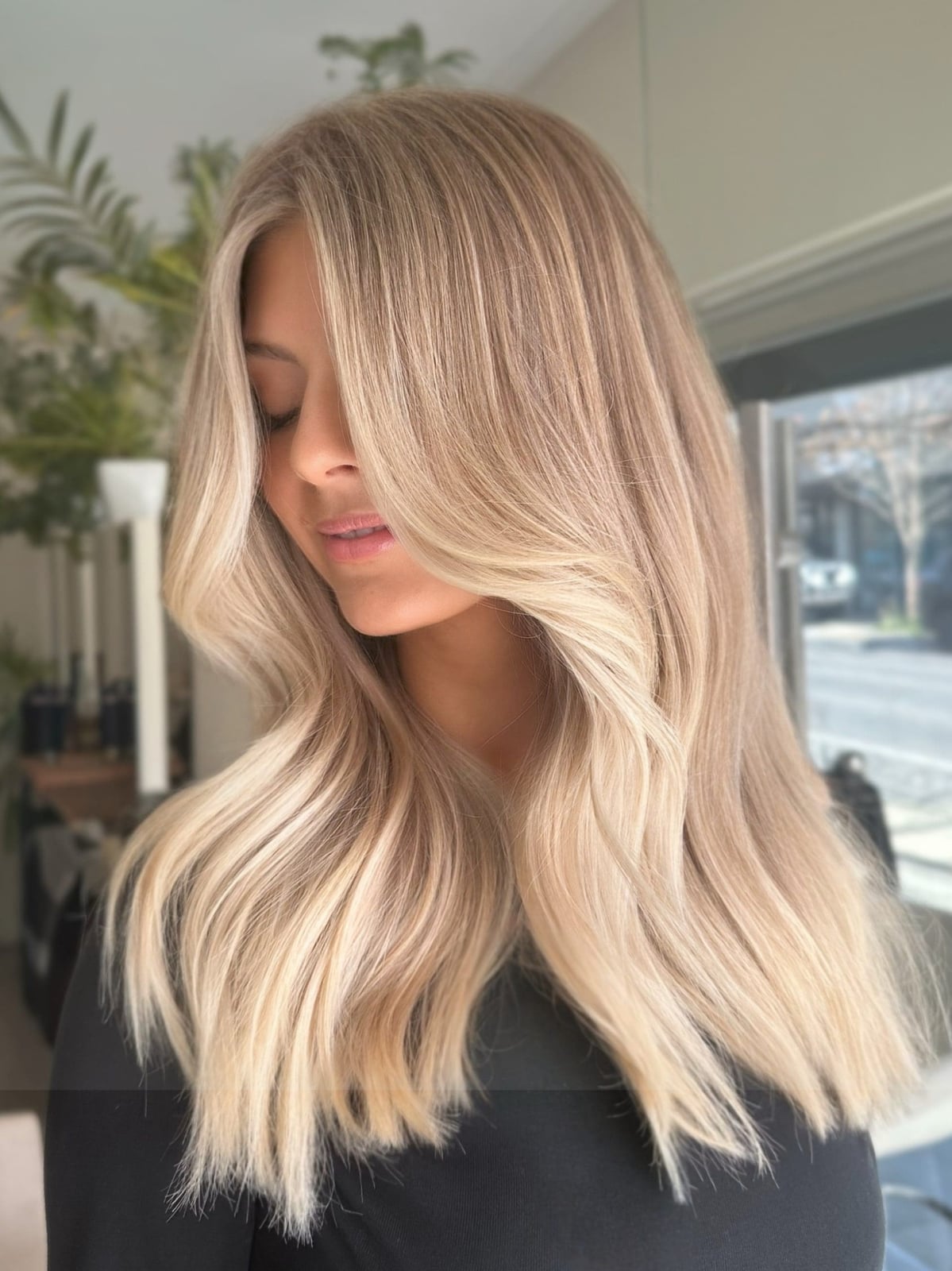
The darker root is the anchor here. Fine, wavy texture lets the ash blonde balayage sit lightly through the mid-lengths without overwhelming the fine density. A side part shifts the weight, so the lighter pieces fall forward on one side. The root color is intentional. It gives the eye a place to land before the silver starts. Ask your colorist for: ash blonde balayage with darker roots. A smoothing serum on damp hair keeps the blowout sleek without weighing down the ends.
Dark ash blonde base with lighter ash tones
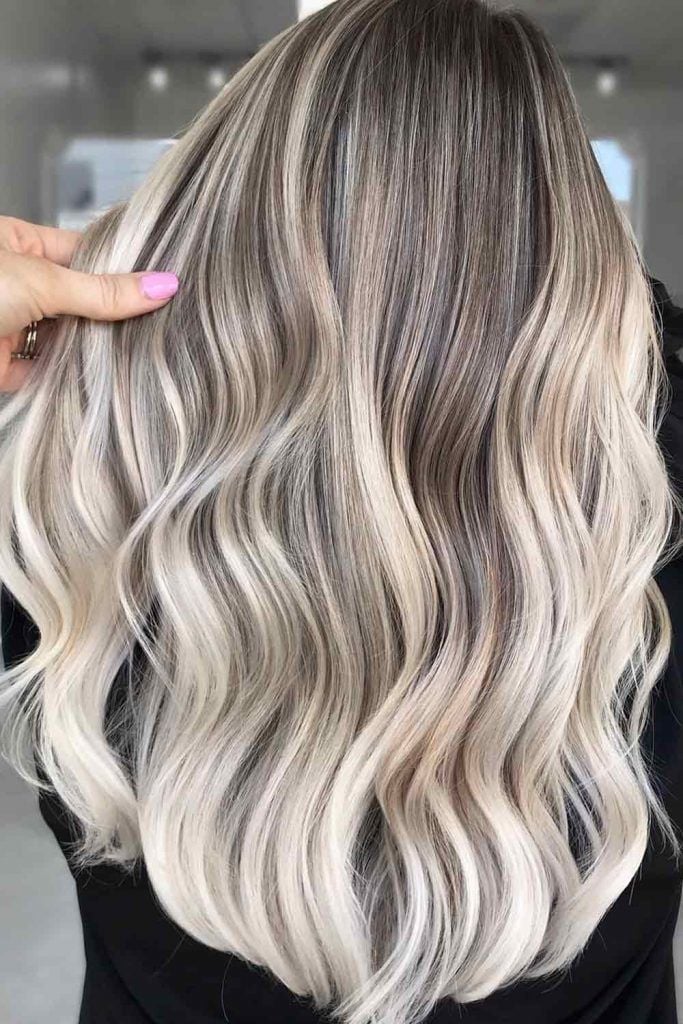
Two blonde tones, one darker and one lighter, both in the ash family. The base sets the depth; the balayage lifts a few levels above it, so the result is tonal and not streaky. Thick, wavy texture makes the separation visible. The lighter pieces sit in the wave, not on top. The rule of thumb: the base must be light enough that the balayage can lift without hitting orange. A colorist starts with the darker tone, then paints the lighter pieces freehand.
Lighter ash blonde balayage on dark blonde
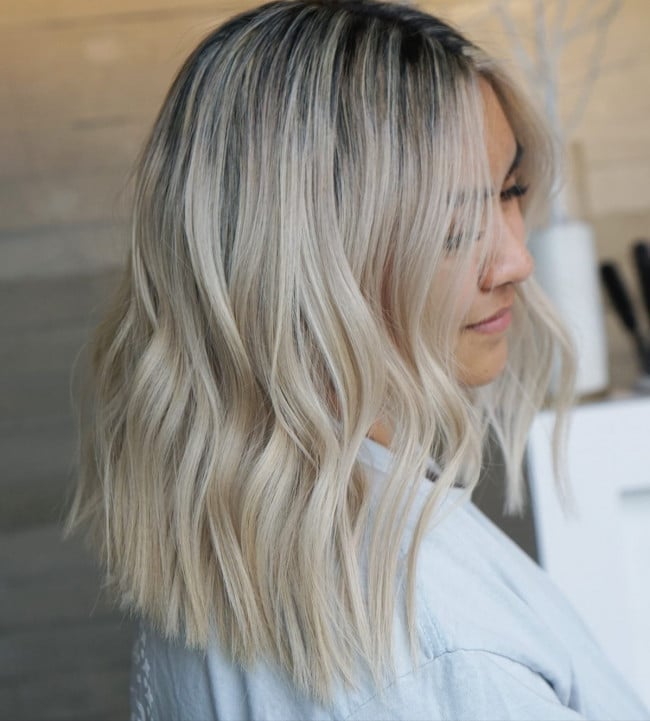
Ash blonde contrasts with a dark blonde canvas. Where warm caramel would go golden, these cooler highlights stay muted and modern. The technique keeps color off the root, so the grow-out looks like shadow, not neglect. Fine, wavy hair at least collarbone length takes the lift best. A very dark base requires multiple sessions to keep the ash from turning muddy. Ask your colorist for: dark blonde base with ash blonde balayage, soft layers. A volumizing mousse adds day-two body without re-washing the whole head.
Lighter blonde highlights on dark blonde base
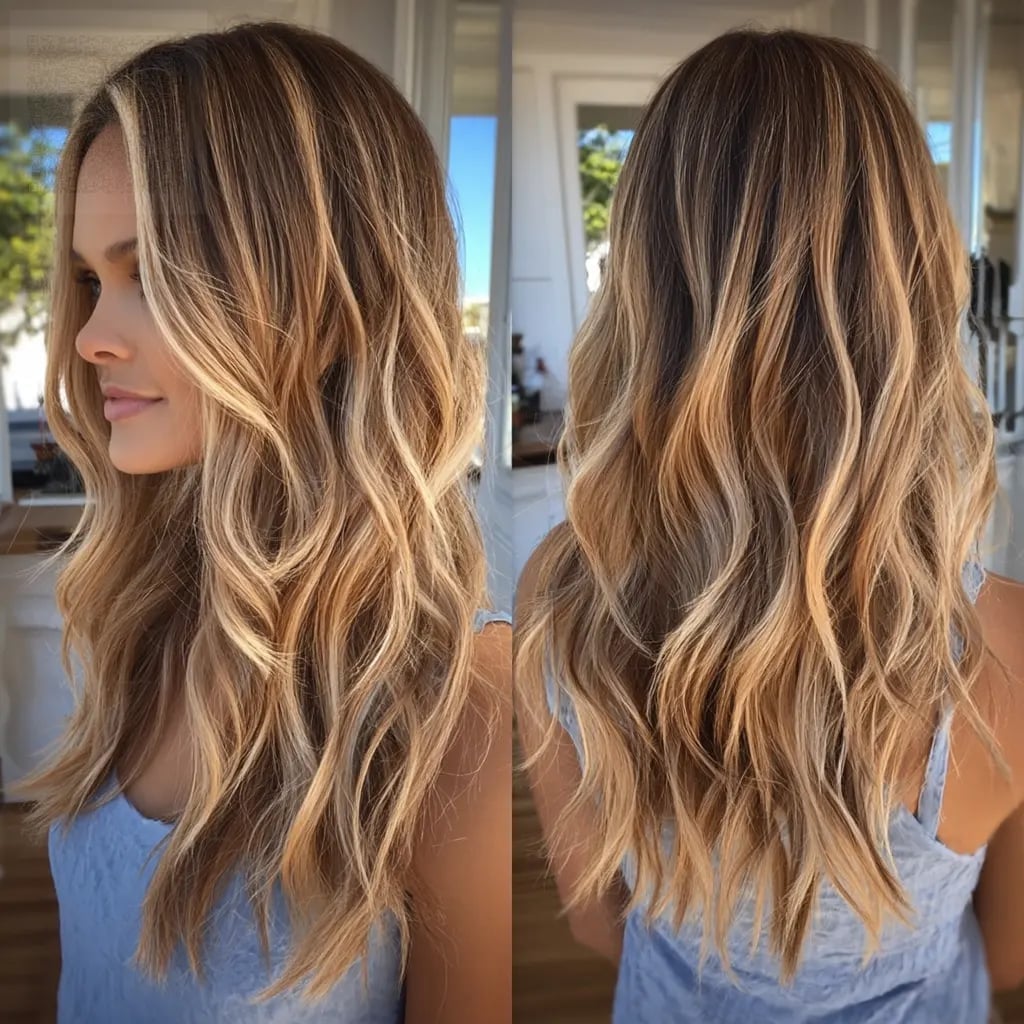
This one is honest about its upkeep. The dark blonde base and lighter blonde highlights need a toner refresh every six to eight weeks, or the brightness slips beige. Thick, wavy hair holds the blend open and prevents the lighter sections from pooling into a single stripe. A trim at the same interval keeps the layers from stringing out. The balayage is painted low and wide for a natural blend. Fewer foils, less time, same result.
Face-framing blonde money piece on dark blonde
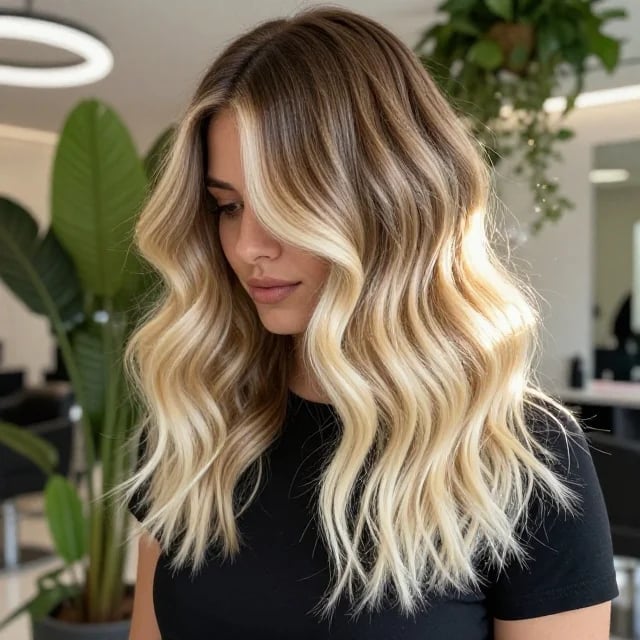
A face-framing section this light has a trade-off. The contrast around the face demands a toner appointment every four to six weeks, or it warms to brass. The catch: if you skip that appointment, the framing pieces look like grown-out highlights instead of a planned money piece.
Thick, wavy texture keeps the lighter sections from looking sparse. It works best if you want a bold face-framing effect; the brightness is the main feature. Ask your colorist for: dark blonde base with lighter blonde highlights, face-framing money piece. The rest of the balayage stays low and blended, so only the front sections stand out.
Lighter balayage from dark to lighter blonde
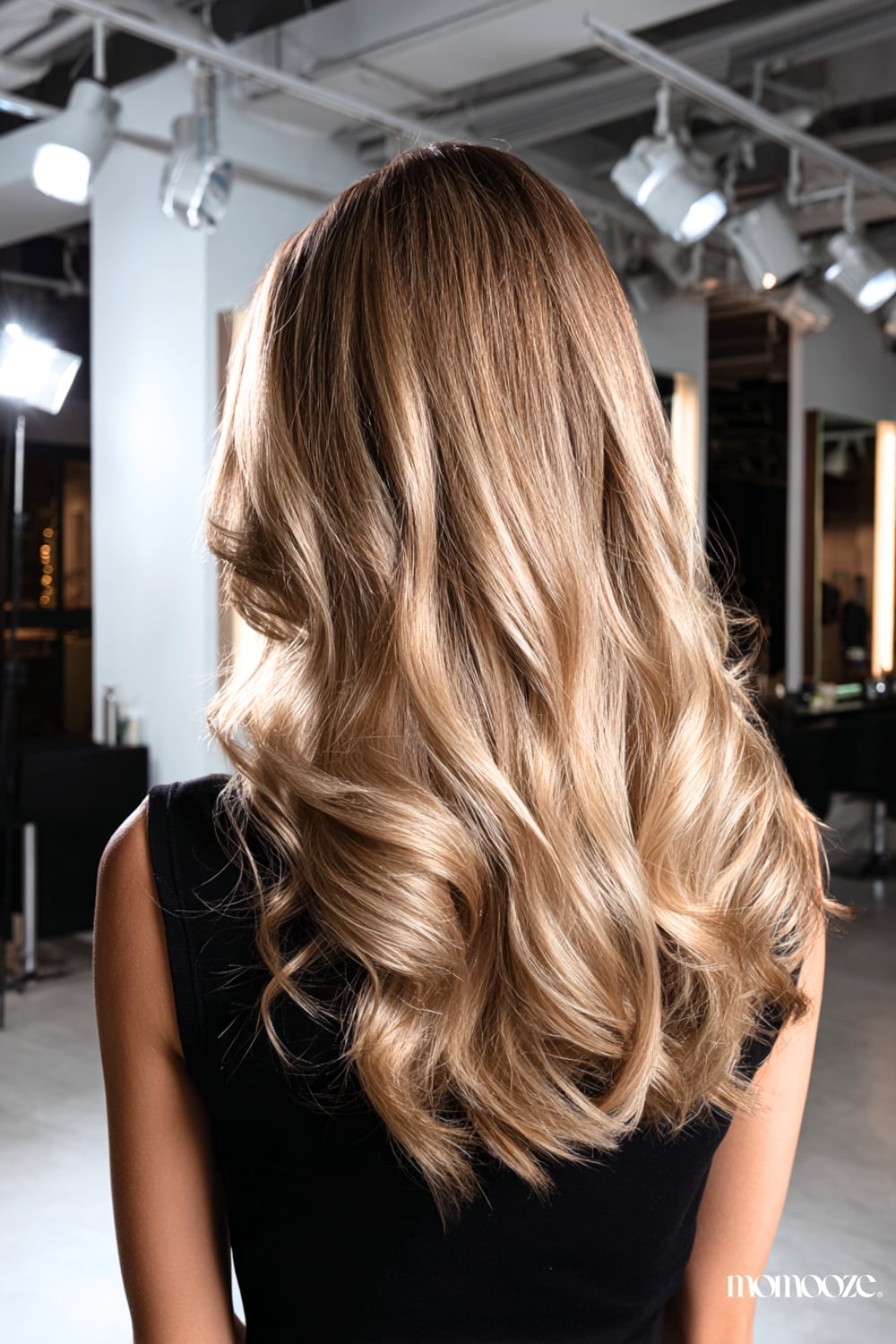
Two things make this transition work. First, the dark blonde base is deep enough to hold the lighter blonde highlights without them washing out. Second, the loose waves break up the color line, so the blend looks gradual rather than striped. Thick, wavy hair gives the lightness enough surface area to read. Skip it if your natural base is very dark; the lift needed here risks hot roots without a two-step process. A leave-in conditioner keeps the lightened strands from feeling dry.
Soft ash tones with wispy curtain bangs
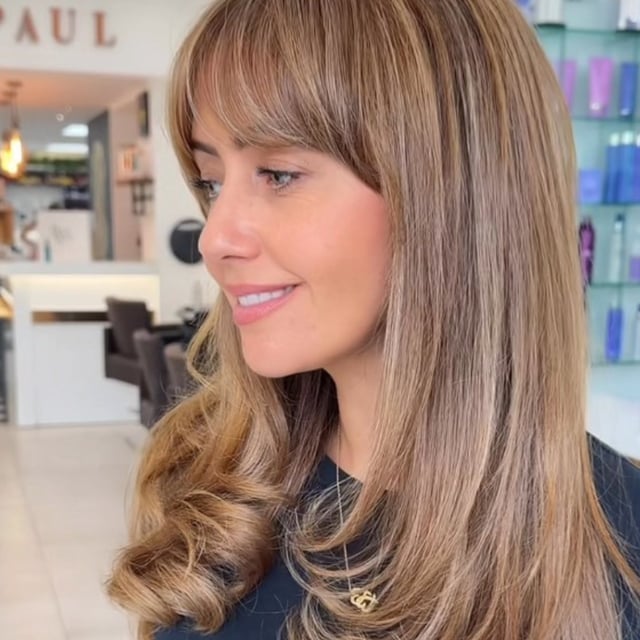
Curtain bangs change the balayage math. The face-framing sections need to be painted slightly heavier, or the bangs disappear into the base. Here, the dark blonde base carries subtle ash tones that keep the lightness from going brassy. Fine, wavy texture works best; thick hair can make the bangs feel bulky at this length. Ash reads cooler than most neutral browns. Ask your colorist for: dark blonde balayage with ash tones, curtain bangs.
Bob with blonde balayage and face-framing highlights
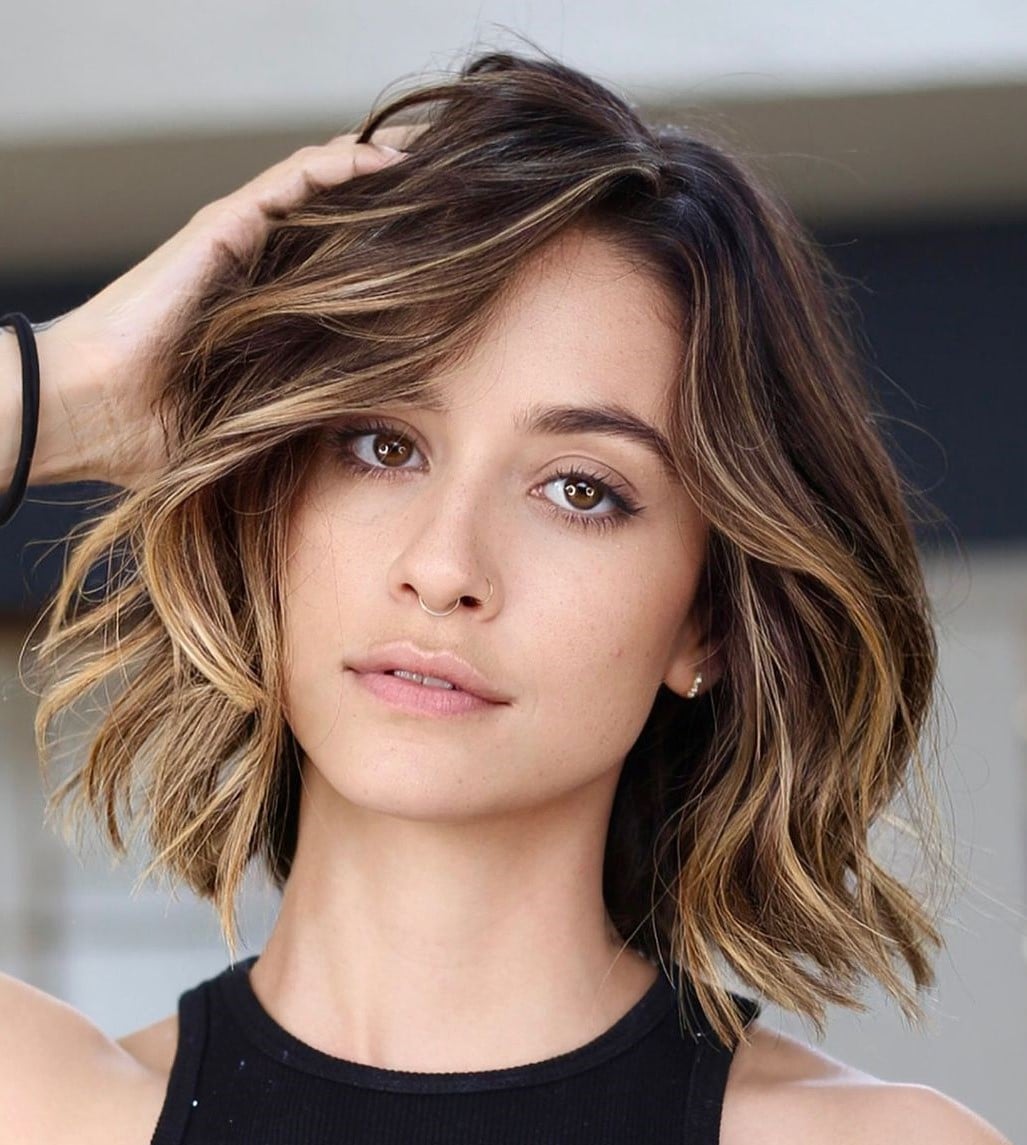
A bob this precise is not a bathroom-mirror job. Dark brown base with blonde balayage, the lighter pieces concentrated around the face. That contrast on wavy fine texture gives the cut its structure. Suits most face shapes, but pass when you prefer length below the chin. Balayage on a bob means every wave lands differently, so the blonde moves with you instead of sitting in stripes.
Final Thoughts
Pick the balayage that matches your starting color and your tolerance for toning.
- Dark brown base that wants warmth: a caramel or copper blend.
- Dark brown base that resists brass: ash blonde tones.
- Dark blonde base: lighter blonde highlights or a lighter transition.
- Fine hair: high-contrast ash balayage with darker roots for visual density.
Trim every eight to twelve weeks. Use color-safe shampoo. Tone every six to ten weeks. Your chair time is about three hours. Your grow-out is invisible.
