

You know the feeling: the consultation is booked, but you are still scrolling for that one perfect color. You want a shade that feels fresh, works with your cut, and actually fits your schedule. That is the gap this collection fills.
Striking Hair Color Ideas 2027 fill so many saved boards right now, and for good reason. Across 34 looks, you get the full spread, bold splits and subtle balayages, high-maintenance vivids and lived-in lowlights, short bobs and long layers. Whatever your natural texture or density, there is a version here that survives a busy week. The hard part is choosing just one.
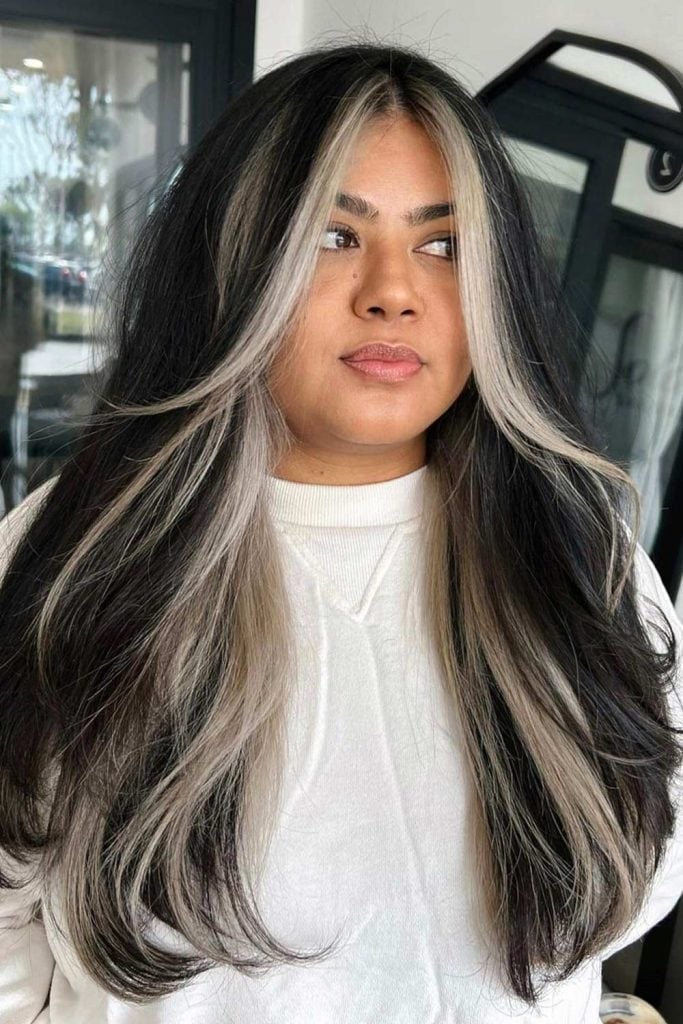
Black base with striking blonde face-framing highlights
Bold blonde strands cut through a black base like a deliberate interruption. The face-framing placement stops the contrast from looking random. Every light piece lands where the layers start. A middle part and soft blowout keep the look wearable. Thick, wavy hair starting at collarbone length carries the weight of two tones best. The gap between black and blonde leaves no room for a gentle fade. Ask your colorist for: dark base with bold blonde face-framing highlights, layered cut. Toning the blonde every four weeks keeps brassiness from turning the contrast muddy.
Two tones: coral and deep red split dye
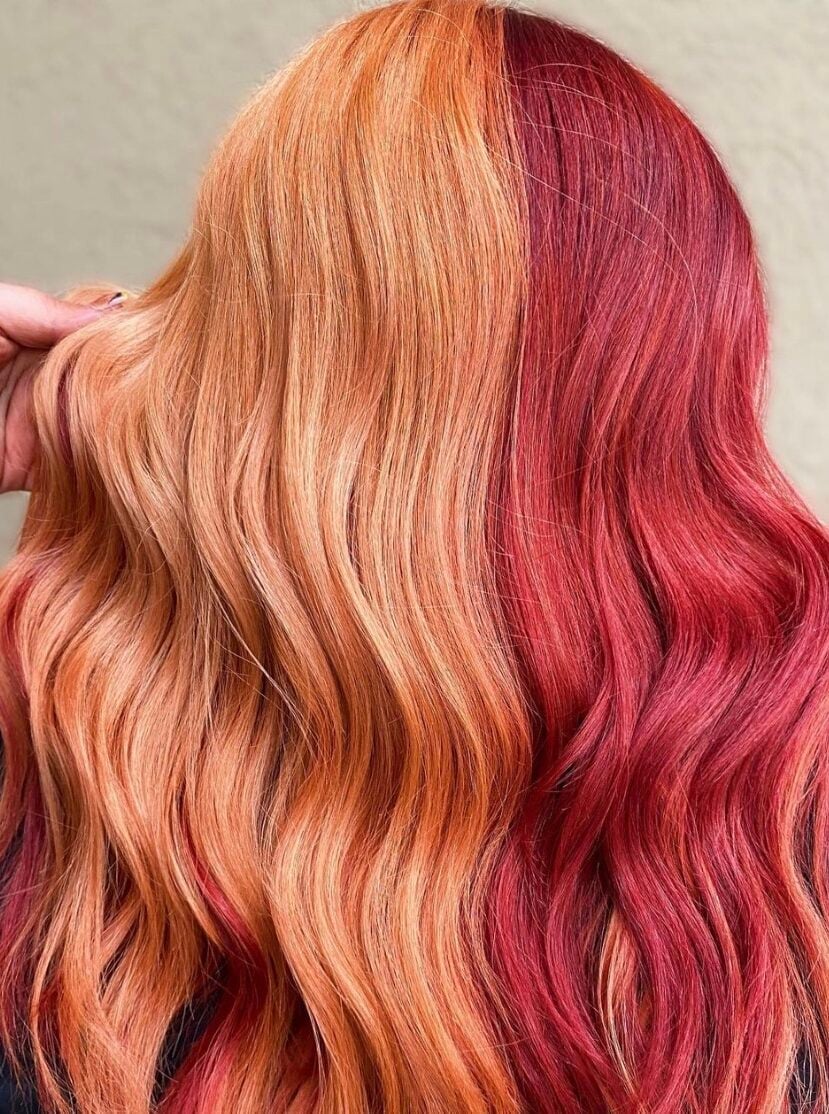
A split dye asks a different question than a balayage. Here, vibrant coral sits on one side and deep red on the other, each color staying distinct all the way down. The wavy styling softens the dividing line just enough. Any hair length or texture can wear this, provided you are ready for two separate maintenance schedules. Pass when you cannot commit to refreshing both hues on the same timeline, coral fades faster than red. Book it as: vibrant coral and deep red split dye. Color-depositing shampoo in each shade extends the life of the split without a salon visit.
Vibrant multi-tonal Ombré in a twisted updo
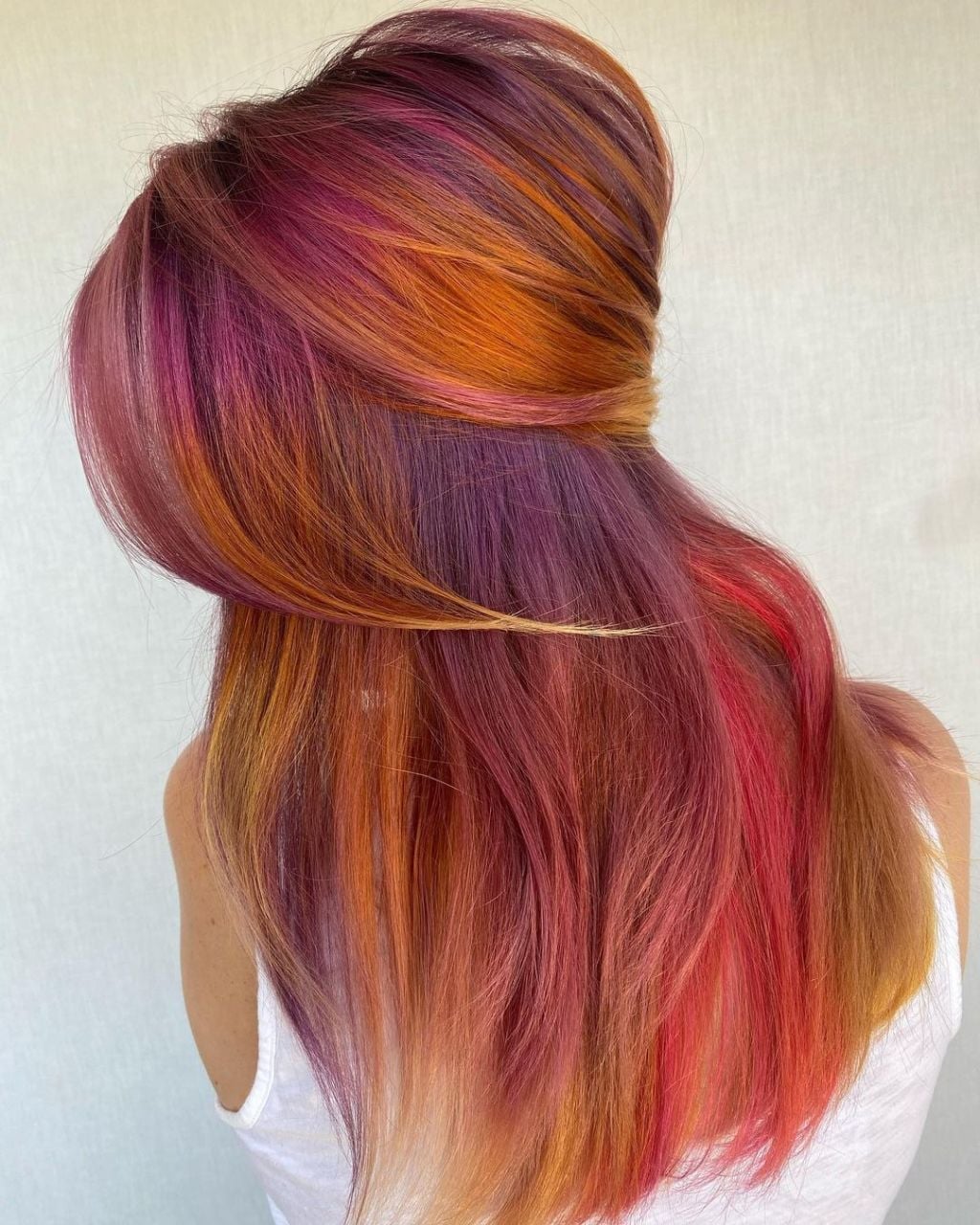
Magenta moves into orange, then into purple, with no hard lines between them. The twisted updo pulls the ombré into a single focal point, so the color looks a spectrum rather than three separate sections. Thick, wavy hair gives the blend enough surface area to transition smoothly.
Not for anyone who wears their hair down most days. The full effect only shows when the hair is lifted and pinned. Tell your colorist: vibrant multi-tonal ombré from roots to ends. A cool-water rinse preserves the magenta and purple longer than the orange, which tends to warm up first.
Blue and purple balayage with air-dried waves
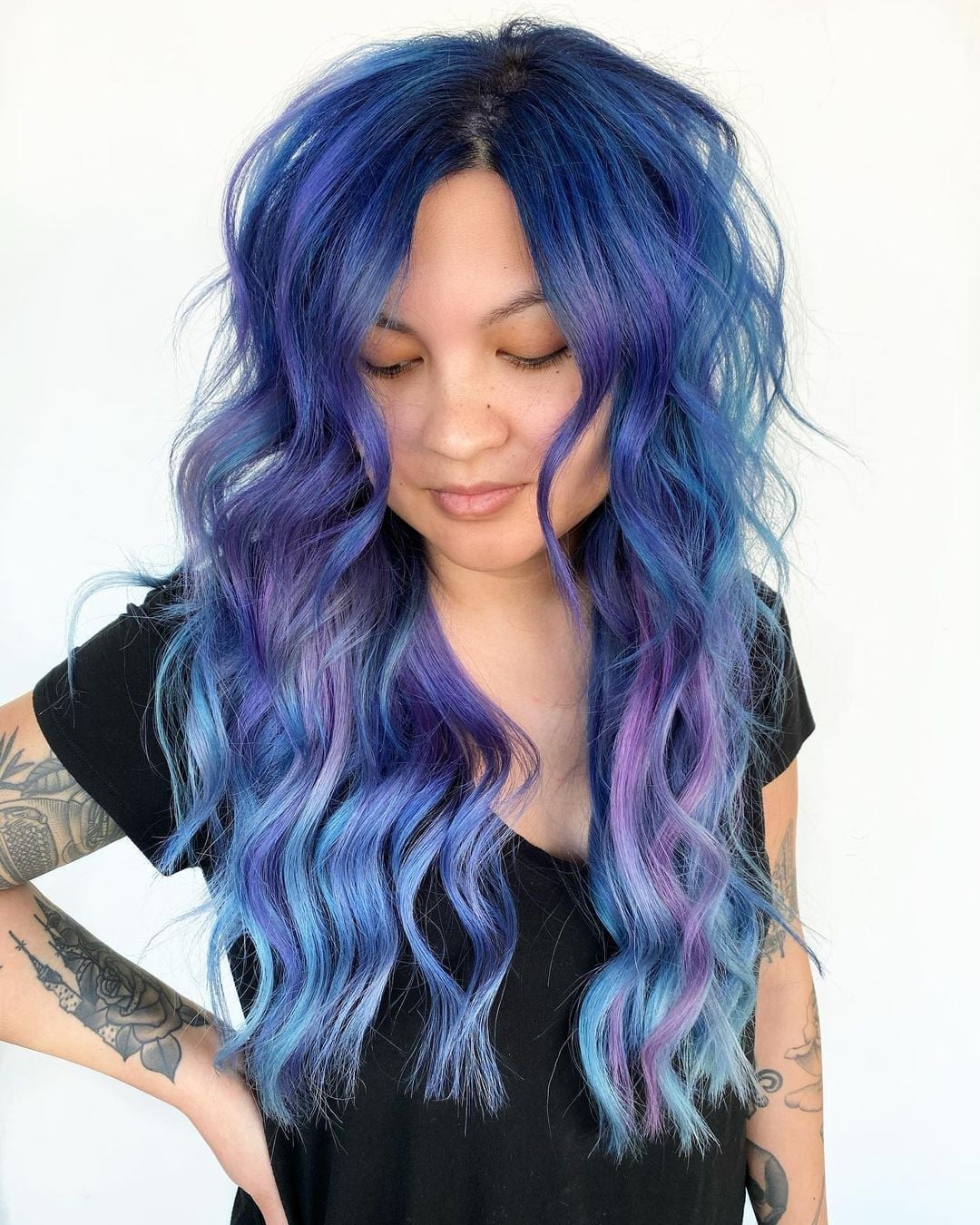
How do you ask for the exact color you see in the chair? Start with the placement. Blue and purple balayage means the lighter tones are painted onto the mid-lengths and ends, not pulled through to the root. The middle part and air-dried waves let the two colors sit next to each other without blending into a single murky tone. Thick, wavy hair holds the separation well. The catch: very fine hair may not show the blue and purple as distinct tones. They can look one dark shade. Air-dry with a texture spray to keep the waves defined and the colors visible.
Dark bob with vibrant purple highlights
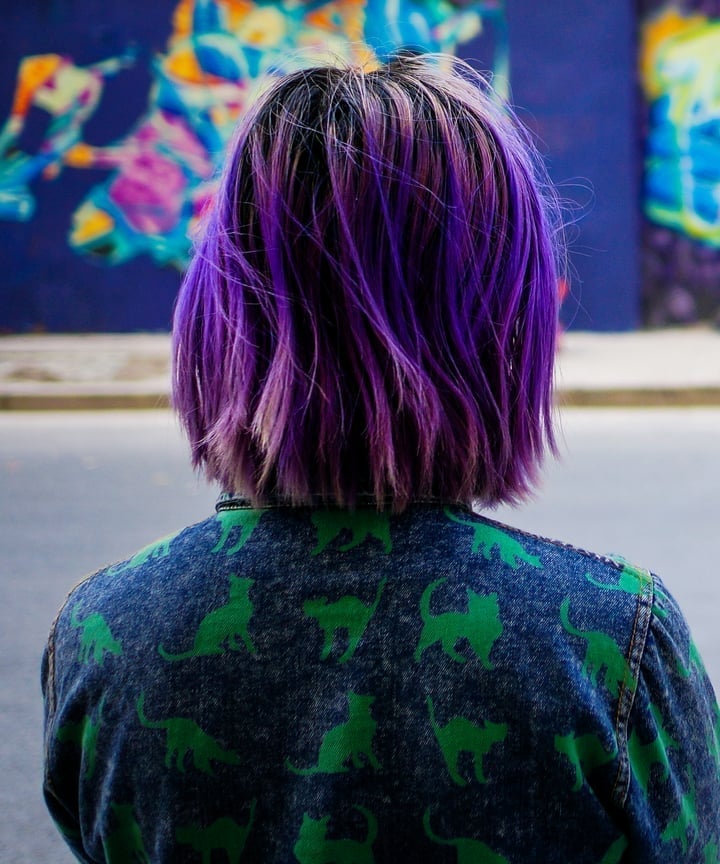
A bob with purple highlights wears differently than longer hair. The dark base gives the purple a high-contrast frame, and the air-dried texture keeps the look from feeling stiff. Fine, wavy hair works well here because the purple strands sit close to the surface. The upkeep is straightforward: a color-depositing conditioner every two weeks keeps the purple from fading to a washed-out lilac. Trim the bob every six to eight weeks to keep the shape sharp. Ask your colorist for: dark base bob with vibrant purple highlights.
Shag with blunt bangs in lavender
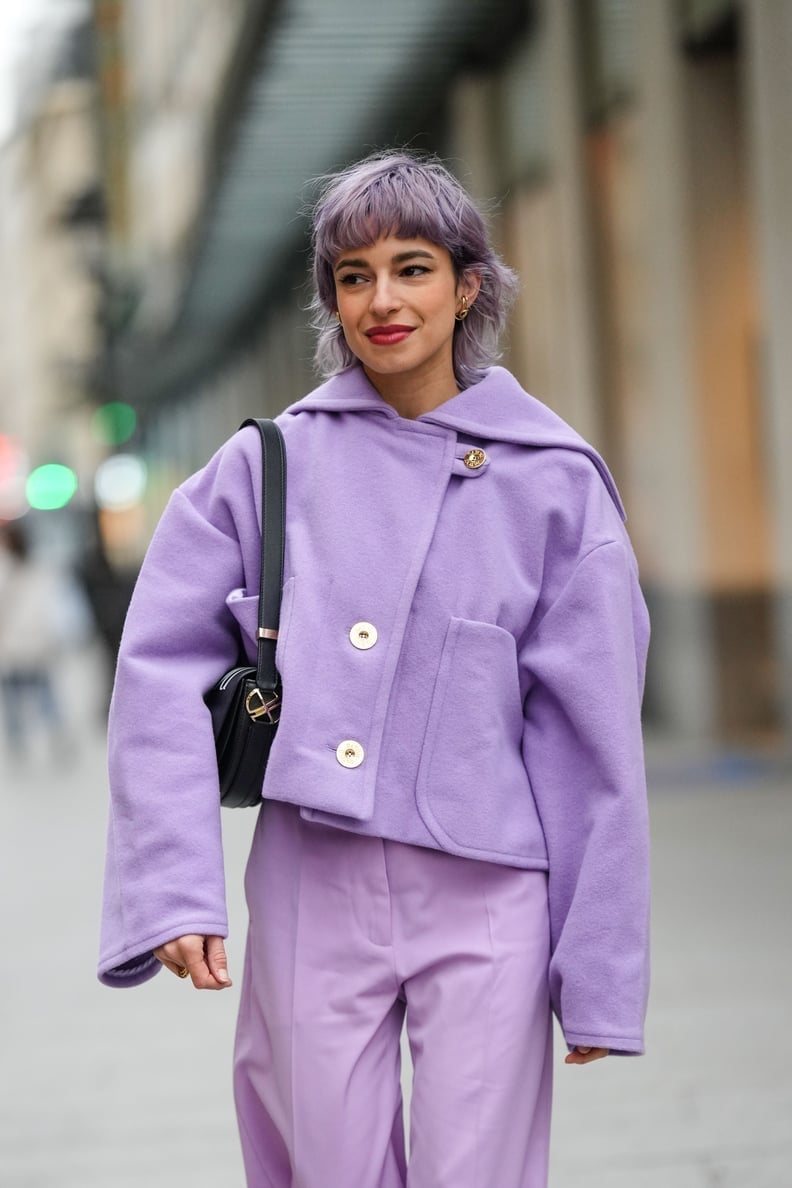
Lavender sounds like a fantasy shade until you see it on a shag with blunt bangs. The wavy, fine texture lets the pastel sit softly, not flat, and the ash undertone keeps it from looking like cotton candy. Skip it if your natural base is dark and you are not ready for a full bleach lift. The contrast is what makes the color read clearly, and fine hair actually holds the tone better than coarse strands do. A trim every six to eight weeks keeps the shag shape sharp and the bangs from grazing your eyes.
Two-tone shag with blunt bangs: platinum blonde and copper
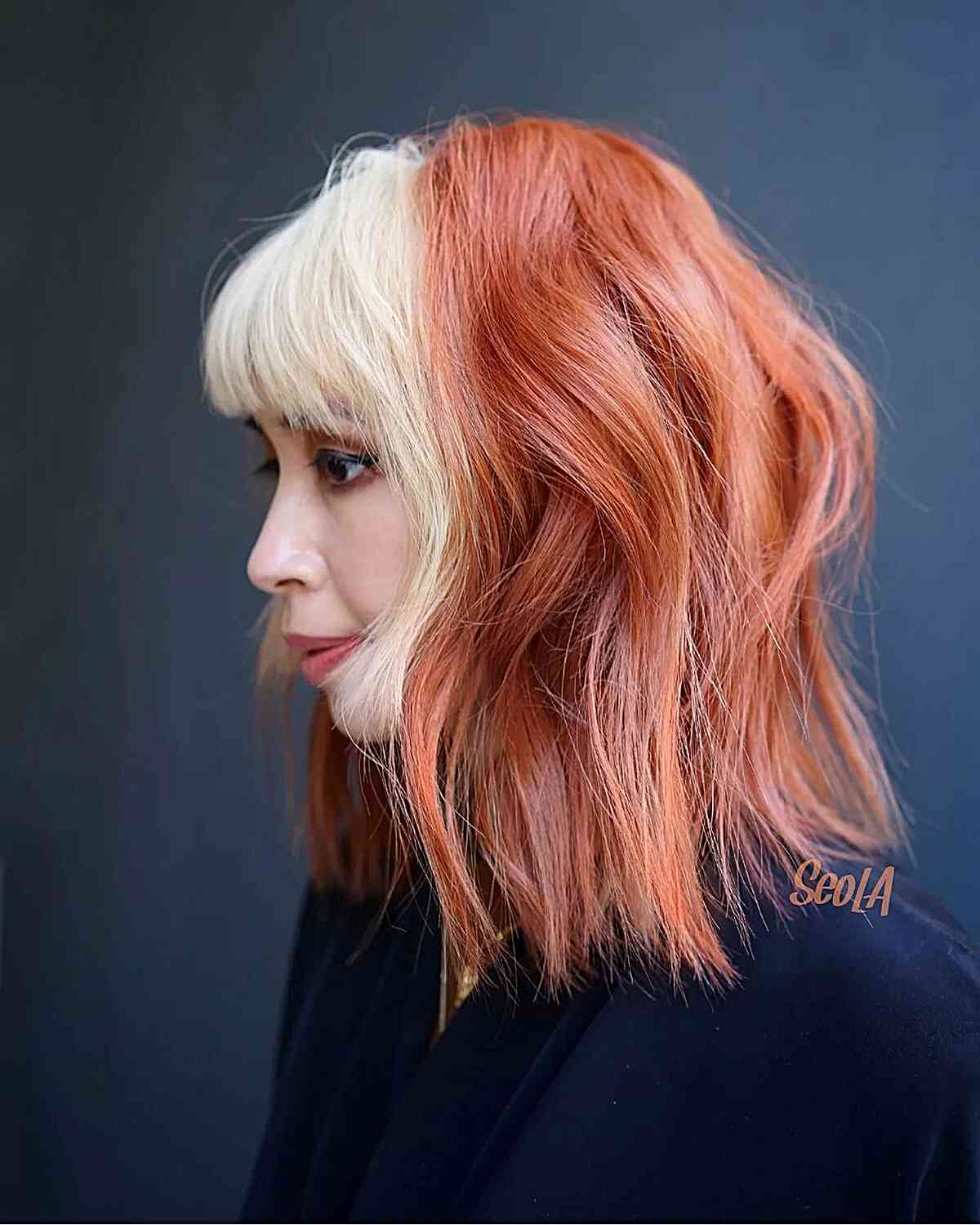
Two tones on one head mean two separate formulas, two processing times, and zero room for overlap. The mistake is asking for a split dye without specifying the line: a middle part gives a clean divide, while a side part lets the copper take more real estate. Fine, wavy texture works because the air-dried finish blurs the seam slightly. Skip it if you need a single-process color for speed or if your hair is dark enough that the platinum side requires multiple sessions.
Book it as a two-tone shag with blunt bangs, platinum on one side, copper on the other. The upkeep demands two different toning schedules: a purple shampoo for the blonde, a color-depositing conditioner for the copper.
When you want dimension without a harsh contrast
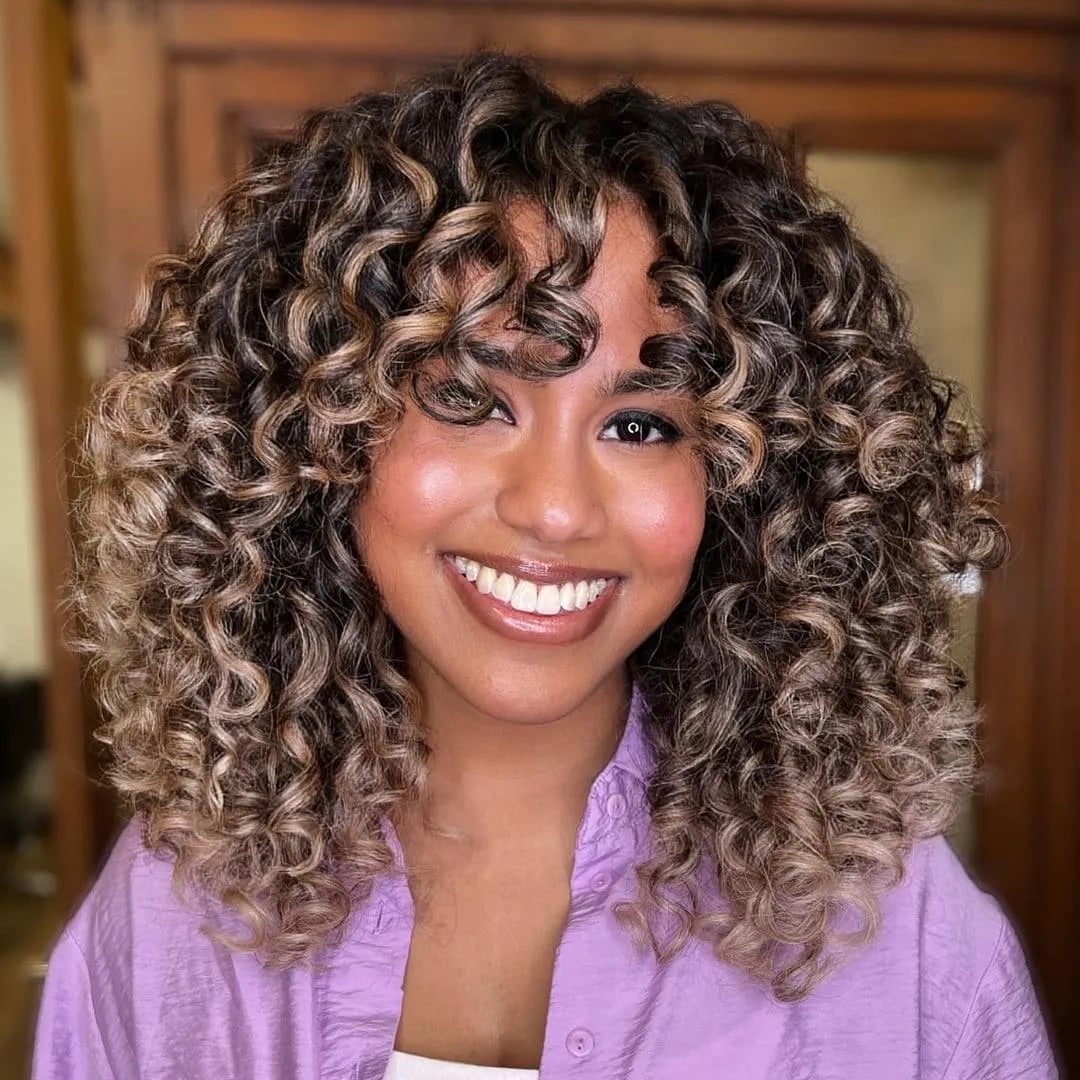
A dark brown base with distinct blonde highlights has a deliberate look. The trick is the placement: the balayage technique keeps the blonde concentrated through the ends, while the curtain bangs bring brightness to the front. Thick, curly texture breaks up the stripes so the contrast feels woven in. The result is a look that has presence without demanding attention.
Dark brown base with ash blonde streaks and curtain bangs
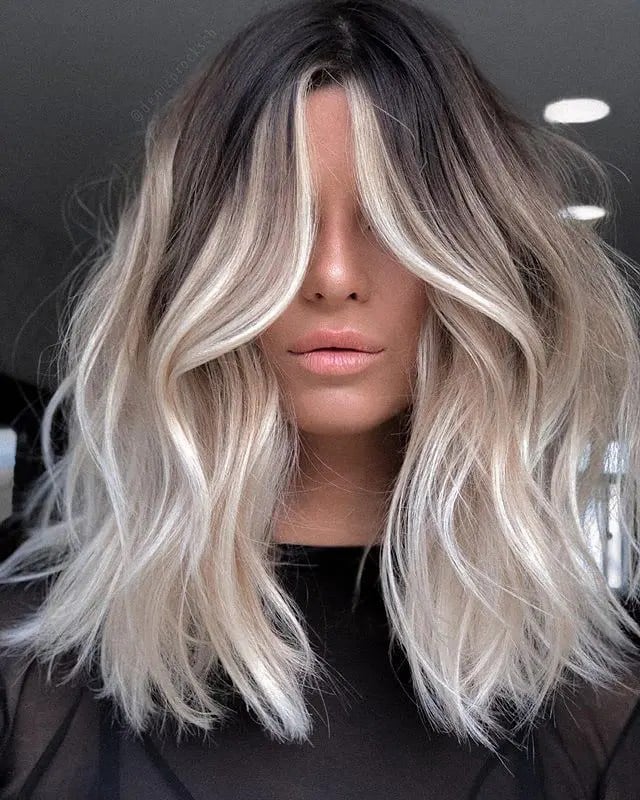
Cool-toned blonde against a dark brown base lands best in late summer and early fall, when the light shifts and the ash tones stop looking washed out. The color melt technique uses a smooth blend from root to tip, so the streaks appear naturally grown out. Fine, wavy texture keeps the ash from going brassy. A toning shampoo once a week prevents the blonde from drifting warm between appointments.
Tell your colorist: dark brown base with ash blonde highlights and curtain bangs. The season buys you a few extra weeks before the roots need attention.
Dark blonde with ash highlights, root shadow, and money piece
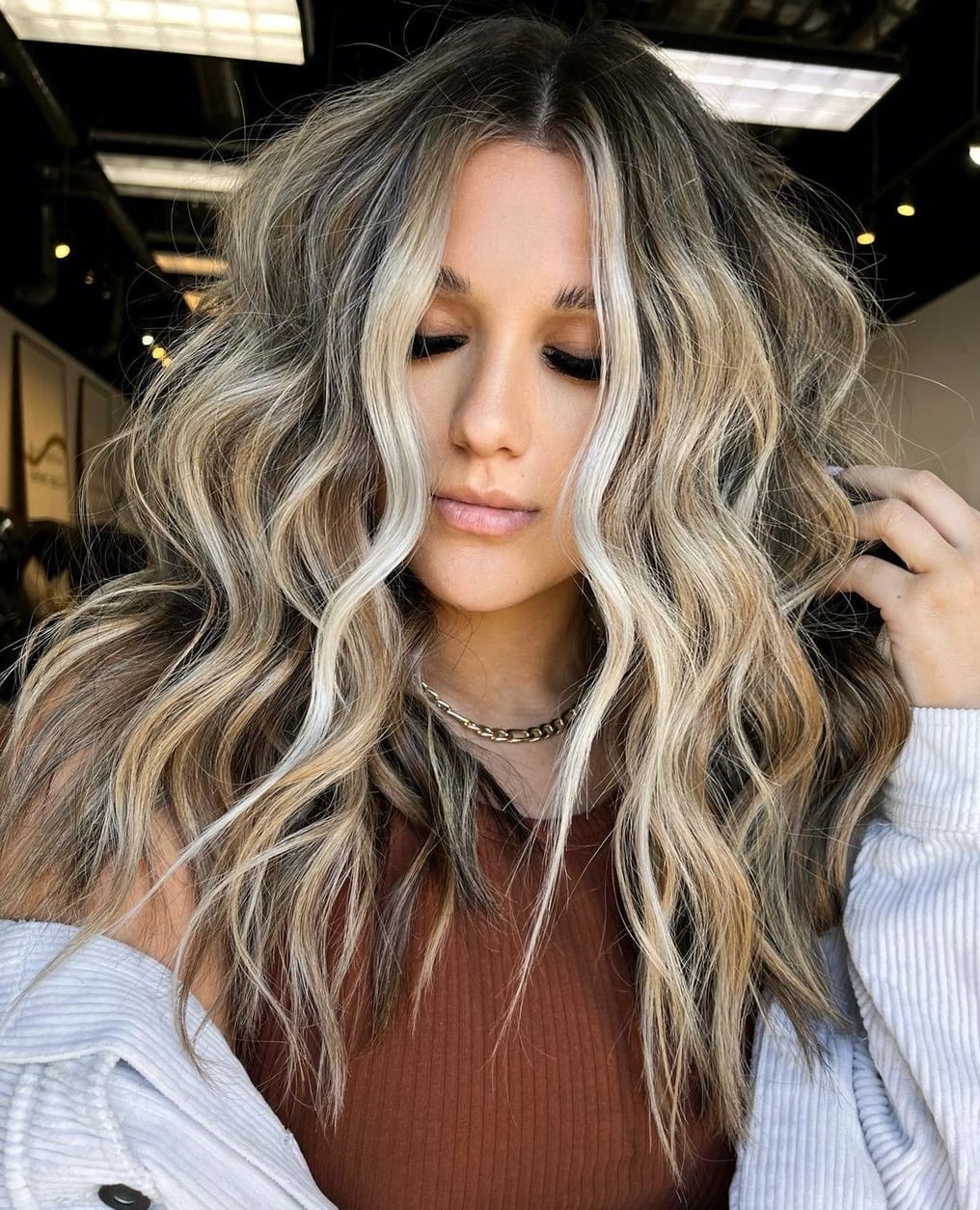
Ash highlights on a dark blonde base risk looking flat unless you add a root shadow. The shadow sits at the part and temples, giving the illusion of depth without a full regrowth. The money piece, two brighter sections framing the face, pulls the eye forward. Thick, wavy texture helps the layers move, so the ash does not settle into a single block of color.
Maintain it with a purple shampoo every third wash to keep the ash from turning yellow. The root shadow needs a refresh every eight to ten weeks; the money piece can stretch longer because it fades gradually.
Dark brown base with root shadow and bold blonde highlights
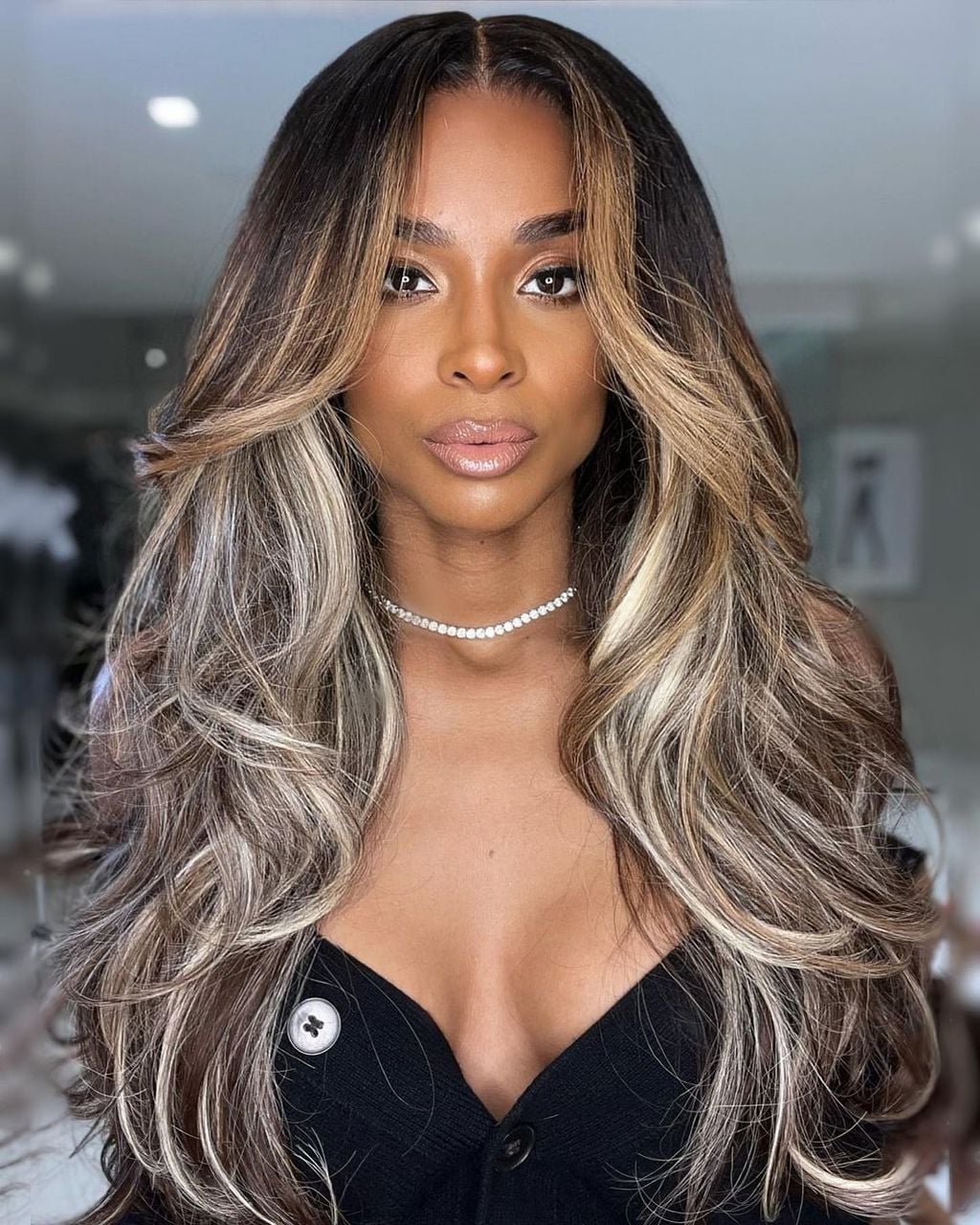
You want contrast without the root-reveal panic every three weeks. That is the entire point of a root shadow on a dark brown base. The bold blonde highlights land on the mid-lengths and ends, while the root stays soft and blended. Ask your colorist for: dark brown base with root shadow and bold blonde highlights, face-framing layers. The tone stays neutral on the blonde pieces, no brass, no ash. Thick, wavy hair with layers shows this off best. A smooth all-over blonde or fine hair that might not support the weight of bold highlights is not the goal here.
Black base with striking blonde face-framing, office-safe version
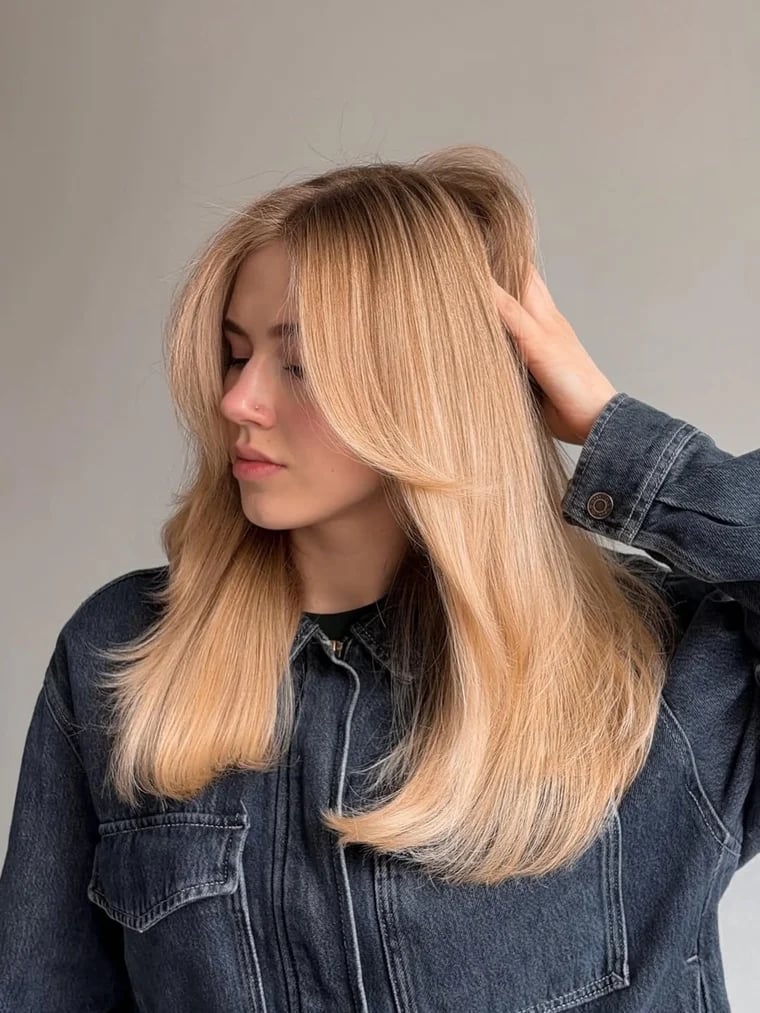
Compare this to the first look: same bold contrast, different volume. Here the black base stays dark, and the blonde face-framing strands are the only light pieces. The middle part and smooth blowout keep it neat. Curtain bangs soften the transition. The tone is cool on both ends, ash blonde against a cool black. Straight, fine hair works because the highlights are concentrated at the front, not scattered through thin sections. This color melt shows a visible root line.
Dark brown with subtle blonde highlights and face-framing layers
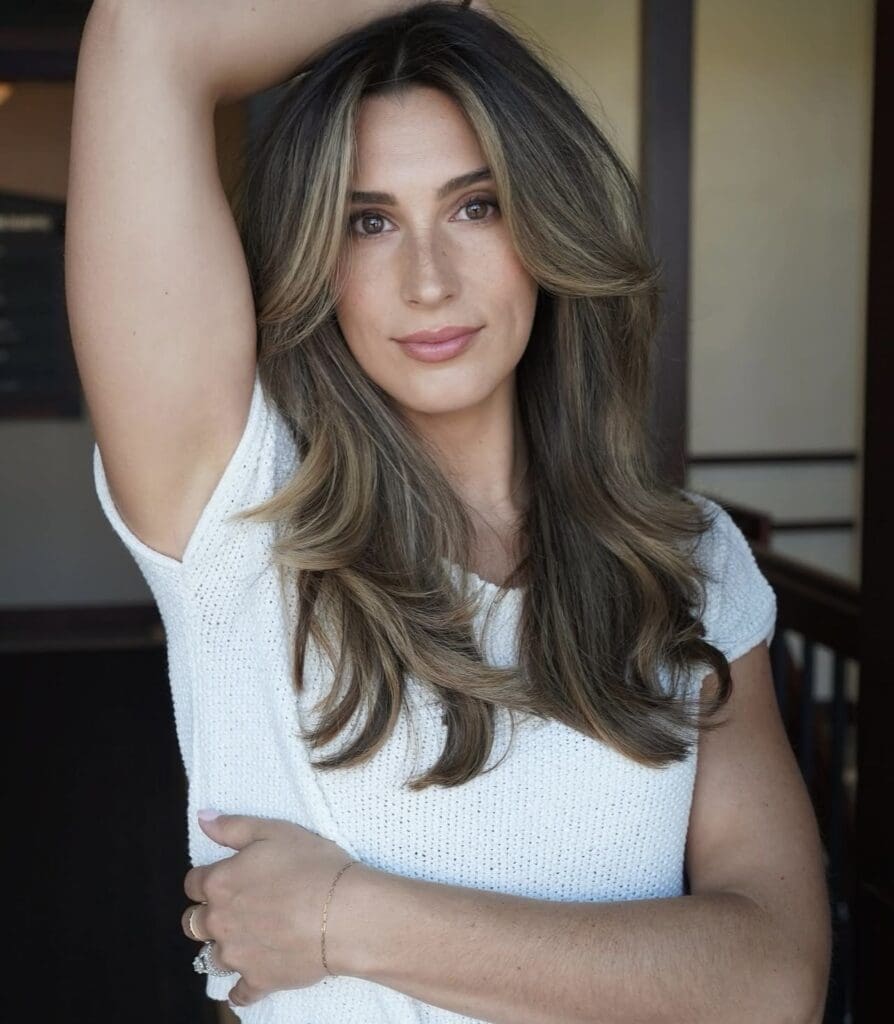
The dark brown base does not compete with the blonde. It holds it. Subtle highlights woven through the mid-lengths look natural, not painted on. Face-framing layers catch the lightest pieces, so the brightness sits where you want it. Ask your colorist for: dark brown base with subtle blonde highlights, face-framing layers. The tone stays warm on the brown and neutral on the blonde, no stark shift. Thick, wavy hair with layers gives the highlights room to land on the wave crests. This is a slow burn, not a reveal.
Dark brown with blonde highlights and face-framing, close-up take
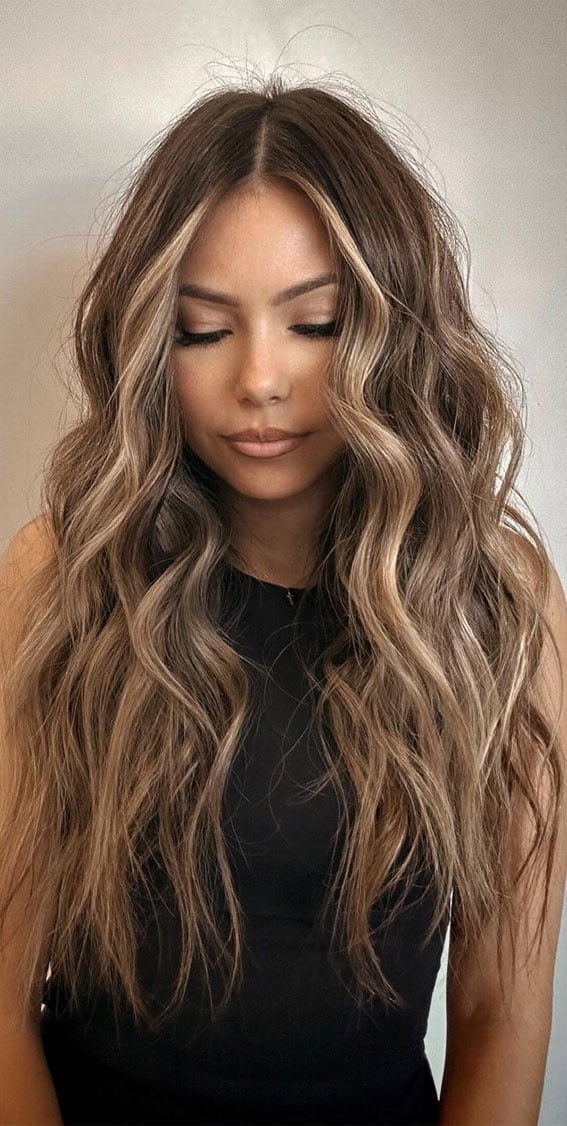
Up close, the balayage technique matters more than the shade range. A dark brown base with blonde highlights that start low and stay soft around the face. That is the wear pattern you want. The middle part lets the face-framing pieces fall evenly. The tone is neutral on the blonde, warm on the brown, no line of demarcation. Thick, wavy hair with layers carries this finish for weeks. A toning gloss every six weeks keeps the blonde from warming into yellow.
Warm brown base with subtle lighter blonde highlights
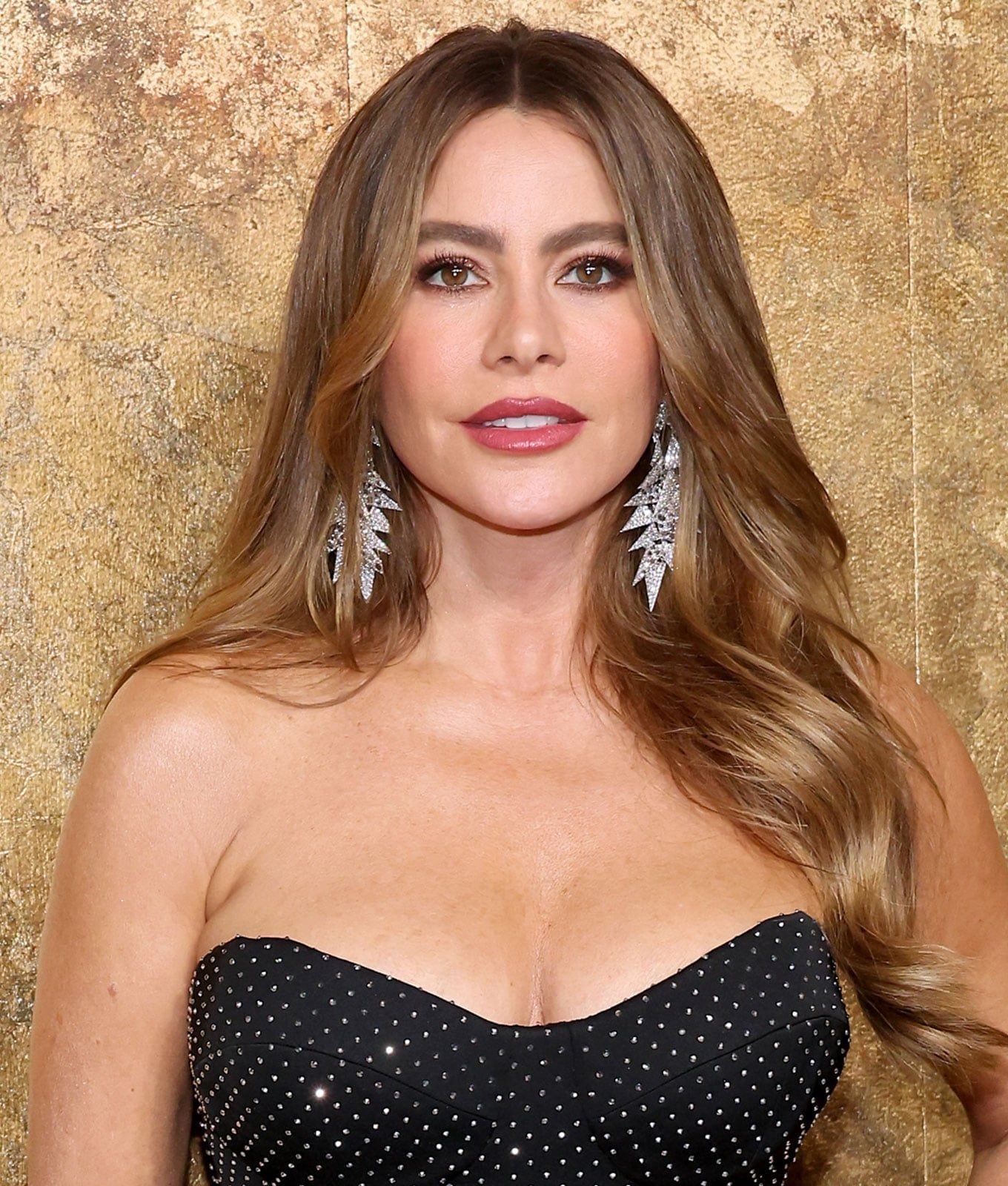
Warm brown with subtle blonde highlights is the closest you get to a no-excuses color. The base holds the warmth, the highlights look sun exposure. Loose waves with a middle part let the tones move together. Ask your colorist for: warm brown base with subtle blonde highlights, layered cut. The tone is warm on both ends. The blonde stays golden, not pale. Thick, wavy hair with layers shows the dimension. The catch: subtle highlights can fade into the base after six weeks, so you either tone or let it grow into a solid warm brown.
Warm brown with golden highlights and side parting
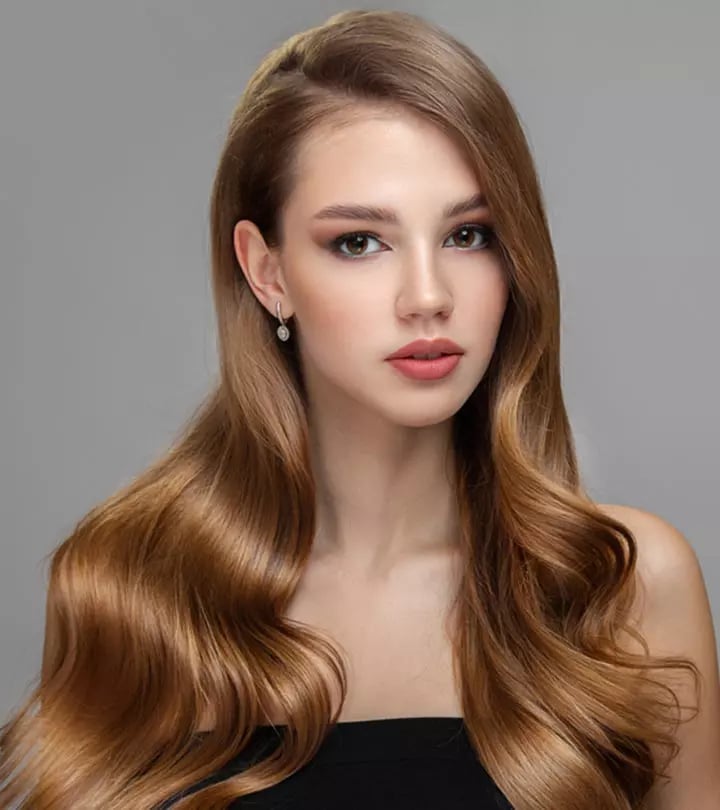
Golden highlights on a warm brown base follow the wave pattern. The balayage technique places color where the light naturally hits, so the side parting becomes part of the design. Thick, wavy hair holds the contrast best.
This look is not ideal for fine hair; the subtle lift may not register. A gloss treatment every six weeks keeps the gold from turning brassy.
Dark brown base with ash blonde balayage and side parting
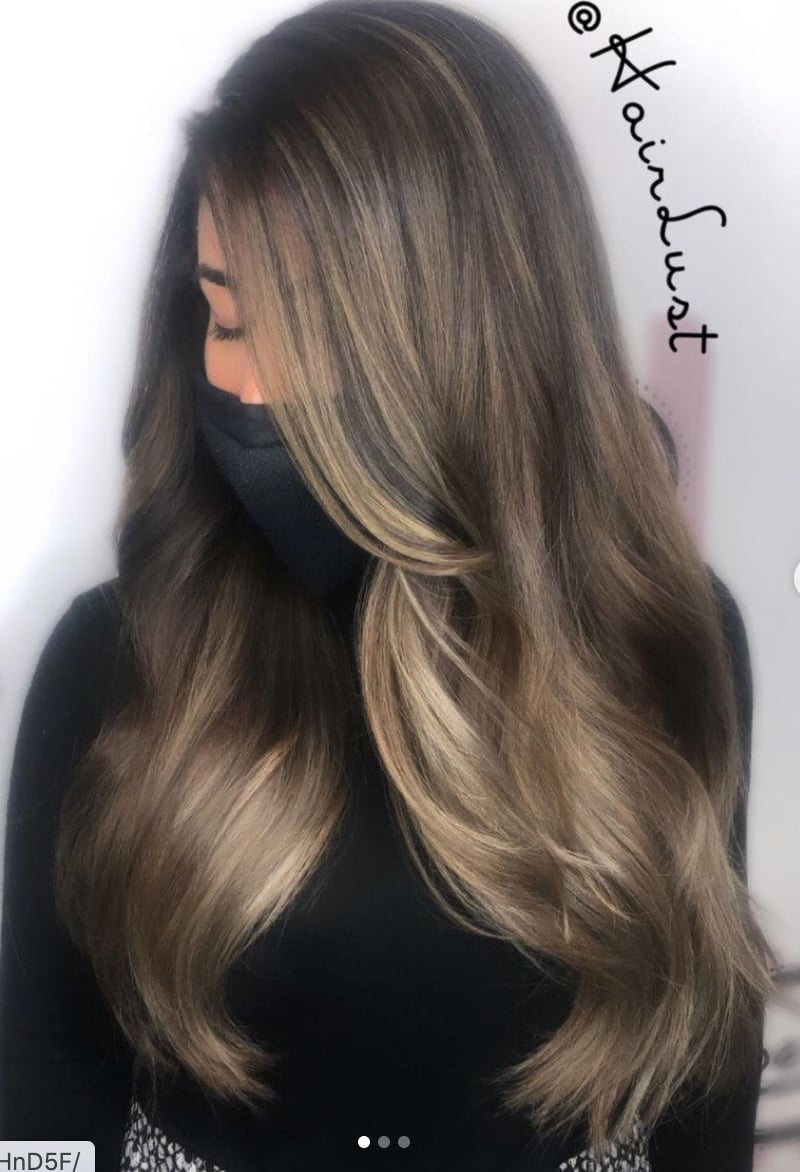
Dark brown base meets ash blonde highlights in a balayage that avoids a hard root line. The side parting lets the cooler tones concentrate on one side, creating asymmetry. Thick, wavy texture gives the ash tone enough surface to read.
This stays firmly cool with no warm dimension. Tell your colorist: dark brown base with ash blonde balayage.
Dark brown with subtle ash blonde highlights and air-dried waves
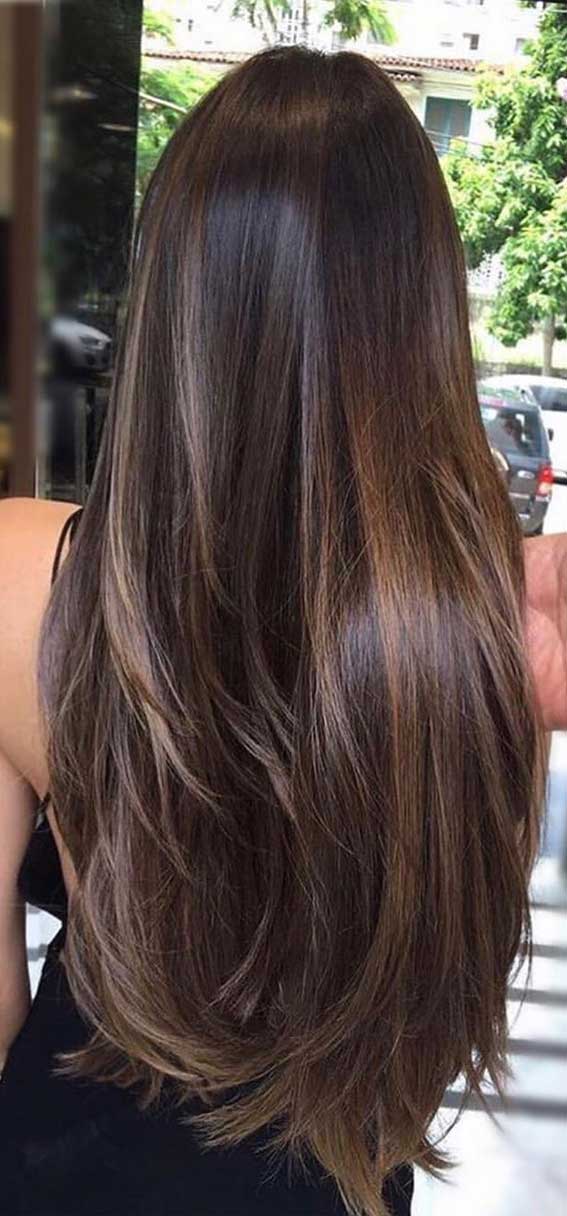
Subtle ash blonde highlights against a dark brown base read more as texture than color. The balayage effect is soft enough that air-dried waves look deliberate, not faded. Thick, wavy hair carries the low contrast well.
Pass when you want a visible change from behind; this one keeps its secrets.
Dark brown base with caramel balayage and air-dried texture
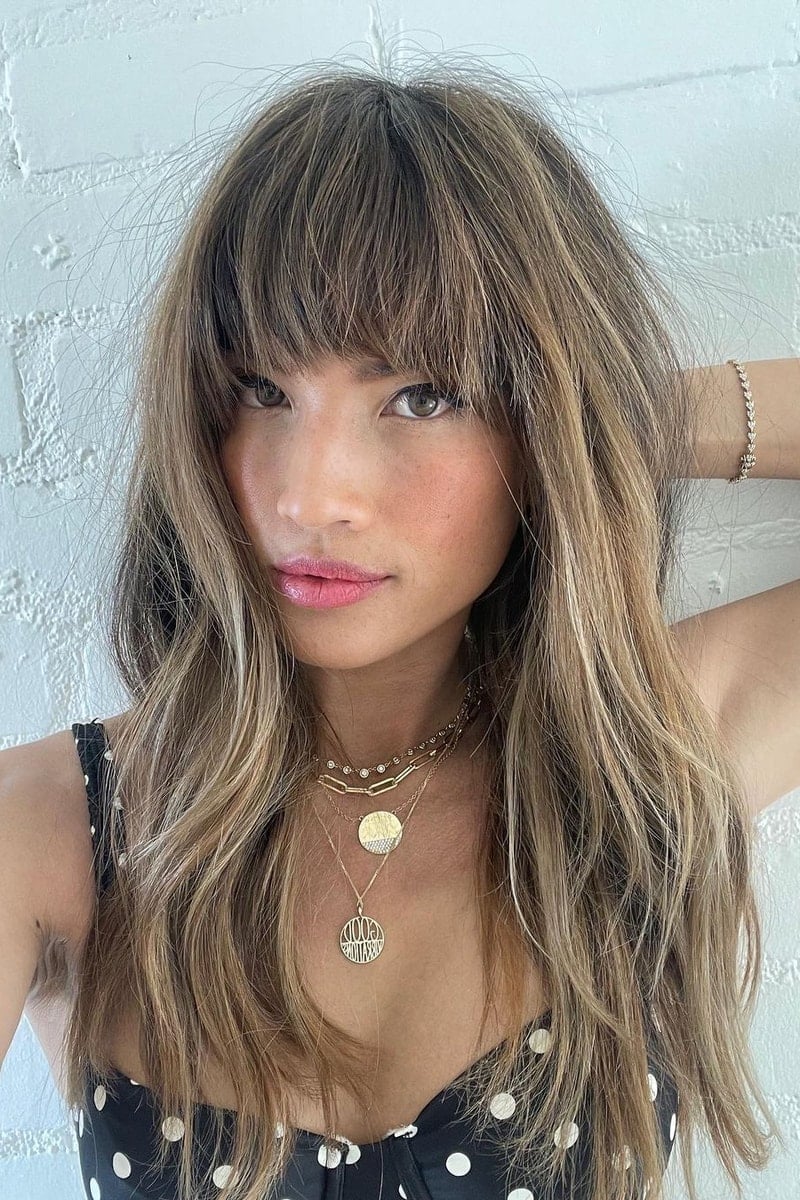
Tell your colorist: dark brown base with caramel highlights, layered cut. The catch: full bangs mean the color sits close to your face, so the caramel tone needs to suit your preference. A color-depositing conditioner every two weeks keeps the caramel from fading flat.
Dark brown with caramel highlights and air-dried waves
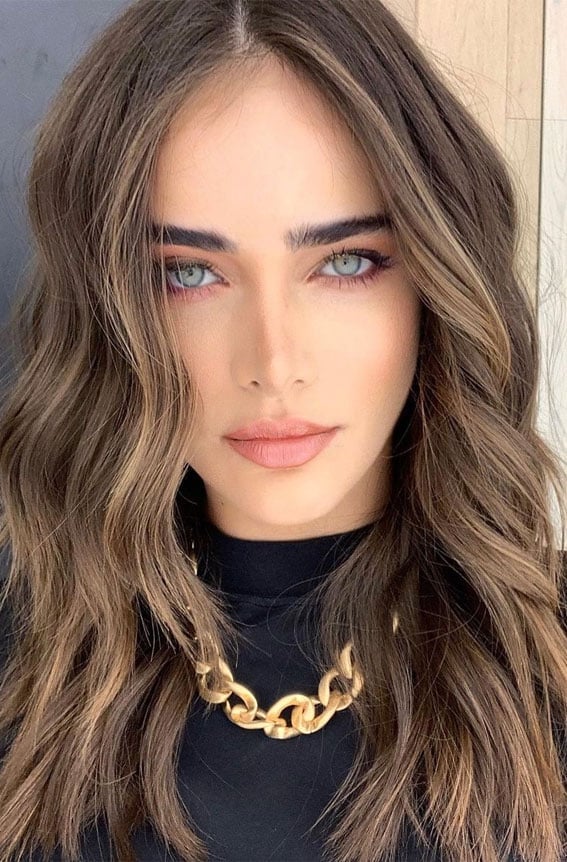
Caramel highlights against a dark brown base work best when they stay subtle rather than chunky. The air-dried waves allow the caramel to appear as a natural light shift rather than a painted effect. Thick, wavy hair holds the separation well.
Skip it if you want high contrast; this is a grow-out-friendly option, not a focal piece.
Dark brown to warm caramel balayage with air-dried waves, wavy
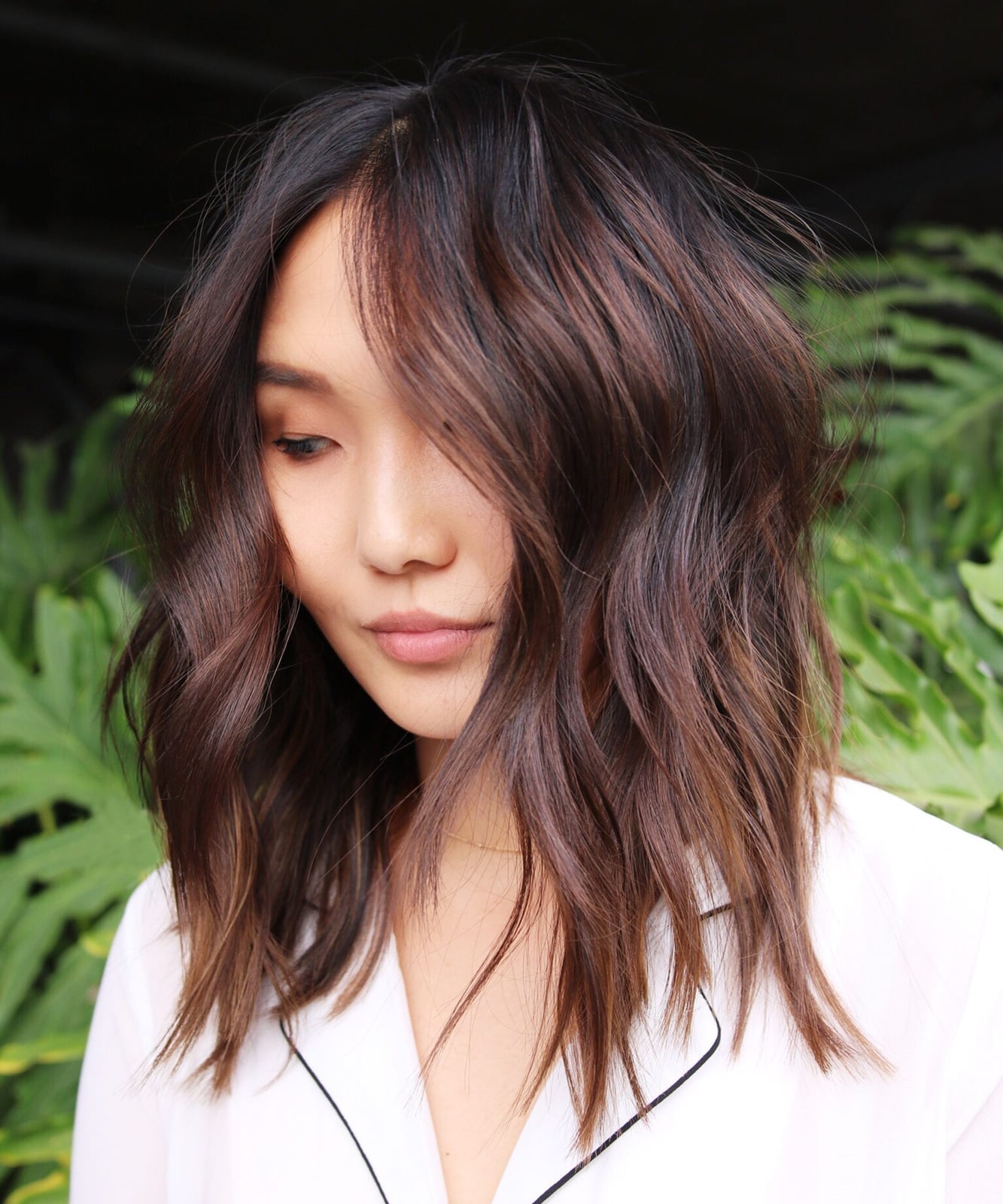
Warm caramel balayage on a dark brown base is a design that wants to be noticed. The fine, wavy texture lets the color breathe, each wave showing the next shade. This blend lands somewhere between subtle and sunkissed. The catch: fine hair shows the transition cleanly, but thick strands can swallow the soft lift. Ask your colorist for: dark brown to warm caramel balayage.
Dark brown base with caramel balayage and curtain bangs
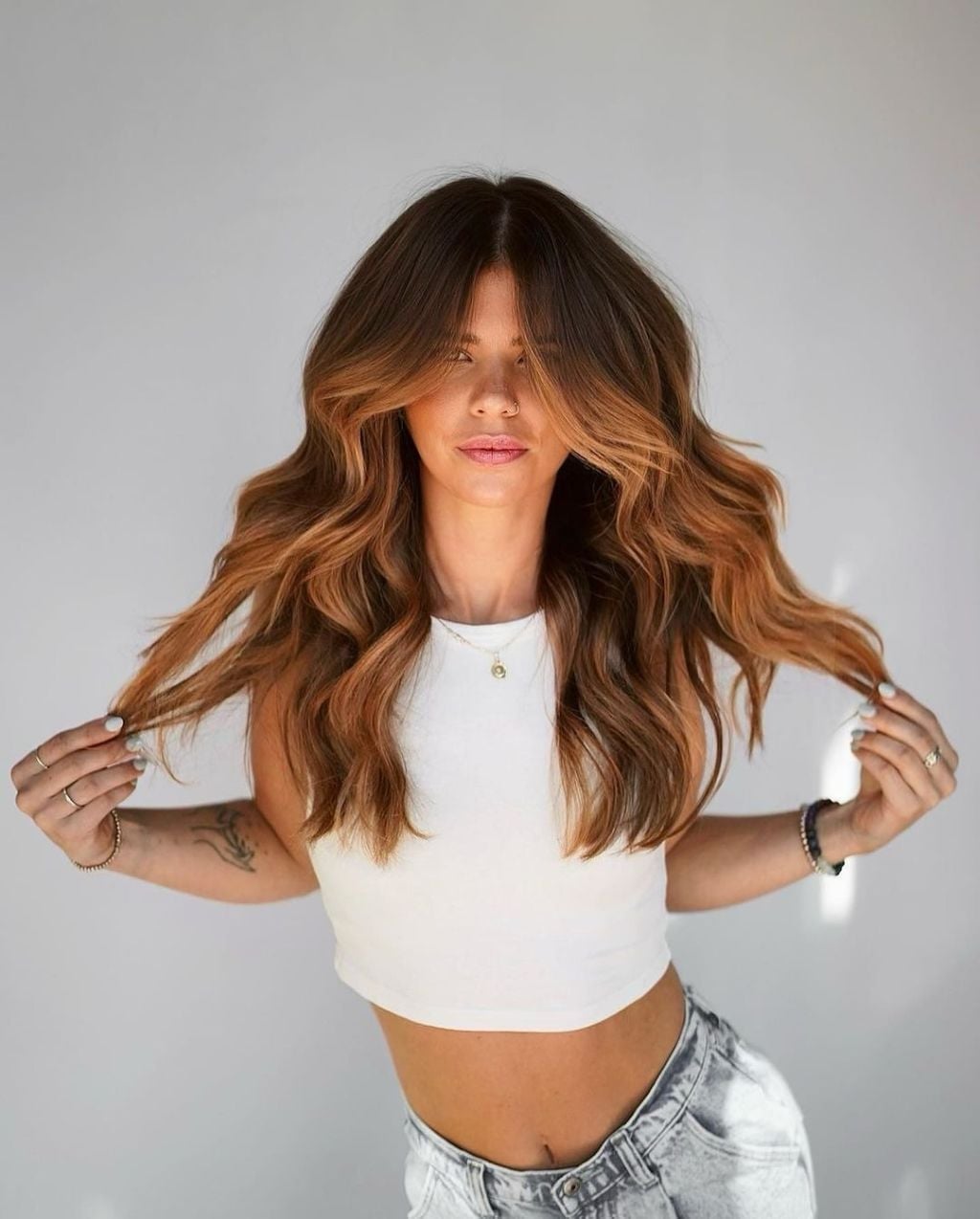
A dark brown base meets caramel balayage in a design built for a middle part and curtain bangs. The technique uses a blowout to show how the shade wraps around long layers, warm at the ends, deeper at the root. Thick, wavy hair holds the shape best; the curtain bangs need a round brush and a few minutes daily to fall correctly. Toning every six weeks keeps the caramel from pulling orange.
Two tones here: the dark base and the warm balayage. No harsh line between them. The blowout finishes the look, but the cut does the work. Curtain bangs frame without shortening the overall length.
Dark brown with caramel highlights, curtain bangs, and blowout, wavy
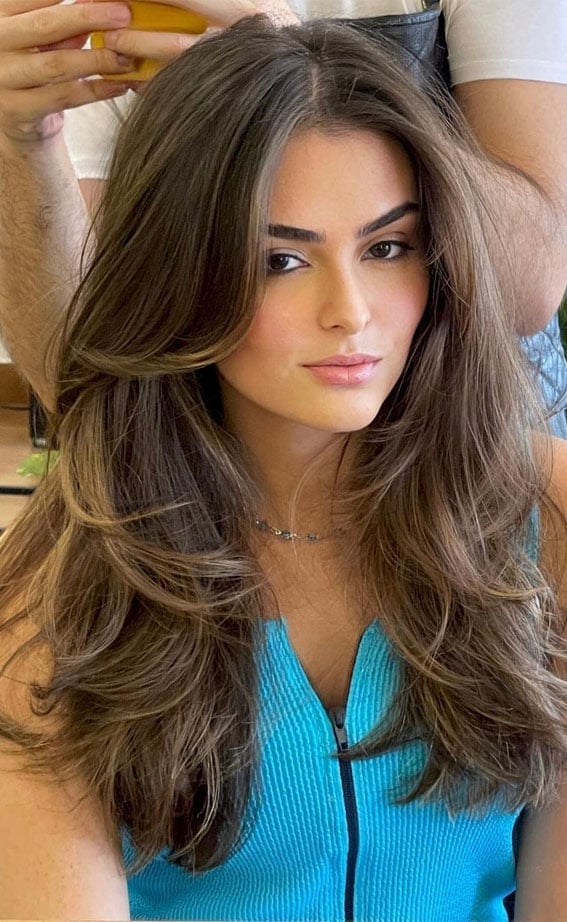
Subtle caramel highlights on a dark brown base create a lighter effect that looks natural, not salon-spun. The face-framing layers and curtain bangs are the real structure here. Thick, wavy hair takes the blowout well, the highlights catch light around the jaw and cheekbones. Ask your colorist for: dark brown base with subtle caramel highlights, face-framing layers, curtain bangs. The technique weaves the caramel through the mids and ends, so the root stays dark and the grow-out period stretches to ten weeks.
It suits those who want a subtle change, not a bold all-over shift. The warm caramel can clash with cool ash tones.
Dark blonde with caramel balayage and air-dried waves, layers
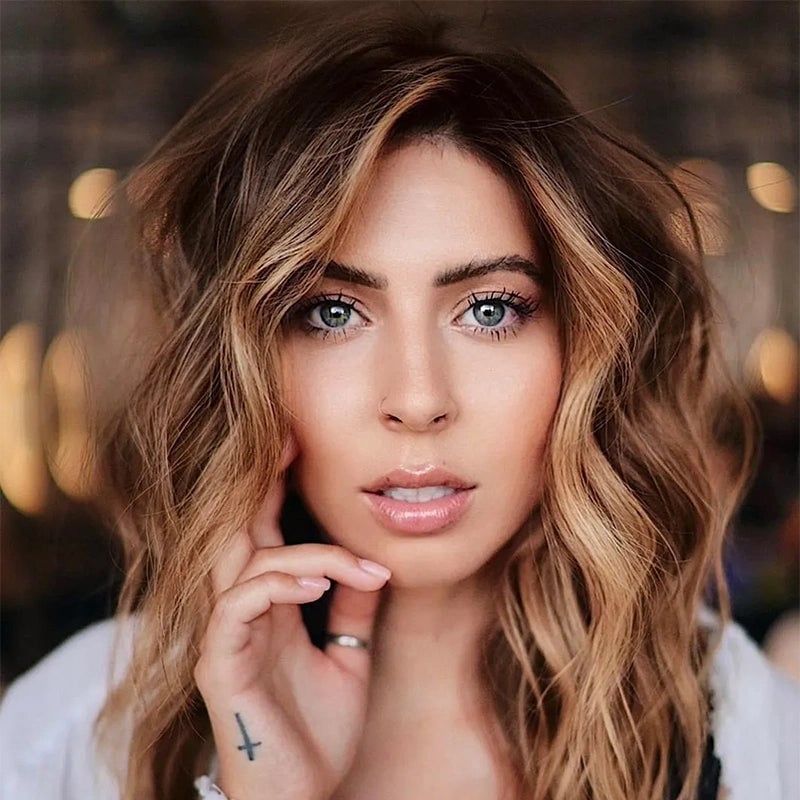
Compare this to the warm caramel on dark brown above: the dark blonde base here lets the balayage sit closer to the natural tone, so the contrast is softer. The air-dried waves and layered cut work best on thick, wavy hair that holds shape without styling. Skip it if fine hair is your reality; the layers can thin the ends and the balayage needs density to read well. The root stays dark blonde, the balayage lifts the ends a shade lighter.
Dark blonde base with lighter blonde balayage and wavy blowout
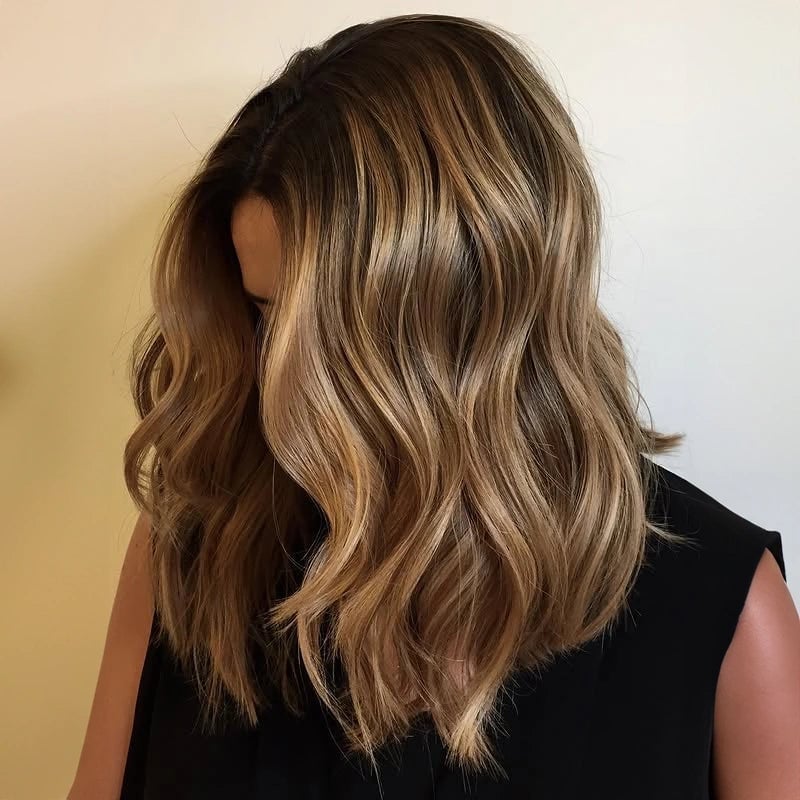
What makes this design work is the side view: the lighter blonde balayage wraps around the layers, so the color shifts as the hair moves. The dark blonde base anchors the look, the balayage stays subtle, no harsh line anywhere. Thick, wavy hair takes the wavy blowout naturally, the layers adding volume without extra product. Ask your colorist for: dark blonde base with lighter blonde balayage, layered cut. The technique paints the lighter shade onto the ends, leaving the root dark blonde for a lived-in finish.
This style is not for a single, solid shade or a high-contrast streak. The balayage blends so softly that it looks like a gloss.
Dark blonde balayage with air-dried waves, close-up take
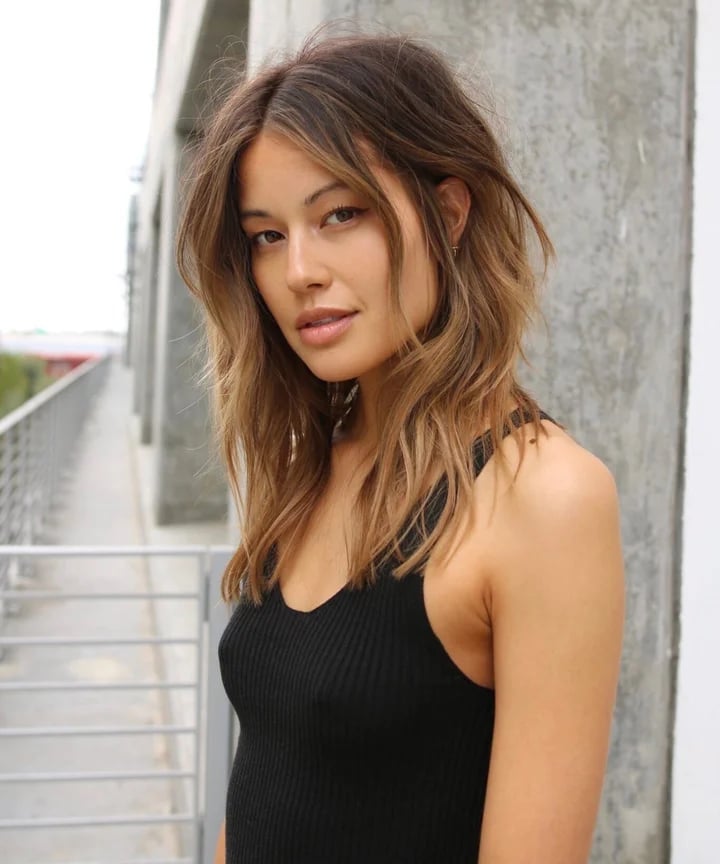
Lived-in color starts with a dark blonde base and a balayage that softens the root line without disappearing. The technique paints lighter, warmer tones through the ends, leaving the top few inches untouched. A middle part and air-dried waves let the lighter effect look natural. You want thick, wavy hair for this; the subtle layers need weight to hold the shape.
Honey blonde with subtle highlights and bouncy waves
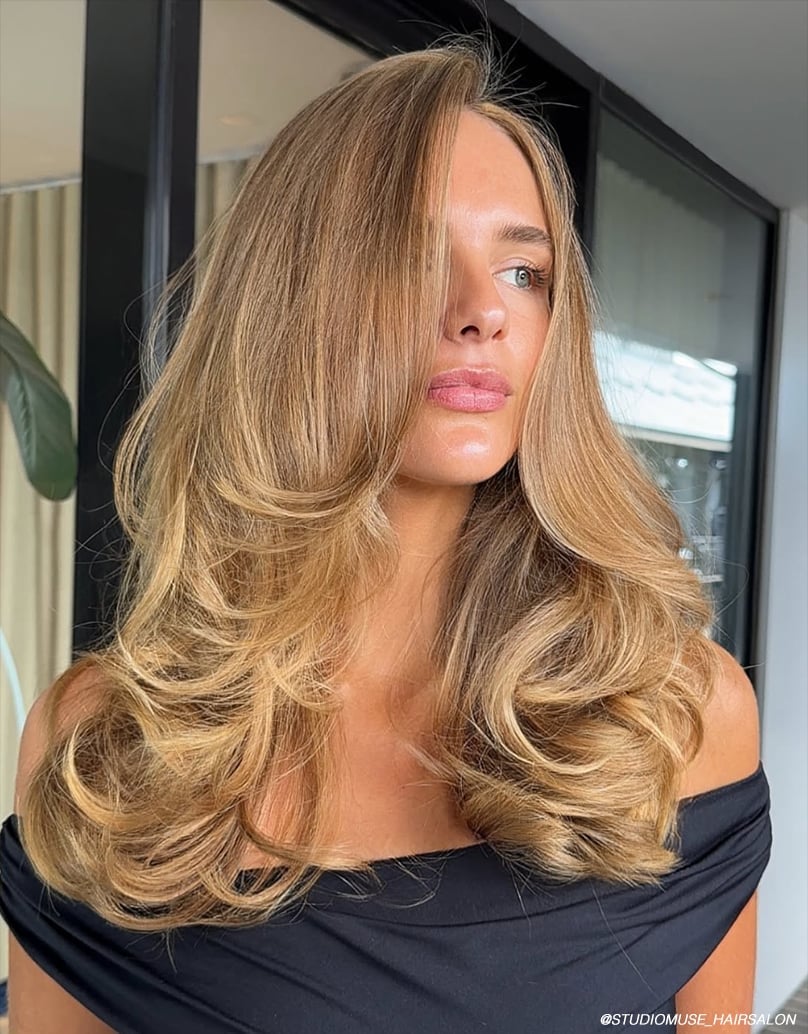
Honey blonde sits warmer than beige and less gold than caramel, which makes it a middle ground that works for a lot of people. The subtle highlights here are woven through the layers, not painted in thick sections. Bouncy waves and a centered parting push the color forward. The catch: fine hair can swallow these highlights whole, and the warmth will fade faster than you expect on a cool base. Skip it if you want a tone that stays icy.
Warm blonde with subtle highlights and curtain bangs
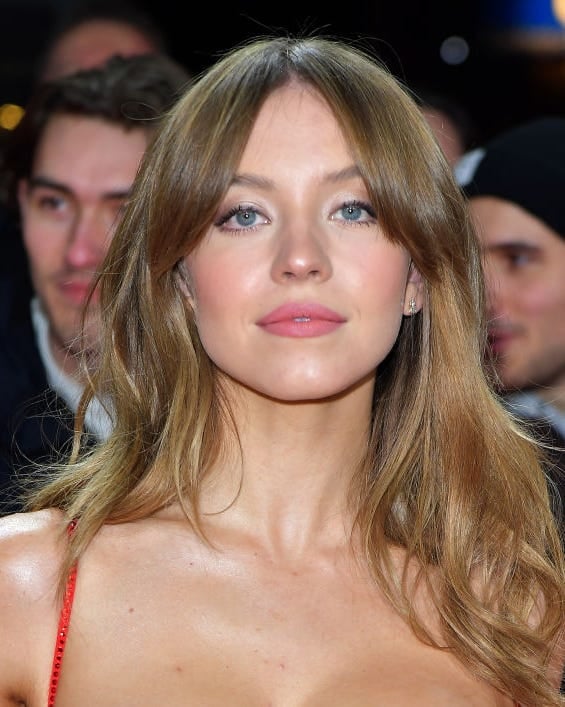
Curtain bangs change the way a blonde reads. The warm blonde base sits close to the root, and the subtle highlights are blended through the layers rather than concentrated at the ends. Fine, wavy hair carries this well because the lighter pieces catch on the bends. A middle part and air-dried styling keep the texture soft.
The technique matters here: the highlights need to be painted fine enough that they don’t create a stripe effect at the bangs. Ask your colorist for: warm blonde base with subtle highlights, curtain bangs.
Warm brown with blonde balayage and face-framing layers
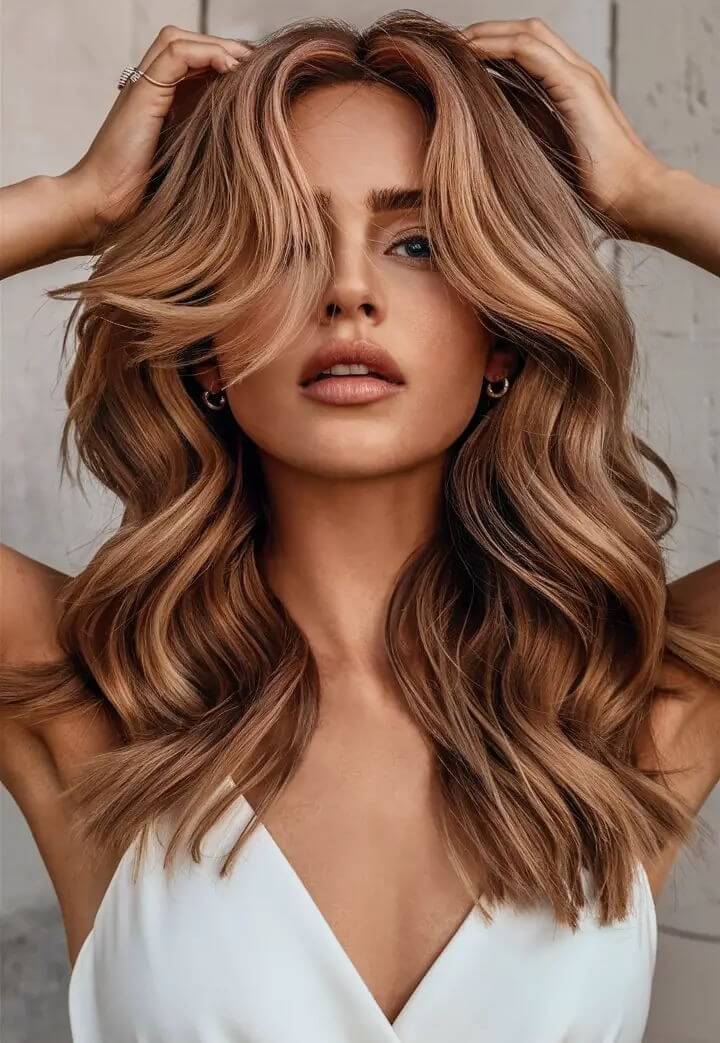
Face-framing layers and curtain bangs work best when the color follows the same logic. Warm brown base keeps the depth; the blonde balayage is painted to fall exactly where the layers cut in. Thick, wavy hair gives the balayage enough surface area to look dimension rather than streaks. A blowout finishes the shape.
The chair line is what makes this work, the balayage follows the cut, not the other way around.
Ash brown with blonde balayage and curtain bangs
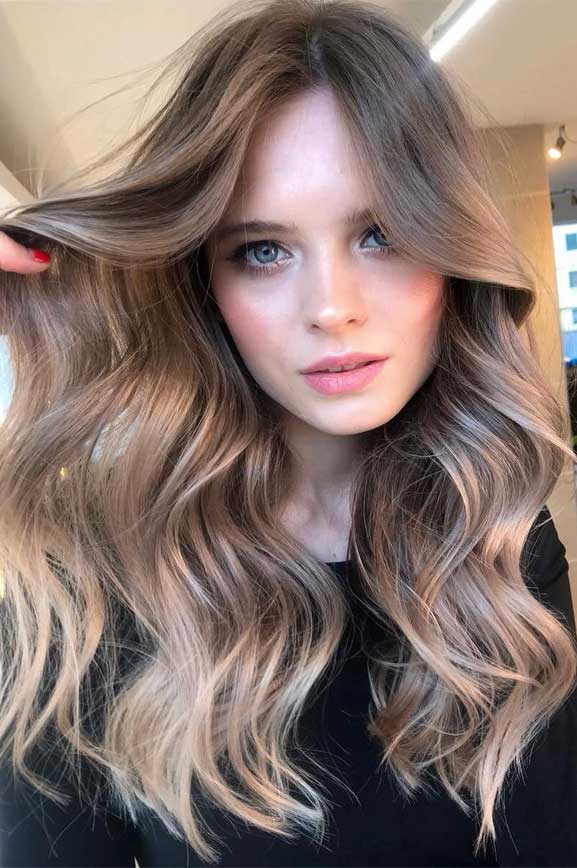
Ash brown and blonde balayage is the cooler cousin of the warm brown version. The ash base sits neutral, almost smoky, while the blonde lifts the mid-lengths and ends. Curtain bangs and soft waves keep the overall effect from looking harsh. Thick, wavy hair carries the blend best because the texture breaks up any hard lines.
Compare it to the warm brown version: ash looks more neat but needs a toning shampoo every two weeks to stop the blonde from pulling green. The warm version fades more naturally.
Voluminous curls with a rich dark brown base
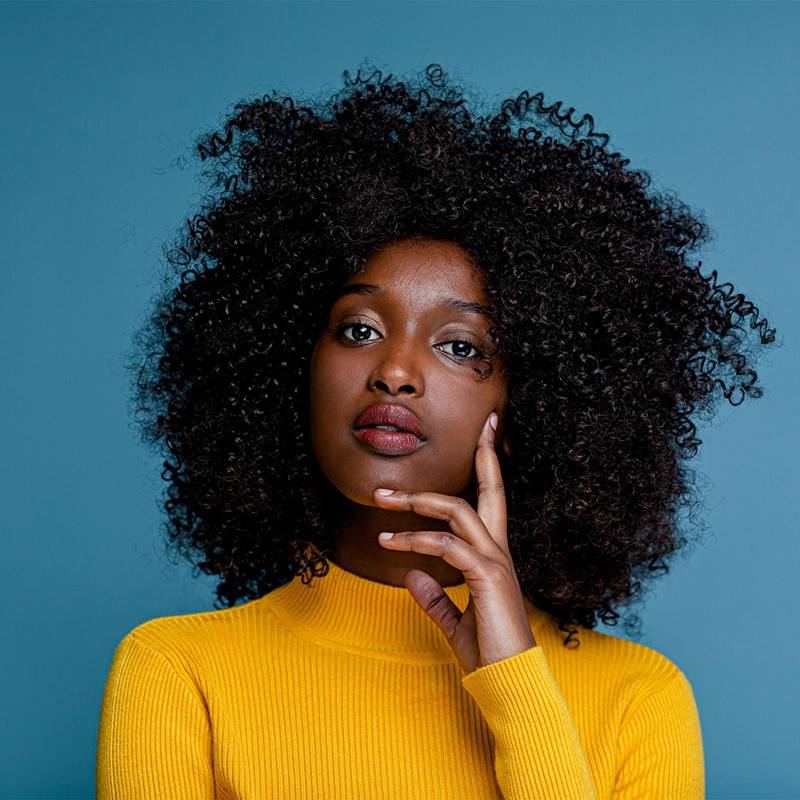
Thick, curly hair needs a color that lets the texture take center stage. A rich dark brown base with a subtle warmth does exactly that. It adds depth without competing with the curl pattern. The tone leans neutral-warm, which keeps the hair looking glossy rather than flat. Air-dried curls this voluminous start with a solid cut; layers are essential to avoid a pyramid shape. Skip it if your hair is straight or very fine. The curl won’t hold, and the volume falls flat. A curl cream and a diffuser get you there.
Vibrant copper red hair with air-dried waves
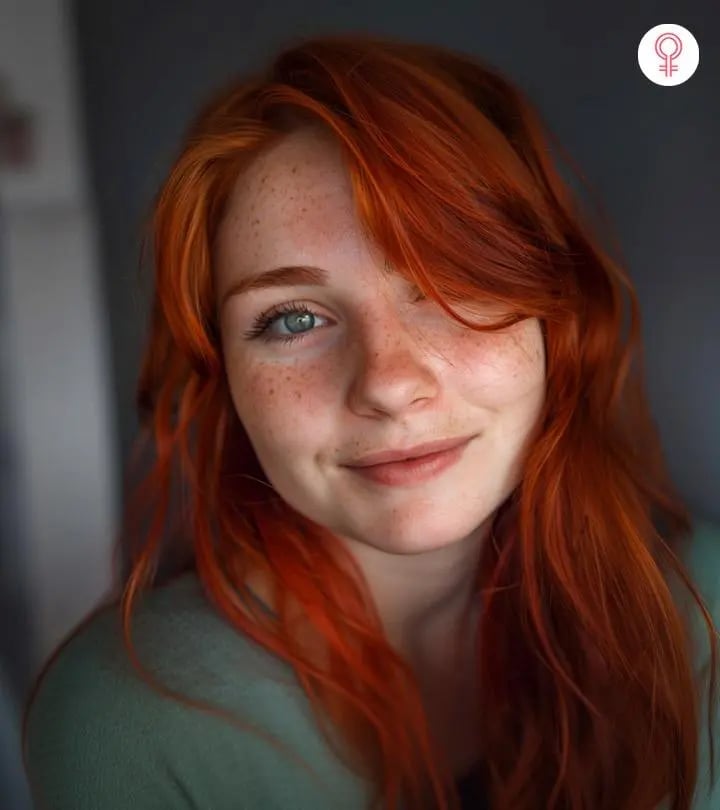
A vibrant copper red is a commitment, but one worth making. The color is a true fiery hue with no orange brassiness. That takes an even application on pre-lightened hair. Fine, wavy texture is ideal here; the color shows through clearly and the waves catch the light. A side-swept parting keeps the look modern rather than retro. The catch: red fades faster than any other tone. A color-safe shampoo and a cool rinse every other wash stretch the time between toning. Expect a refresh visit every six weeks to keep the copper bright.
Rich dark brown with auburn undertones and soft waves
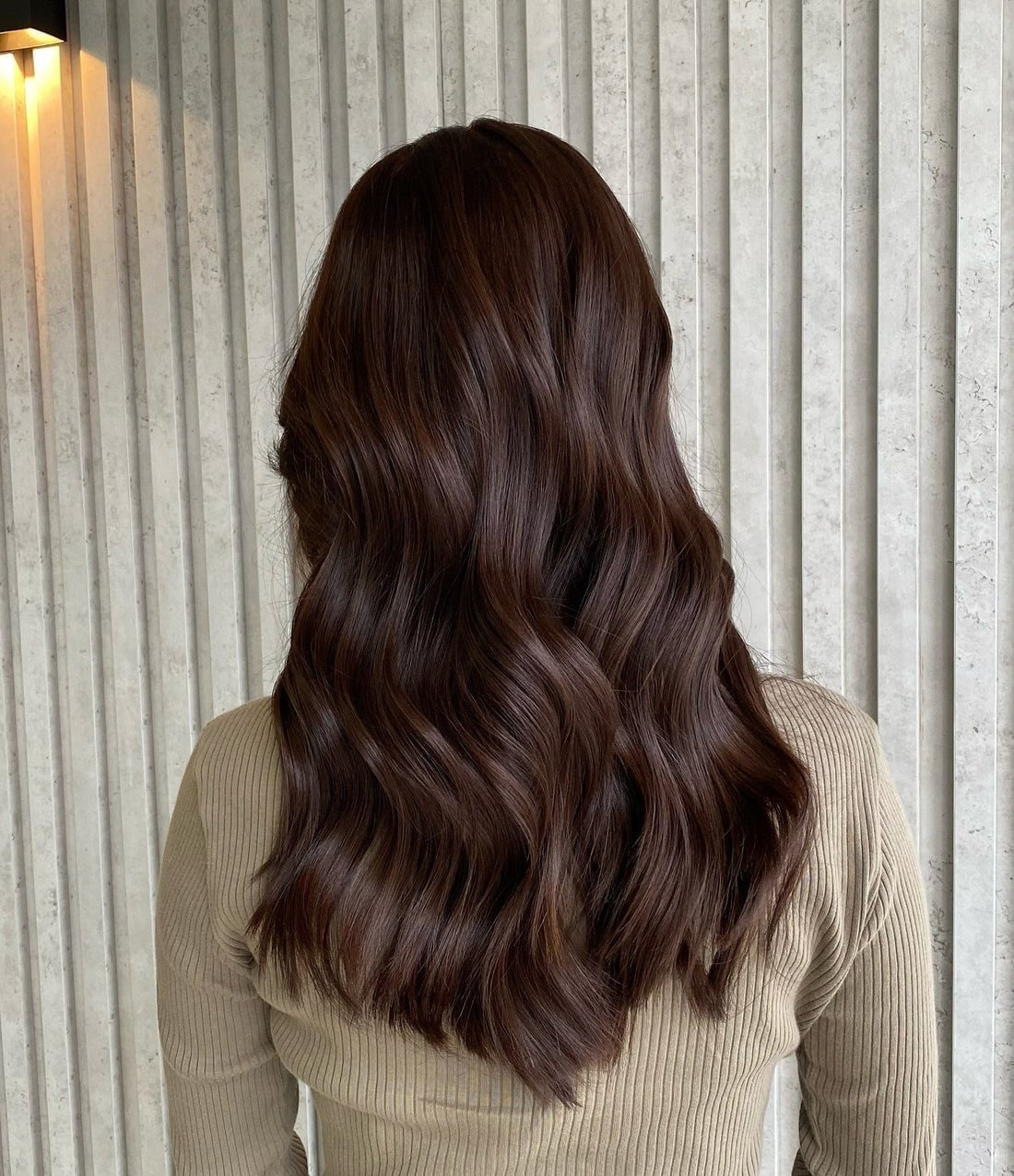
A middle part and soft waves set the stage for a color that rewards a second look. The dark brown base carries subtle auburn undertones, not enough to look red, but enough to catch warm light and stop the brown from going flat. Thick, wavy hair absorbs this kind of tone well; the layers let the undertone peek through at the ends. The real drawback: auburn can pull orange on certain brown bases. A gloss at the first sign of warmth fixes it. No bangs means the color does the work, not the cut.
Dark brown bob with auburn undertones and vintage waves, wavy
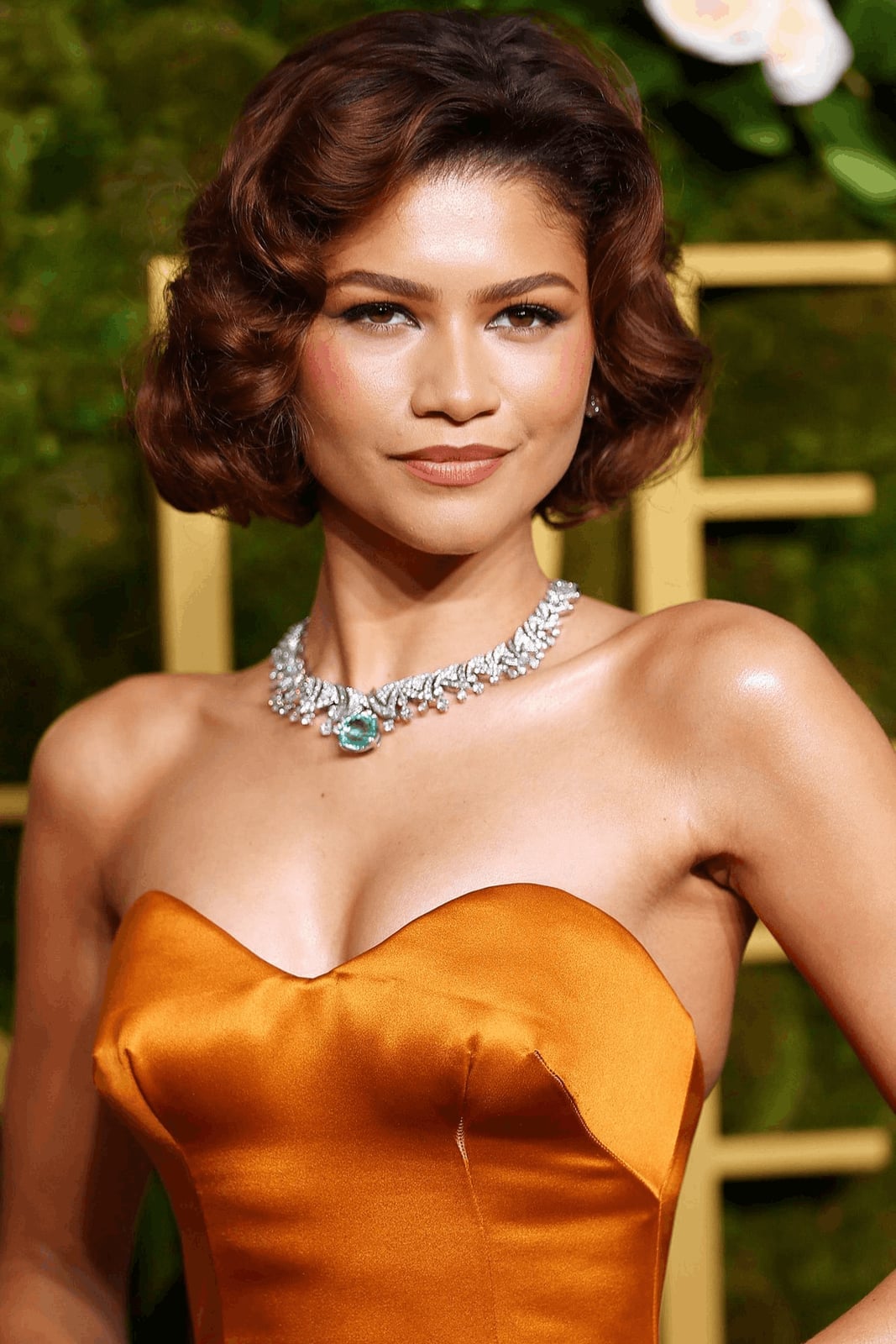
A bob with a deep side parting and vintage waves needs a color that adds richness without looking heavy. Dark brown with auburn undertones fills that brief. The warm tone keeps the bob from feeling severe. The technique is straightforward: a single-process color with a warm gloss layered on the ends. Thick hair holds the wave pattern best, and the bob length means the curl doesn’t droop. The words for the chair: dark brown base with auburn gloss.
Final Thoughts
You have 34 options, but the right one comes down to two things: how much time you have for toning and how your hair behaves on day three.
- Fine hair: choose an all-over color or root shadow for volume
- Ten minutes in the morning: balayage or highlights that grow out softly
- Cool base that pulls brassy: schedule toning every six to eight weeks
- Committed to vivids: deep condition weekly and use a color-safe shampoo
Find the color that truly makes you feel your best.
